Pieces from the Picts: The Missing Archaeology of the Battle of Dunnichen
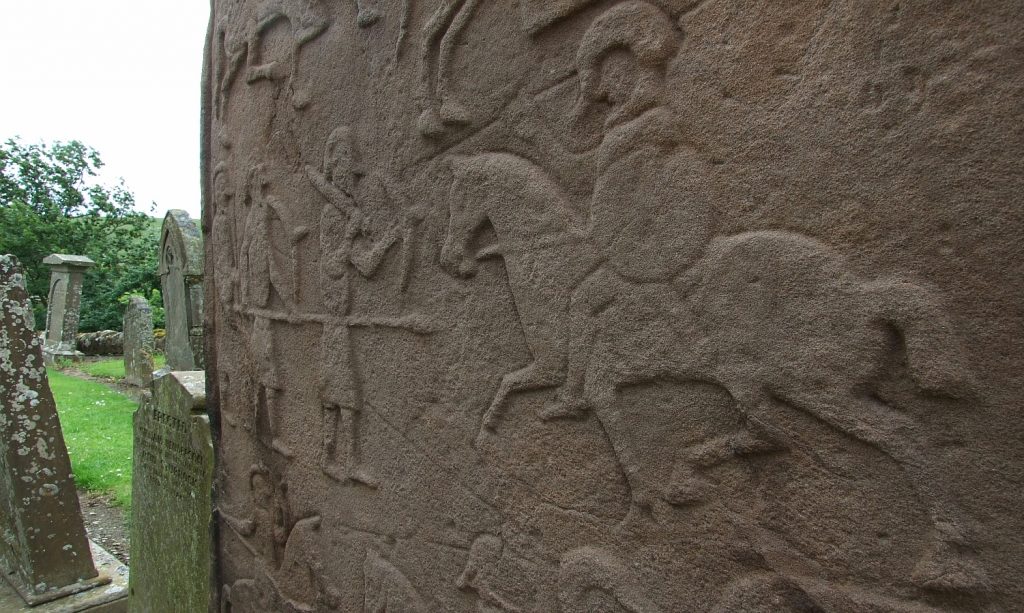
On 20 May 685, the Picts made one of the most decisive victories in the history of the British Isles at Blàr Dhùn Neachdain, also known as the Battle of Dunnichen or the Battle of Nechtansmere.
What Happened?
In the seventh-century, Northumbria was the largest kingdom in the island of Britain, its borders stretching as far north as the Firth of Forth, west to Galloway and as far south as present-day Sheffield in England. It also held control over a number of sub-kingdoms, including the Pictish ones.
However, by 685 Northumbrian dominance over Northern Britain, won by King Ecgfrith’s predecessors, had begun to disintegrate. Several of Northumbria’s subject nations had rebelled in recent years, leading to a number of large-scale conflicts against the Picts, Mercians and Irish, with varied success. After sieges of neighbouring territories carried out by the Picts, Ecgfrith led his forces against them, despite advice to the contrary (even by the famous Cuthbert, bishop of Lindisfarne), in an effort to reassert his power over the Pictish nations.
The battle ended with a Pictish victory – led by King Bridei Mac Bili – which severely weakened Northumbria’s power in northern Britain. Ecgfrith was killed in battle, along with the greater part of his army. The Pictish victory marked their independence from Northumbria, who never regained their dominance in the north.
20 May 685, the independence of the Pictish Nation is preserved at the Battle of #Nechtansmere. pic.twitter.com/7SxoRiYMK4
— Bonnie Dundee (@BonnieDundee89) 20 May 2016
The Aberlemno Stones
Aberlemno in Angus is famous for its Pictish stones, six of which have been found in or around the village. On the reverse of the carved stone known as Aberlemno 2, is a battle scene long thought to depict the Battle of Dunnichen.
In the scene, the warriors on the left-side of the stone fight without helmets, showing their long hair – these are thought to be the Pictish forces. The opposing army occupies the right side of the scene wearing helmets with prominent nose-pieces – consistent with Northumbrian armour. It appears that the army on the left is winning, with a Pict on horseback chasing a Northumbrian cavalryman straight off the edge of the stone. On the bottom row, a dead Northumbrian (possibly King Ecgfrith) is being pecked by a raven; the symbol of death in battle.
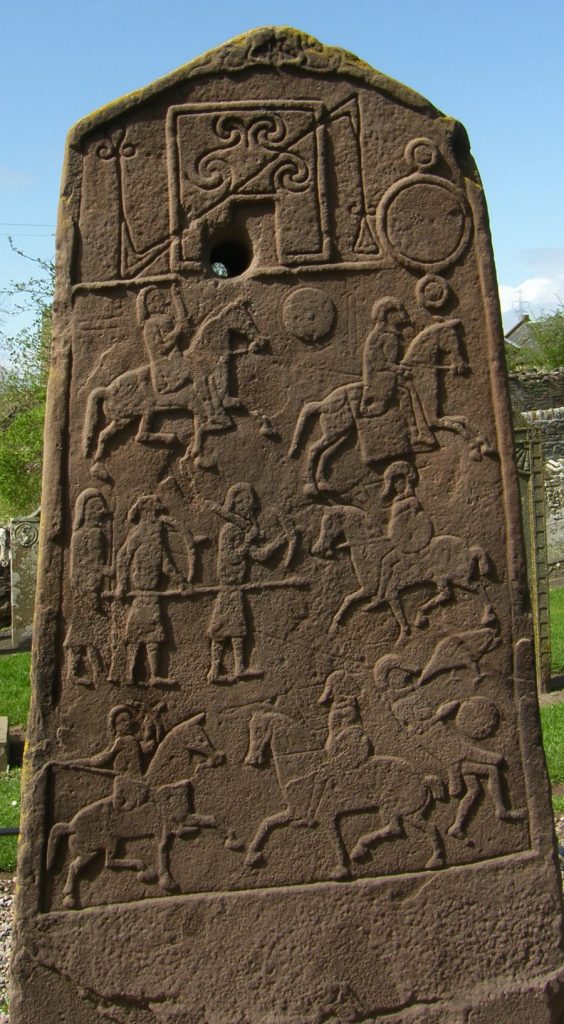
There has possibly been a church at Aberlemno since 710 (originally called Egglespethir associated with Restenneth Priory), which led some to believe that the stones were created around then to commemorate the battle. Early nineteenth-century historian George Chalmers argued that the location of the battle (recorded in the Annals of Ulster as Dún Nechtain) was the same as present-day Dunnichen, just four miles south of Aberlemno.
However, Aberlemno 2 has since been re-dated and found to have been carved in the mid-ninth century, over 150 years after the battle. As a result, alternative interpretations have been made as to the identity of the warring figures on the stone, including that the scene depicts a battle between Picts and Vikings, or that it is a memorial to 8th-century Pictish king Óengus I, or even that it represents a spiritual struggle.
The Location of the Battle
So, just where did this devastating event take place? There are several written accounts of the battle, including a description by the scholar Bede in his Historia Ecclesiastica Gentis Anglorum, as well as the Annals of Ulster which probably draw on an earlier chronicle from Iona.
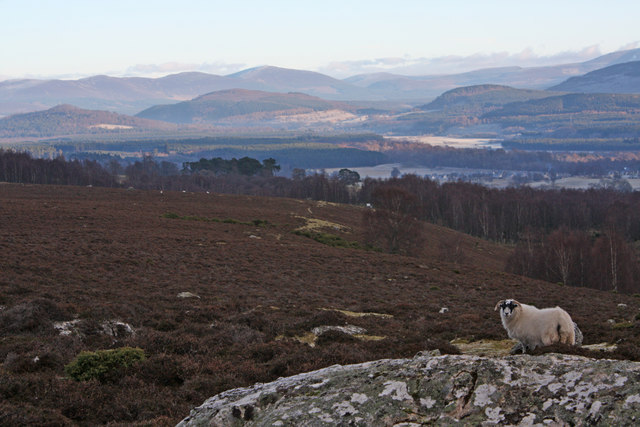
Locating the site in Dunnichen may match up with the Annals of Ulster, but it conflicts with Bede’s account, which noted that the battle took place ‘in tight places amid inaccessible mountains’.
Many scholars have posited where this site could be, but early medieval historian Alex Woolf thought he found the answer in early 2006. Due to further place-name evidence, an alternative Dún Nechtain was identified at Dunachton, an estate in the Highlands, which fitted the topographical constraints of Bede’s account.
The theories as to the battle’s location are based primarily on evidence of place-names, surviving almost unchanged for over a thousand years, which originate in texts not written by the Picts (who had no written language apart from Ogham) or by anyone in close proximity to the event. Even Bede was writing from a monastery in England almost fifty years after the date of the battle.
Apart from the fascinating scene on the reverse of Aberlemno 2, no archaeological evidence associated with the battle has yet been found. Badenoch however, is littered with Pictish stones, and perhaps one day a stone will be discovered from this area which depicts the greatest Pictish victory in history.
By Sally Pentecost, Dig It! Communications and Events Officer
Header Image: Battle detail [from Aberlemno 2] by Stuart Anthony via Flickr, CC BY-NC-ND 2.0
