The Archaeology of Dunbar (English)
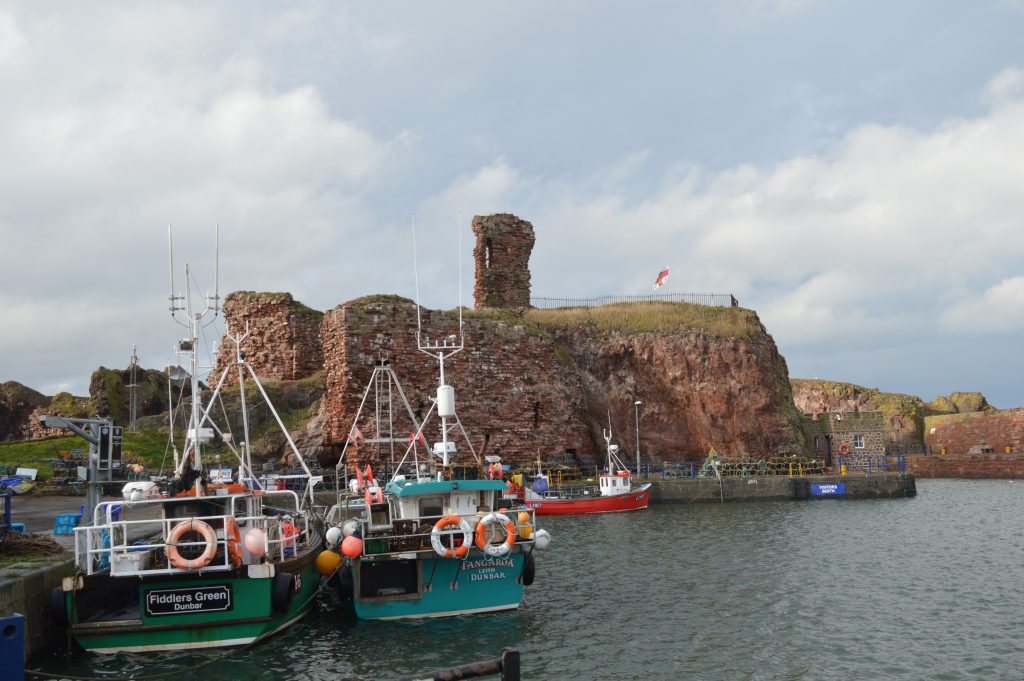
You’d be forgiven for looking askance when you read that Dunbar Castle was once one of the most powerful and important castles in Scotland.
The castle today
Perched precariously above the Harbour, the fragmentary remains of Dunbar Castle are scattered over a rock standing 80 feet above the sea, which surrounds the site on three sides today and originally cut it off almost entirely from the mainland.
It can be hard to distinguish the ruins from the bedrock on a foggy day and even harder to imagine what this proud fortress once looked like. Dunbar Castle was as much the key to the Lothians as Stirling Castle was the key to controlling access to and from the Highlands. The castle covered the most convenient landing on the coast beyond Berwick, and after Berwick became finally English in 1483 that importance was intensified for Scotland.
As much as I would love to write about Dunbar Castle’s fun former features like murder holes, brewhouses and oubliettes* (because, as we all know, murder and beer are always the best bits of any castle) we’re not sure that these existed. In fact, no one is quite sure as to how Dunbar Castle looked in its heyday, but it’s certainly not for a lack of trying.
* a secret dungeon with access only through a trapdoor in its ceiling.
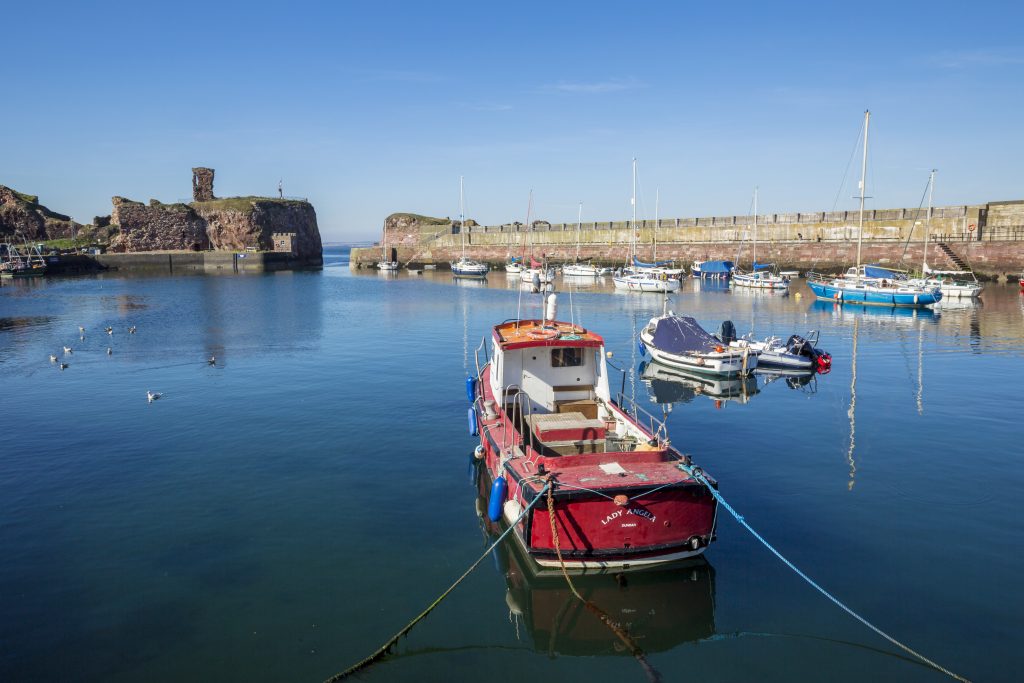
Dunbar Harbour, East Lothian (Image Credit: Kenny Lam / VisitScotland)
Archaeological reports
Between 1987 and 1993 a huge amount of archaeological work was undertaken by the Scottish Urban Archaeological Trust at Castle Park before the leisure pool was built.
What they discovered is a perfect example of the kind of archaeology that often slips under the radar of the public consciousness – six hard years of turning up mostly ditches, drains and bits of walls that didn’t catch the eye of the media but did shed a valuable light on the history of the area.
What the report showed was that the nature of the site is confused, to say the least. The area has been occupied almost continuously from the Iron Age through to the modern day, as a result, we are left with the remains of buildings on top of buildings on top of buildings, with their drains and foundations running through older structures, creating a puzzle that has to be carefully picked apart.
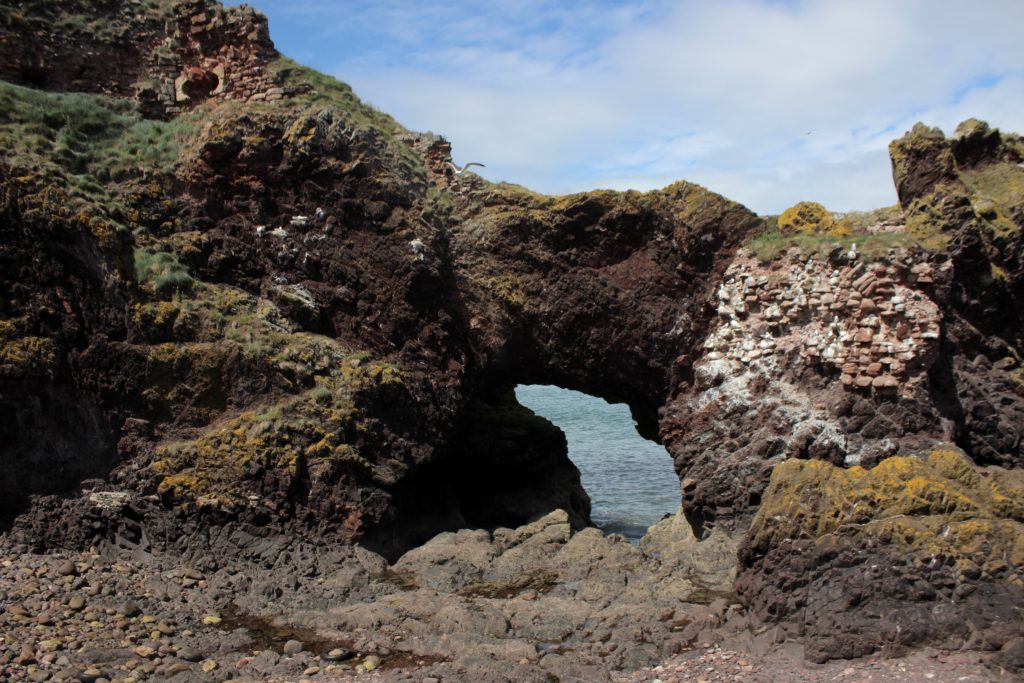
Archway in Dunbar Harbour (Image Credit: John Wilson, CC BY-NC 2.0)
A fortress has existed on the rock at least since the early ninth century; our first record of the castle comes from 858 when it was burnt by Coinneach mac Ailpein (Kenneth MacAlpin, known as the first King of Scots). For centuries the castle changed hands between Scotland and England, meaning that it spent years being besieged, damaged and rebuilt.
In the end, its strength was its downfall because it often made more sense to destroy the fortress following its capture rather than allow it to fall back into enemy hands. In 1488 the Scottish Parliament ordered it to be torn down, but it was rebuilt again in 1496 by James IV; it was finally demolished in 1567. The several periods of rebuilding means the castle likely changed appearance fairly regularly.
The most prominent feature of the castle today is the upright remains of a tower. This was likely connected to a blockhouse, built on an isolated island mass in the early 16th century, specifically to house two floors of artillery. This was surrounded by a curtain wall and a courtyard of sorts which is now buried under the leisure pool in Castle Park, and linked up to the rest of the castle by a bridge (see above).
The future of coastal archaeology
The castle at Dunbar has played a pivotal role in much of Scotland’s history, and its visible remains hint at the complex and ever-changing structure which guarded the eastern sea road into Scotland for centuries. Sadly, due to neglect and hazardous conditions, we may never see another excavation at Dunbar, but its weather-beaten remains stand as a reminder of how important it is to excavate our heritage which is currently threatened by coastal erosion.
Each year, Scotland’s archaeology at incredible sites like the Neolithic settlement at Swandro in Orkney is in danger of being washed away by the tide and damaged by the harsh elements. Now more than ever it is crucial that we turn our attention to these dwindling sites before they are gone for good.
For Dunbar Castle though, the work of reconstruction artists breathes new life into the remains and depicts what the castle may have looked like in its full splendor.
Dunbar Castle, East Lothian (Scotland) watercolour reconstruction suggestion. A Dunbar stronghold visited by Mary Queen of Scots. @MaryQueenMovie @MarieStuartSoc @mqofs #ScottishCastles #medieval #watercolour #paintings pic.twitter.com/R5Qc3cGPiZ
— Andrew Spratt (@andrewsp2009) 12 December 2018
By Sàga Crawford, historian and Dig It! TV presenter
Hungry for more? Check out our Dig It! TV video which covers the resounding Scottish victory of “Black Agnes” against English invaders.
