Top Five Archaeological Sites Around Falkirk
Prehistoric rock art, Roman forts and medieval castles await in the Falkirk area!
Chacefield Wood Rock Art
Chacefield Wood on the edge of Denny is home to a plantation of Scots Pine, well-used paths for walking and cycling and a large sandstone outcrop which has been called “the best rock art site in the Falkirk area”.
During the Neolithic (c.6,000 to 4,000 years ago) and Early Bronze Age (4,000 to 2,000 years ago), people in Scotland carved symbols into natural outcrops and boulders by hammering rock surfaces with stone tools or large river pebbles. The most common are ‘cupmarks’ (small circular hollow pecked into the rock) and ‘cup-and-ring motifs’, where cupmarks are surrounded by one or more concentric circles (see below).
The Chacefield Wood site includes three of these cup-and-ring motifs with deep-set rings. The central motif is a cup with two rings and the other two are cups with single rings. Three cupmarks with no rings can also be spotted.
More than 3,000 carved rocks are known in Scotland, but we still don’t know who created the art or why.
Tappoch (Torwood) Broch
Venture into the woods north-east of Denny to find the remains of Tappoch Broch (aka Torwood Broch), a circular stone structure which has been in this spot for around 2,000 years.
Some of the most striking features include the massive walls (about six metres thick) and “an unusually well-preserved staircase” set within the gap between the inner and outer layers of the walls which would have led to the next level.
It was first excavated in 1864 and a few small-scale digs have taken place near the site since. Finds have included rotary querns (likely used for grinding grain), a spindle whorl for spinning yarn, a potential stone ‘lamp’ and several pieces of pottery.
Brochs are unique to Scotland, and found mainly in the Highlands and islands, so this is a rare treat for lowland dwellers.

The Antonine Wall and Rough Castle Fort
Over 1,900 years ago, the Roman army constructed the Antonine Wall across Scotland’s central belt to mark the north-western frontier of their empire. The site included a rampart which was mostly built out of layers of turf, a huge ditch which ran to the north of the Wall and 17 forts which accommodated around 7,000 soldiers from areas including modern-day Syria, Spain and Algeria.
Rough Castle, east of Bonnybridge, is the best-preserved fort on the Wall and is home to several gateways, the tallest surviving section of rampart, and defensive pits which were likely fitted with sharpened stakes (see below).
Excavations in the early 1900s identified several buildings within the fort, including a granary (grain storehouse), bathhouse and headquarters building where a tablet recording the erection of the building by the Sixth Cohort of Nervii (an auxiliary unit) was found. Several years earlier, an altar to the goddess Victory was also discovered just south of the fort.
Want to make a day of it? Follow the signposted path on foot to reach the Falkirk Wheel in about 15 minutes.
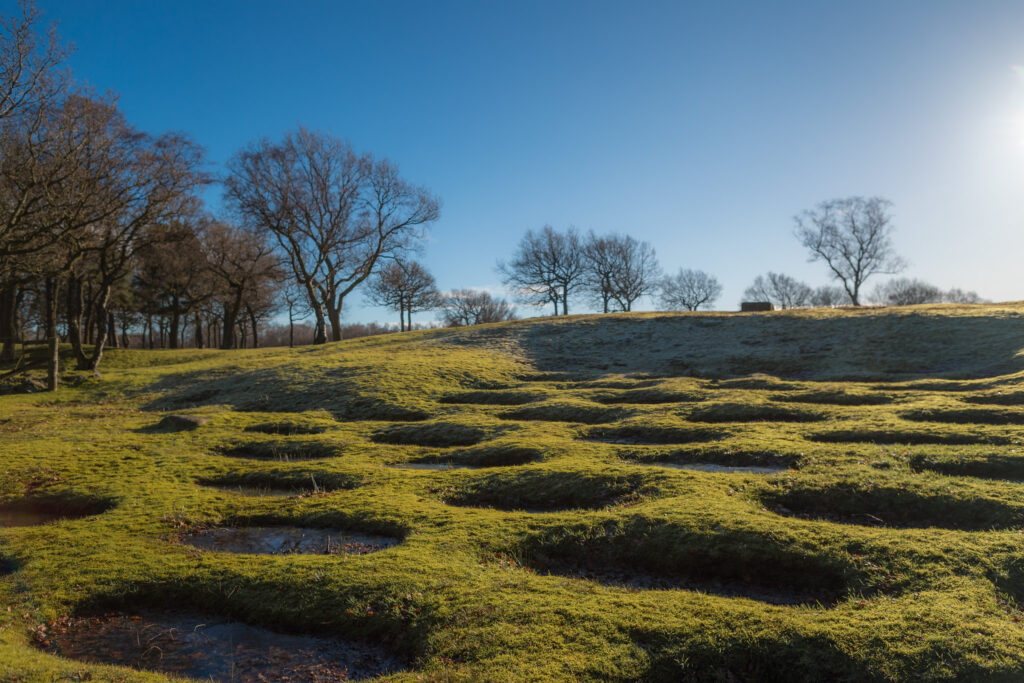
Image © Vass Media
Blackness Castle
Blackness Castle by the Firth of Forth was built in the 1400s as a residence for a nobleman (before becoming a royal castle, garrison fortress, state prison and ammunition depot), but the history of this site stretches much further back.
In 1924, a burial with a penannular bronze armlet (formed as an incomplete ring) which may be over 1,300 years old was discovered in front of the barracks. The low hill overlooking the site from the south has produced additional evidence for prehistoric burials, including one containing an early food vessel which shows how much care was taken with this individual.
The hill also retains the foundations of St Ninian’s Chapel, which is recorded from the 1300s and was probably largely destroyed during the 1650 siege that damaged the castle’s defences so badly that the scars can still be seen today.
Booking in advance is recommended to guarantee entry.
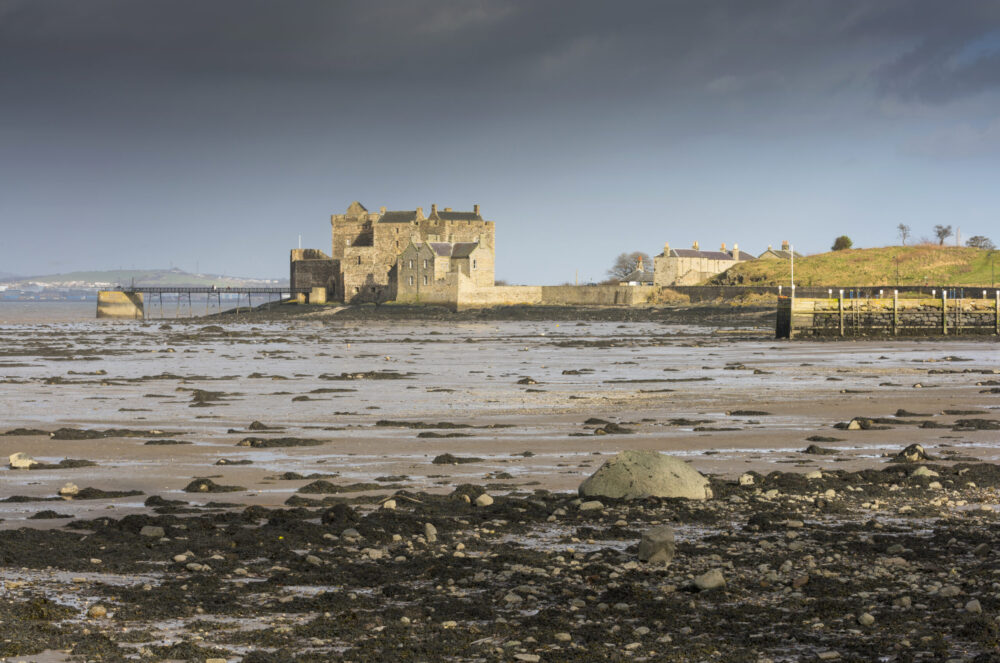
Image Credit: VisitScotland / Kenny Lam
Kinneil Estate and Museum
The Kinneil House mansion which stands west of the centre of Bo’ness was mainly built during the 16th and 17th centuries and contains “some of the finest Renaissance painted interiors in Britain” with decorations including leaves, blossoms, birds, animals and biblical scenes.
The House also displays the Kinneil Cross which could be around 800 years old and was found in the foundations of Kinneil Old Parish Church during excavations by Doreen Hunter, Curator of Falkirk Museum, in 1951. This large stone carving of Christ – which was heavily defaced centuries ago – belongs to a rare class of sculpture known as rood crosses and is Scotland’s only known example.
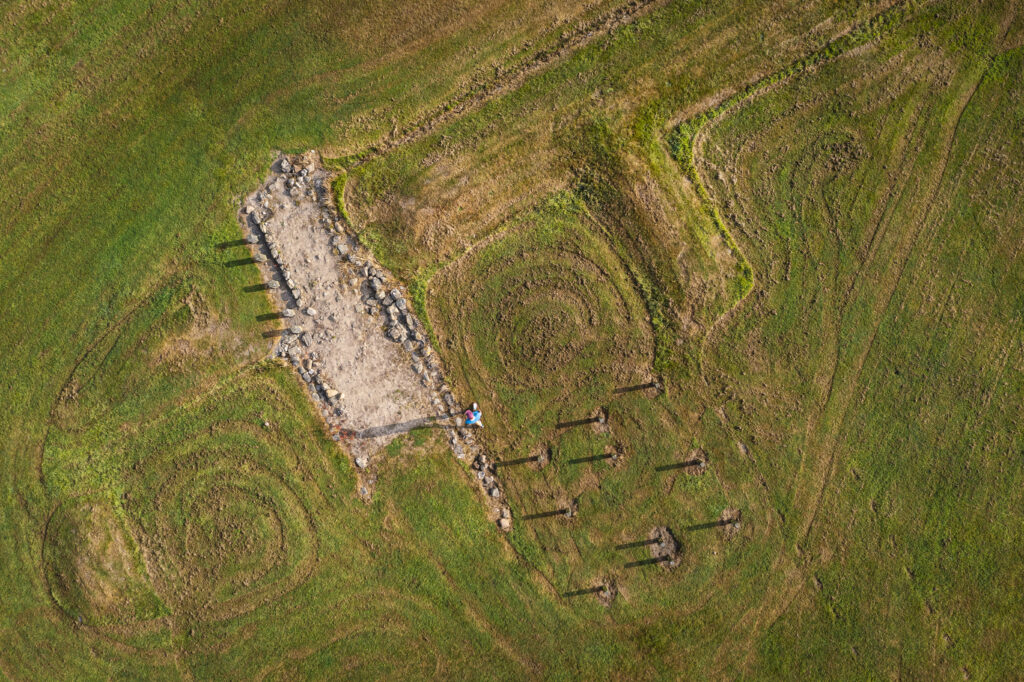
The Estate is situated along the line of the Antonine Wall (“Kinneil” is believed to mean “head/end of the wall”) and is home to the only example of Antonine Wall fortlet remains still visible today. The fortlet was first discovered in 1978 after a local history society found Roman pottery during fieldwalking. After excavations revealed the remains (plus portions of the rampart, shoes, pots, bones and a bronze harness mount), the fortlet was partially preserved and put on public display.
In recent years, archaeologists and volunteers have opened trenches and carried out a geophysical survey which uncovered additional aspects of the site’s past from the Roman to medieval periods, including evidence of a metalled surface that may represent remnants of the Military Way (the road linking the forts and fortlets along the Antonine Wall) and green-glazed pottery which was made over 500 years ago.
The House is currently closed to the public, but you can enjoy virtual guided tours or visit the grounds and free museum which features displays and artefacts dating back to Roman times.
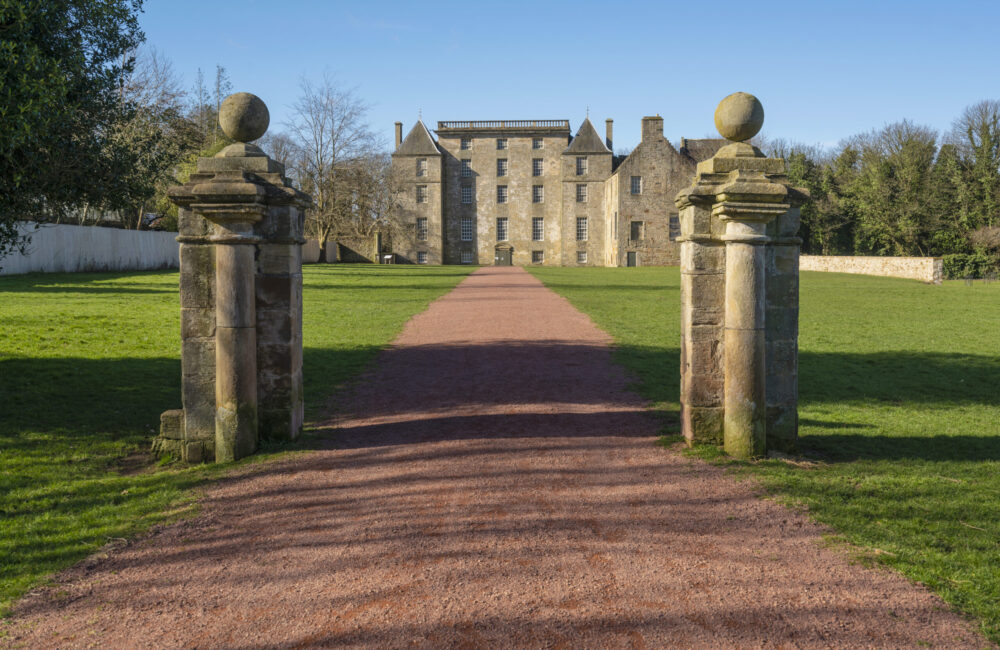
Image Credit: VisitScotland / Kenny Lam
Want to keep exploring? Check out the rest of the Destination Archaeology series.
Header Image: Kinneil Estate fortlet (Credit: VisitScotland / Kenny Lam)