Shetland’s Unique Sites Hiding in Plain Sight

When we think of Shetland, we’re often drawn to the wildness, the wool or the ponies. But these islands are also home to some of the most finely preserved sites in the UK spanning around 6,000 years of human activity; some of which are on the beaten track and some which require a more adventurous spirit.
Two for One
Jarlshof and Old Scatness, two icons of the southern mainland of Shetland, dramatic in their breadth and scope and heavily trafficked (for good reason!), are nearby joined by a rare site – the Ness of Burgi. A blockhouse fort from the Iron Age (over 1,500 years ago), this is one of only three known examples in the UK and all are in Shetland. Better still, if you retrace your steps a few hundred metres and veer to the right you’ll come across a second one, Tonga.
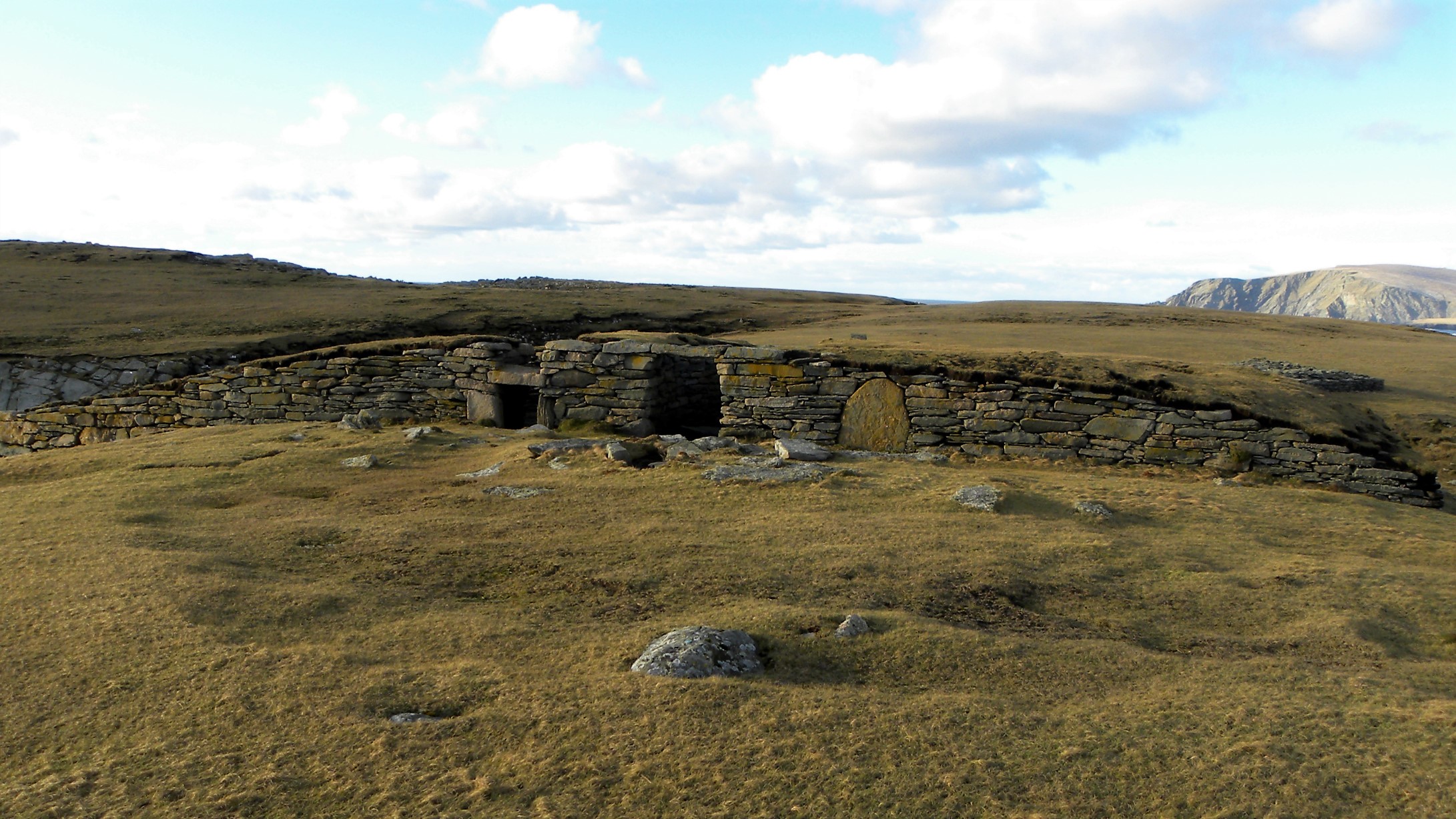
Ness of Burgi (Image credit: Stephen Jennings)
To the Tombolo
Move north to make the obligatory stop at St Ninian’s Isle, famed for its beautiful tombolo (the largest active sand tombolo in the UK) and the St Ninian’s Isle Treasure. But there is far more than treasure here; crossing the tombolo to the isle, you’ll see the remains of a 12th-century chapel which has been built over an older, pre-Viking chapel. It’s set amidst what may be Shetland’s largest known burial grounds ranging from the Neolithic (over 5,000 years ago) to the 19th century and surrounded by an arresting history that spans the ages. Whilst visiting, be aware – that may not be a sheep bone laying at your feet!
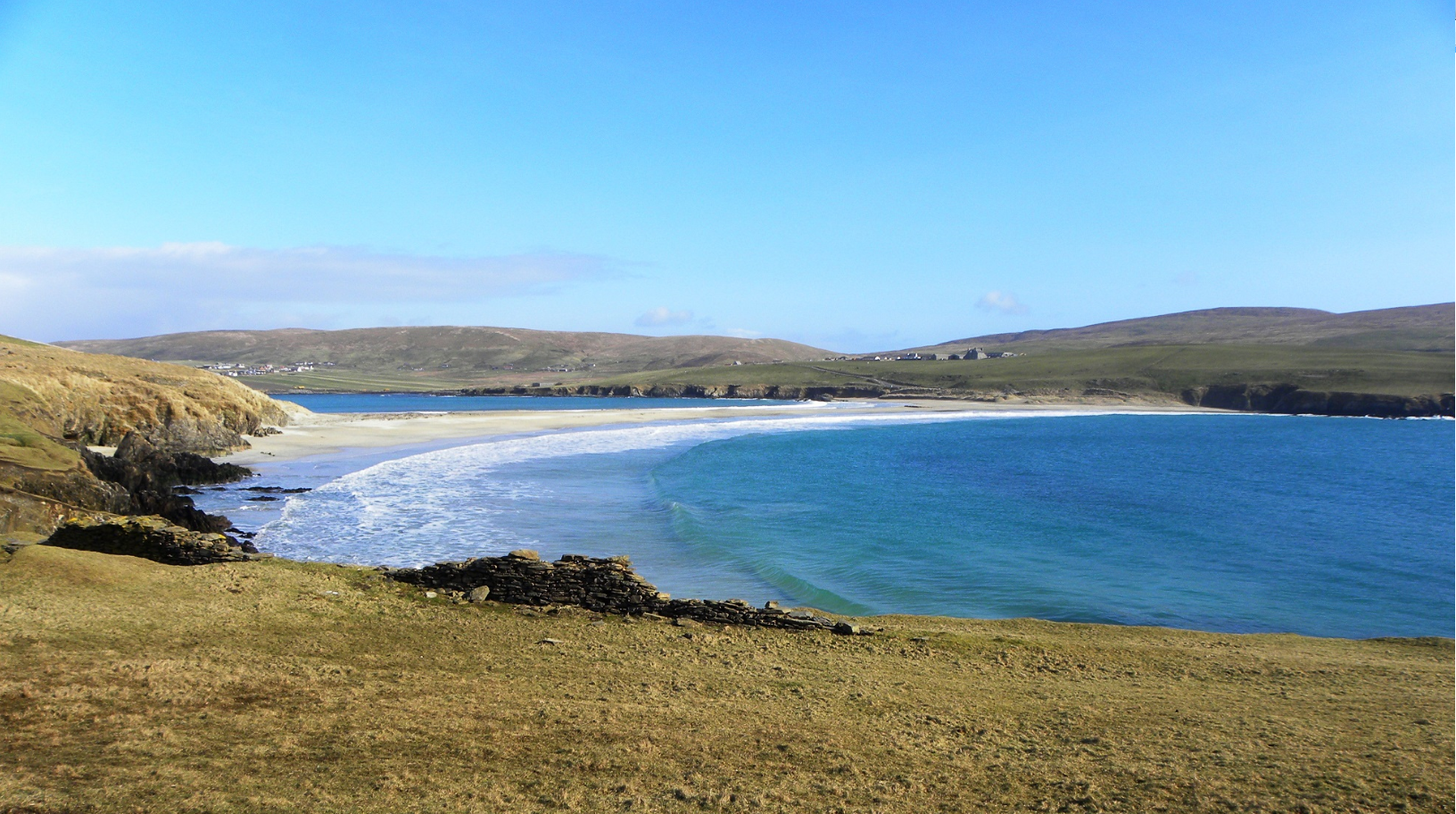
Tombolo (Image credit: Stephen Jennings)
Looking Around Lerwick
Leave this behind to arrive in the town of Lerwick, home of the Broch of Clickimin and some outstanding, and decidedly more modern, architecture. While strolling through the charming town looking for a souvenir, popping into a coffee shop or conversing with the local folk, keep an eye out for WWII sites dotted throughout the town and surrounding landscape.
Make your way to the surrounding hills with a rare observation post on Staney Hill to admire what is likely the best-preserved WWII defences of any fortified town in Scotland. Keep your eyes peeled for repurposed bomb shelters and gun platforms, Nissen huts (steel structures), gun emplacements and a variety of tank traps and – as you reach the top – a concrete triple torpedo tube emplacement (the last of its kind in Scotland) on the water’s edge at a south pointing ness known as “The Knab”.
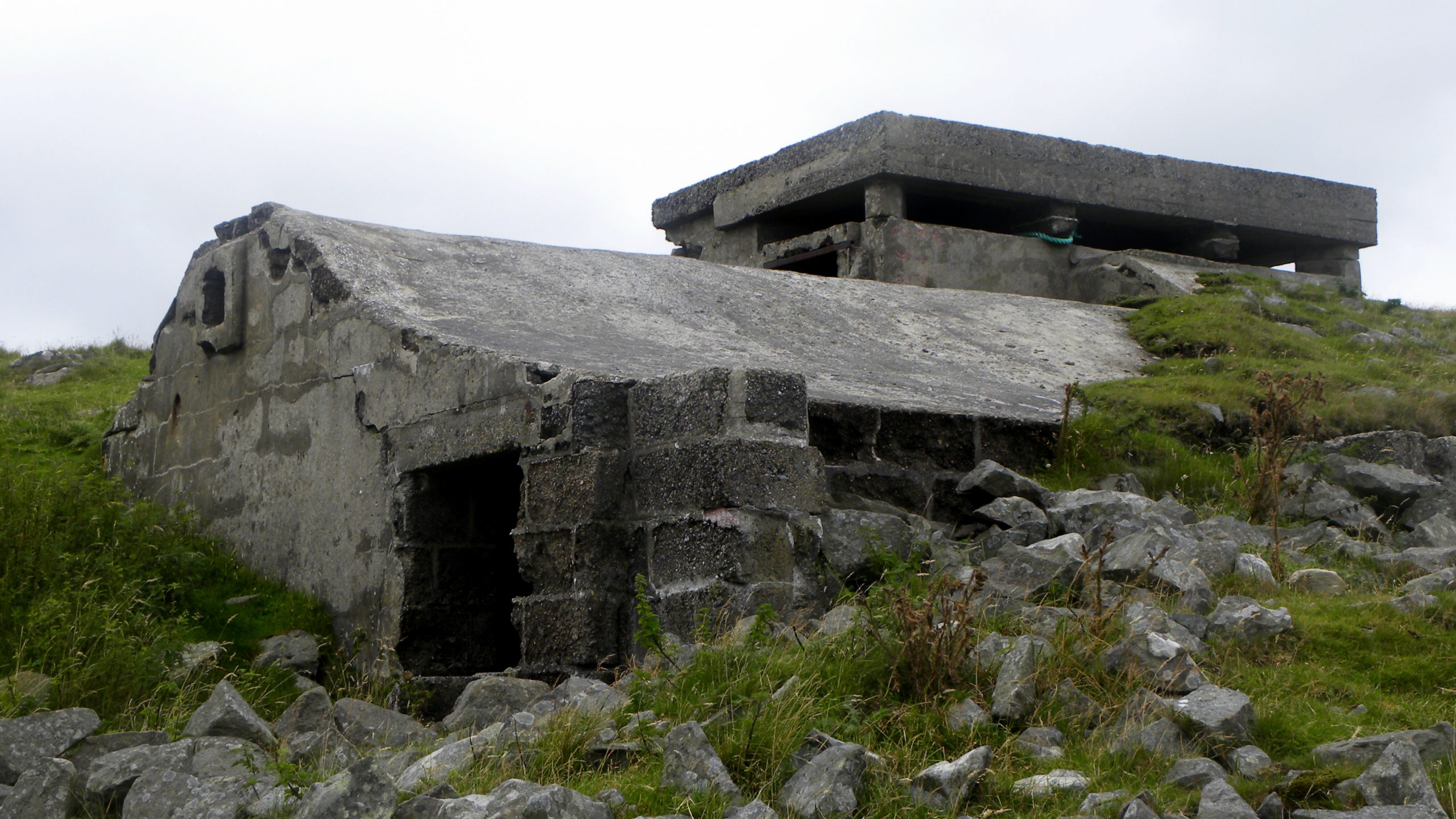
WWII Spotting Tower (Image credit: Stephen Jennings)
Circuit Training
Move north again and your first stop is the mighty cliffs and crashing seas of Eshaness. Though famed for its spectacular scenery, it’s from here you can trace all 6,000 years of occupation in one short circuit. Begin at the Cross Kirk Cemetery and the grave of Donald Robertson, one of the more interesting and damning epitaphs one will ever chance to see – his death was “caused by the stupidity of Laurence Tulloch of Clothister (Sullom).”
Continue on to pass through sites as mighty as a broch (two of these drystone structures, in fact!) and a rare and quite large Neolithic square cairn (stack of stone) to something as modest as a long-disused otter trap. To complete and fully appreciate this circuit it helps to have a guide to hand.
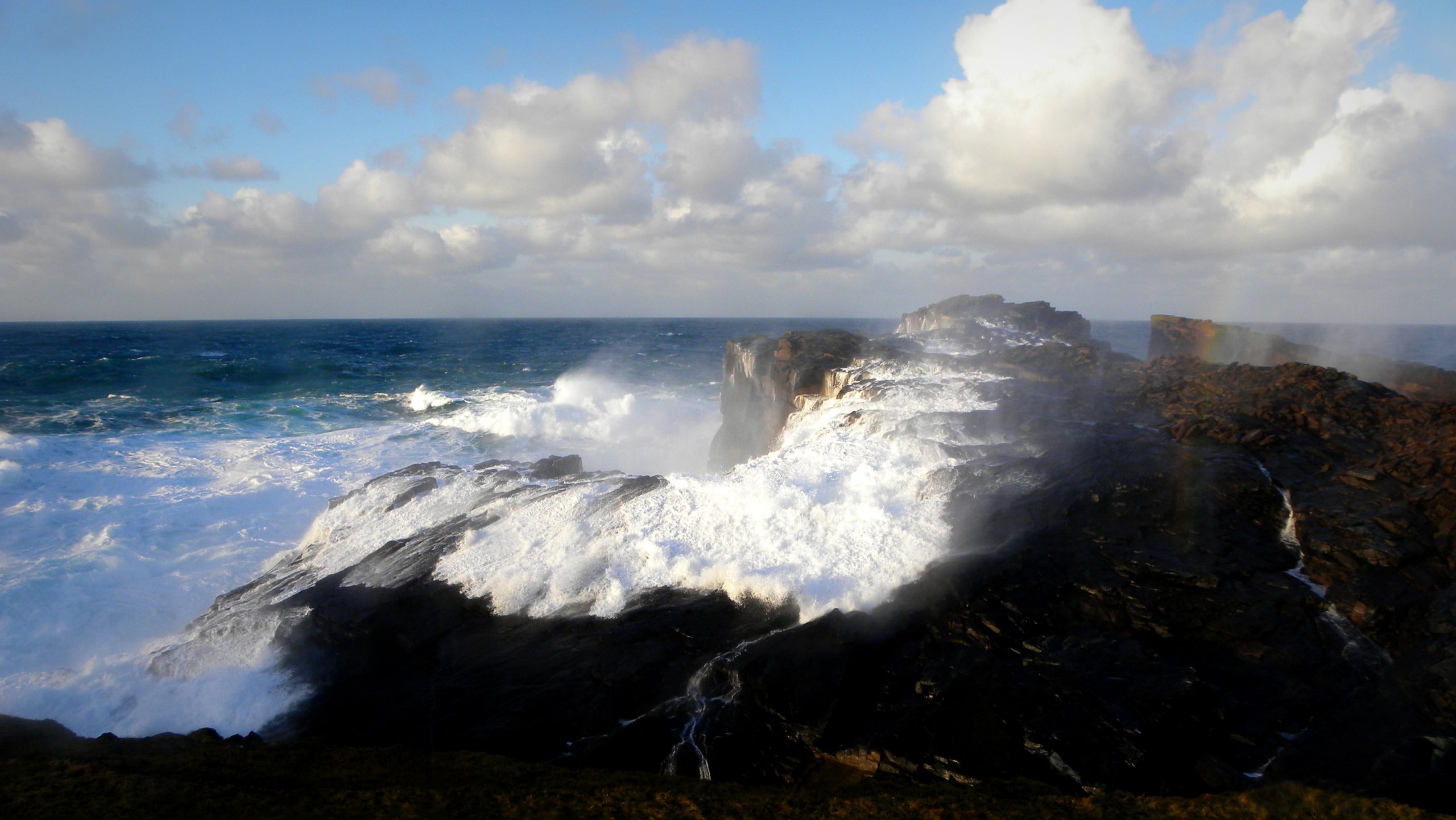
Eshaness (Image credit: Stephen Jennings)
Up North
Finally, head nearly to the northern extreme and arrive at Ronas Hill, Shetland’s largest peak, where you’ll find rare arctic plants and – on a nice summer day – a view of all the islands and everything you’ve just seen. A Special Area of Conservation (so please don’t disturb or remove anything), it’s home to the Neolithic ‘axe factory’, felsite quarries from which most of the beautiful and unique Shetland knives were made. As you reach the peak, you might also be surprised to find a Neolithic chambered cairn, as they’re not often found at the very top of substantial hills in the British Isles.
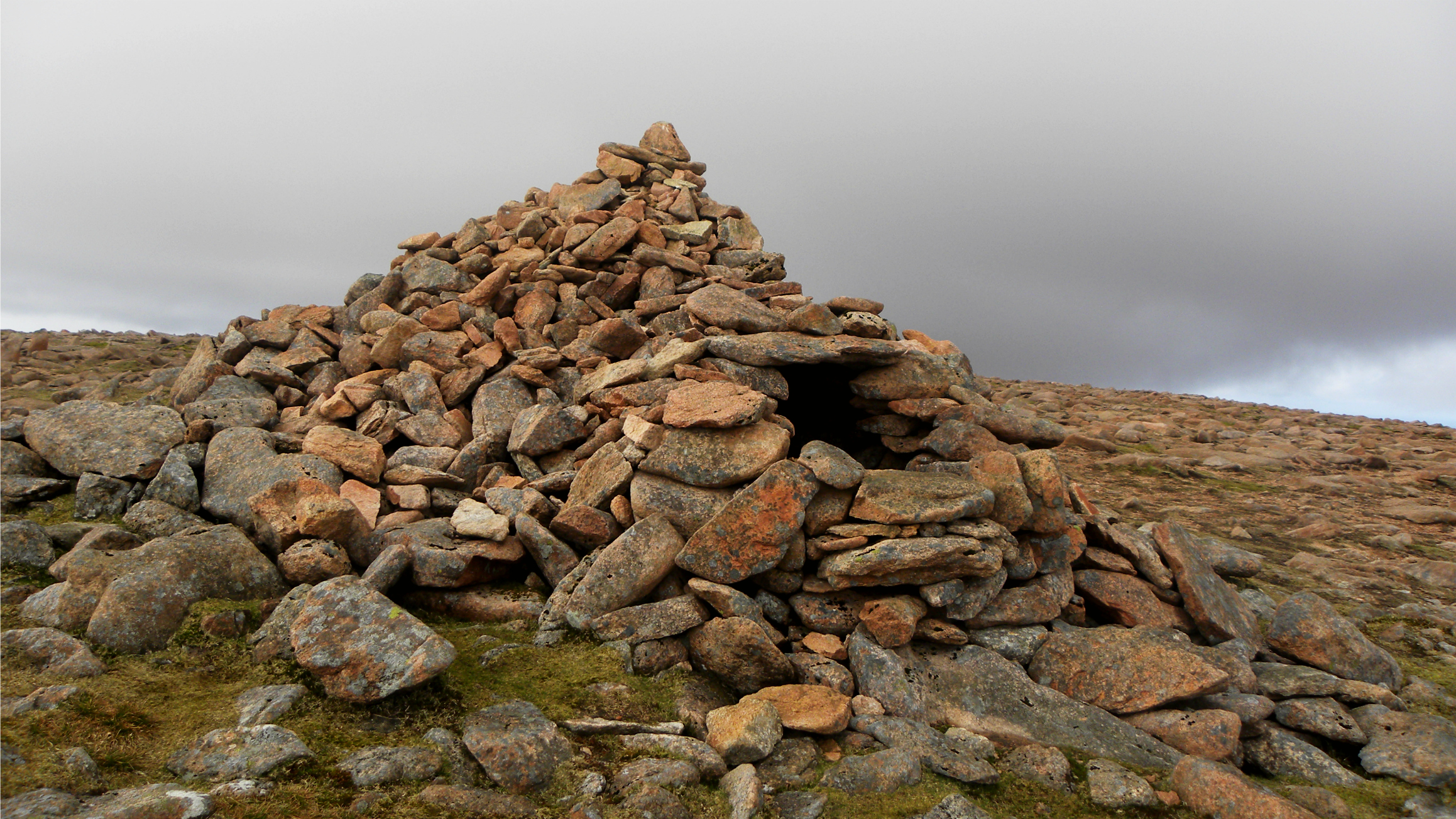
Chambered Cairn – Ronas Hill (Image credit: Stephen Jennings)
If you’d like to keep exploring these islands, visit the Archaeology Shetland website for events, resources and more.
By Stephen Jennings, Chair of Archaeology Shetland
Header Image: St Ninian’s Isle ruins (Image credit: Stephen Jennings)
 |
|