Introducing Scotland’s Crannogs

Scotland is defined by water – flowing through landscapes carved by ice, crashing onto island shores or falling from the sky. This is true now, and has been true for the entirety of time people have been around to experience Scotland. Among the more unique and important aspects to the human history of our waters are artificial island dwellings, or crannogs, which are found throughout the country.
These structures contain some of the best preserved evidence for life in the past in Scotland, and are a very important expression of past peoples’ relationships to water. Crannog studies in Scotland go back to the 19th century, but ongoing research projects have brought to the surface a wealth of new information that is changing the way we view crannogs and the kinds of information about the human past we can gain from them.
What are crannogs?
Crannogs are artificial islands where people lived. Anyone who has driven through Scotland is certain to have seen or passed by examples. They can be spotted in lochs as small rocky islets maybe with a few trees, although most remain completely submerged.
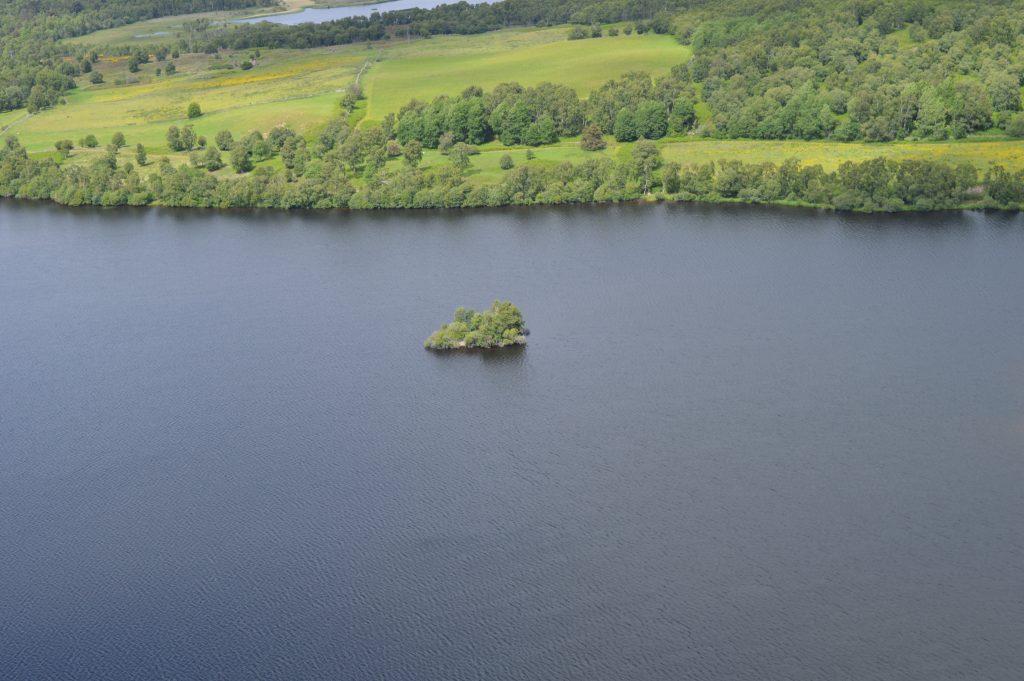
Prison Island, Loch Kinord is visible from the popular walks around the loch at the Muir of Dinnet National Nature Reserve. Work here has indicated the site dates from between the 8th and 13th centuries AD (Image Credit: Michael Stratigos)
In addition to being a peculiar, but important, aspect of past peoples’ relationship to water, crannogs are also important for the fact that the cold, dark water of Scottish lochs preserves organic material unlike anything seen on dry land. This has dramatically improved our understanding of how people used materials that don’t normally survive. For instance, timbers cut down 2,500 years ago and used to build crannogs still show the tool marks from the axes that cut them down. But what were crannogs for? And who built them?; these are tougher questions to answer.
Neolithic Rituals
The earliest known crannogs in Scotland come from the Na h-Eileanan Siar where artificial islands were built in the Scottish Neolithic (4,000–2,500 BC). An exciting new programme of work, the Islands of Stone project, will explore these early crannogs.
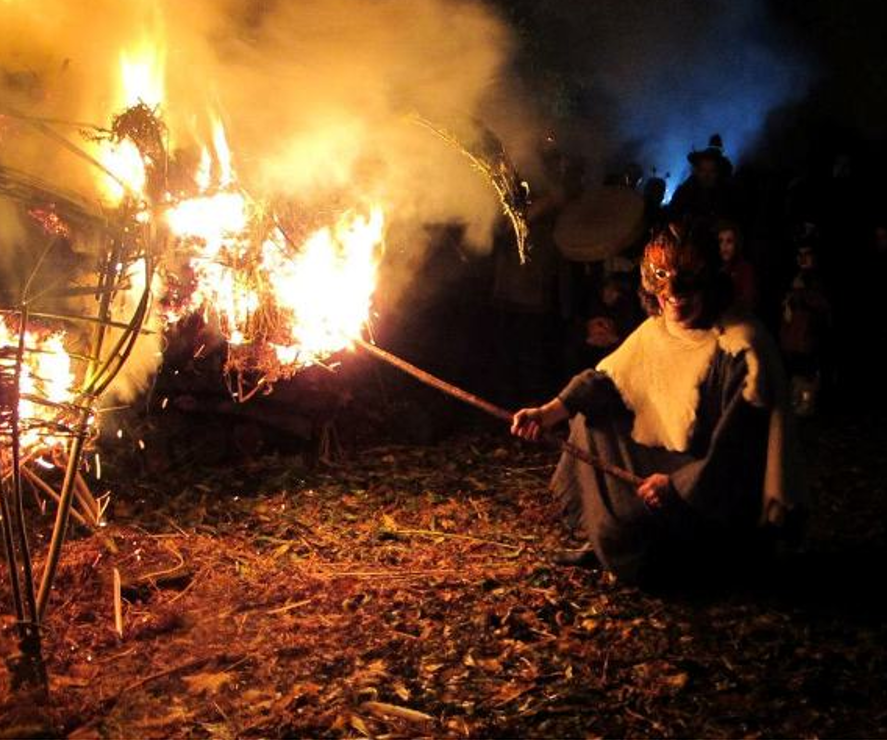
A sacrificial Wicker Ram Burn, part of the Celtic Samhain event at the Scottish Crannog Centre (Image Credit: Scottish Crannog Centre)
Recent investigations have shown that people were placing (or throwing) ceramic vessels into the water around them. This begs the question; were crannogs built specifically for this purpose? However, so far, Neolithic crannogs have not been found outside Na h-Eileanan Siar, and it is unclear how they might relate to periods of crannog use 2,000 years later in the Scottish Iron Age.
Iron Age Farmhouses
Outside of the Na h-Eileanan Siar (the Outer Hebrides), crannogs were first built in the Early Iron Age (800–400 BC) with repeated and continued use throughout the Iron Age (800 BC–AD 400) even until just a few hundred years ago. In the Iron Age, there is clear evidence that people were living on these islets, probably in roundhouse structures, and were engaged in farming crops and keeping flocks of sheep and cattle. Why Iron Age farming communities felt the need to build and live on artificial islands remains stubbornly unclear.
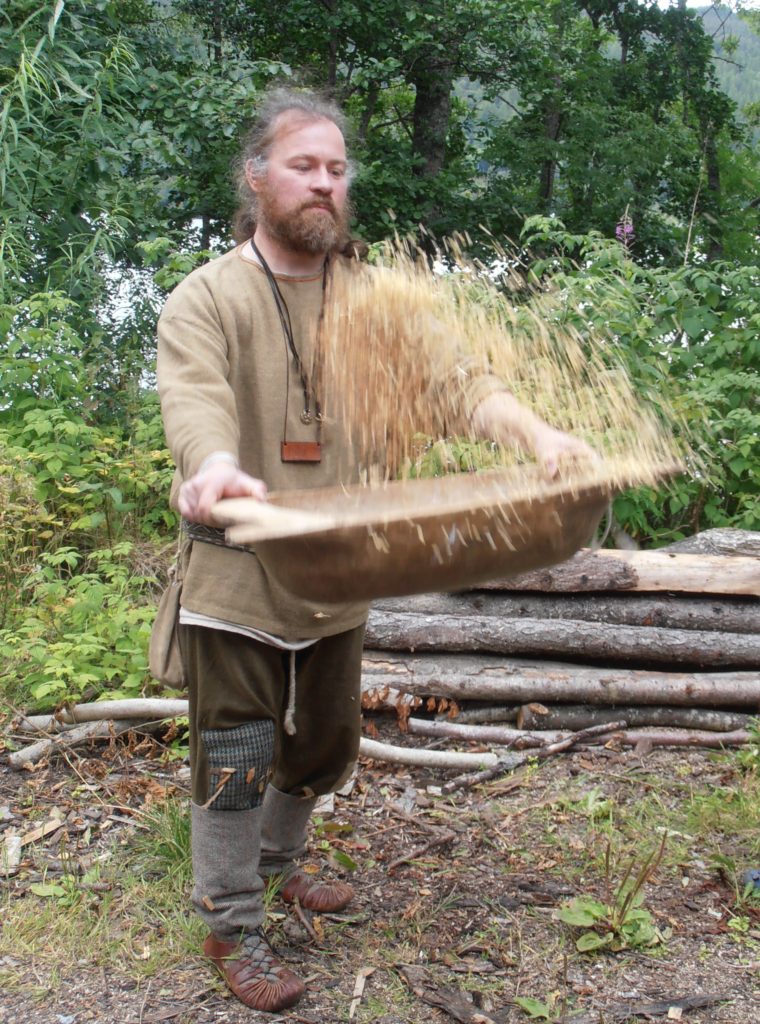
Prehistoric life at Oakbank crannog is recreated at living history events throughout the year (Image Credit: Scottish Crannog Centre)
Some have suggested crannogs were the dwellings of the leaders of their communities and that crannogs were symbols of their power, while others have suggested they were more ordinary farmsteads of extended family groups set out on water for protection. There have been many more ideas besides, but clear evidence for any of these interpretations is mostly lacking. Indeed, any number of interpretations could be true – not every crannog need have been built for the same purpose. Given the difficulty and expense in excavating a substantial area of even one of these sites, let alone a representative number of the over 600 known, how might we tackle the issue of understanding who built crannogs and why in the Iron Age?
The ongoing Living on Water project, funded by Historic Environment Scotland, is addressing this issue through a unique combination of scientific methods to examine the precise timing of the appearance and use of crannogs in the Early Iron Age at Loch Tay in Perthshire. This has thrown light on their Iron Age emergence which seems to be no earlier than 600 BC, with most activity dating to the first decades of the 4th century BC. This precision for a group of crannogs is a major step forward for understanding these sites.
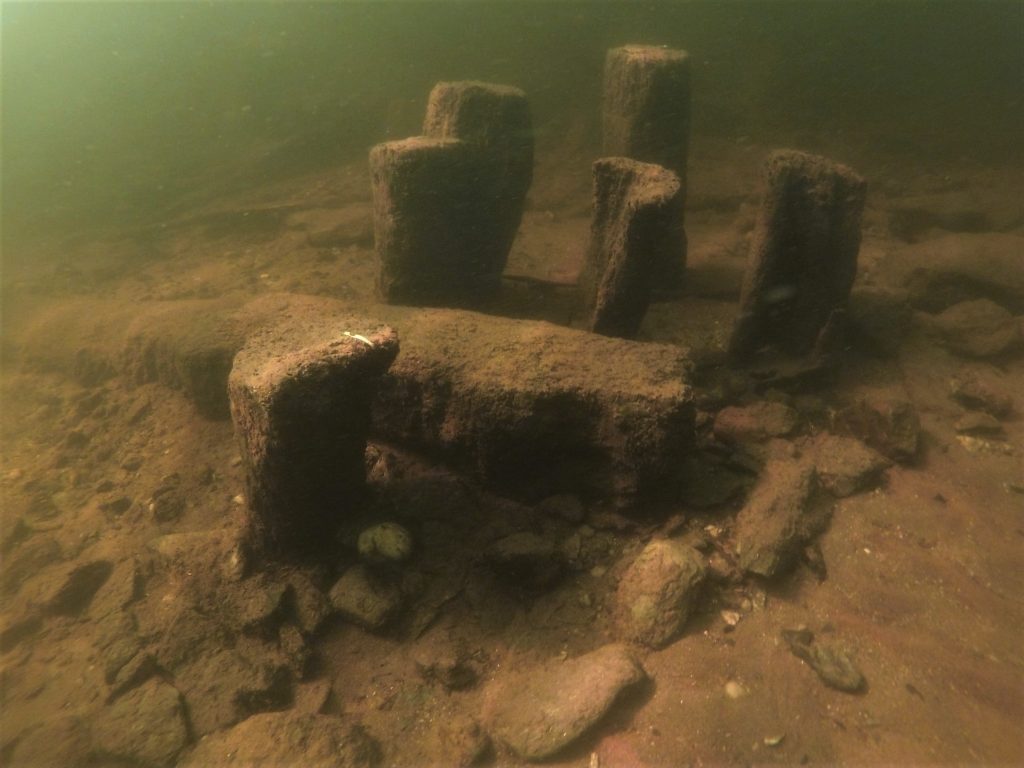
These timbers are located where a walkway met the main crannog structure at Oakbank crannog, Loch Tay. Oakbank dates mostly from the 5th century BC and was excavated by Nick Dixon. Material from Oakbank has been a major part of the work of the Living on Water project (Image Credit: Michael Stratigos)
We also have tantalising glimpses of what life was like on crannogs at this time. For example, new work in south-west Scotland led by AOC Archaeology has shown that flooding may have been a regular occurrence on crannogs, and that the buildings on top of them might have only been used for a few decades at a time.
Further glimpses include new suggestions that music was played on crannogs – excavations at Oakbank Crannog on Loch Tay recovered a wooden whistle and the remains of what might be the bridge of stringed instrument. Further evidence from Oakbank for merry-making includes opium poppy seeds and part of a possible drinking vessel, both perhaps evidence for feasting which is thought to be central to Iron Age societies.
Kings and Crannogs
After the Iron Age, crannogs across Scotland continued to be used for another 1,500 years. There are numerous examples around Scotland of crannogs being used in the early medieval period (c. AD 400–1000), probably as dwellings similar to their Iron Age predecessors. In the later medieval period, we know that royalty, clergy and other well-to-do individuals lived on and visited crannogs.
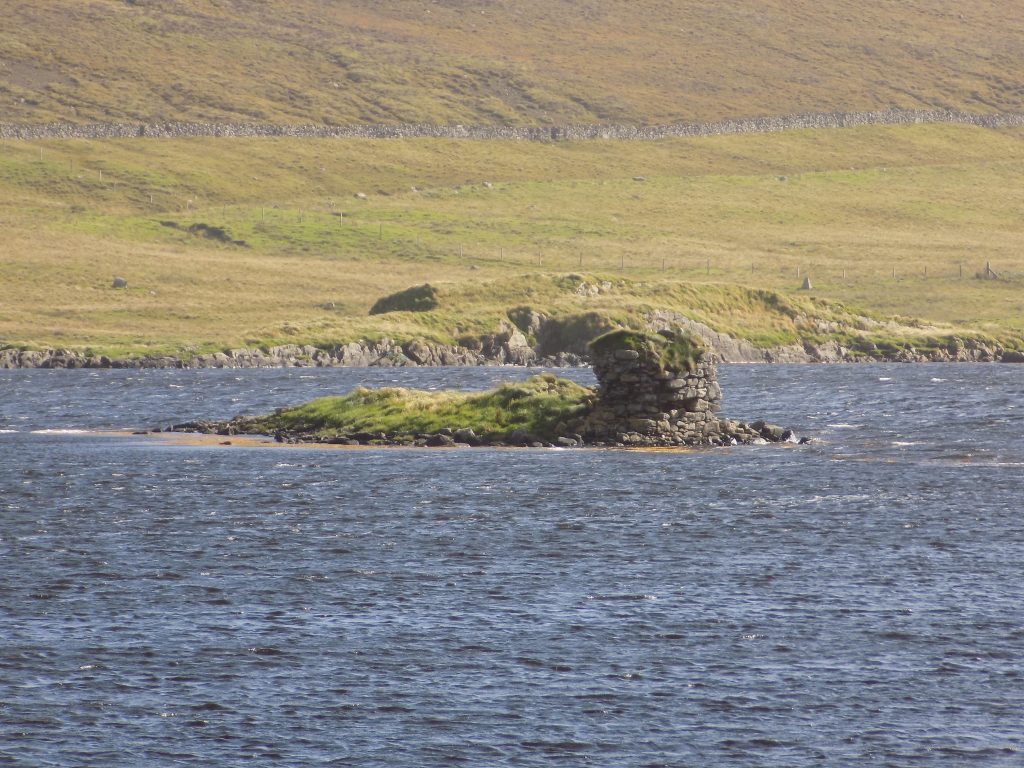
Castle Holm in Shetland where a local legend says an outlaw took refuge in the castle here for years evading capture in the 16th century (Image Credit: Michael Stratigos)
Many later medieval crannogs had stone castles built on top of them, and some became very large (almost the size of football pitches in some cases). These structures can still be seen on several crannogs around the country today. Building and living on artificial islands in Scotland only came to an end in the 17th century when fashions for polite architecture changed, although a few other uses for crannogs have been found since they stopped being residences.
The Future
The future for understanding crannogs could be very bright. Due to the incredible preservation of organic material, crannogs store vast amounts of information on human life in the past, but also exceptional evidence for what the wider environment and climate was like. As we face the challenges of anthropogenic climate change (that is, climate change originating in human activity which so often relate to water; rising seas, drought/floods, etc.), the information stored on crannogs represents a unique opportunity to offer a long-term perspective on our present situation and how people at different times have coped with climate change in the past.
So, the next time you are enjoying Scotland’s waters, keep an eye out for crannogs, and think of the Neolithic rituals which may have taken place there, or the chieftain of an Iron Age tribe that called that their home, or the medieval clergy who sought out isolation on an island in a loch.

The Scottish Crannog Centre (Image Credit: Shutterstock)
Already planning your trip to The Scottish Crannog Centre? Discover more Perthshire archaeology within a stone’s throw of the world-famous reconstruction, here.
Dr Michael Stratigos is an archaeologist and research assistant at the Living on Water project, which investigates the Early Iron Age crannogs of Loch Tay. based at the Scottish Universities Environmental Research Centre in East Kilbride.
Featured Image: Crannog _ Foter
This article was produced in support of Scotland’s Year of Coasts and Waters 2020-21.

