A Portrait of Life and Death in Aberdeen: Excavations at Aberdeen Art Gallery | Archaeological Research in Progress
Excavations around Aberdeen in recent years have provided a wealth of fascinating discoveries and insights into its medieval heritage. [NOTE: Article contains images of human remains]
AOC Archaeology were delighted to work with Aberdeen City Council ahead of redevelopment work at Aberdeen Art Gallery in 2015-2016. Built on the grounds of a Dominican Friary, founded between AD1230 and 1249, the excavation at the gallery has added greatly to our understanding of life in medieval Aberdeen.
A Call to Alms
The Dominicans were a religious order introduced to Scotland by Alexander II (1198-1249) and established houses across the country. The order, which were known as medicants (beggars) aimed to be as self-sufficient as possible, living off the charity (alms) of those they ministered to, and tending to the population of newly expanding urban areas. An important part of their order was the Virgin Mary, who is said to have given St Dominic the Rosary. Excavations have revealed the final resting place of some of Aberdeen’s inhabitants, potentially including people associated with the friary, along with personal ornaments and more.
While living off the charity of their flock, the Dominicans also played an important role in society at the time. They would at times act as procurators (a court representative), manage rents and assist in the burying of the dead. At one point there were 13 friars recorded as living at the friary in Aberdeen.
The friary was torn down in 1560, during the Scottish Reformation and the only evidence of the friary today are one boundary wall and the name of Black Friars Street.
A Grave Discovery
Archaeologists from AOC were not the first to discover the gravesite at the gallery. During the original construction of the Victorian gallery in 1884 some fragments of the original friary along with human remains were discovered. The Victorian builders, who made this discovery, constructed a Charnel House (a vault to store remains) and respectfully reburied the remains in three coffins. It was the Charnel House that was first discovered by archaeologists when work commenced on the redevelopment.
As the excavation continued graves were also discovered, in their original locations, inside the art gallery. A total of 60 graves were recorded, containing male and female remains of various ages.
The excavations recorded 60 individual graves and 4,272 fragments of disarticulated human remains, representing a minimum of 441 individuals. Upon analysis most of the individuals were found to be adult males, but the remains of females and juveniles were also recorded.
A Hard Life
Analysis of the remains has provided valuable insights into the lives of some of the individuals buried at the friary. For example, most were locals who had grown up in the Aberdeen region. Regrettably ill health was clearly a problem with many of the individuals showing signs of dental disease including plaque and dental abscesses along with gum recession.
Dressed to impress
While these were Christian graves, and large numbers of grave goods were not expected, some personal items were recovered. These included belt buckles, needles, and tobacco pipes dated to the 17th and 19th centuries, and a silver coin.
One of the most personal items recovered was a barrel-shaped lignite bead, which we have interpreted to be a rosary bead. It is beautifully decorated with one side being worn down. Rosaries were a way for the devout to keep track of prayer, acting as a memory aid and associated with the Virgin Mary. These are always deeply personal items and often kept on the wearer. Rosaries were also an important aspect of the Dominican order.
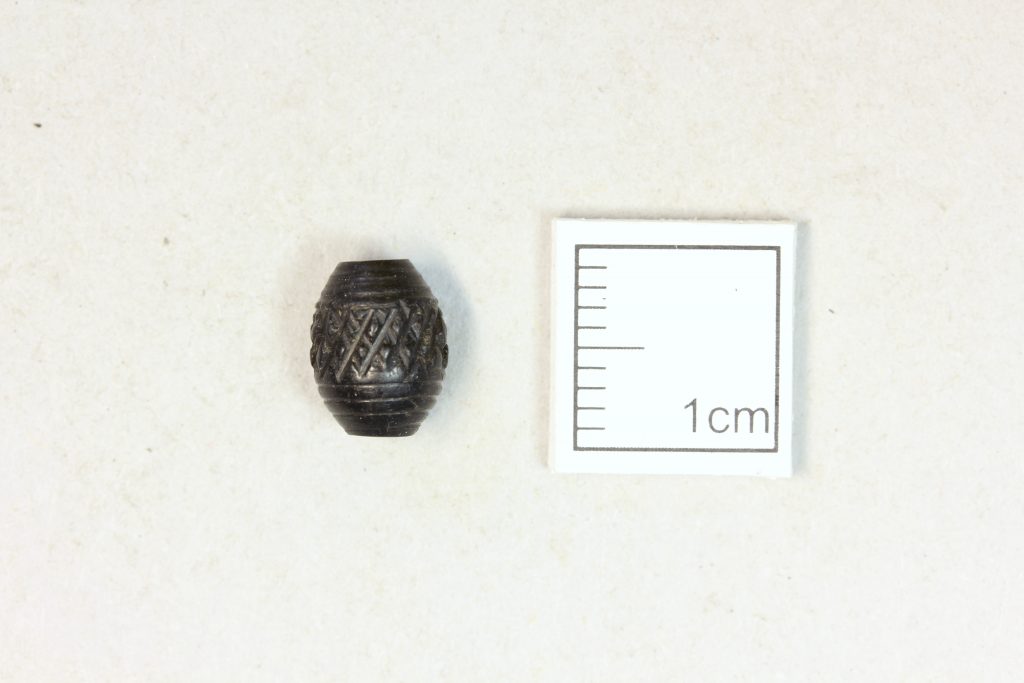
Image Credit: AOC Archaeology Group
Skeleton [125]
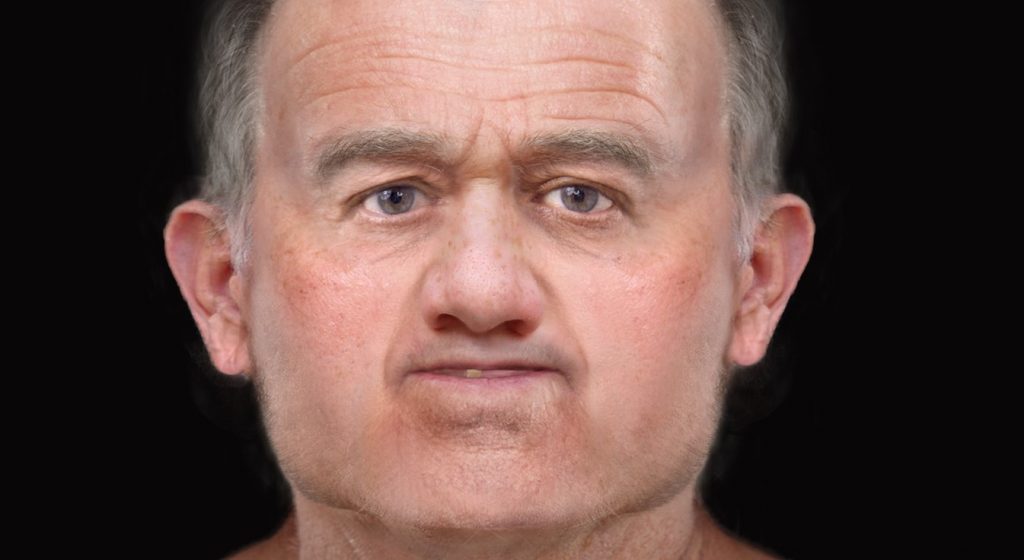
Analysis of the skeletons is allowing us to establish lots of information about them, such as their age, sex, and place of origin. This information can be used to provide us with insights into their lives and to create a connection between the people who lived in medieval Aberdeen and people today. One of the people who has been ‘brought back to life’ is Skeleton 125, who has been examined in detail and undergone facial reconstruction.
Radiocarbon dating has shown us that Skeleton 125 lived sometime between AD1050 and 1450. He was an adult male over the age of 46 years and was between 166cm and 169cm tall, which was shorter than the average male for the later medieval period. He also suffered from extensive dental disease and stiff joints. Isotope analysis has shown us that he mainly lived off a diet of terrestrial animals, but in later life he also ate marine fish. It has also shown that he may have spent his childhood in a different part of Scotland, perhaps the Highlands or Outer Hebrides, while in later years he spent most of his time in the Aberdeen area.
To recreate SK125’s facial appearance, forensic artist Hayley Fisher took detailed photographs and measurements of his skull. Hayley then worked out how the muscles overlay and attached to the skull. Finally, she overlay the skin to give us the person we can see today. While the reconstruction is based on accurate measurements of the skull, hair and eye colour are down to interpretation.
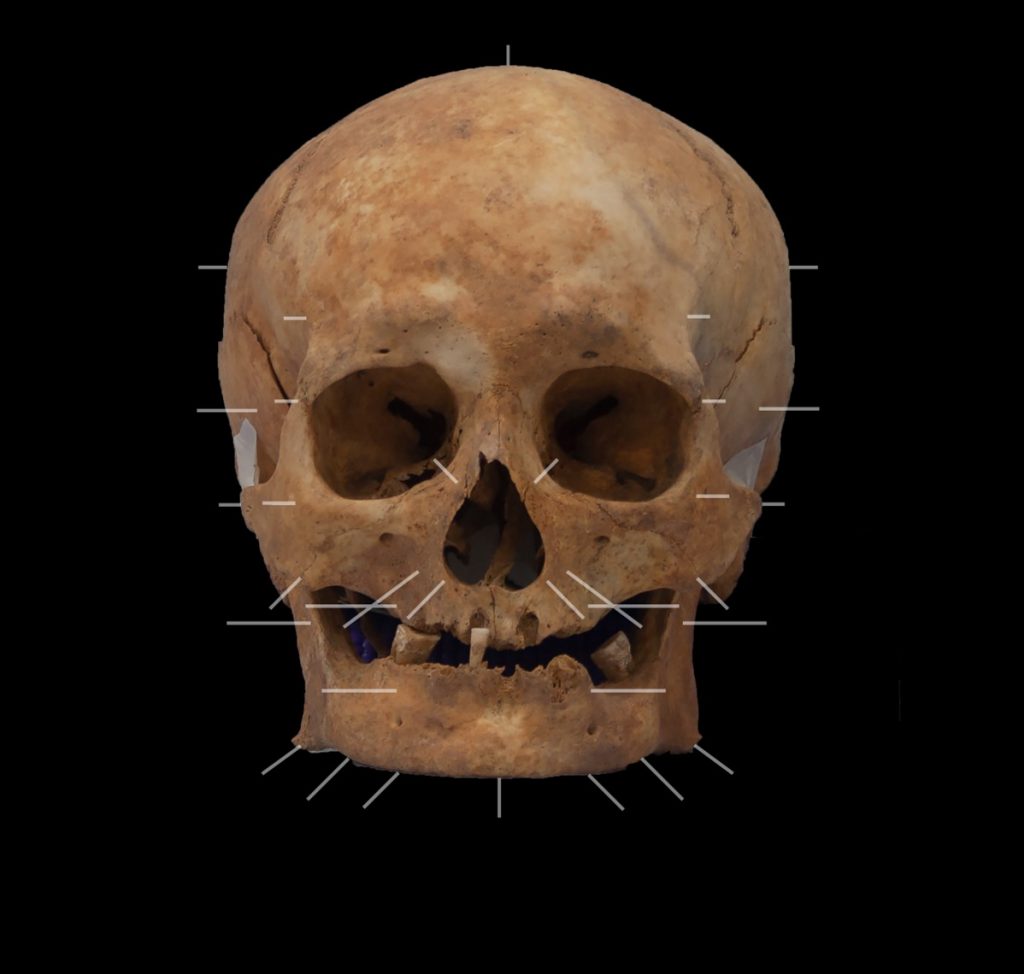
Image Credit: AOC Archaeology Group
If you have enjoyed reading about our excavation, medieval Aberdeen and how we can undertake facial reconstructions to connect with people from the past, then visit our website where you can read about the latest excavations by AOC Archaeology.
By Steven Watt, a Project Officer for AOC Archaeology Group working across the country on a variety of projects.
This article was produced as part of Archaeological Research in Progress 2020, an online version of the annual conference which presents new research findings and best practice in archaeology covering all periods from across Scotland and beyond. It is organised in alternate years by Archaeology Scotland and the Society of Antiquaries of Scotland, with support from Historic Environment Scotland.
