Whae Were the Pechts? (Scots)

The Pechts are best kent fur their byordinar symbol stanes, whit are tae be fund oot-through Scotland. Hooivver, recent research has brocht tae licht michtie new elite settlements and airtit oot Pechtish monasteries – forby, it has e’en gied us dates fur these ferlie stanes. Takkin tent o aw this new data, lat’s hae a glisk at some o the maist common questions speirt anent thon unco interestin fowk.
HOW Dae we cry thaim pechts?
‘Pict’ comes fae the Roman nemme Picti, meanin “pentit people”, which has lang been thocht tae refer tae the prattick o tattooin or body pentin. The term wis first yaised aboot 1,700 year syne and wis brocht in fur tae distinguish atween Roman and no-Roman Britons durin the time o the Roman inbidin o the British Isles. Sinsyne, it has cam tae refer tae a group o fowk whae bidit in whit is noo Scotland.
It is misfortunate that nae muckle scrievit material fae the Pechts has cam doon tae us, sae we maun lippen tae whit ither fowk in Britain and Ireland scrievit anent thaim. Acause o this, we maun tak guid tent whan ettlin at unnerstaunin and interpretin these soorces.
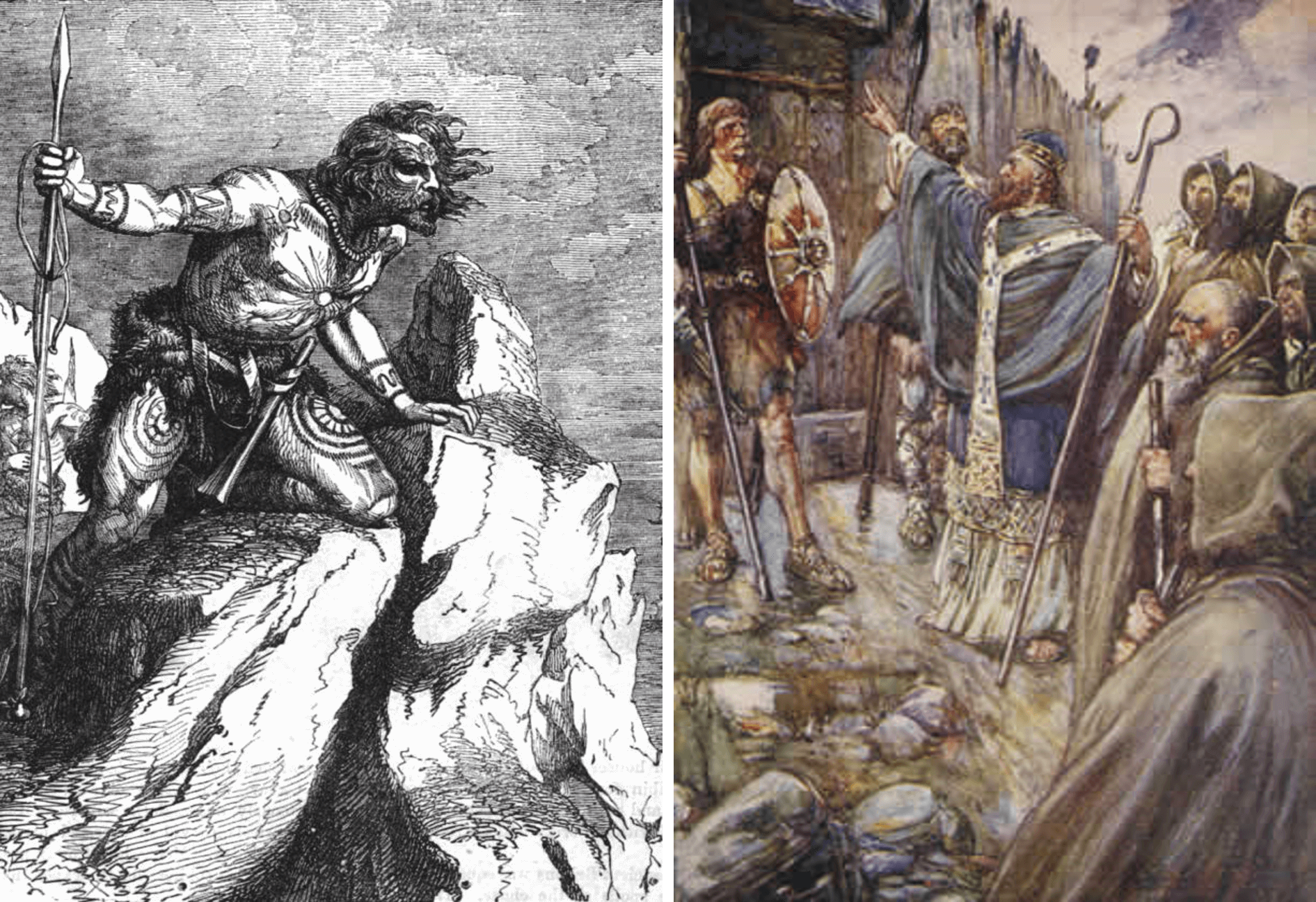
A Pecht, as representit in a 19th-century history buik (via Wikipedia, Public Domain) forby an early 20th-century depiction o Saunt Columba’s miracle at the yett o King Bridei’s fortress, descrievit in Adomnán’s late 7th-century Vita Columbae (via Wikipedia, Public Domain)
Medieval scholars sic as the English monk Bede, and Adomnán, an Abbot o Iona, yaised Picti fur tae descrieve Britons whae bidit north o the River Forth in Scotland, and scrievit doon ither details aboot the laun o the Pechts.
Hooivver, hoo the Pechts thocht o thairsels, and on whit basis thon identity wis taen tent o, is aye a gey fykie issue.
WHAUR DID THE PECHTS COME FAE?
An auncient springheid story, maist likely creatit by the Pechts thairsels, hauds that they vaigit tae Scotland fae auncient Scythia (like as no modern-dey Central Asia and pairts o Eastern Europe) – whaur classical soorces, sic as The Histories scrievit by Herodotus (an auncient Greek makar) in 430 BC, descrieve a pentit fowk bidin there.
Hooivver, this isnae likely tae be true. Thon myth wis like as no an ettle by the Pechts at foondin their origins in the classical warld, which wis pairt o the trend o kinrick-biggin at thon time. Scholars hae threapit that kings and elites socht tae yaise siclike origin myths or ‘ethnic ideology’ fur tae uphaud their pooer and mak mair siccar their claims tae rulership.

The tribes o Scotland as set oot by the Roman geographer Ptolemy (Creative Commons)
It’s mair likely that the Pechts were descendit fae the hamelt peoples o Scotland, sic as the Caledones or Vacomagi, whae bidit in modern-dey northern and eastern Scotland aboot 1,800 year syne.
WHan WERE THE PeChTS IN SCOTLAND?
Historians and archaeologists hae lang debatit aboot hoo lang the Pechts thocht o thairsels as ae fowk wi ae kenable culture, hoo lang they ruled ower ae single kinrick, and whan this kinrick cam tae an end. Hooivver, based on archaeological evidence, the existence o Pechtish symbol stanes, and scrievit soorces, it can be threapit that the fowk kent as Pechts were aroond fur a period o aboot 600 year, fae roughly AD 300 tae AD 900.
Recent analysis by archaeologists at auncient metalwarkin and settlement sites, sic as Dunnicaer and Rhynie in Aiberdeenshire and Jonathan’s Cave at East Wemyss in Fife, has shawn that they were in yaise aboot 1,700 year syne. These sites aw conteen siblike early style Pechtish symbols, the ettle o which seems tae hae been fur tae pit across identities, maist likely personal nemmes. This means that, oot-through northern and eastern Scotland, people were probably cairvin their nemmes yaisin a shared symbol system.
Thon tradition o cairvin bidit on fur centuries, wi Pechtish symbols eikit on tae Christian sculpture, sic as the byordinar Rosemarkie Cross Slab that wis cairvit aboot 1,200 year syne.
The scrievit soorces that hae cam doon tae us cannae tell us exactly whan the Pechtish kinrick ceased tae exist, but a note on the deith o a king, preservit in a document cried The Annals of Ulster (a chronological history o Medieval Ireland fae AD 431 tae AD 1540), micht gie us a clue. This details that the lest chiel tae hae the title rex Pictorum (king o the Pechts) wis cried Áed, and wis assassinatit in AD 878 by memmers o his ain hoosehaud.[1] Siccarly no the best wey tae gang!
Forby, fae aroond AD 860, muckle Viking settlement taen place in the Northern and Western Isles o Scotland forby a wheen areas on the mainlaun. Thon faurer shooglet the foondations o the Pechtish kinrick, and there are myntins o Viking reivin at Pechtish monasteries sic as Portmahomack in Easter Ross, whaur stoatin Pechtish cross slabs and ither sculpture were brak and smashed.
Fae AD 900 onwarts, the Pechtish kinrick and its rulers were replaced by fowk whae didnae regaird thairsels as Pechts, but as fowk o Alba – the precursor tae whit we cry Scotland. The rulers and high-heid-yins o this new kinrick fur the maist pairt traced their lineages back tae Ireland, no Pechtland.
WHaur IN SCOTLAND DID THE Pechts bide?
We ken whaur the Pechts bidit maistly by the symbol stanes they left ahint. Their locations tell us that they haudit gey muckle territory, specifically in northern and eastern Scotland, includin Orkney, Shetland and Na h-Eileanan A-Muigh (the Ooter Hebrides). Fur exemple, ferlie Pechtish sculpture can be fund at Knowe of Burrian in Orkney, whaur we see amang the maist kenable o Pechtish symbols, sic as the mirror and crescent and v-rod.
Day 19. The ‘Burrian Eagle’ Pictish symbol stone. Featuring eagle, mirror and crescent & V-rod symbols. #AdventCalendar #orkney pic.twitter.com/Cfh2Wctw77
— Orkney Museums (@OrkneyMuseums) December 19, 2016
Hooivver, their territories or later kinrick had nae siccar borders or boondaries fae the period AD 300 tae 900. These would flit aboot as the Pechts or their neebours flauntit their military micht or gaed intae alliances wi neebour fowks, sic as the Gaels o Dal Riata in modern-dey Earra-Ghàidheal (Argyll).
WHIT DID THE PECHtS LUIK LIKE?
Early modern depictions o the Pechts sic as A Pictish Warrior Holding a Human Head (A Pechtish Warrior Haudin a Human Heid) and A Pictish Woman (A Pechtish Wumman) creatit by John White aboot 400 year syne, shaw naked warriors decoratit wi tattoos. Hooivver, these pentins dinnae hae muckle basis in fact.
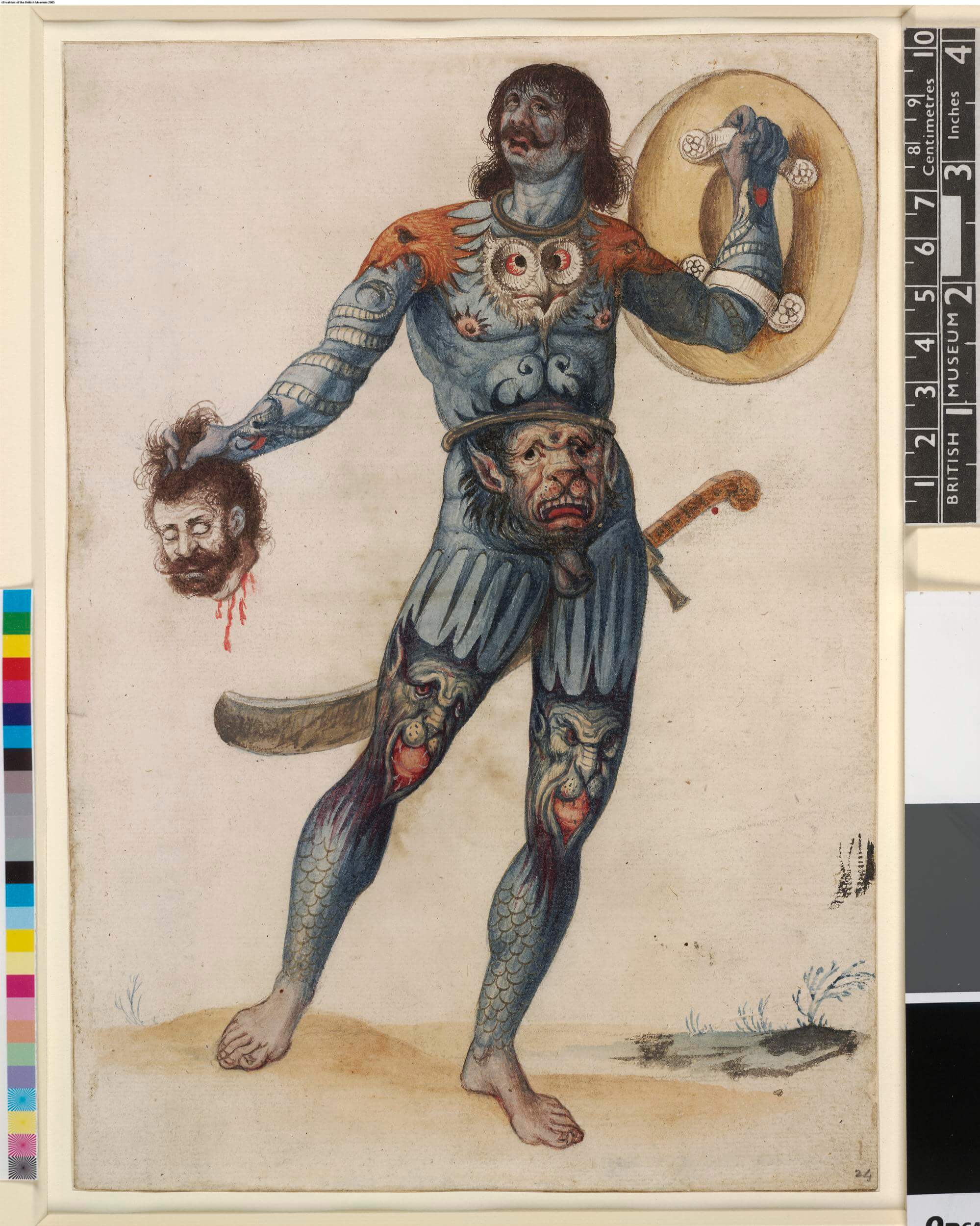
A Pictish warrior holding a human head by John White (© The Trustees of the British Museum, CC BY-NC-SA 4.0)
Fortunately, we hae a wheen braw representations by the Pechts thairsels on some o their ayebidin stane sculptures. Fur exemple, a female figure, wi lang hair and a muckle brooch claspit tae her cloak, is shawn ridin side saddle on the Hilton o Cadboll Cross Slab.
In Shetland, a beardit chiel wi curly hair scartit ontae a piece o slate gies an awmaist cartoonish impression o whit a Pechtish man micht hae luikit like. It’s interestin tae tak tent that keekin glesses and combs, sic as thon seen on the iconic Aberlemno Symbol Stane in Angus, aft kythe as symbols on Pechtish stanes, myntin that they were gey taen up wi their appearance.
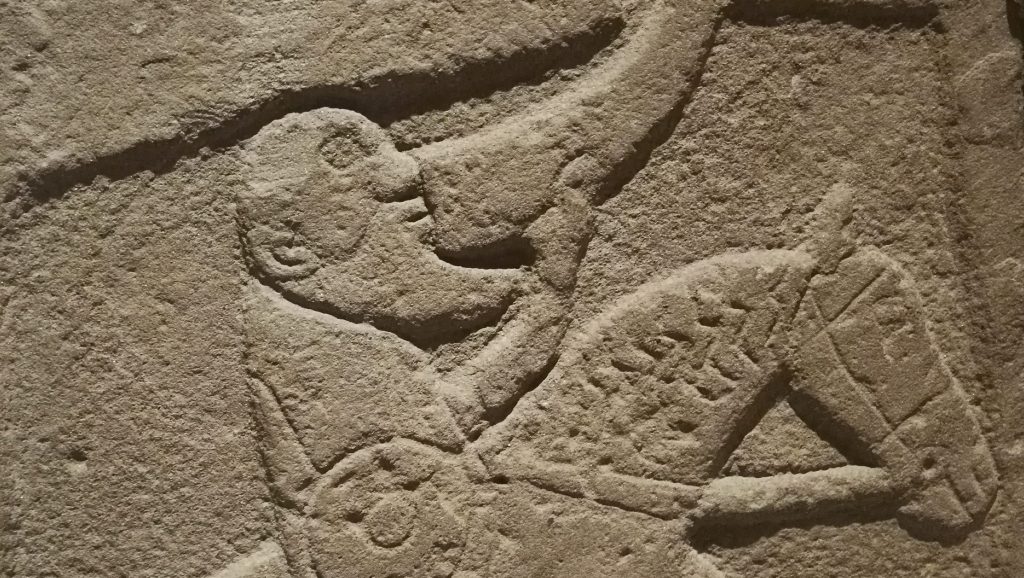
The Bullion Stane fae Invergowrie, Angus (c. AD 900 – AD 950) in the National Museum o Scotland shaws an auld Pechtish man wi a bald heid and pyntit beard (Image: Ain Wark).
An e’en mair stoatin image comes fae a modern rebiggin that wis producit by Dame Sue Black and her team at the University o Dundee. The digital image features a Pechtish man whae wis brutally killed and yirdit in a cave at Rosemarkie in Easter Ross aboot 1,400 year syne.
WHiT IS THE EVIDENCE FuR THE PechTS?
The maist muckle soorce o evidence fur the existence o the Pechts is their byordinar Pechtish symbols. These are a unique reenge o at least 50 designs that hae been cairvit on stanes, cave waws, banes and ferlie silver jewellery. The ettle o these symbols seems tae hae been fur tae pit across identities, maist likely personal nemmes.
Whit’s mair, archaeological excavations at Rhynie no lang syne hae producit evidence fur the makkin o wee animal figurines that luik gey siblike tae some o the beasts cairvit on the Pechtish stanes, sic as the Ardross Wolf.
Forby, the Pechts biggit muckle yirdin moonds, cried ‘square-‘ or ‘roond-‘ barraes. Some o these were excavatit no lang syne at Tarradale in the Hielans, whit conteens at least 18 roond barraes and 8 square barraes (although anely the cropmerks were visible, as the moonds hae been ploued awa at ower time).
Fortunately, some o these barrae cemeteries are aye upstaunin, and ye can gang visit thaim at Garbeg and Whitebridge in Inverness-shire.

Ye can see in the middle o this photae o Garbeg Barraes the heized areas whit are some o the moonds (Image: Daniel MacLean)
Settlement archaeology is anither key bit o evidence fur the existence o the Pechts. The michtie promontory fort (a settlement wi defences locatit abuin a stey brae, aft connectit tae the mainlaun anely by a wee neck o laun) at Burgheid in Moray has complex defences, whit includit a triple rampart cuttin the promontory fae the heidlaun and an upper and lower enclosure inby. Excavations and radiocarbon datin mynt that the fort wis in yaise fae the 6th tae the 10th century AD. Sax symbol stanes o bulls survive fae a faur mair muckle group that wis fund in the 19th century; later Christian sculpture has been fund forby. Some o the stanes can be seen at the visitor centre in the fort.
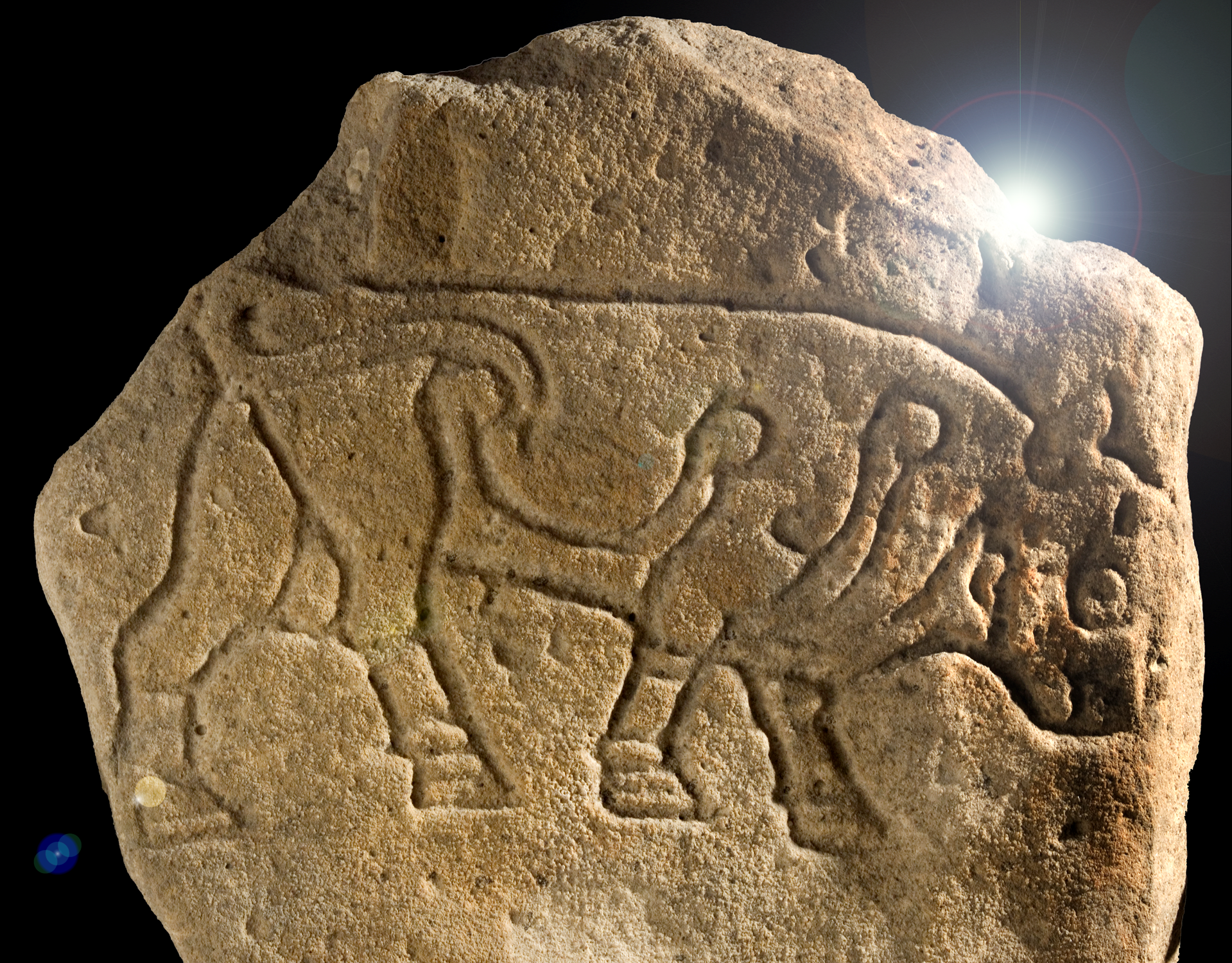
Symbol stane o roch sandstane wi the cairvit figure o a bull, Pechtish, fae Burgheid, Moray (National Museums Scotland)
WHIT WIS THE PECHTISH WEY O LIFE?
The lifestyle o the Pechts wis biggit aroond agriculture, baith the growin o crops and the rearin o beasts, and we ken fae their symbol stanes that beasts were o gey muckle significance tae thaim.
There is mair and mair evidence fae archaeological sites anent whit type o beasts were ett and whit types o crops were growed, wi barley and oats maist common amang the types brocht tae licht. At the Pechtish settlement at Portmahomack in Easter Ross, wee plough-stanes (plough pebbles) were airtit oot. These were fittit intae the edge o a 1,400 year-auld widden plough fur tae bield it fae bein worn doon by the soil. This byordinar discovery shaws that the fowk whae bidit at Portmahomack had ingang tae advancit technology and were involvit in gey intensive agriculture fur the time period at haun. The detail o thon airtin-oot can be fund in the excavation furthsettin (at pages 96-98).
Forby, excavations at Rhynie no lang syne hae gied us rare evidence that some elite Pechts were drinkin Mediterranean wine fae French gless beakers 1,500 year syne. The site, that wis like as no ane o the hooses o a Pechtish king, producit evidence fur the makkin o fantoosh jewellery sic as brooches and pins, possibly in silver, forby. It is tantalisin tae tak tent that bits o the muckle pottery vessels (amphora) that conteened the Mediterranean wine hae been fund, tae, at the michtie Pechtish settlement at Tap O’ Noth, jist tae the North East o the high-status site at Rhynie.
These ferlie finds shaw the trade connections the fowk bidin in Rhynie would hae had, sic as their ability tae import wine and their ingang tae precious metals sic as silver. Forby, they demonstrate the technical kennin o Pechtish craftsfowk.
Forby, we ken fae stane sculptures that the Pechts enjoyed huntin wild beasts sic as deer, and that this wis unnertaen on horseback wi huntin dugs. The ongaun excavations at the Pechtish fort at Burgheid hae producit deer, horse and dug banes in amang the rubbish middens that relate tae the fowk whae bidit in the fort.
COULD I BE RELATit Tae A PeChT?
The lest decade has seen the aye-growin popularity o genetic geneaology (tracin yer auncient ancestry), wi a guid wheen wabsites noo offerin fowk the opportunity tae trace their ‘true’ ancestry back hunners o years athort the globe.
Straichtforrit mathematics would shaw that maist fowk fae modern-dey Scotland could be relatit tae the Pechts, or tae onie o the ither fowks whae bidit in whit is noo Scotland, sic as the Gaels o Dal Riata. Indeed, oniebodie wi European roots can be pairtly linkit tae oniebodie whae lived in Europe aroond 1,000 year syne.

Hooivver, we maun be gey tentie, as the studies ahint this research intae tracin genetic genealogy hae been cairried oot yaisin gey muckle sample sizes fur tae analyse the histories o populations. This means that scientists hae analysed the genetic data on a muckle scale, which isnae fur necessar representative o yer ain individual genetic mak-up.
We should tak tent, forby, that studies intae genetic genealogy micht gie us a gey shooglie idea o whit Pechtish society wis like. There is some evidence that engagin wi genetic research serves tae threap the importance o the male line o descent. Forby, it whiles seems tae uphaud masculine ideas o the Pechtish faimily. Hooivver, ane o the maist weel-kent o aw the Pechtish kings, Nechtan mac Der-Ilei (Nechatan, the son o Der-Ilei) ettlet at makkin siccar his threap tae the Pechtish kingship o Fortriu through his mither’s ancestry (although this wisnae common prattick and seems tae hae taen place anely in byordinar unco circumstances)
PITTIN THEGITHER THE PECHTISH PUZZLE
The Pechts are a gey fascinatin fowk, and recent research has helped tae answer a hantle o the maist common speirins anent thaim. Thanks tae muckle-scale archaeological investigations, sic as the anes at Rhynie, Portmahomack and Burgheid, we ken faur mair aboot their symbol stanes, their wey o life, and whaur they bidit. Hooivver, there’s muckle aye tae be airtit oot. Gin yer wantin tae find oot mair or get involvit wi the sairch, gie the University o Aiberdeen’s Northern Picts Project a wee follae on Twitter and Facebook, or read mair aboot their recent wark here. Forby, gin yer wantin tae hae a luik at thon ferlie symbol stanes wi yer ain een, how no awa and tak yersel tae twa museums in the Hielans: Tarbat Discovery Centre near Tain or Groam House Museum in Fortrose?
BY DANIEL MACLEAN. DANIEL STUDIED CELTIC AND VIKING ARCHAEOLOGY AT THE UNIVERSITY O GLesgae AND IS WaRKIN the noo WI THE NORTHERN PICTS PROJECT helpin oot AT THE EXCAVATIONS O SITES Sic AS RHYNIE AND BURGHEiD, WI A tentie FOCUS ON THE MATERIAL CULTURE airtit oot forby THE COMMUNITY ENGAGEMENT SIDE O THE PROJECT.
OWERSET INTAE SCOTS BY ASHLEY DOUGLAS, Multi-leidit researcher, scriever, and owersetter. FOLLAE HER ON TWITTER @ASHDOUGLASSCOT
Heider Image: The Craw Stane, ane o the Pechtish symbol stanes airtit oot at the high-status pooer centre at Rhynie in Aiberdeenshire durin the 2015 excavations (Croon Copyricht HES)
Tweet
[1] at 878.2
Mair readin
- Portmahomack on Tarbat Ness: Changing Ideologies in North-East Scotland, Sixth to Sixteenth Century AD, available as a free e-buik on the Society o Antiquaries o Scotland wabsite
- The King in the North: The Pictish Realms of Fortriu and Ce – Gordon Noble and Nicholas Evans
- The Art of the Picts: Sculpture and Metalwork in Early Medieval Scotland – George Henderson and Isabel Henderson
- Picts Gaels and Scots: Early Historic Scotland – Sally M. Foster
- From Caledonia to Pictland: Scotland to Ad 795 – James Fraser
- Scotland’s Early Silver – Alice Blackwell, Martin Goldberg and Fraser Hunter
