Top 10 Animals in Scottish Archaeology

Famed not only for its world-class archaeology, Scotland is also known around the globe for its rich and diverse natural history. Today, the country is home to over 90,000 species, with the land, seas and skies supporting a wide range of native mammals, birds, and more.
Bringing Scotland’s natural and archaeological heritage together, take a tour through time with our top picks of animals found in Scottish archaeology.
Pigs Digging up the Past on Ìle (Islay)
In 2015, a group of pigs brought in to clear bracken at Rubha Port an t-Seilich on Ìle (Islay) off the west coast of Scotland accidentally uncovered a deposit of ancient stone tools. The tools unearthed by the pigs dated from the Mesolithic era, but experts called in to investigate the site soon discovered a lower level almost 3,000 years older, long before any human beings were thought to have been in the region.
These artefacts (now in the Museum of Islay Life) include utensils used by hunter-gatherers for cleaning animal skins and were sandwiched between layers of ash from an ancient volcanic eruption in Iceland, which helped to date the finds to around 12,000-year-old. These rare objects pushed the earliest evidence of human activity on the island back by 3,000 years from the Mesolithic period into the Palaeolithic era.
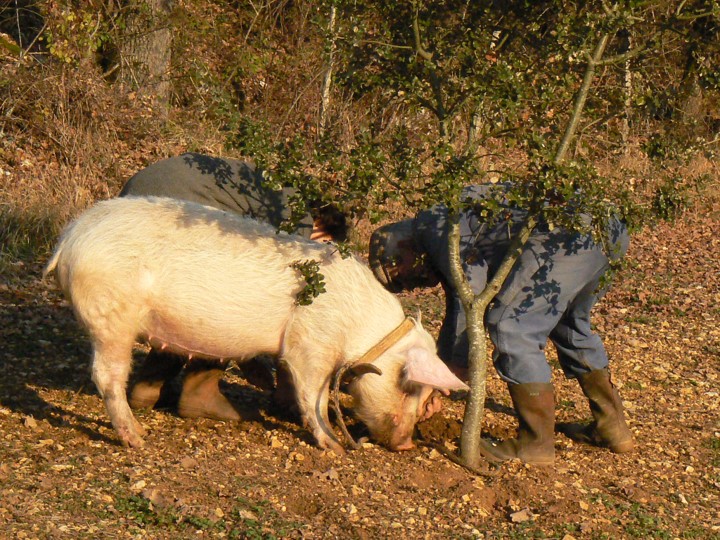
(Robert Vayssié via WikiCommons at https://bit.ly/3BLjFLo, CC BY-SA 3.0)
Rare Red Deer in Argyll
In May 2021, it was announced that the earliest known animal carvings in Scotland had been found in a prehistoric tomb in Kilmartin Glen in Argyll. The “extremely rare discovery” which “rewrites the story of prehistoric rock art in north-west Europe” was found by accident and includes two stags with massive antlers.
Deer would have been very important to local communities 4,000 to 5,000 years ago, who made use of their meat, hides, bones and antlers (which were made into a variety of tools). They’re also the first clear examples of deer carvings from the Neolithic to Early Bronze Age (around 6,100 to 3,500 years ago) in the whole of the UK.
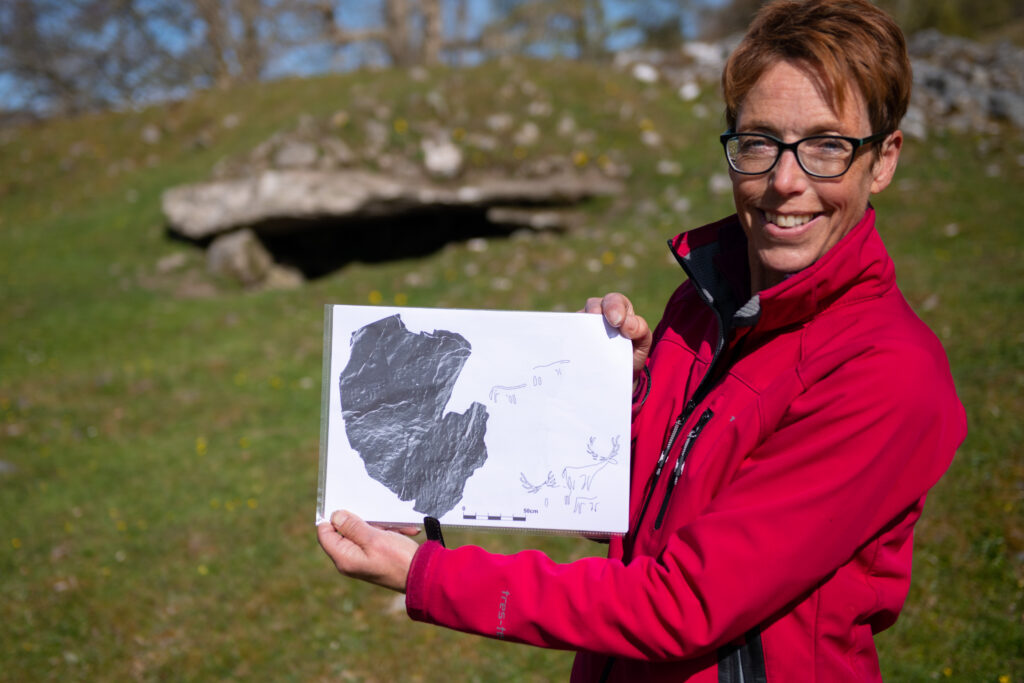
Kilmartin Glen. Dunchraigaig Cairn (© Historic Environment Scotland)
A Domesticated Dog in Orkney
In 2019, this model of a 4,500-year-old pooch was recreated using one of 24 dog skulls found in an Orkney tomb. The skulls were excavated by archaeologists at Cuween Hill in 1901, a delicate passage tomb which has been radiocarbon dated to 2,500 BC and it was originally used for human burial.
The reason for the unique deposit of canine bones around 500 years after the cairn was built is still a mystery but it’s thought that the animal may have been a symbol or totem for the local community. These domesticated dogs would have stood about the size of a large collie and “the world’s first canine forensic reconstruction” shows that they still bore wolf-like characteristics.
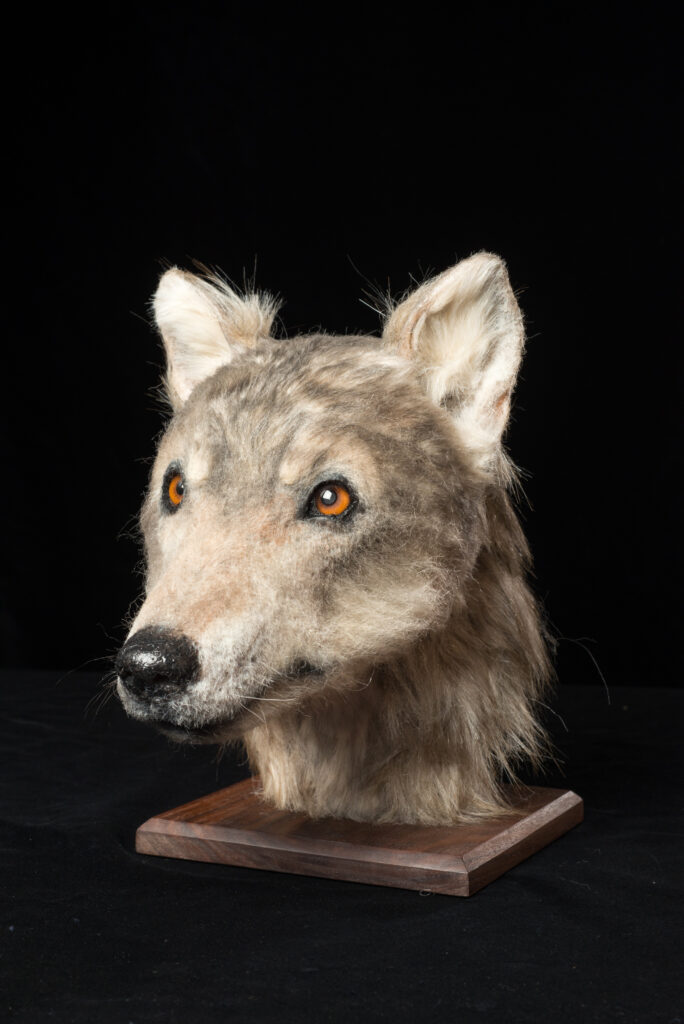
The reconstructed head made using one of the Cuween Hill dog skulls (© Santiago Arribas Pena)
A Hard-Working Horse in the Scottish Borders
In 2020, a metal detectorist was left “shaking with happiness” after finding a 3,000 year-old horse harness as part of a Bronze Age hoard buried in a Peebles field.
The harness is only the third of its kind found in the UK and the first ever to be uncovered in Scotland. Unusually for the country’s acidic soil, leather and wood from the harness survived, which means that experts can map out how the harness was assembled, something “never before seen in Britain”.
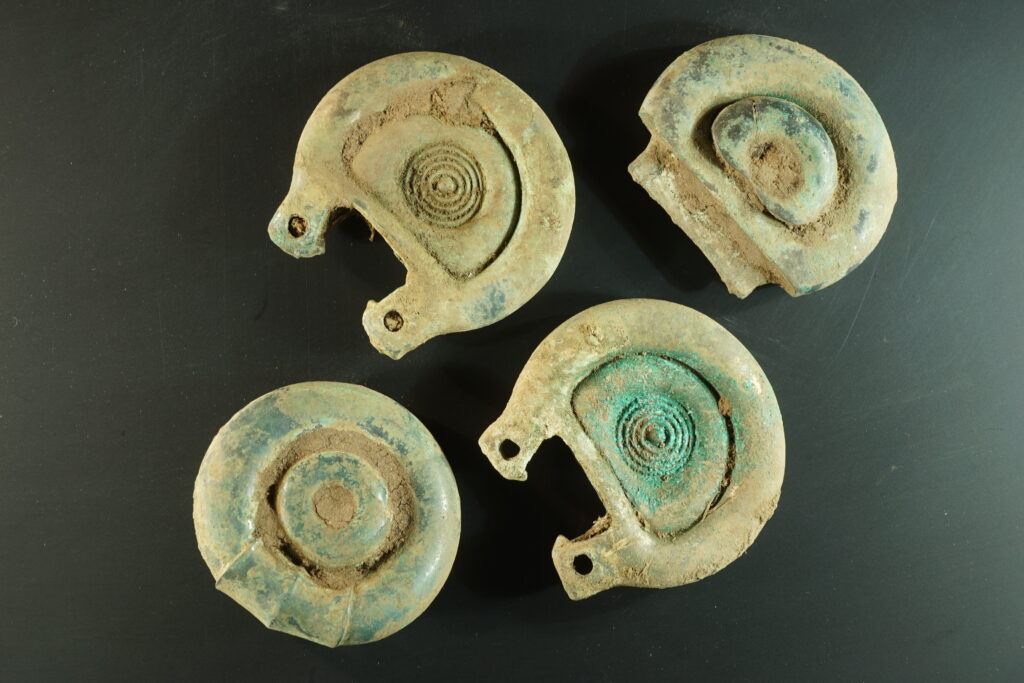
Bronze buckles from the 3,000-year-old horse harness found in the Peebles Hoard (Crown Copyright)
A Curious Wild Cat near Falkirk
2,000 years ago, a wild cat left an impression at Mumrills Roman fort in the Central Belt. We know that this was made by a wild cat because of its size – the perfect pawprint measures 45mm across (10mm larger than an ordinary full-grown tom cat today).
The impression also shows the marks of the animal’s retractile claws, which tells us that the print was made when the cat was in the process of springing.
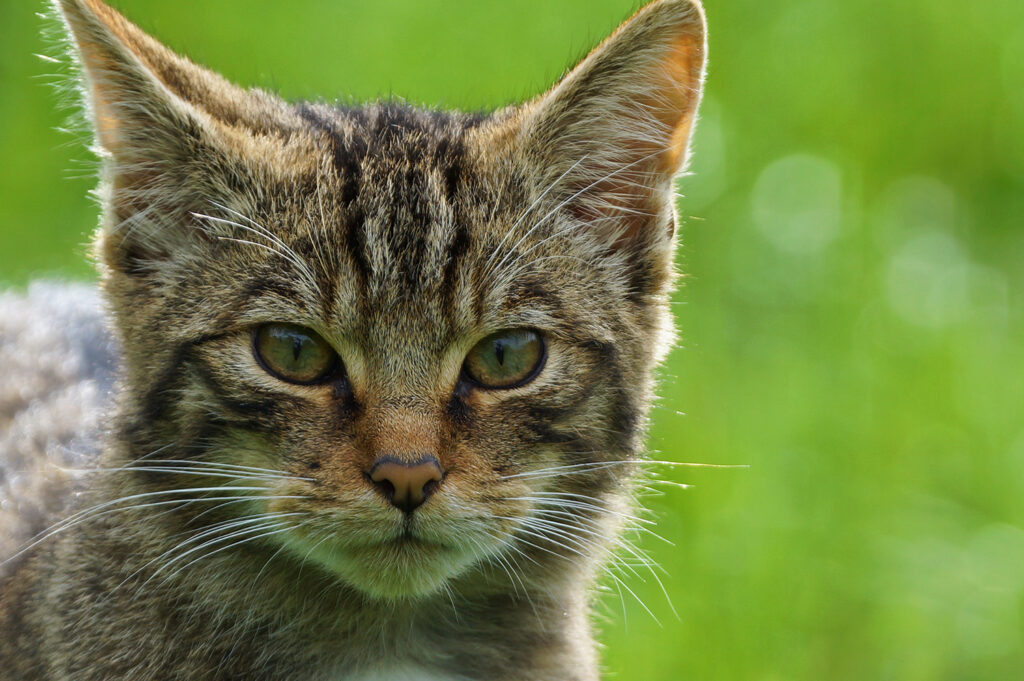
Scottish wildcat kitten (hehaden via Flickr at https://bit.ly/3iyzMTD, CC BY-NC 2.0)
A Fearsome Lioness in Edinburgh
In 1997, a ferryman uncovered a 1,800-year-old sandstone sculpture of a lioness from the mud of the River Almond at Cramond near the city of Edinburgh, which turned out to be one of the most important Roman finds in decades. Cramond is the site of a former Roman fort and you can still see the lines of the walls of barracks and granaries, as well as the excavated remains of one of the best-preserved Roman bath houses in Scotland.
The sculpture was probably created as a memorial for one of the fort’s high-ranking officers. The monument symbolises death and depicts a naked bearded man with their hands tied behind their back (probably representing a local taken captive) being devoured by a lioness.
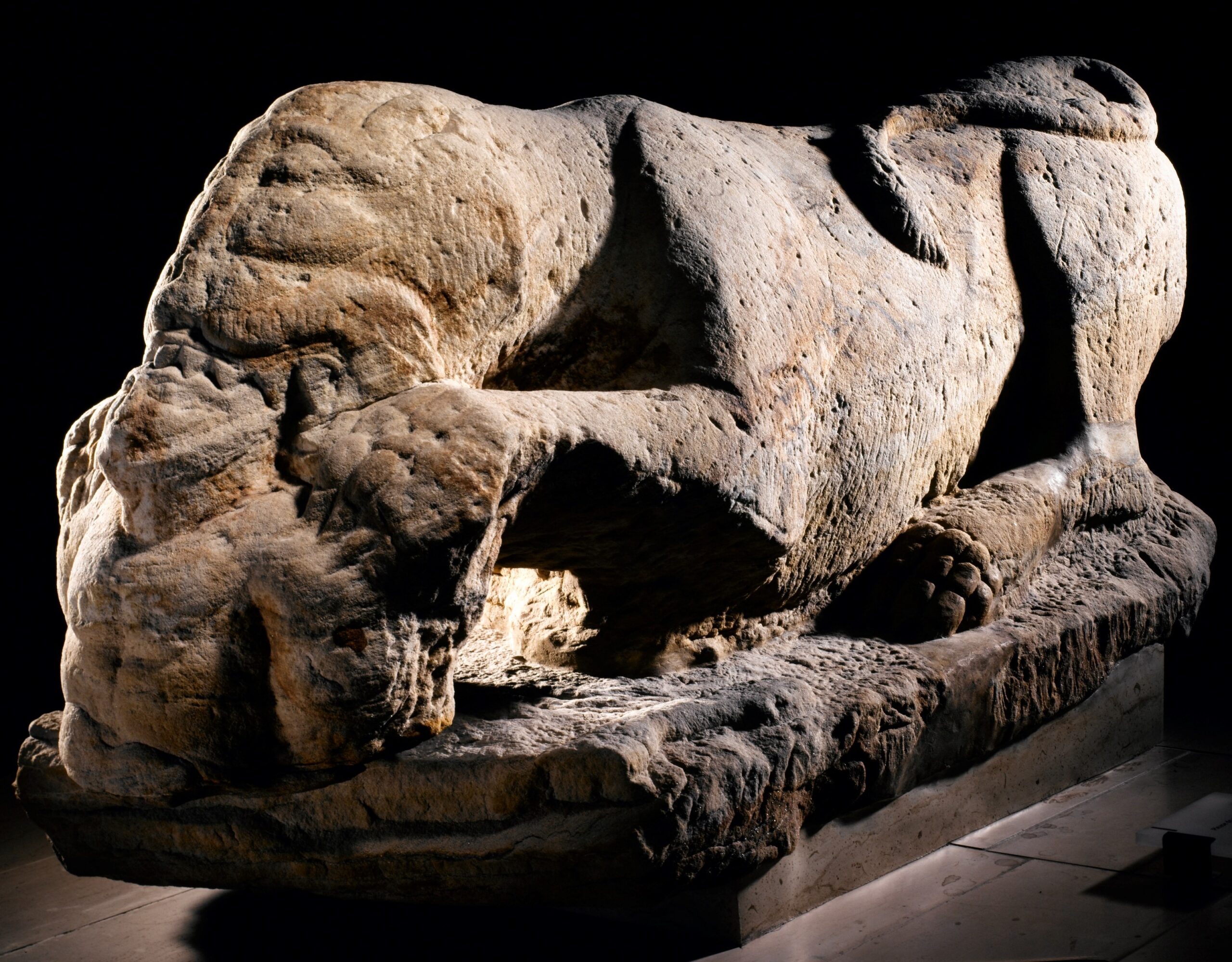
The Crammond Lioness (National Museums Scotland)
The Remains of ‘Scotland’s Dodo’ in East Lothian
In 2014, a 1,500-year-old bone from a giant sea bird was uncovered by archaeologists at North Berwick’s Seabird Centre. Known as ‘Scotland’s dodos’, giant auks were closely related to puffins, were flightless and were last seen in Shetland in 1840. They were hunted to extinction by humans who prized the bird as food, an oil source, for its eggs and as a taxidermy specimen.
The upper arm bone of the bird was found at the entrance to an early building in a dig which also found the remains of butchered seals, fish and seabirds. Radiocarbon dated to between the 5th and 7th centuries AD, the bone of the hunted bird tells us more about what ordinary life was like in East Lothian at this time, as well as the history of wildlife and human habitation in Scotland’s medieval period.
It’s hoped that the discovery will continue to help historians and conservation experts to educate future generations about the precious nature of Scotland’s natural resources.
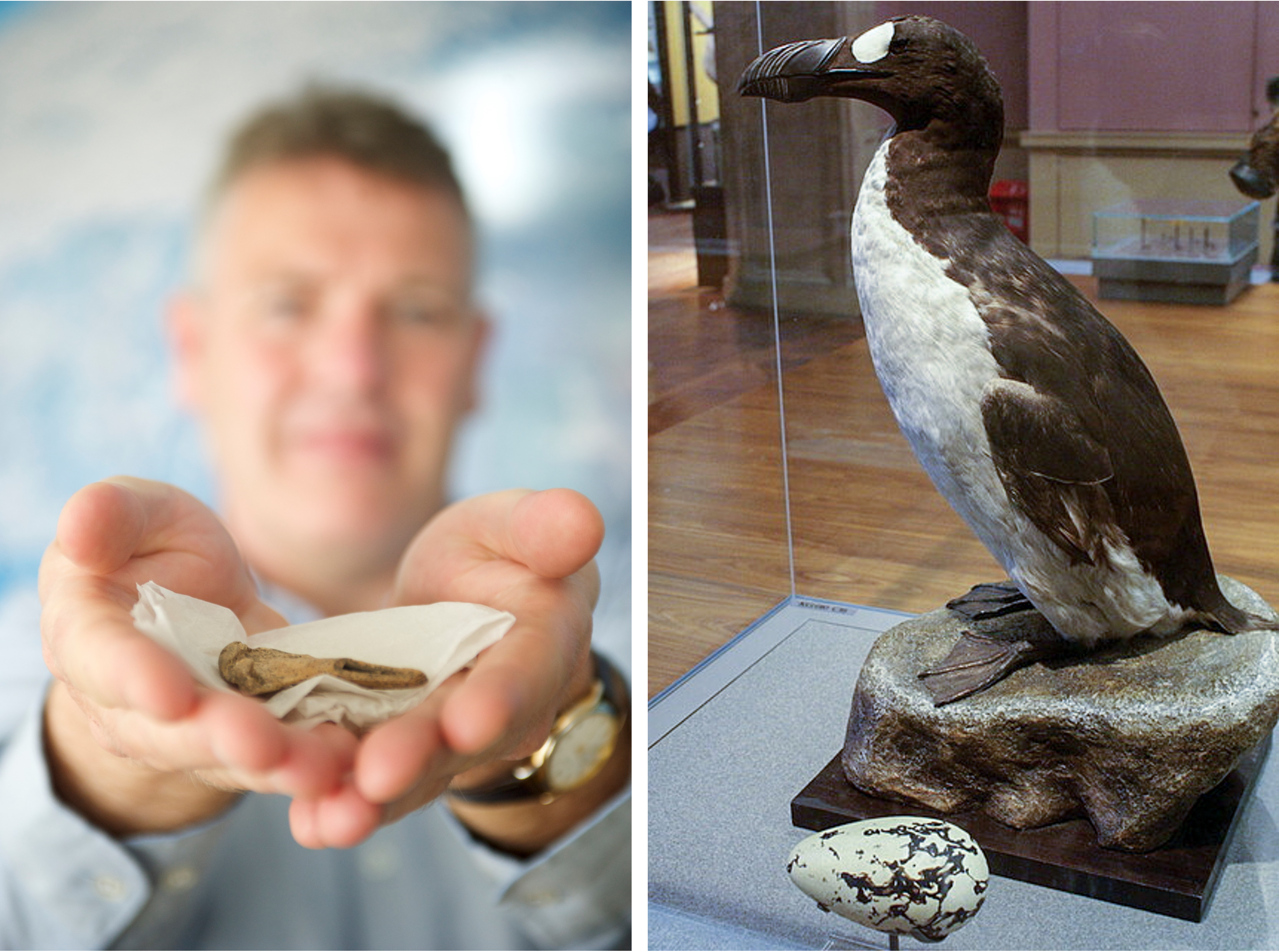
The bone found at the Scottish Seabird Centre and a stuffed Great Auk and replica egg in Kelvingrove Museum, Glasgow (© Rob McDougall and cc-by-sa/2.0, © Mike Pennington, geograph.org.uk/p/1108249)
A Mighty Bull in Moray
These unique 1,400-year-old bull carvings were found at Burghead, once the home of a huge Pictish fortress. It’s thought that they may have been a symbol of the people (known as the Verturiones) who lived there, signifying their might and power.
Sadly, only six examples (out of around 30 originally discovered) remain as the rest were used as infill when building the new harbour during 19th-century improvements.
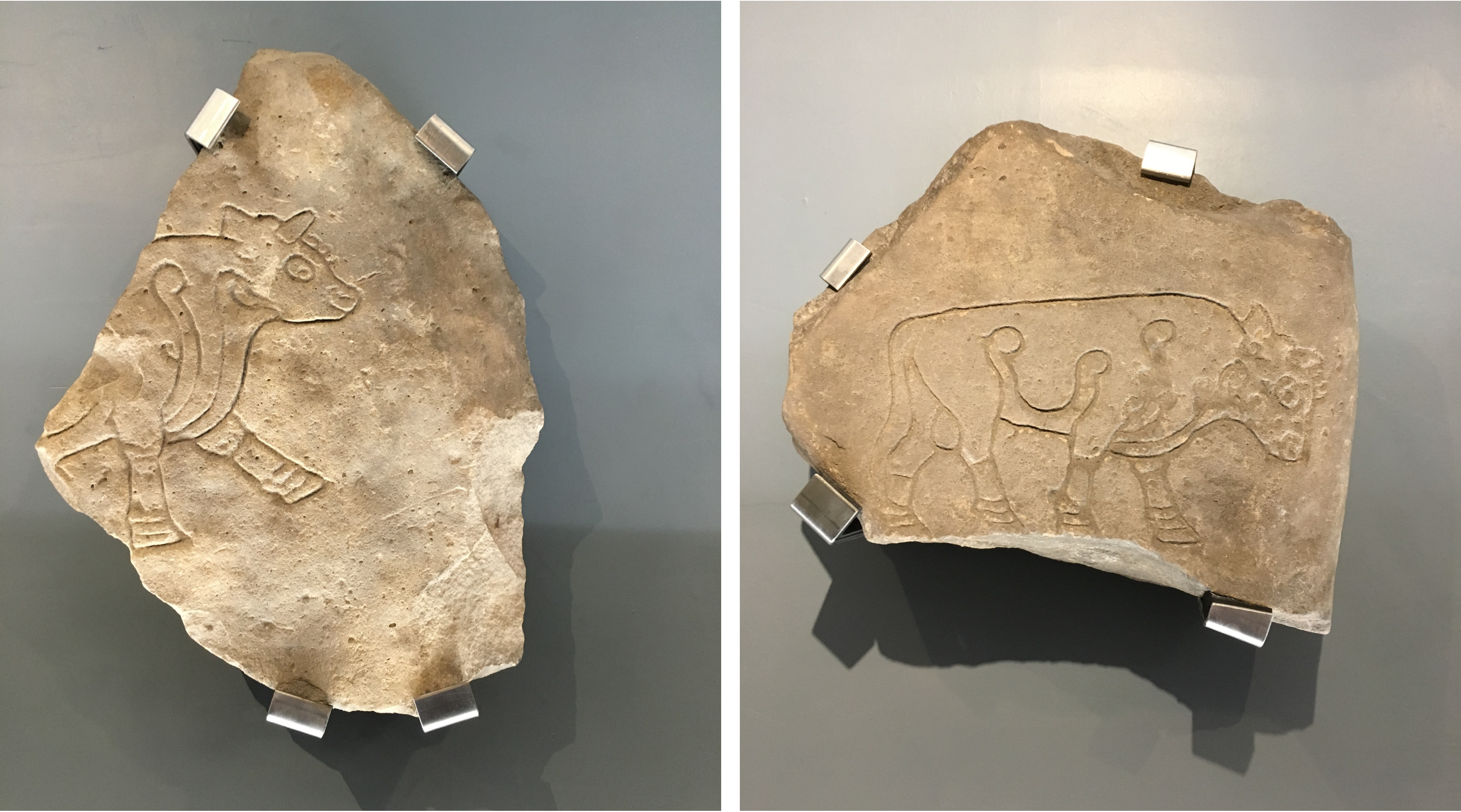
Two of the Burghead Bulls on display at Elgin Museum (JimmyGuano via WikiCommons at https://bit.ly/3eVop78, CC BY-SA 4.0)
A Prophetic Eagle in the Highlands
Clach an Tiompain (‘The Eagle Stone’) is a 1,300-year-old Pictish symbol stone in the Highlands, which features an eagle, shown with its wings folded and detailed feathers, talons and beak. There are 12 known eagle carvings in Scotland and while the exact meaning of this and other Pictish symbols remains unknown, it has been suggested that they were perhaps based on the tattoos the tribes used to decorate their bodies, and may have had symbolic or magical properties.
In the 17th century, a seer reportedly predicted that should Clach an Tiompain fall three times, ships would anchor on the spot. The stone has supposedly fallen twice already and is now set in concrete.

cc-by-sa/2.0 – The Eagle Stone, Strathpeffer by Julian Paren – geograph.org.uk/p/5244130
A Perplexing Porpoise in Shetland
In 1958, a Shetland schoolboy uncovered a 1,250-year-old hoard of Pictish silver, including bowls, weapons and brooches. Made in the second half of the 8th century AD, the St. Ninian’s Isle Hoard is the only Scottish hoard of fine metalwork of this date to survive in its entirety.
The collection was found in a wooden box, buried under a slab marked with a cross and it’s generally assumed that the artefacts were hidden beneath the floor of an earlier chapel, perhaps to hide it from Viking raiders. Curiously, a porpoise jawbone was also found with the hoard – the only artefact not made of silver. Why the bone was included with the hoard remains a mystery, though experts think that it must have had some symbolic meaning which is unclear to us today.
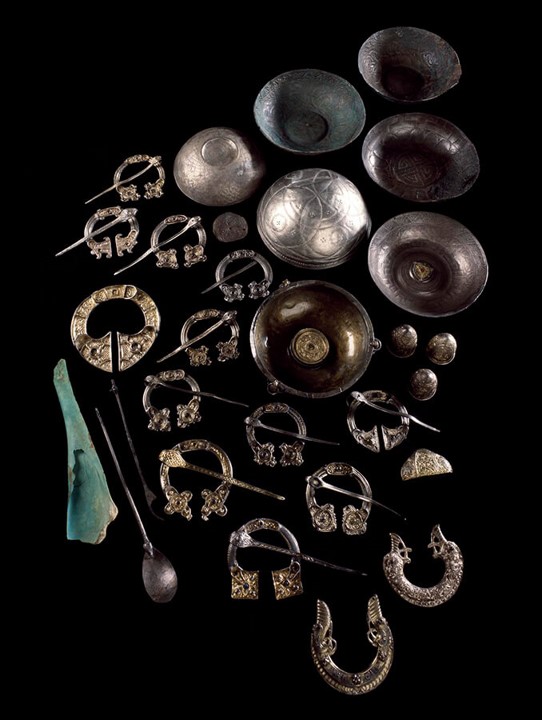
The St Ninian’s Isle Hoard with the porpoise jawbone pictured on the left (National Museums Scotland via WikiCommons at https://bit.ly/2VdlaRo, CC BY-SA 4.0)
Bonus Animal! A Runestone Snake in Edinburgh
Originally from Uppland in Sweden, this 1,000-year-old memorial stone is the only genuine Swedish runestone in Scotland and was donated to the Society of Antiquaries of Scotland (who coordinate Dig It!) in 1787. These impressive monuments honour powerful members of the community and were erected in busy locations so that they would be seen by many people.
On this runestone, an inscription (which reveals that it was commissioned by a son in memory of his father) is carved within the body of a snake encircling a cross. In 2017, the Society led a collaboration of organisations and individuals to move, conserve and interpret the runestone, which you can now visit at its new home outside the University of Edinburgh.
Hungry for more top 10 lists? Dive into our picks of the best archaeological artefacts found in Scottish waters and check out more articles on our Discover page.
Header Image: © Santiago Arribas Pena
