Archaeologists and Volunteers Set Out to Answer Mysteries of Scotland’s Past This Summer
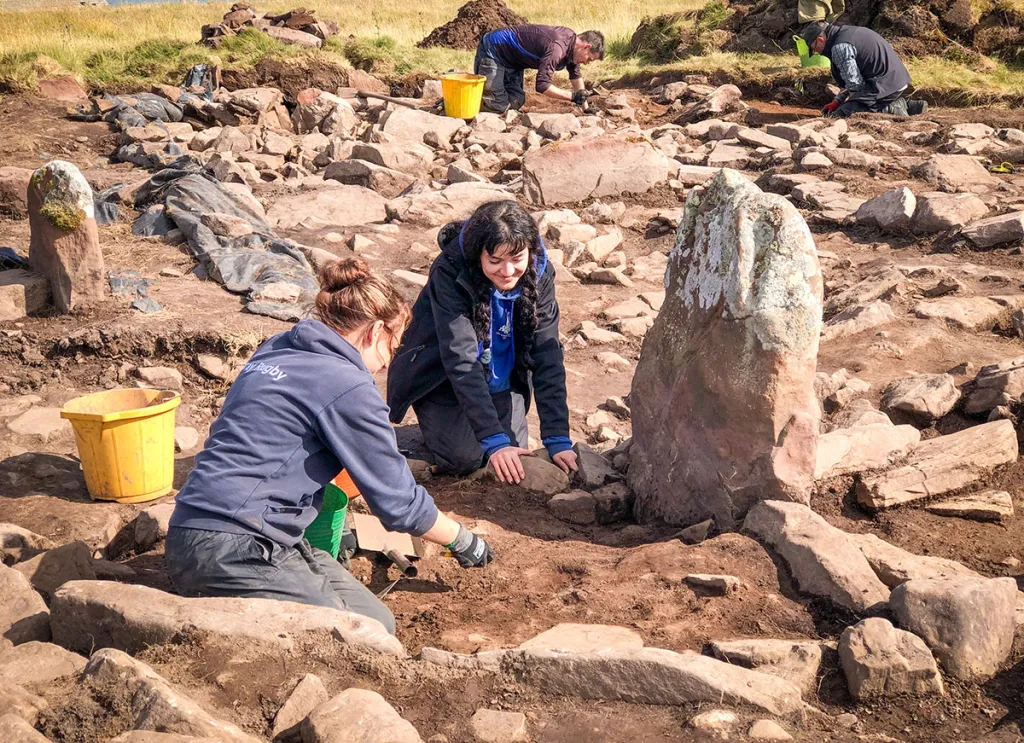
As the summer fieldwork season gets into full swing, the public are invited to visit the sites and participate in investigationswhich could plug gaps in our knowledge of Scottish history.
Over the next few months, organisations across the country are taking advantage of the summer weather and undertaking fieldwork such as survey, recording and excavation. To kick off the season, Dig It! has collated a list of free and low-cost opportunities for the public, which includes site visits, open days and volunteering – no experience required.
Like all archaeological fieldwork, these activities will attempt to answer questions about the past, many of which have been set out in the Scottish Archaeological Research Framework (ScARF). This website is a free research resource which provides an overview of Scotland’s past, including the gaps in our knowledge and questions to guide future investigations.
The evidence uncovered this summer by experts and volunteers will feed into ScARF, updating our current understanding of Scottish archaeology while creating new questions for future researchers.
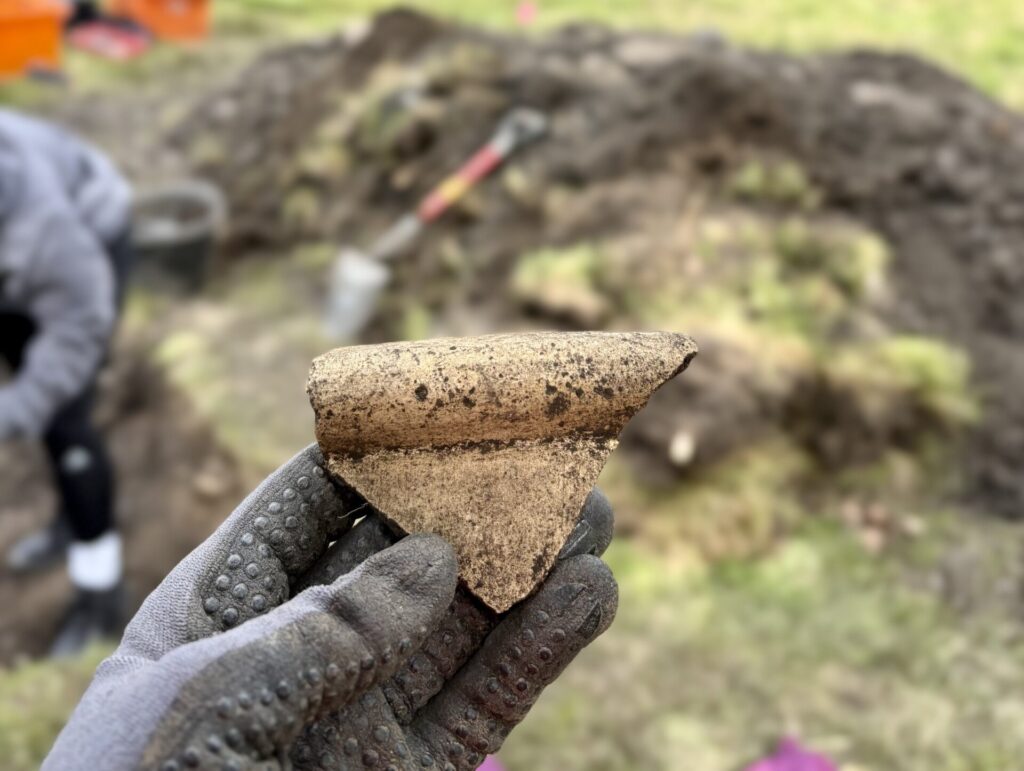
Artefact discovered at Bannockburn House (Credit: Bannockburn House Trust)
At Bannockburn House near Stirling, excavations continue at this 17th-century building with roots stretching back to the medieval period. This year, volunteers have returned to explore the area around a now-lost range of buildings and other features that appear on a map from c.1750. Their work could help answer questions regarding how people in this time period lived in and organised their homes and provide information about their daily use and design. Stirling Field & Archaeological Society and Bannockburn House Trust welcome volunteers (registration essential) from 18 to 26 July.
In Sanday, Orkney, the UHI Archaeology Institute will return to a prehistoric site at Spurness. Originally thought to be a Bronze Age house, 2025 excavations suggested that the remains are actually of an earlier structure from the Neolithic period with what appears to be later (potentially Bronze Age) alterations or additions. There are large gaps in knowledge regarding the Neolithic to Bronze Age transition around 2500 BC, which information on the architecture and dating from Spurness could help address. From 19 July to 14 August, visitors can watch the excavation in progress.
In August, excavations resume at the site of a 1,200-year-old Pictish fortress at Burghead on the Moray coast, coordinated by the University of Aberdeen’s Northern Picts project. With its impressive ramparts and well-preserved house structures and middens, the site is revealing fascinating new details about life in early medieval Scotland – a huge gap in our knowledge. From 11 to 25 August, the public can watch the digging or attend an open day on 22 August to enjoy site tours and a finds showcase.
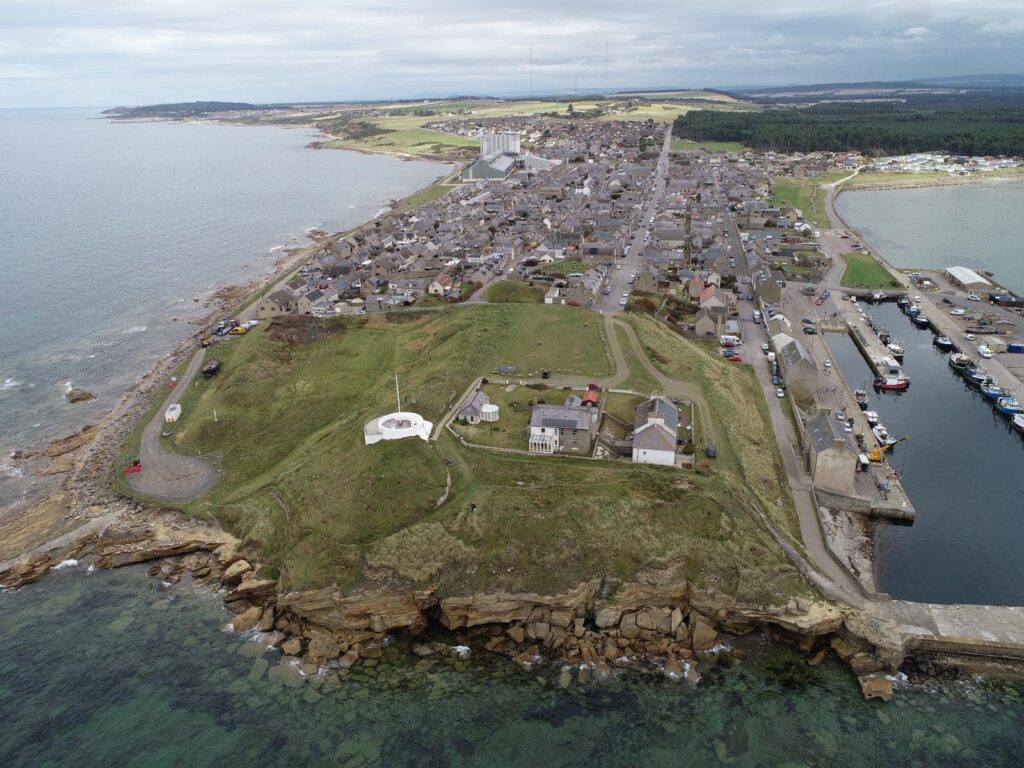
Aerial view of the Burghead Pictish fort site (© University of Aberdeen)
Throughout the summer, digging continues at Cammo Estate in Edinburgh where Edinburgh Archaeological Field Society are excavating the remains of this mansion, its walled garden, servants’ quarters and stable block. Their investigations, which are revealing how the estate and its surroundings developed over the 16th to 20th centuries, will help us to better understand the history of South East Scotland, especially how urban gardens and green spaces changed. The public are welcome to volunteer every Monday or drop by during an open day on 4 July, 8 August or 6 September to dig, join a tour or see the artefacts.
Other summer highlights include the opportunity to help investigate a 2,000-year-old broch in Dunblane and a Roman-Iron Age hillfort in Stirling. In Orkney, the public can also visit the excavations of an Iron Age broch at The Cairns and a multi-period settlement at Skaill, as well as a small exploratory excavation at the Ness of Brodgar Neolithic complex.
Dr Simon Gilmour FSAScot, Director of the Society of Antiquaries of Scotland which co-ordinates Dig It! and ScARF, said:
‘I am thrilled to see the range of public archaeology events on offer this summer, with our Dig It! and ScARF projects actively enhancing understanding and encouraging greater engagement as part of Scotland’s Archaeology Strategy. To build on this work, the Society of Antiquaries of Scotland’s campaign to establish a national heritage hub in Edinburgh will create an invaluable physical space for further sector collaboration and public discovery. Ultimately, this hub will amplify our projects’ ability to deliver on our charitable vision: ensuring that Scotland’s past is for everyone to research, share, enjoy and protect, home and abroad.’
Dr Susan O’Connor, Head of Grants at Historic Environment Scotland, said:
‘This summer, people have the chance to become part of Scotland’s history even if they have never picked up a trowel before. The opportunities highlighted by the Dig It! project are a great way to connect with our past and try to discover the answers to some of the mysteries that archaeologists and historians have pondered for ages. We are delighted to support Dig It! and ScARF with grants funding to help make Scottish archaeology available for everyone to experience and understand.’
Dig It! and ScARF are coordinated by the Society of Antiquaries of Scotland and primarily funded by Historic Environment Scotland.
Information about the fieldwork opportunities and other archaeology events taking place this summer and throughout the year can be found on our events page.
Header Image: Archaeological fieldwork at Spurness in Sanday, Orkney (© Sigurd Towrie)
