Spain and Scotland: The Archaeology of the 1719 Jacobite Rising (English)

The 1719 Rising was the only Jacobite activity conducted with Spanish support. In prior conflicts, it had been the French who assisted the Scots loyal to the exiled Stuart kings.
Culminating in the Jacobite defeat at the battle of Ghleann Seile (Glen Shiel, around 45 miles south west of Inverness), this brief but fervent rising, which attempted to restore James Francis Edward Stuart to the throne, reignited support for the Jacobite cause. It resulted in the destruction of an iconic medieval Scottish castle, Eilean Donnain (Eilean Donan), and a British victory at Ghleann Seile, one of very few battlefields in Scotland where field fortifications survive.
The Attack on Eilean Donnain
Britain had been at war with Spain for a year when in March 1719, a Spanish invasion fleet carrying thousands of soldiers was ravaged by a storm and failed to land on the English coast. However, a smaller force of around 270 Spanish marines, led by the earl of Dùn Fhoithear (Dunnottar Castle), soon set up camp at Eilean Donnain on 11 April. 500 men from the Mackenzie clan joined the earl and they set off for Inverness, leaving a garrison of 40-50 Spanish marines to guard the castle and the Jacobites’ surplus arms and ammunition.
One month later, three Royal Navy warships arrived in Loch Alsh and spent the next two days bombarding the castle. In the evening of 11 May the British troops went ashore and captured the castle with little resistance, taking its guards prisoner and spending the next 48 hours razing the castle to the ground using the Jacobite gunpowder. The ruins sat undisturbed on the island for 200 years before the castle was rebuilt in the twentieth century with the help of a stonemason who is said to have foreseen the appearance of the rebuilt castle in a dream.
The reconstruction more or less follows the plan of the earlier castle as it was in its later phases; the main tower is a rebuild of the 14th-century tower house. The outline of the 13th-century enceinte (the fortified enclosure wall) can still be traced, and there are even remains of the earliest structure on the island; an early medieval vitrified fort wall (where rocks are fused together under intense heat to form a strong defensive structure) and the remains of a shell-heap.
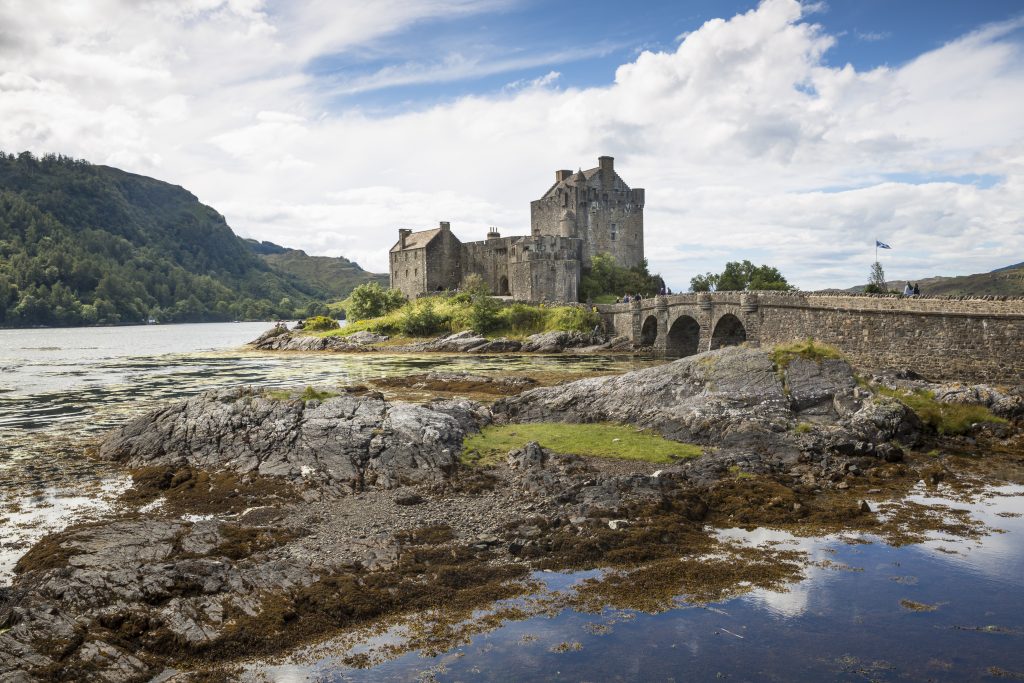
Eilean Donan Castle on Loch Duich at Dornie (© VisitScotland / Kenny Lam)
Blàr Ghleann Seile
Meanwhile, the earl and his men had learnt that government troops had left Inverness to confront them, and so the Jacobites, including the famous Rob Roy MacGregor, established a defensive position on a natural bottleneck through the pass at Ghleann Seile. The battle began late in the afternoon of 10 June, when the government forces advanced on the Jacobite defences.
The British used Coehorn mortars (lightweight bore guns of Dutch design) to bombard the Jacobite position. After three hours of resistance, the Jacobites were eventually forced to retreat. The Spanish marines later surrendered and were transported to Edinburgh as prisoners.
Ghleann Seile was the sole battle fought during the 1719 Jacobite Rising and thankfully, it resulted in a relatively small number of losses on both sides (though it is thought that more Highlanders were killed than government men). The Spanish contribution to the battle is remembered by the name of the overlooking mountain, Sgurr nan Spainnteach (Peak of the Spaniards).

Archaeological Remains
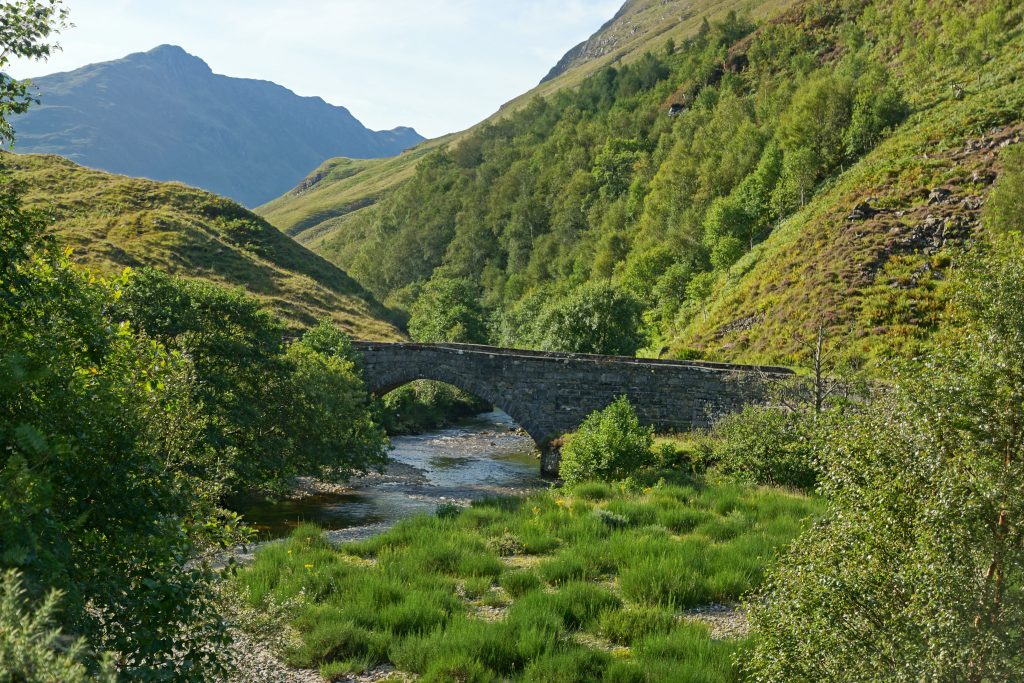
Remains of the Spanish and Jacobite fortifications can still be found over the hillsides at Ghleann Seile. They range from a series of banks and ditches to rough stone barricades which survive on the northern slopes of the glen. You can still visit the Glen and see the remains for yourself.
A topographic survey carried out in 1997 revealed a variety of stone breastworks, cairns and structural features within the glen which may relate to the battle and graves constructed in the aftermath. It is thought that a sheep or goat pen, which may have been in existence at the time of the battle, was utilised as a defence to guard the Jacobite baggage.
In 2015 and 2018, the National Trust for Scotland carried out excavations to uncover more about the battle. Using a GPS survey kit, they were able to locate the remains of the battlefield to within a centimetre. In June 2019, the team discovered the remnants of a musket ball and mortar shell, the first actual artefacts to be discovered from the battle.