Historic Hotspots on Ìle (Islay)
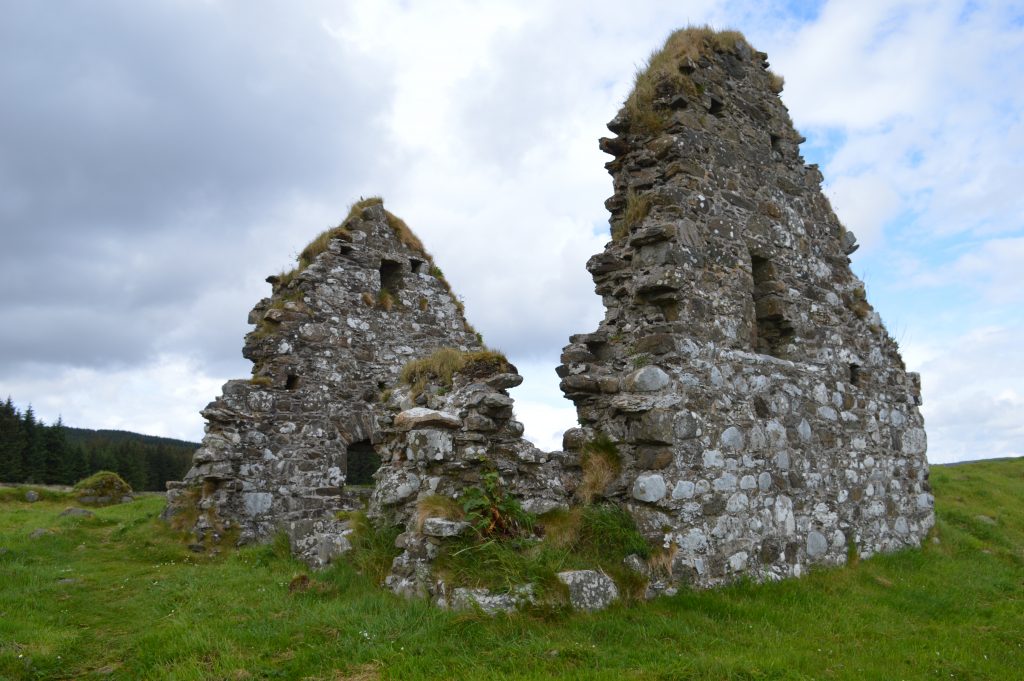 Ìle (Islay)" class="fimg" />
Thinking of heading west? Take a look at these three archaeological hotspots in Ìle featuring whisky, walking, and even a castle thrown in for good measure.
1. Three distilleries pathway
The Three Distilleries Pathway runs for 3 miles between Port Ìlein (Port Ellen) and An Àird Bheag (Ardbeg), passing the distilleries of Laphroaig, Lagavulin and Ardbeg. The path is fully accessible for walkers, cyclists, pushchairs and wheelchairs.
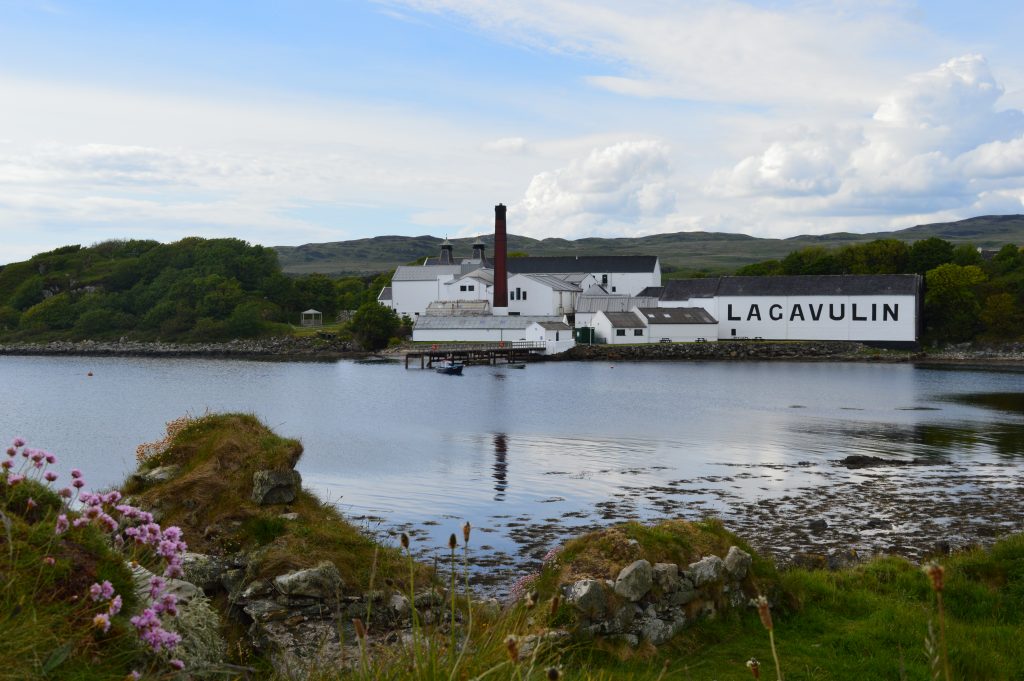
Lagavulin Bay on the Three Distilleries Pathway.
Like many Scottish distilleries, the origins of these big players in the Scotch whisky market lie in illicit distilling, before changes in the law in 1816 and 1823 allowed the commercial development of whisky production. Prior to 1816 the Excise tax on whisky prompted illegal stills to pop up all over Ìle with little threat of visits from excisemen.
On display in Lagavulin distillery is an illicit pot still believed to have been used in the region at this time. In Lagavulin Bay you can also find another piece of Ìle history much older than it’s whisky-producing neighbour.
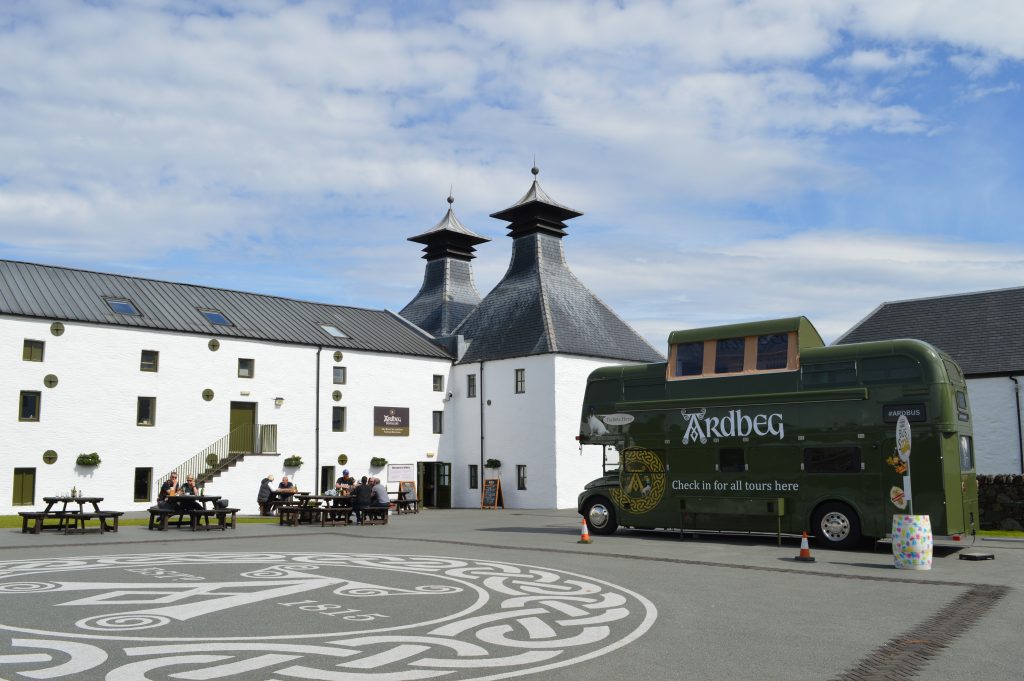
The courtyard of Ardbeg distillery, the final stop on the Three Distilleries pathway.
2. Dun Naomhaig (Dunyvaig Castle)
Dun Naomhaig was the naval fortress of the chiefs of the Clann Dòmhnaill (Clan MacDonald), who were the Lords of the Isles for centuries. Atop an earlier fort or dun, a castle was built by Clann Dòmhnaill around the twelfth century.
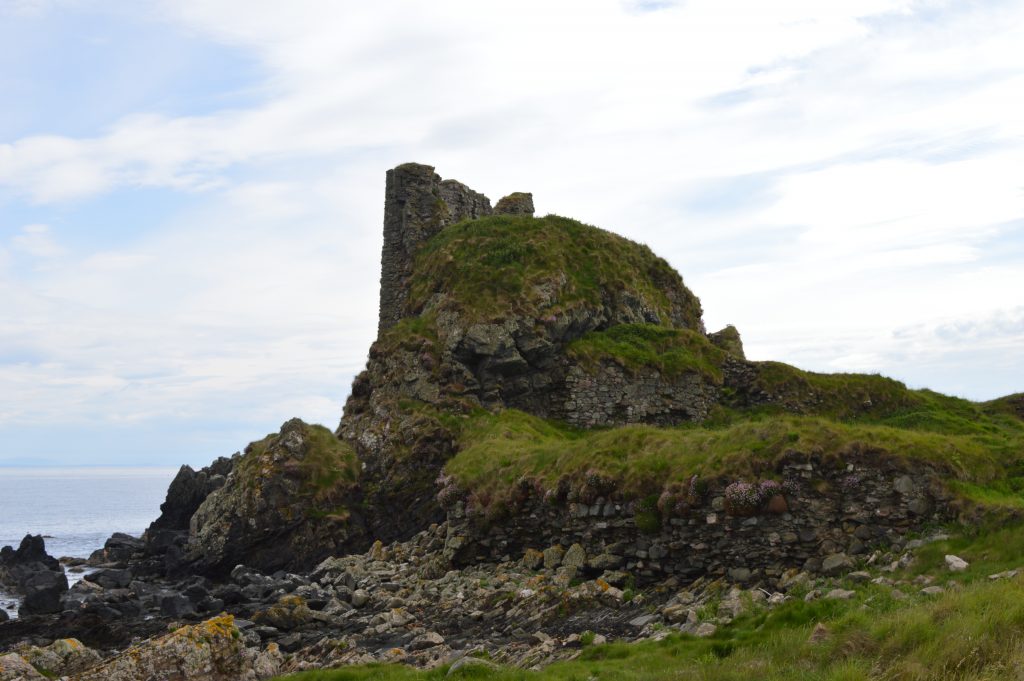
The striking remains of Dùn Naomhaig.
Today the striking remains of Dun Naomhaig are mainly the ruins of the sixteenth-century buildings; below is how the castle may have looked at that time. The site includes a thirteenth-century courtyard and a fifteenth-century keep.
Dunyvaig Castle, Island of Ìle (Scotland) watercolour reconstruction suggestion. A stronghold of the MacDonalds Lords of the Isles. Besieged in 1588 by the MacLeans of Duart with the help of the crew and cannon from the San Juan de Sicilia (Spanish Armada vessel). #Dunyvaig pic.twitter.com/bSgreEaewj
— Andrew Spratt (@andrewsp2009) 20 June 2019
Islay Heritage currently run annual excavations at Dun Naomhaig. Last year, an ancient clan seal was found in the castle ruins; you can read the full excavation report here.
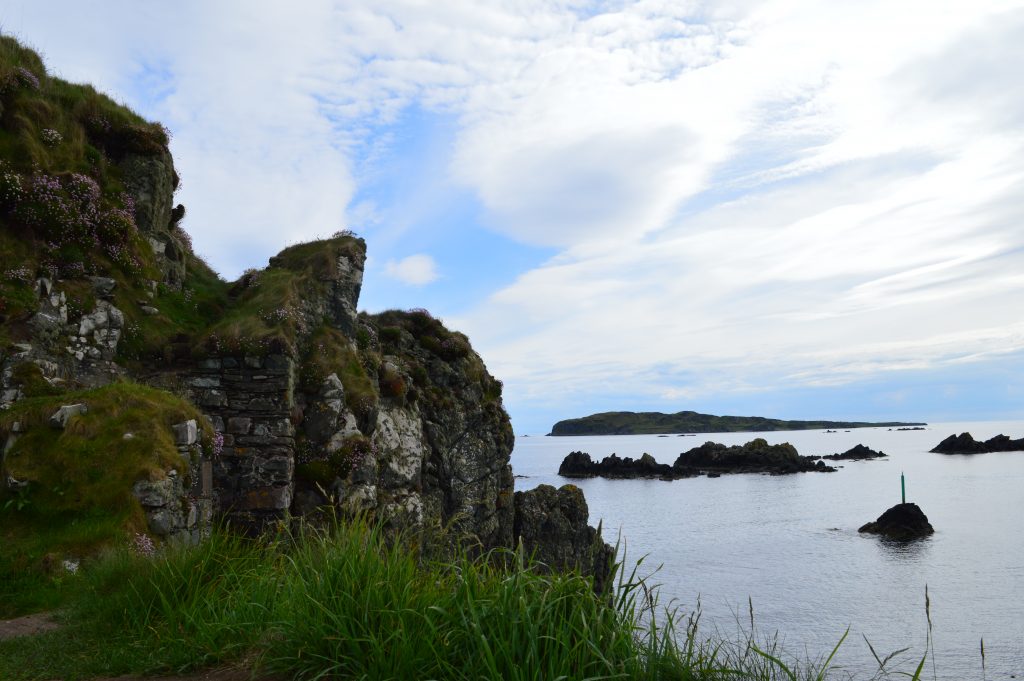
This site is a real castle hunter’s treasure; a ruined weather-beaten fortress with heather and wildflowers overtaking the stonework, sitting on a rocky outcrop in a picturesque bay – what more could you ask for! Be warned, the site is not manned and a lot of the masonry is insecure, so it’s best admired from a distance.
A set of ruined steps leading to the top of the castle.
3. Port an Eilein (Finlaggan)
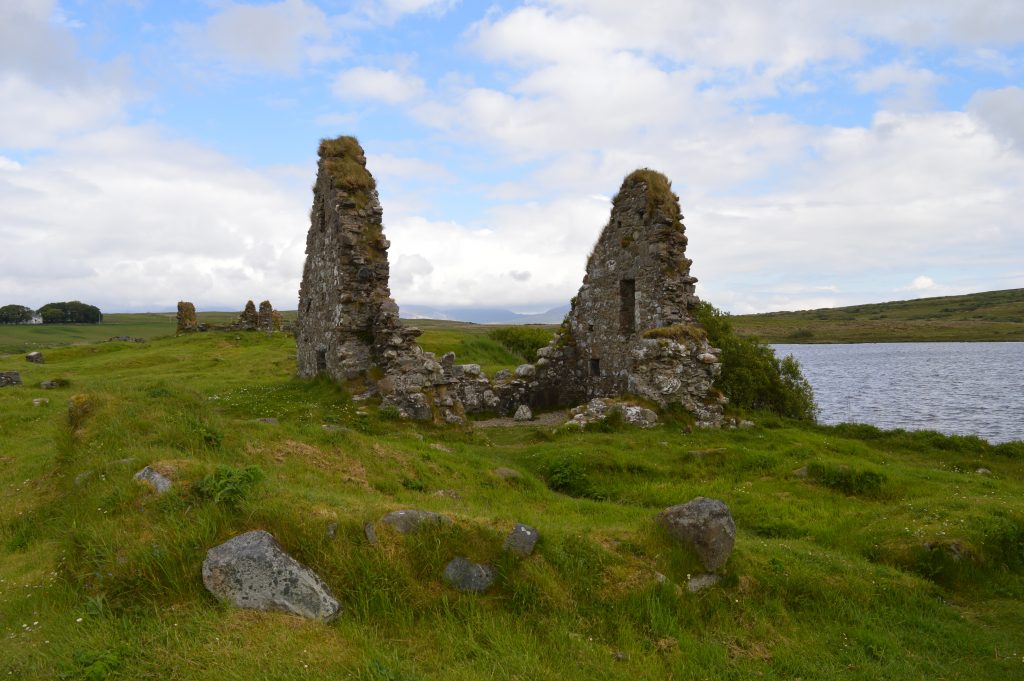
Finally, no trip to Ìle is complete without a stop at Port an Eilein (Loch Finlaggan), a few miles south-west of Port Askaig. In the loch are three islands, two of which, Eilean Mòr (the Large Island) and Eilean na Comhairle (the Council Island), contain fragmentary remains of an important medieval settlement.
In the first half of the 600s a monastic community was established on Eilean Mor. This was either dedicated to, or possibly even founded by, St Findlugan, an Irish monk and a contemporary of St Columba. But the islands are best known as the administrative centre of the Lordship of the Isles, and it was here that the inauguration of the MacDonald chiefs took place throughout the medieval period until the mid sixteenth-century.
Building remains on Eilean Mòr with the chapel in the background.
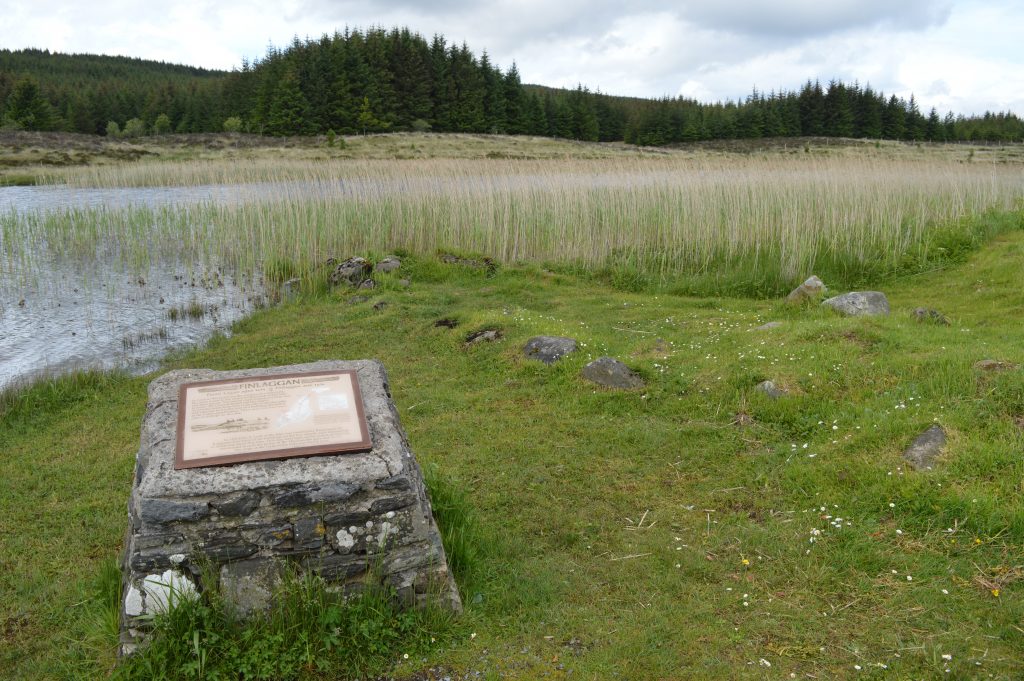
A thriving community grew in the fourteenth-century under John, Lord of the Isles. Eilean na Comhairle (the origins of which date back to a broch (a prehistoric circular structure of uncertain use) built in the loch during the Iron Age) eventually became home to a stone castle. This was served by jetties, but was also linked by a causeway to the larger Eilean Mor.
-
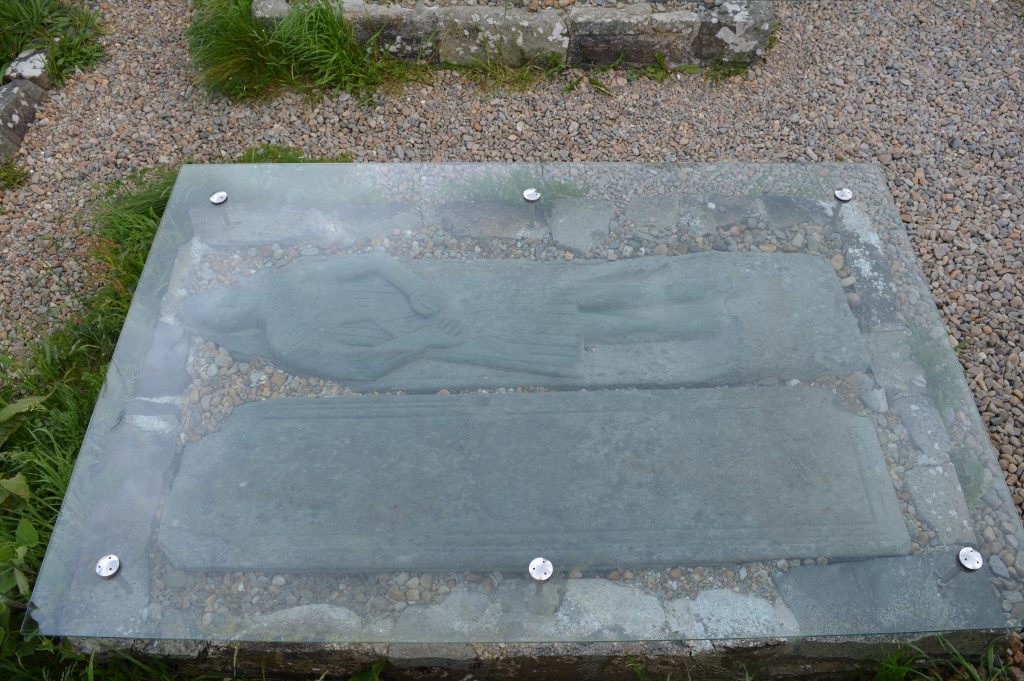
- A medieval grave slab in the chapel on Eilean Mòr, most likely the tombstone of MacGilleasbuig of Finlaggan who died after the forfeiture of the Lordship.
-
- The remains of a jetty which once connected Eilean Mòr to the mainland.
Here there was a great hall, a chapel (possibly on the site of the monastery founded six centuries earlier) and other accommodation, plus ranges of service buildings of the sort usually associated with a lordly residence. The ruin of the chapel stills stands on Eilean Mor, but other remains on the island largely date back to a homestead which existed here in the 1600s.
The visitor centre boasts displays of incredible finds. The origins of settlement on and around Loch Finlaggan appear to date back to the Iron Age, though there are also some Mesolithic (Stone Age) finds on the mainland.
-
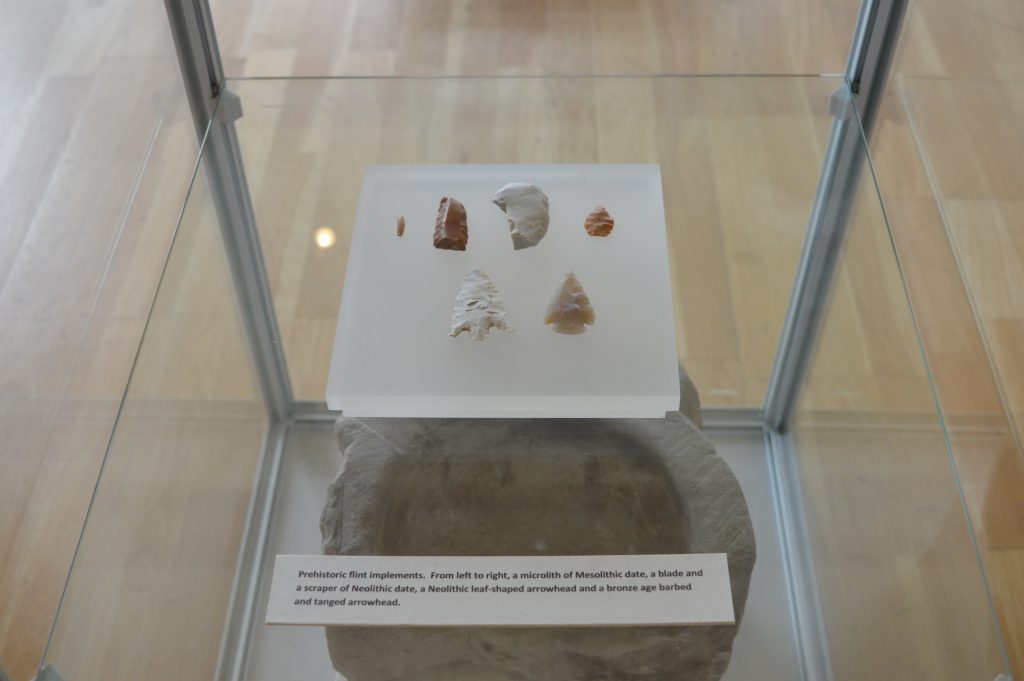
- Prehistoric tools on display at the visitor centre.
-
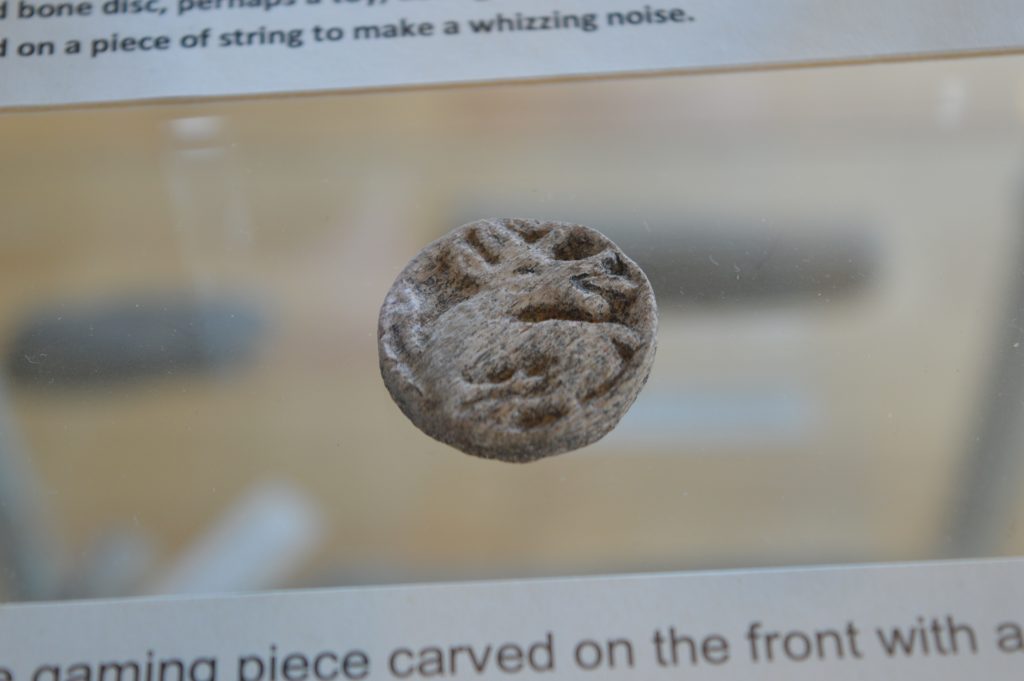
- A fifteenth-century bone gaming piece carved with a deer.
In spring 2019 the visitor centre installed a super virtual reality experience created by experts at the University of St Andrews, working with the Finlaggan Trust and the National Museum of Scotland. Using a remote control the user can navigate every corner of the medieval settlement seen through the goggles and cast to the TV screen.
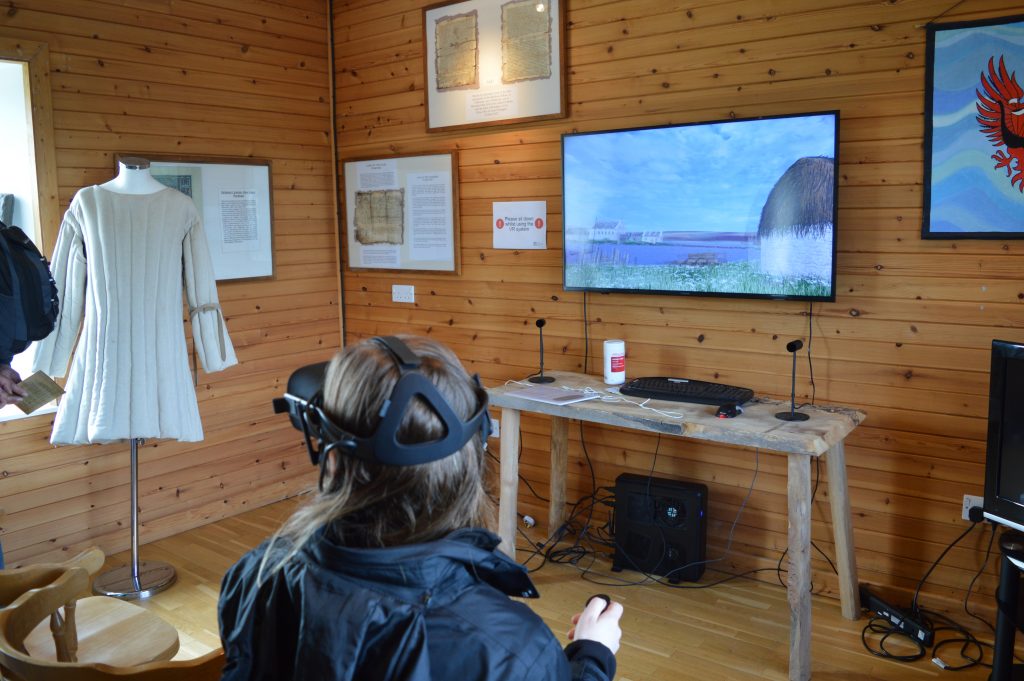
The virtual reality experience in the visitor centre.
The headset is also fitted with headphones playing the Gaelic audio of the associated text which appears on the screen for a fully immersive experience. The lifelike simulation is complete with flickering candles and moving farm animals, which you may be tempted to pet.
This is just a taste of the amazing archaeology you can explore in Ìle. Is your appetite well and truly whetted? Check out Dig It! TV’s trip to the Museum of Islay Life for more.
