Archaeological Discoveries Made by Gypsy/Travellers in Scotland
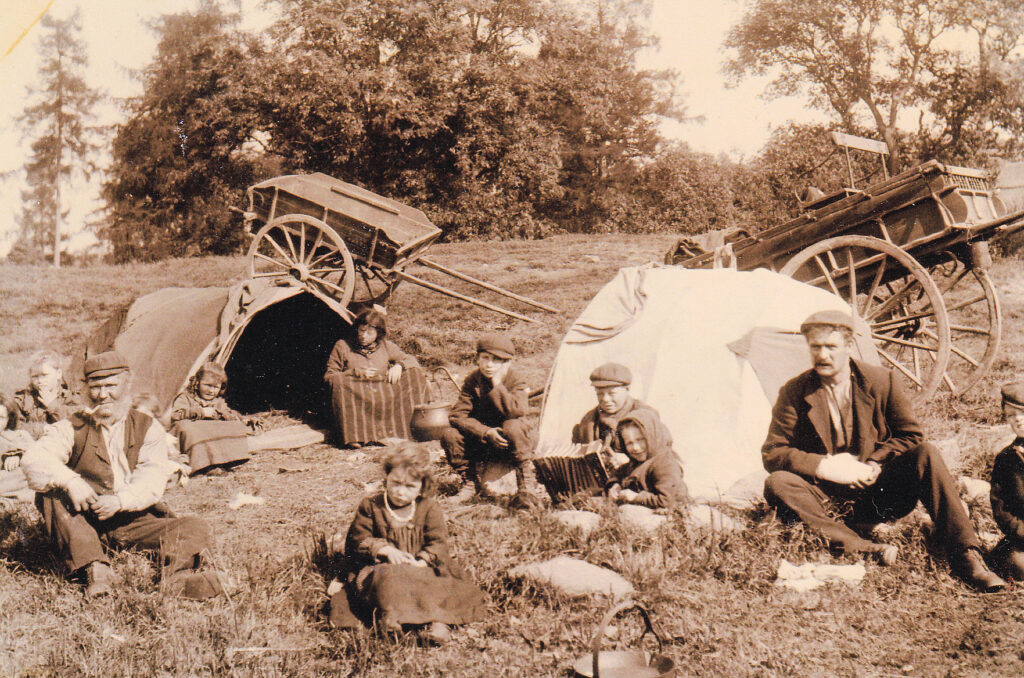
The links between archaeology and one of Scotland’s most marginalised communities – Gypsy/Travellers – might not be immediately obvious. The material traces of these communities in the landscape are under-researched and as of 2026, no excavations have been carried out in Scotland with the aim of discovering how Gypsy/Travellers lived and worked in the past.
Gypsy/Travellers are also rarely mentioned in relation to archaeological collections or excavations. Recent research, however, has highlighted a number of objects in museum archaeological collections which were found by and/or came to them via Gypsy/Travellers. What can these finds reveal about Scotland’s past and the people who found them? Dr Rhona Ramsay tells us more.
Gypsy/Traveller Contributions to Scottish Museum Collections
When I first started researching Gypsy/Traveller material in Scottish museums, I was mainly looking for objects that they had made, such as tin lanterns, heather pot scrubbers, horn spoons, willow baskets and silver brooches. As the research went on, however, it became clear that not only was there material in museums that had been made by Gypsy/Travellers, but that they have directly contributed to museum collections by trading or donating artefacts from a variety of contexts.
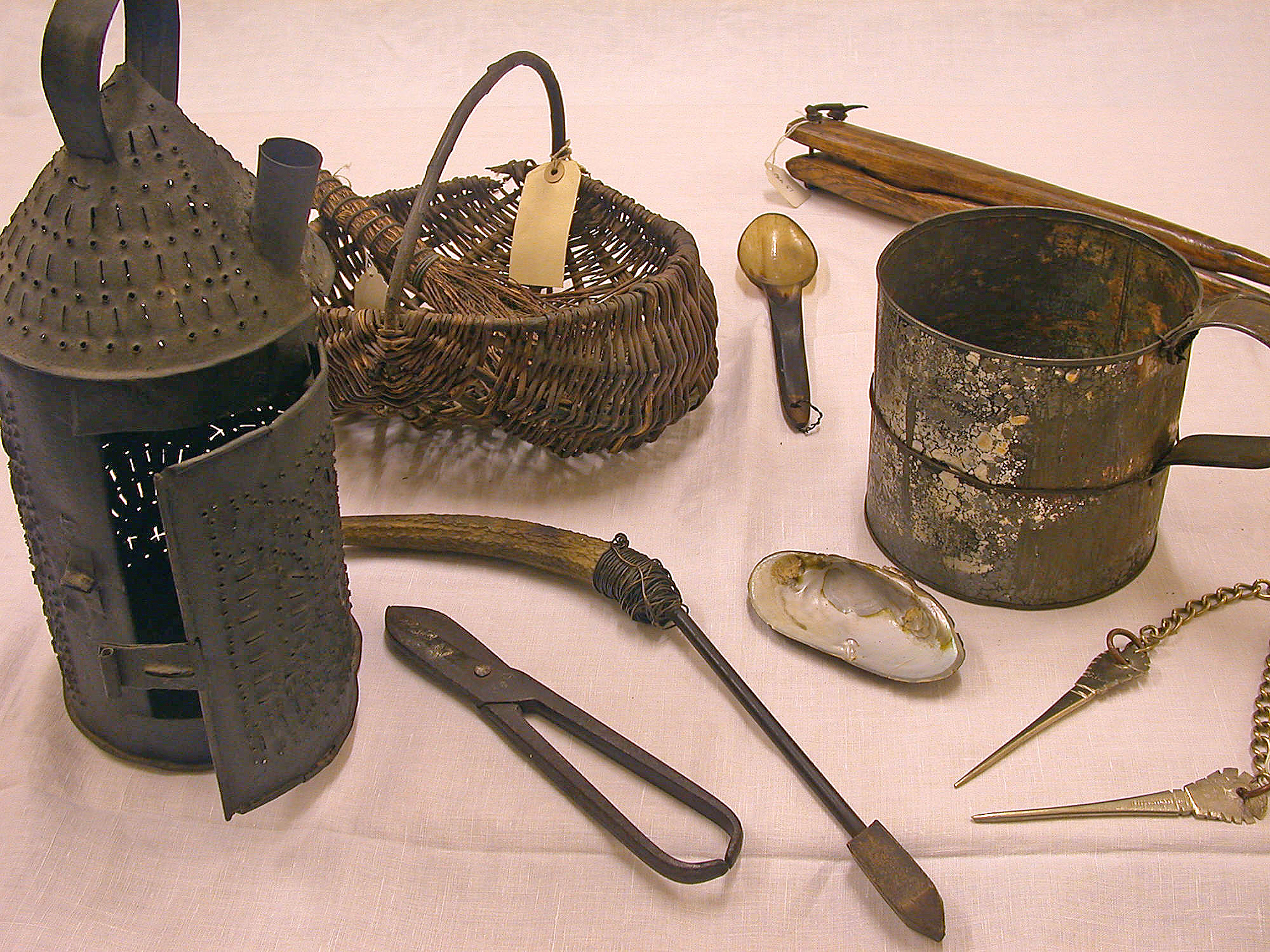
A collection of objects made and used by Travellers, including a tin lantern, a frame basket, a heather potscrubber, a horn spoon and spoon mould, tinworking tools, a pearlfishing jug and a set of skivver (pins used by Gypsy/Traveller women to secure a shawl used to carry a baby on her back) (Credit: Am Baile and the Highland Folk Museum)
Many Gypsy/Travellers in the past dealt in scrap or second-hand goods as part of the work they undertook, which turned out to be of interest to museums who also wanted to know more about items that people have historically thrown away. Isabel Frances Grant, founder of the Highland Folk Museum, for example, acknowledged her debt to scrap dealers in her recollections of setting up the museum.*
Gypsy/Travellers have also been known to preserve some older items through reuse, thus lengthening the lives of objects, some of which have then found their way into museums. In addition, Gypsy/Travellers brought material to museums, including natural history specimens, especially freshwater mussel shells and pearls; medals and kilts linked to their military service or that of a relative; and, in some cases, artefacts with stories that span millennia.
Prehistoric Material Found by Gypsy/Travellers
Historically, a lot of Gypsy/Travellers performed a mix of jobs across the seasons, some of which brought them into contact with ancient finds.
Note: While prior to 1996 there was no law which obligated the reporting of historical finds, today, if you think you have found something of archaeological significance in Scotland, you are obliged by law to report it to Treasure Trove.
In 1909, for example, John Yates traded a spearhead from the Bronze Age (2500 BC to 800 BC) into the Stirling Smith Museum and Art Gallery, which had been found while pearl fishing where the River Teith meets the Forth (pearl fishing was later banned in 1998).
Gypsy/Travellers used homemade pearl jugs – made by replacing the bottom of a jug or other receptacle with glass – to help them locate mussel shells in rivers. By placing the glass end into the water and looking through the opening at the top, ripples in the water were flattened and reflections excluded. This allowed mussel shells to be found, but it gave a similarly clear view of any other items on the riverbed. It was almost certainly this process that revealed the spearhead.
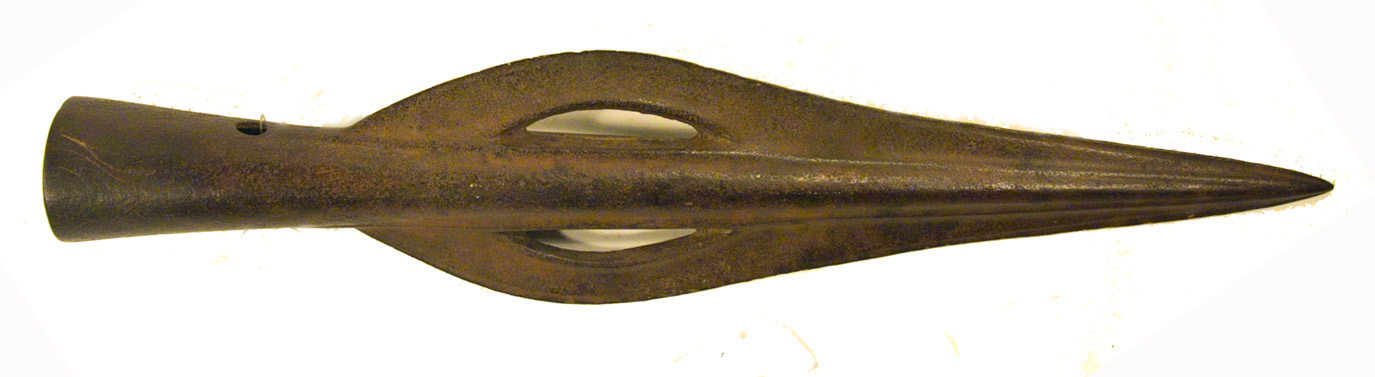
Bronze Age spearhead found by John Yates, while pearl fishing where the Teith meets the Forth, STIGM.03226 (© Stirling Smith Museum and Art Gallery)
Not all Gypsy/Travellers, however, gave their finds directly to museums (it wasn’t until 1996 that The Treasure Act obligated the reporting of historical finds). Mark Hall, Collections Officer at Perth Museum (Culture Perth and Kinross), has taken an interest in items in their archaeological collections which, according to museum records, were found by Gypsy/Travellers.
Among the artefacts found by Gypsy/Travellers, in the collections at Perth, are three bronze artefacts objects, found and added into the collection between 1914 and 1926. Two are Bronze Age socketed axes (some 2,800 to 4,500 years old) and one has been identified as the leg from a medieval cauldron from the 13th or 14th century (around 500 to 800 years old). Each was found in the Tay by pearlfishers, at least one of whom is recorded as a Mr J. Townsley.
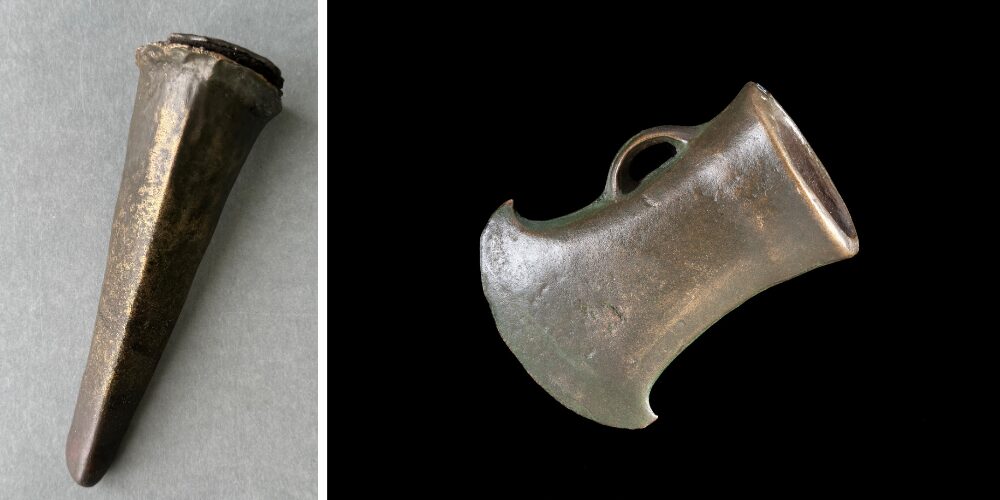
The leg of the medieval cauldron and the Luncarty axe head (Copyright and Courtesy of Perth Museum, Culture Perth & Kinross)
A fourth object known to have been found by a Gypsy/Traveller was given to Perth Museum around 1939. This Neolithic axe head was uncovered as the result of another area of work often undertaken by Gypsy/Travellers: seasonal farm labour. The finder is recorded in the museum records as Mr John Johnstone. It’s likely he was digging to plant or harvest crops or clearing stones from a field when he found it.
Unlike the spearhead in Stirling Smith Museum and Art Gallery, which the finder, Mr Yates, took directly to the museum, each of the items found by Gypsy/Travellers in Perth Museum’s collections entered the museum through a third party who they reported and sold the finds to.
It’s also worth noting that we also have records of Gypsy/Travellers reporting sites of archaeological interest. For example, in Orkney in 1915, Isaac Newlands uncovered a burial cist close to Maeshowe Chambered Cairn, after which interested parties made an examination of the site, as detailed in a short article in The Orcadian.**
Artefacts Repurposed by Gypsy/Travellers
Gypsy/Travellers also sometimes retained and repurposed human-made artefacts from the past, which later made their way into museum collections.
For example, a prehistoric stone axe head discovered at an unknown location was given to the Highland Folk Museum by a Gypsy/Traveller family who said their grandfather used it to shape the bowls of horn spoons. It survived partly because it was found to be useful.
John Yates, who found the Bronze Age spearhead, went on to deal in antiques with his son from a premises on Spittal Street in Stirling. From there he traded material into several museums, including the Highland Folk Museum, the Stirling Smith Museum and the University of Aberdeen Museum Collections. During his life he also gathered a personal collection of items related to Gypsy/Traveller crafts and practices.
Among the items that formed Yates’ personal collection – now in the collections of the University of Aberdeen – are two bronze pots and a bronze ewer, dated from around AD 1200 to 1600 (some 400 to 800 years ago). The pots are associated with Elvanfoot, Lanarkshire, and the ewer with Forres, Moray. Entry information associated with these items suggests that beyond their original use, they had been found and repurposed for the storage of important items, almost like a safe. It is possible that these are another example of the preservation of ancient material through reuse by Gypsy/Travellers.
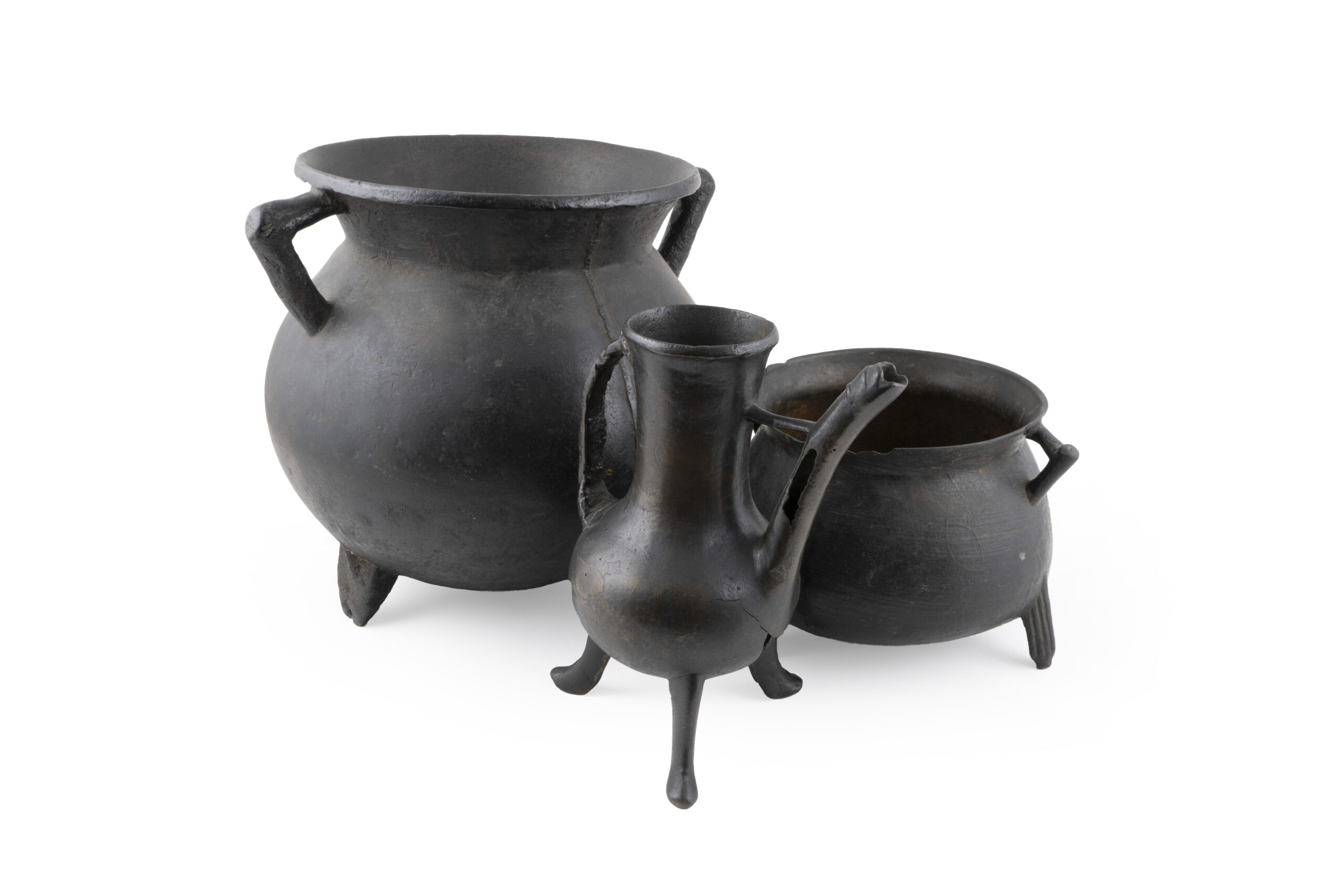
The repurposed bronze artefacts collected by John Yates, reused by Travellers in Forres and Elvanfoot (This image of ABDUA:18078, ABDUA:18081 and ABDUA:18082 in University of Aberdeen Collections is licensed under CC By 4.0)
Indirect Evidence of Gypsy/Traveller History in Scotland
Although these artefacts weren’t made by Gypsy/Travellers, they still reveal interesting facts about them. In most cases, Gypsy/Travellers remained anonymous when they gave items to museums or when they reported finds, but as we’ve already seen, there are some whose names are recorded, such as John Yates, J. Townsley, Isaac Newlands and John Johnstone.
Beyond learning their names, we can also gain insights into how and where Gypsy/Travellers lived and worked and some of the ways in which they interacted with the people, places and things around them.
Gypsy/Travellers often undertook a range of work, depending on season and demand. These finds tell us that Gypsy/Travellers were engaging in pearl fishing, seasonal farm work, labouring involving digging, mending roads and making horn spoons, as well as second-hand trading or scrap dealing.
These artefacts and the ways in which they found their way into museums can also tell us something of the relationship between Gypsy/Travellers and the intermediaries who they sold finds to – including landowners, estate workers, farmers and teachers – as well as with museums themselves. For some Gypsy/Travellers, museums became a trading partner who would buy items from their scrap, second-hand, or antique businesses. Gypsy/Traveller presence is often unseen, but the museum objects here hold traces of the transactions that take place regularly between Gypsy/Travellers and non-Travellers.
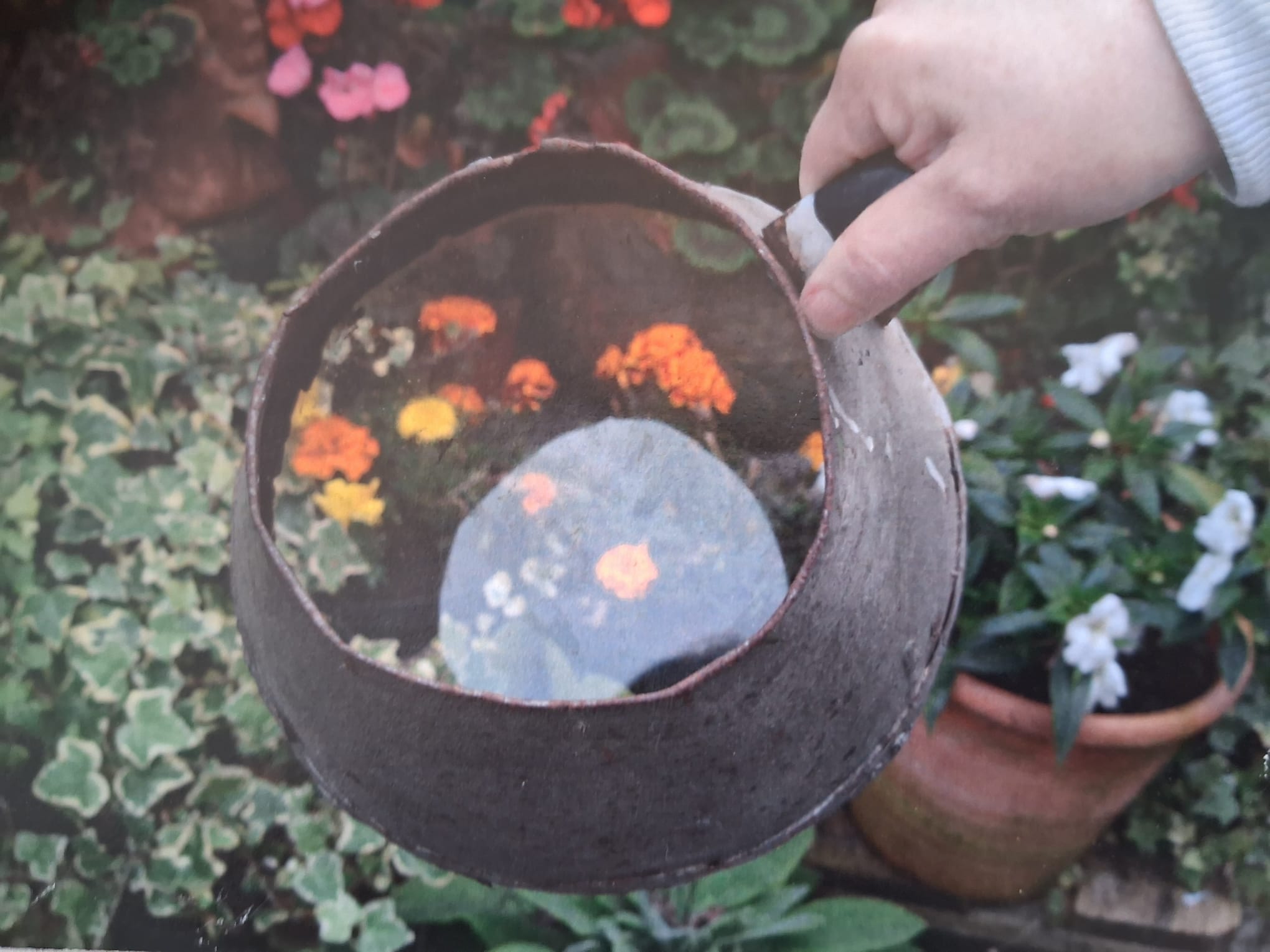
Pearl jug showing a glass bottom in the collection of Fiona Townsley (Credit: Peter Ross)
Tracing Gypsy/Traveller Presence Through Pottery
China pottery and dishware also provide further traces of Gypsy/Traveller presence and interactions with non-Travellers, as well as evidence of another area of work.
As a mobile population, often with access to wheeled transport, Gypsy/Travellers would buy up china in centres of industry or in cities where these items were readily available. Kathy Townsley McGuigan, a Gypsy/Traveller working at Auchindrain Township Museum in Argyll, has recounted that her family used to buy up “swag”† from warehouses in Glasgow which they took back to Argyll to sell. In fact, Gypsy/Travellers were once so famed for this trade that some called them “Potters” or “Pig-and-raggers” (“pig” being Scots for earthenware vessels or crockery).
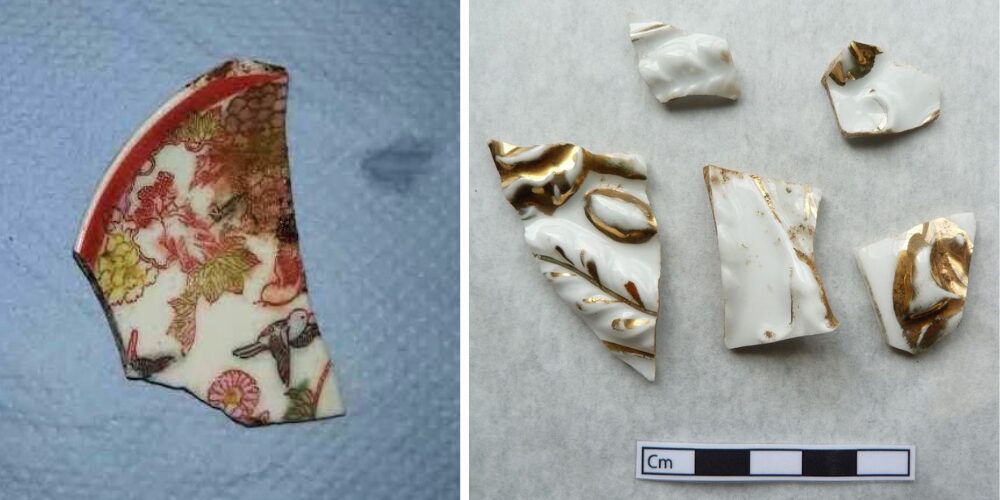
Pottery sherds found in excavations at Auchindrain township (Credit: Auchindrain Township Museum)
Excavations at Auchindrain Township, an open-air rural museum which preserves a traditional farming village, have turned up material linked to the original residents and visitors. Townsley McGuigan has identified some of the sherds as pieces of pottery likely traded into the township by Gypsy/Travellers.
Similarly, a report from excavations carried out at Ben Lawers in the central Highlands between 1996 and 2005 makes links between some of the pottery finds and Gypsy/Travellers trading pottery into the area.
The Future of Gypsy/Traveller Archaeology
While the artefacts featured in this article offer insights into Gypsy/Traveller presence and jobs, there’s a wealth of objects and information that could be revealed if archaeologists were to work with contemporary members of these communities to identify and investigate sites of importance.
In 2024, for example, Romani Community Archaeology carried out fieldwork in the New Forest in England, the site of both traditional and designated Gypsy camps. Here in Scotland, the Scottish Government has already committed to finding ways to map traditional stopping places, and excavations of some of these sites would expand the benefits and learning from such a process.
Writing this blog post has been a catalyst to opening discussions about what can be done to support the visibility of Gypsy/Traveller presence in the historic landscape and the protection and exploration of this presence in the archaeological record. During the course of writing this article, discussions have begun with Perth and Kinross Heritage Trust about including Gypsy/Traveller campsites in the Historic Environment Record (HER) for their area.
In the meantime, where readers have local knowledge of places where Gypsy/Travellers have stopped or camped in their own areas, they can contact their local HER record keeper with details to help enrich the record.
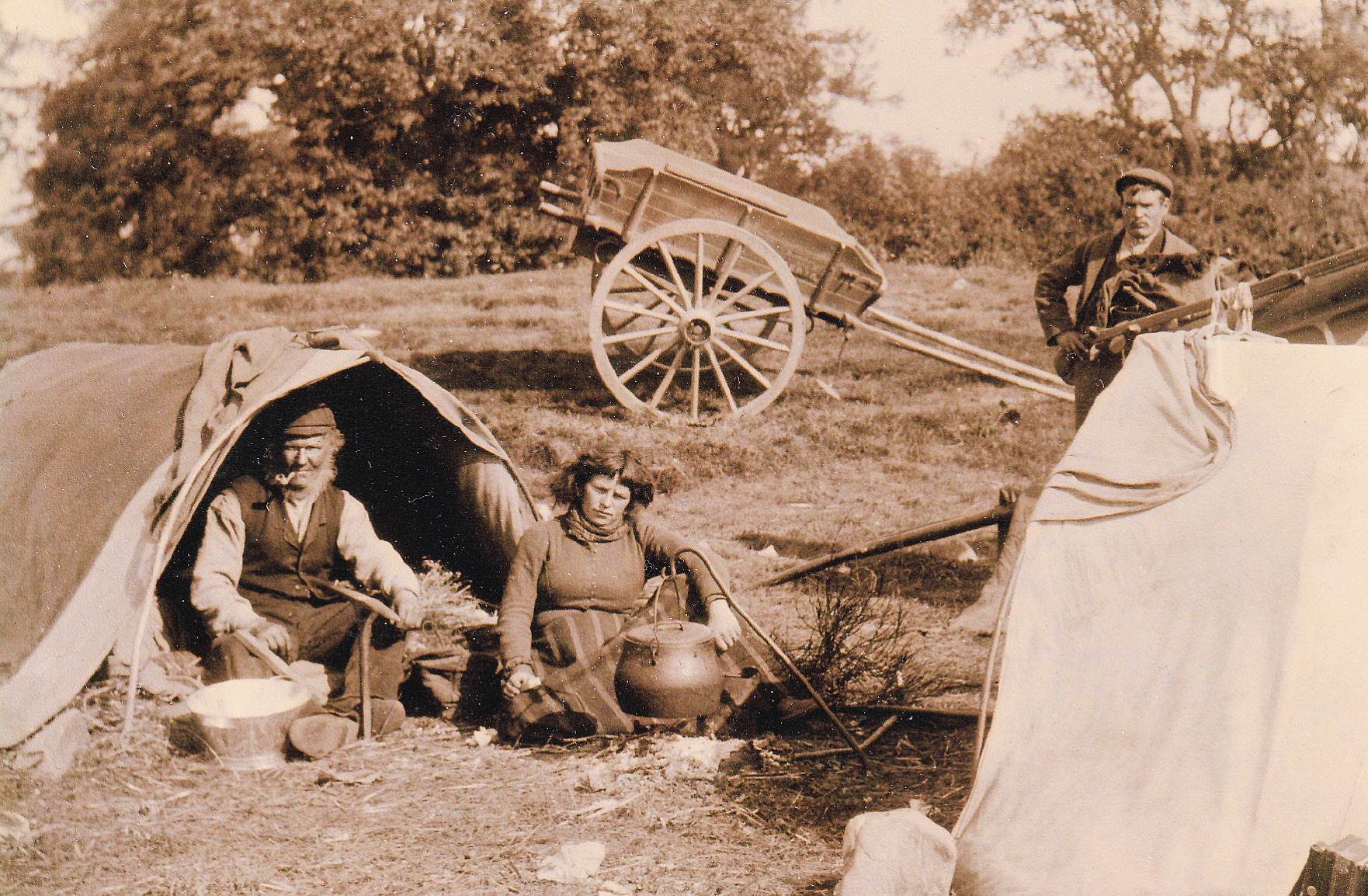
A photo believed to be of the Townsley family camped in Perthshire (with kind permission of Jim Black)
By Dr Rhona Ramsay FSAScot. Dr Ramsay is a part-time Research Associate at the University of Glasgow and works part-time at Perth & Kinross Archives. Her doctoral research was into the material culture of Gypsy/Travellers in Scottish museums. As well as finding examples of Gypsy/Traveller-made items in museum collections, Rhona also identified other objects linked to Gypsy/Travellers, including items connected by use and reuse, as well as items traded into museums, or ancient finds made by Gypsy/Travellers as discussed in this article. Since completing the PhD, Rhona has continued to work with Gypsy/Travellers in support, heritage and research.
With thanks to the following people for information that has helped in the development of this article and the research behind it: Dr Mark Hall, Perth Museum; Kathy Townsley McGuigan, Auchindrain Township Museum; David Chappell, great-grandson of John Yates; Fiona Townsley and Peter Ross who gave permission for the use of the photograph of Fiona’s pearl jug. Thanks are also due to the Highland Folk Museum, the Stirling Smith and the University of Aberdeen Museum Collections.
Header Image: A photo believed to be of the Townsley family camped in Perthshire (with kind permission of Jim Black)
A Note on Terminology
Gypsy/Travellers is an umbrella term used by policymakers in Scotland to refer to populations for whom itinerancy (the practice or state of traveling from place to place) has been a part of their cultural heritage.
It doesn’t refer to a homogenous group, but instead a series of distinct, although in some cases interconnected, communities with their own identities and backgrounds. Among these groups, some identify as Gypsies, as Gypsy Travellers, as Travellers, Scottish Travellers, Highland Travellers or Nackens/Nawkens. Although exact numbers for Gypsy/Travellers currently in Scotland are not known, an estimate of around 20,000 is often given.
Travelling people from elsewhere are also present in Scotland (on both short- and long-term bases), including Irish Travellers (Mincéirs, or Pavee), Welsh Kalé, English Romany Gypsies, as well as those from further afield who identify as Roma, or in more specific, regional ways.
It’s also worth noting that we don’t always know how individuals within historical records would have referred to or considered themselves. The term Gypsy/Travellers is used here, so that – as far as possible – it doesn’t leave out any group that is relevant to the article.
References:
* Grant, I.F. (2007), The making of Am Fasgadh. Edinburgh: NMS Publications, p. 106-7.
** ‘FINDING OF ANCIENT BURYING PLACE AT STENNESS’, Orcadian, 14 August 1915, p. 4
† Ramsay, R. (2021), Unsettling Nacken chaetrie: the absence and presence of Gypsy/Travellers in Scottish museums [unpublished doctoral thesis], University of Stirling.
For further reading, Dr Ramsay recommends Matthews, J., (2015) “Where are the Romanies? An Absent Presence in Narratives of Britishness”, Identity Papers: A journal of British and Irish studies 1(1).
