Are We Really That Different? Exploring the Similarities Between Iron Age Scotland and Indigenous North America
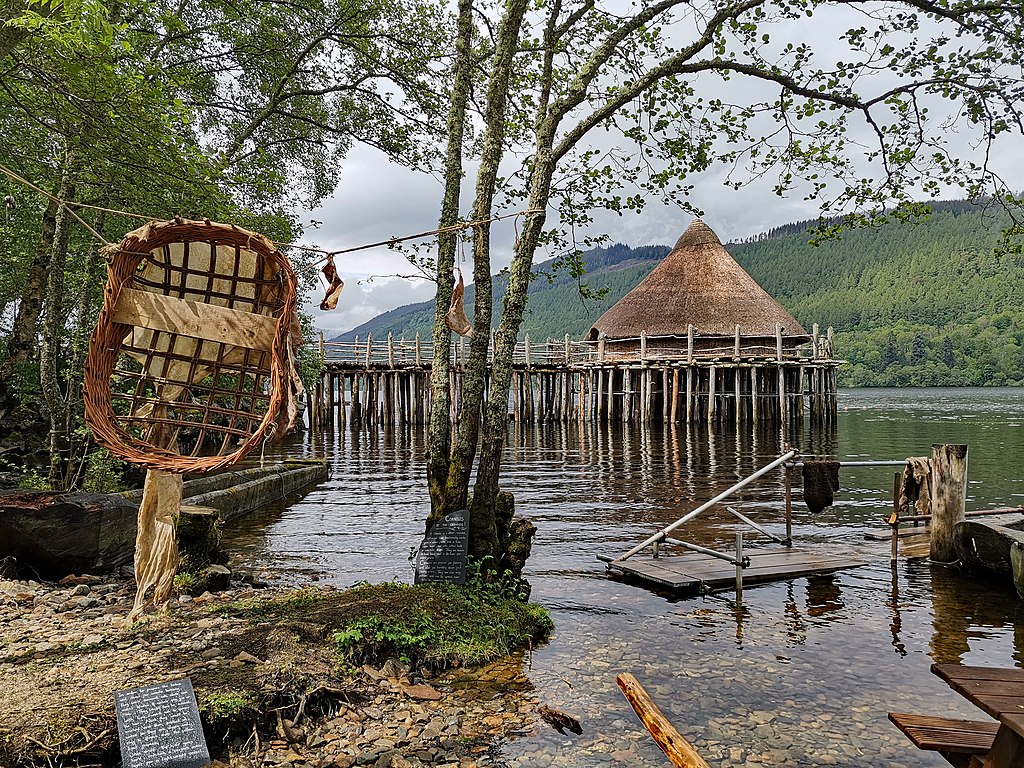
When you think of Iron Age Scotland and Indigenous North America, not many similarities often come to mind right away. But after a closer examination, there’s a lot more in common between them than meets the eye.
Thanks to fields such as archaeology and anthropology, we’re able to make comparisons between peoples and societies that would have had no contact in the past, including their community bonds, oral traditions and gender roles.
While this article will be exploring similarities with Indigenous traditions and cultures, it must be noted that there are more than 630 Indigenous communities in Canada from 50 different nations. Not all nations and communities hold the same beliefs, practices and traditions (which also applies to Iron Age Scotland), but there are many overarching similarities between them all such as their respect for nature.
Community in Iron Age Scotland and Indigenous North America
Community. That is one word that resonates within Indigenous nations across Canada. Communities are there to help everyone out, be close together, and be an extension of existing kinship structures. In a time when communities were spread apart and travel was difficult (particularly in the winter months), communities relied on one another for most things.
Members of Indigenous communities would take on roles such as healer, warrior, or member of the nation’s council, for example, to serve and benefit the entire community. While parenting may have been outwith these specific roles, children were also cared for by members of the community that didn’t work away from the living area. In many communities, generations of a family would also live under the same roof.
There’s also a good chance that the word “community” would have resonated with people who lived in Scotland during the Iron Age, which began 2,800 years ago and ended around 1,600 years ago (800 BC to AD 400), for the same reasons.
Larger dwellings such as crannogs (built on bodies of water), for example, could have been occupied by what we now term an “extended family” or communal groups. This would have meant security for those who needed extra care, fewer buildings to protect, and the ability to maintain strong kinship connections.

Event at the Scottish Crannog Centre (Image Credit: Scottish Crannog Centre)
Oral Traditions in Iron Age Scotland and Indigenous North America
The use of the oral tradition for sharing and passing down wisdom is a widespread custom which continues to this day in the lands now known as Canada; from the Haida and Nisga’a of the west coast, to the Mi’kmaq and Haudenosaunee of the east. Stories and legends such as the creation story of Turtle Island (an indigenous name for North America) were passed down through the generations and shared around fires when different communities came together.
And it’s likely that the same thing was happening across the Atlantic Ocean in Iron Age Scotland – a time before most people could read or write. Many crannog dwellings that were scattered across parts of the country had central hearths where families, friends and the occasional visiting group would presumably gather for warmth, but also to share knowledge through stories.
Musical instruments may have also been used to aid in this sharing of information and one of these rare artefacts, the bridge of a lyre, can be seen in the Scottish Crannog Centre in Perthshire.
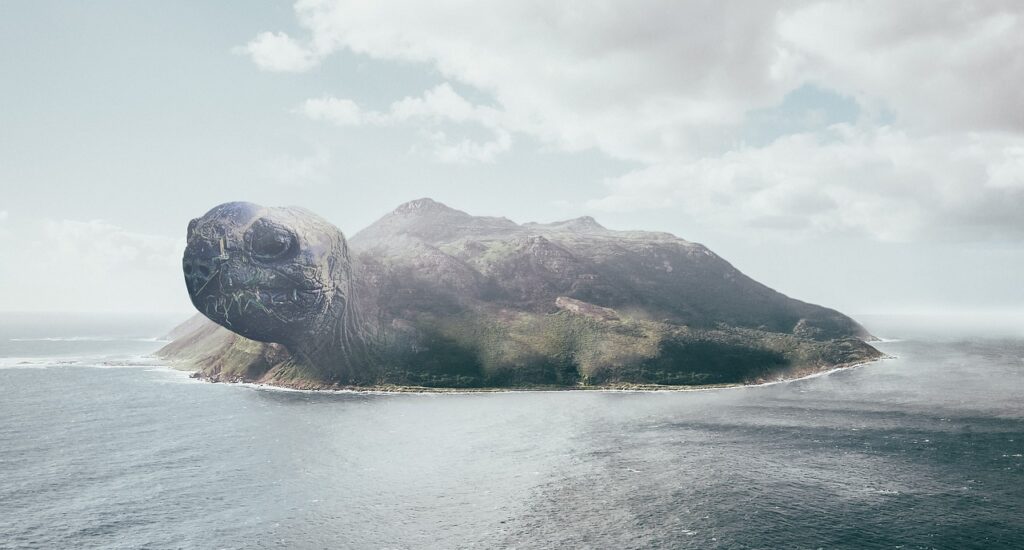
Turtle Island (Image by Baggeb from Pixabay)
Gender Roles in Iron Age Scotland and Indigenous North America
Think of the traditional gender roles that can be found throughout Western society. Now take those notions and flip them on their head.
Gender roles are not the same in every culture and historical age, including Indigenous cultures in North America. Concepts like Two-Spirit (a third gender between the masculine and feminine) and matriarchy (women as the leaders of the community), for example, are the norm for many peoples.
Depending on the community, people also had roles based on abilities and age. Elders, for example, were treated with great respect regardless of their gender and often took on educational roles to pass down traditional knowledge to the new generations.
If we turn to Iron Age Scotland, it’s often assumed that men built the houses and hunted while women cooked and took care of the children which is based more on modern traditional gender roles than archaeological evidence.
But tasks and positions may have been distributed similarly to Indigenous peoples. Those with dextrous and nimble fingers could have done the finer work on buildings, those with more endurance may have been sent to hunt, and those with physical strength most likely conducted the more gruelling tasks. Indigenous cultures and societies are helping to challenge these notions that may colour the lenses we look at history through.
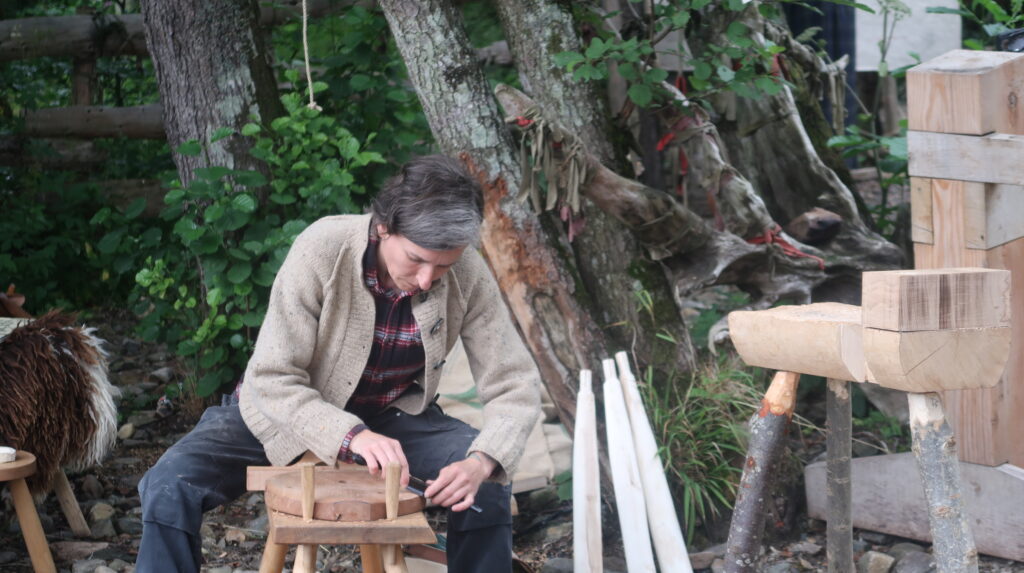
Wood working at the Scottish Crannog Centre (Image Credit: Scottish Crannog Centre)
There can be so much division in this world, but when we look back at the historical and archaeological records, another story is told. Despite thousands of kilometres and vast bodies of water, people like those who lived in Scotland during the Iron Age and those who have inhabited the lands of Canada for centuries might have been incredibly similar.
These are cultures that many are trying to keep alive or rediscover today through archaeology and anthropology, or in the case of Indigenous peoples, reconnecting with their cultures and traditions. These similarities are not limited to just these two countries and can help us challenge modern societal norms and the ways of viewing things that have been ingrained into us. Peoples like these show that pushing and challenging our boundaries is possible.
Indigenous peoples in North America are still fighting for their culture and traditions to be accepted and for oppression to end. By learning about the peoples that inhabited North America before colonisation, it’s a step towards helping in the fight for recognition. If you’d like to know more about what’s happening in the 21st century, you could read statistics about Indigenous peoples living within Canada, explore maps of where the different communities and nations are located across the country, and learn about reconciliation work that’s going on right now.
Want to know more about Iron Age Scotland? You can also dig into some of the period’s top sites and discoveries.
BY ERIN TURNER. ERIN IS METIS FROM THE ALGONQUIN AND HAUDENOSAUNEE TRIBES IN EASTERN CANADA AS WELL AS PART SCOTTISH. SHE HAS A BA IN HISTORY AND ANTHROPOLOGY FROM THE UNIVERSITY OF LETHBRIDGE AND A MSC IN HERITAGE FROM THE UNIVERSITY OF STIRLING. IN 2022, ERIN COMPLETED AN INTERNSHIP AT THE SCOTTISH CRANNOG CENTRE WHERE SHE LEARNED ABOUT THE IRON AGE HERE IN SCOTLAND AS WELL AS WORK WITH EQUALITY AND DIVERSITY WITHIN HERITAGE AND MUSEUMS.
Tweet
Header Image: Crannog Centre on Loch Tay (PaulT (Gunther Tschuch), CC BY-SA 4.0 <https://creativecommons.org/licenses/by-sa/4.0>, via Wikimedia Commons)
