Craftworking in Iron Age Scotland: Four Highlights from Culduthel
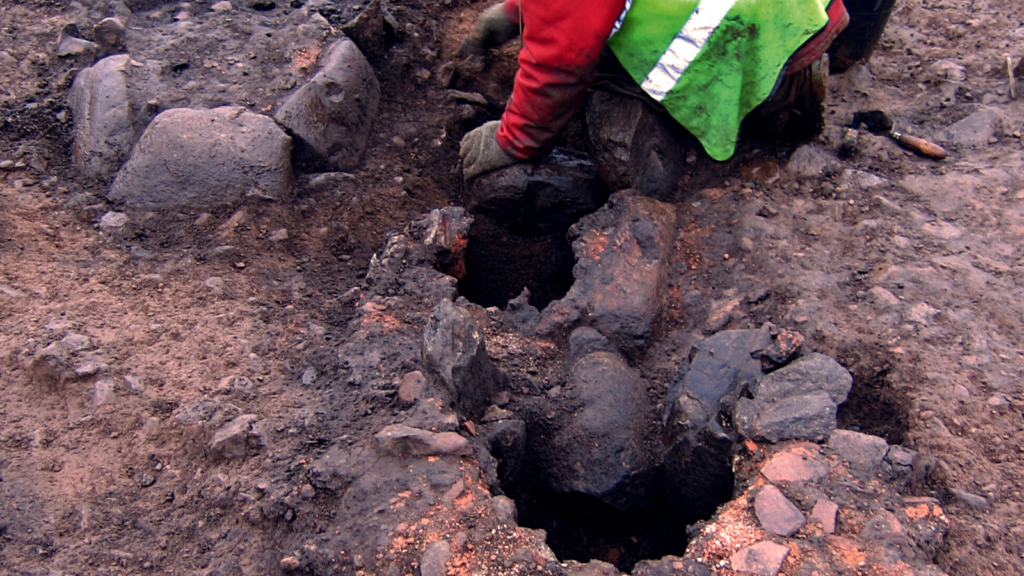
In 2005, an exceptional discovery was made by archaeologists in a field on the outskirts of Inverness.
A cropmark on an aerial photograph showed that a large timber enclosure had once stood on this land. This cropmark triggered an archaeological investigation prior to the development of the field for housing. It was during this preliminary work that a previously unknown and well-preserved Iron Age settlement of 17 roundhouses was unearthed to the west of the enclosure.
This settlement – known as Culduthel – appeared to be very different from anything previously uncovered in the Scottish Iron Age.
Many of the roundhouses were not domestic dwellings but iron-working workshops with the stone bases of iron-smelting furnaces still intact within their interiors. Two large-scale roundhouses, cobbled yards, stone-built hearths and a turf-walled structure were also found close by. These structures contained the working waste from iron, glass and bronze-working and iron tools used to make iron, bronze, glass, wood, textile and leather items.
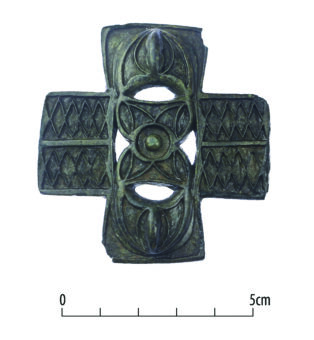
Horse harness strap end (Image © Headland Archaeology)
A full-scale excavation of the field commenced and an extensive assemblage of artefacts was recovered from the buildings, furnaces and hearths and the large spreads of waste material left behind from these industries. These objects included glass beads, iron tools, daggers and chariot parts, and bronze objects including part of a decorative horse harness. What’s remarkable is that all these objects appear to have been made at this thriving specialist craft-production centre approximately 2,000 years ago.
Dig into some of the highlights from the site and the assemblage of finds:
Iron-smelting furnaces
The U-shaped stone bases of seven iron-smelting furnaces were identified at Culduthel. Each of these stone bases would have had a clay chimney above and an entrance-way to feed in wood to keep the fire within burning.
Iron was made within these furnaces by heating bog iron (a form of impure iron deposit) and charcoal together to a very high temperature (c. 1,200°C). Bellows made of wood and leather with clay nozzles would have been used to blow air into the interior of the furnace to increase the heat.
Evidence suggests that the craftworking settlement was primarily focused on the production of iron objects including craft tools, agricultural implements, weapons and fittings associated with building and transport. The scale of this production overshadows anything seen in the Scottish Iron Age to date and suggests that Culduthel was making iron and other objects to trade and exchange across the north-east and beyond.
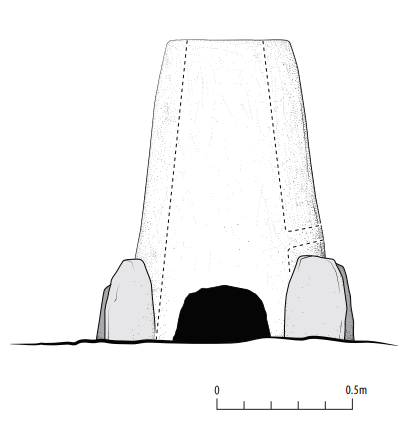
Smelting furnace reconstruction (Image © Headland Archaeology)
A repurposed quern stone
This quern stone started life as a lower part of a pair of stones made to grind grain to make flour. It was made from local schist stone and its unfinished state suggests that it was never completed or used for this task. It was instead picked up by the bronze-workers at Culduthel and repurposed as a mould for the casting of bronze objects.
A circular and rectangular shape had been carved into one side of the quern, while the other side features a fish shape. Molten bronze would have been poured into these moulds to create discs, bars and vessels.
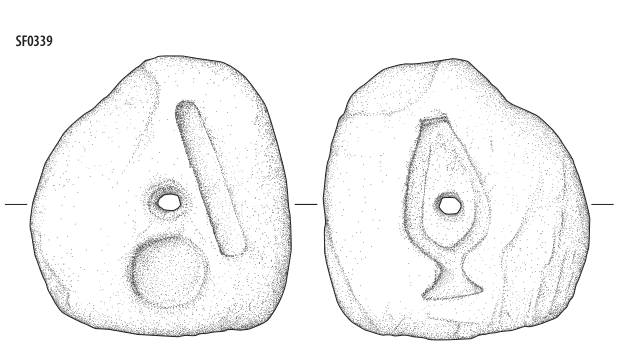
Quern mould (Image © Headland Archaeology)
Glass beads
Alongside glass working for metal inlays (enamels), the craftspeople at Culduthel were making glass beads. A variety of forms were recovered from the excavation including blue, yellow and triangular beads with spiral decoration.
The glassworkers imported glass as ingots (blocks) and melted them down to make these beautiful and colourful objects.
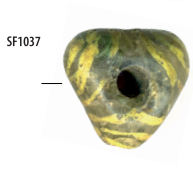
Glass bead (Image © Headland Archaeology)
Items from horse harnesses and chariots
Two objects made at Culduthel give us a real insight into the status and expertise of the craftworking community at Culduthel.
The bronze cruciform harness strap mount (pictured above) is a rare and remarkable find. It’s decorated with small geometric cells which were intended to have coloured enamel within each of them. The piece was made on site and is unfinished. It’s freshly cast and must have been abandoned before the cells could be filled with glass. The design of this object is more akin to the wider British-Celtic art world of central Britain and shows that the craftspeople of Culduthel were designing pieces with first-hand knowledge of styles of Celtic art.
Archaeologists also uncovered a linchpin which would have been used to hold the wheels in place on the axles of Iron Age chariots. This iron linchpin made on site suggests that the community were making and using chariots. This would have required a highly specialists team of workers and many months of work to complete, with vast resources of iron and wood used. Chariots must have been a highly visible, and very portable, way to display wealth and status in Iron Age Scotland.
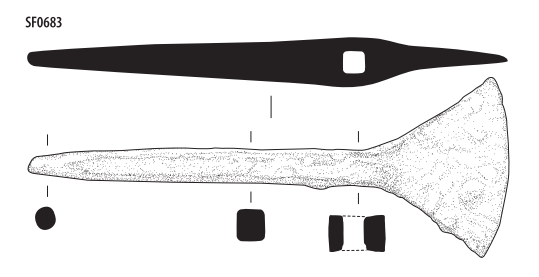
Chariot linchpin (Image © Headland Archaeology)
Want to know more? Culduthel: An Iron Age Craftworking Centre in North-East Scotland is available for free through Open Access and can also be purchased through the Society of Antiquaries of Scotland (who coordinate Dig It!).
By Dr Candy Hatherley, an archaeologist with over 25 years of experience of excavation and research in Scotland and throughout the UK. She is currently a Project Manager at Headland Archaeology.
Header Image: Iron Smelting furnace under excavation (Image © Headland Archaeology)
