Five Historical Building Reconstructions to Visit in Scotland (and Two to Watch Out For)
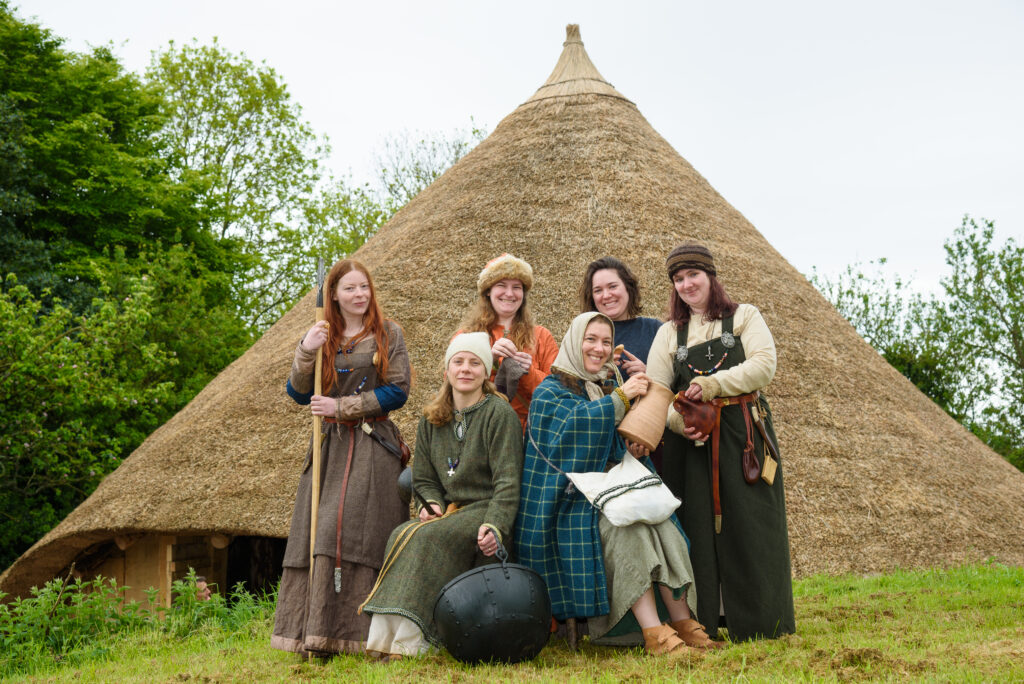
An Iron Age loch-dwelling, Pictish building, and 17th-century turf home are just some of the impressive structures that have been recreated across the country with the help of archaeological information.
In addition to creating new visitor attractions, educational resources, and employment and volunteering opportunities, historical reconstructions constructed using traditional materials and techniques can help answer archaeological questions – an approach known as “experimental archaeology”.
We’ve compiled a list of some of the best examples in the country, including two developing projects.
The Scottish Crannog Centre
2,500 years ago, some people in Scotland lived in Iron Age loch-dwellings known as “crannogs”. Since 1980, archaeologists have been diving to explore the ones in Loch Tay in Perthshire, and in 1997, a replica based on excavation results was built on the banks and became the showpiece of the Scottish Crannog Centre.
A fire destroyed the reconstructed crannog in 2021, but after years of fundraising and development, they were able to open their new museum at Dalerb on 1 April 2024 on the other side of the loch next to an original crannog site.
The new site includes a visitor centre with a museum to showcase their internationally significant archaeological collections. It also features an Iron Age-inspired village with seven buildings constructed using traditional methods, from reed and heather thatching to dry stone walling and turf building. Work on three expert-led and community-built crannogs has already begun.
The Dalerb site is open seven days a week and all entrance fees come with a guided tour of the museum and Iron Age village.
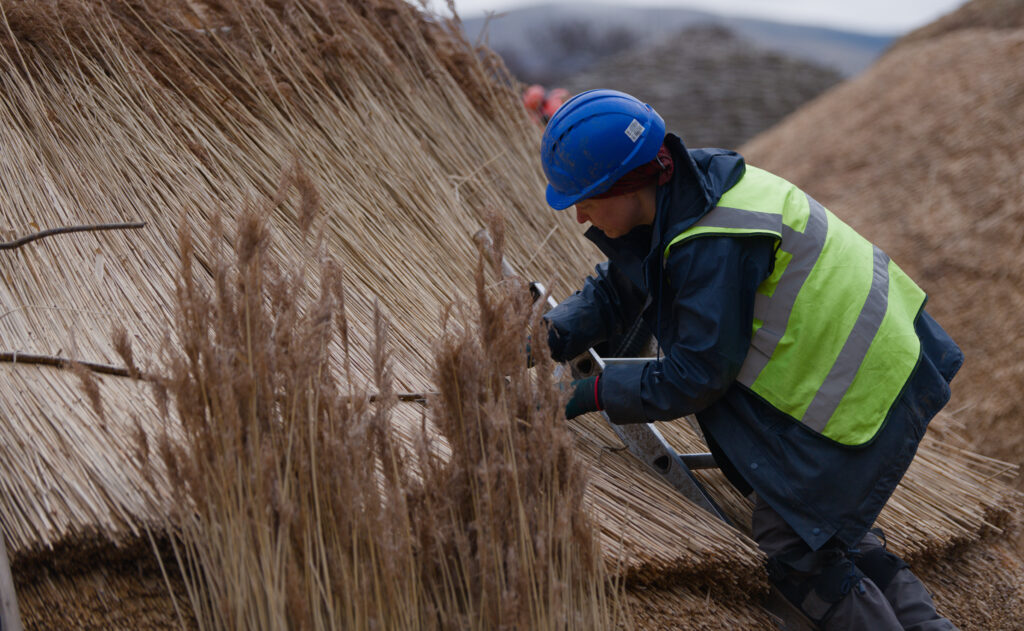
Scottish Crannog Centre (Image Credit: Yorkshire Exile)
Whithorn Roundhouse
From 2015 to 2019, a dig by AOC Archaeology led to the discovery of several roundhouses – the standard form of Iron Age housing – dating to around 430BC at the Black Loch of Myrton in Dumfries & Galloway.
In 2016-7, the Whithorn Trust reconstructed a full-scale replica of one of these structures in Whithorn, about five miles to the east. They used local material and trained unemployed or part-time craftspeople to carry out the work of thatching, wattling and installing the central ring beams which support the roof.
The reconstruction includes details from the original building which reflect its exact size, including a substantial oak façade and intricately woven flooring made of hazel rods.
The site is open from April to October 31st, Sunday to Friday. Tickets include access to the reconstruction via a guided tour, as well as entry to exhibitions and Historic Environment Scotland’s Whithorn Priory and Museum featuring early medieval carved stones.

Whithorn Roundhouse (Image Credit: The Whithorn Trust)
Old Scatness Iron Age Buildings
The Iron Age Broch and Village at Old Scatness in Shetland was first discovered in 1975 as the result of roadworks.
20 years later, excavations were initiated by Shetland Amenity Trust and carried out by staff and students from the University of Bradford, who also provided training for local volunteers. The discoveries included a later Iron Age village, as well as a broch built between 400 and 200 BC. A group of large roundhouses were constructed around the broch, and in time, this changed to create a Pictish village with cellular buildings and “wheelhouses”, which have the shape of a wheel from the air.
During the excavation, several of the structures were reconstructed which provided insights for the archaeologists into the buildings they were uncovering. The reconstructions also enhanced the visitor experience and are still used as part of the interpretation today.
Old Scatness is open on Fridays only throughout the summer months (usually May to October), although tours for group bookings of up to 25 people may also be available on request.
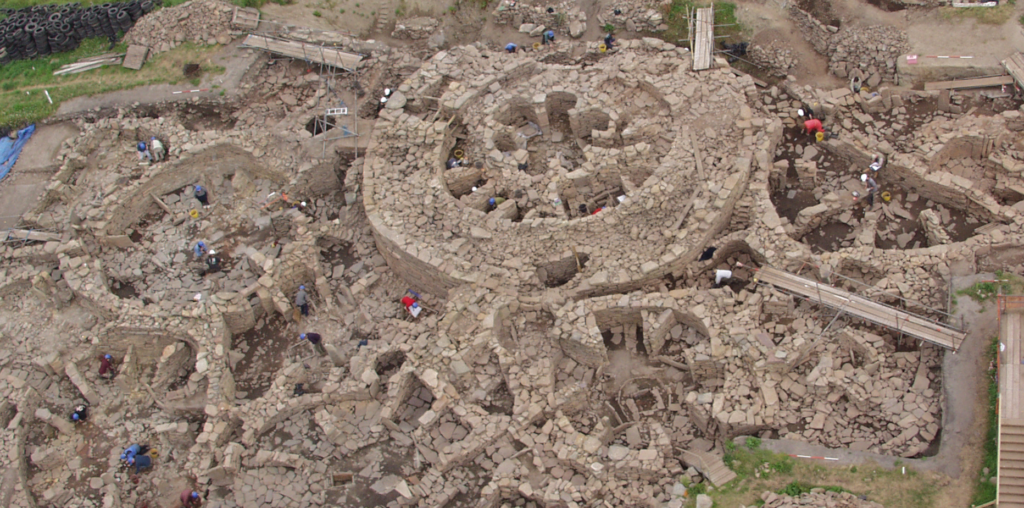
Old Scatness excavation (Image Credit: Shetland Amenity Trust)
Bosta (Bostadh) Iron Age House
In 1992, a severe storm exposed stone walls of a village which had lain hidden under sand dunes for millennia at Bostadh (Bosta) Beach on Eilean Leòdhais (the Isle of Lewis) in na h-Eileanan Siar (the Outer Hebrides).
Four years later, the site was excavated by CFA Archaeology as well as University of Edinburgh students and local community volunteers, revealing a well-preserved Late Iron Age settlement of five houses that dated from AD 400 to 800. The excavation and footprint of the village were recorded in detail before the vulnerable structures were re-covered in sand for preservation and possible future excavation.
Using the same techniques available at the time of the original structures, a detailed life-size reconstruction of one of the houses was then created by the local Comunn Eachdraidh sgire Bhearbaraidh (Bernera Historical Society).
The building is open to visitors throughout the summer months where a guide explains the house and experimental archaeology that has been undertaken since. More information about the excavations and some of the finds can be found in the local museum at Bernera Community Centre.
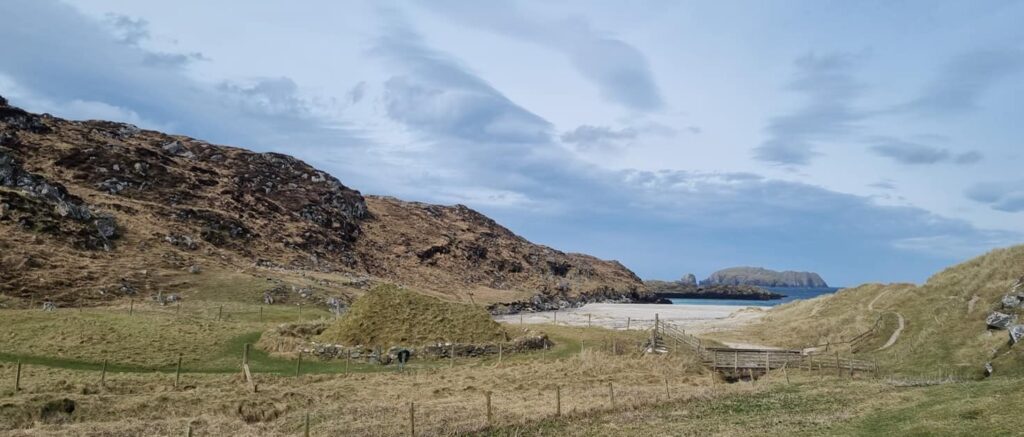
Bosta Iron Age House (Image Credit: Bernera Museum)
The National Trust for Scotland’s Turf and Creel House
In the 17th century, the lower slopes of Glencoe were home to a community of 400 to 500 people. 350 years later, National Trust for Scotland archaeologists began investigating one of these historic settlements, Achtriachtan.
Informed by surveys and excavations conducted by the archaeologists and volunteers, the Trust set out to recreate one of the homes.
Using all the evidence available and a bit of experimentation, they assembled a team of craftspeople, skilled in traditional building techniques, to design and reconstruct one as authentically as possible. Made using only what could be found in the surrounding landscape, including turf for the exterior walls and freshly cut green wood for the basket-like interior ‘creel’ framework, these houses could be described as the original eco-homes.
The turf and creel house can now be found just a few minutes’ walk from Glencoe Visitor Centre, which is open every day. Visitors can enjoy free entry during Visitor Centre opening times.
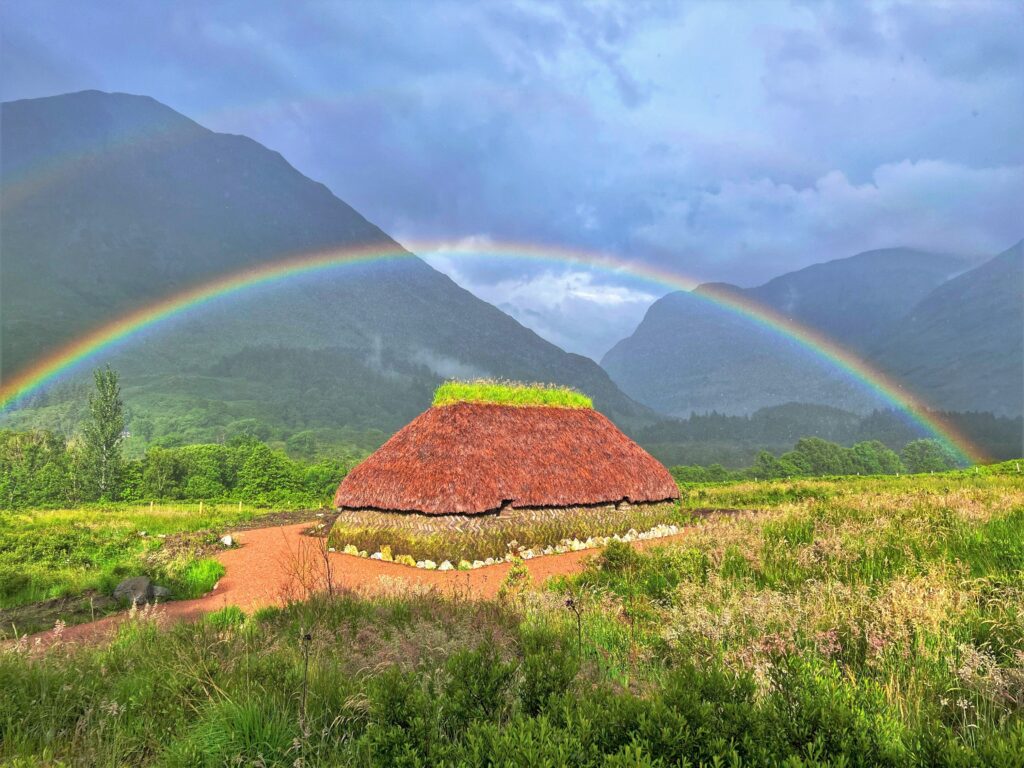
The National Trust for Scotland’s Turf and Creel House (Image Credit: National Trust for Scotland / Guy Veale)
Future Reconstruction: The Caithness Broch Project’s Broch
Since 2013, the Caithness Broch Project have been working towards the construction of the first broch to be built in Scotland in nearly 2,000 years. These Iron Age towers are unique to Scotland, and it’s thought that they were dwellings, perhaps for a chieftain or a number of families.
By attempting to build this structure as authentically as possible – working with tools of the past and using techniques familiar to Scotland’s prehistoric inhabitants – they hope to gain a deeper understanding of how the brochs were built and answer difficult archaeological questions.
Once the structure has been completed, they plan to furnish it and employ re-enactors and craftspeople to create a living history experience for tourists and locals, including schoolchildren.
They have selected a site in an area north of Latheron to build the broch and are now mapping out the next steps. If you would like to support their work, you can become a Friend for free, a Member for £10 a year, or donate via their website.
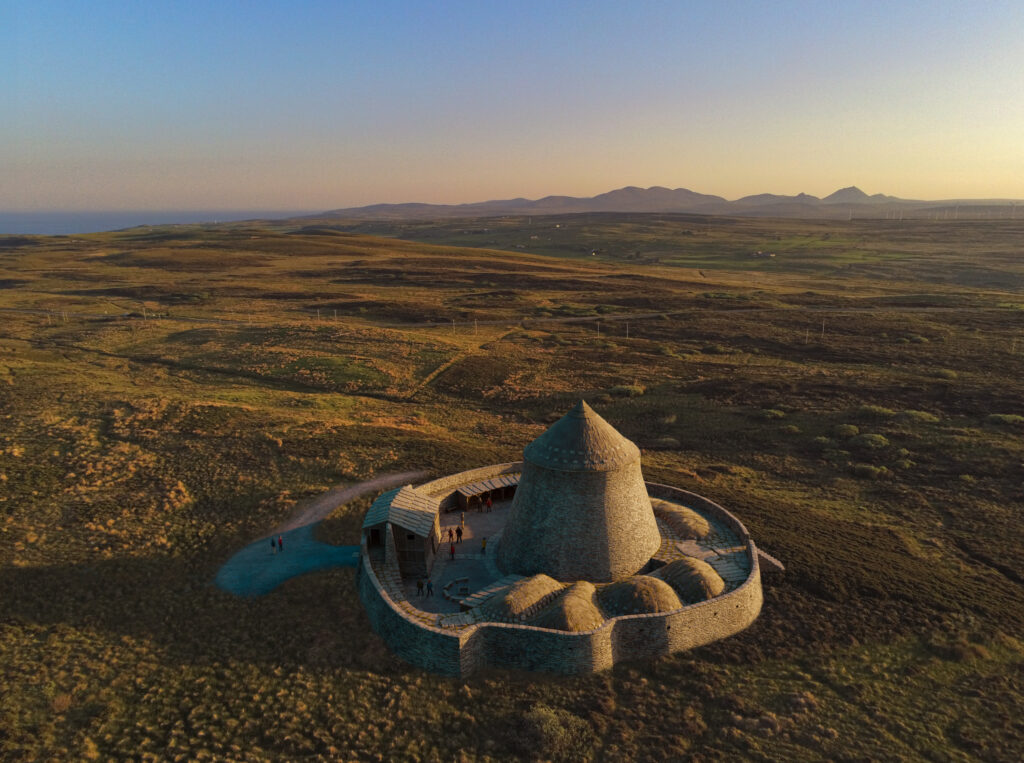
Digital reconstruction of the Caithness Broch Project broch (Image Credit: Bob Marshall / Caithness Broch Project)
Future Reconstruction: 1722 Waggonway Project’s Wooden Waggonway
Scotland’s earliest railway was built in 1722 to move coal from the Tranent mines to the Cockenzie salt works in East Lothian.
Having excavated the site since 2017, the 1722 Waggonway Project now have enough knowledge to be able to build a working wooden replica, exactly as it was constructed in the 18th century. They also plan to build several other replica structures associated with the waggonway, including a full-scale working salt pan house.
They will be constructed using accurate traditional techniques and materials wherever possible, with multiple opportunities for volunteers to get involved.
According to the 1722 Waggonway Project, there are currently no working wooden waggonways or 18th-century-style salt pan houses in the UK, which would make this a significant living history heritage asset for East Lothian and Scotland, as well as an industrial heritage visitor attraction.
The 1722 Waggonway Project are currently aiming to raise £10,000 to kick-start the project and donations can be made via JustGiving.
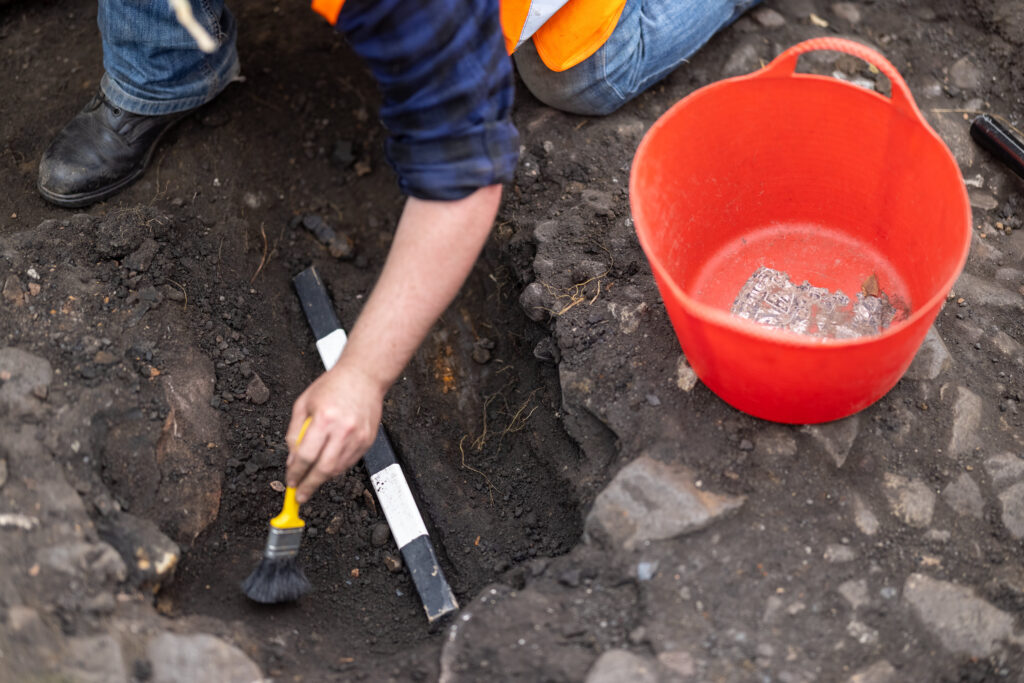
1722 Waggonway Project excavation which unearthed the remains of Scotland’s earliest railway (Image © Shahbaz Majeed 2021)
Dr Jeff Sanders FSAScot, Project Manager at the Society of Antiquaries of Scotland’s Dig It! project, said:
“By bringing these structures back to life, these organisations are not just learning from the past, they’re providing opportunities for the future. Often built with a deep understanding of their environment, they offer valuable lessons in sustainable design and resourcefulness. In addition to supporting these projects however you can, we encourage everyone to not just connect with history, but reflect on the challenges of climate change, be inspired by the ingenuity, and imagine a future where we build smarter and live more sustainably.”
Dr Susan O’Connor, Head of Grants at Historic Environment Scotland (primary funders of the Dig It! project), said:
“It’s fantastic to see so many successful historical recreations projects right across the country. Historical building reconstructions offer a window to the past in a way unlike any other, and whether someone visits a crannog, a roundhouse or a broch, they will feel like they have stepped back in time. We encourage everyone interested to take part in these experiences, form new connections with our built heritage, and learn about Scotland’s history through its buildings.”
Want to start exploring these sites and projects? Follow the links to read more about the Scottish Crannog Centre, Whithorn roundhouse, Old Scatness Iron Age buildings, Bosta (Bostadh) Iron Age house, the National Trust for Scotland’s turf and creel house, the Caithness Broch Project’s broch and the 1722 Waggonway Project’s Wooden Waggonway.
Header Image: Whithorn Roundhouse (Credit: The Whithorn Trust)
