Five of Scotland’s Most Amazing Archaeological Discoveries from 2023
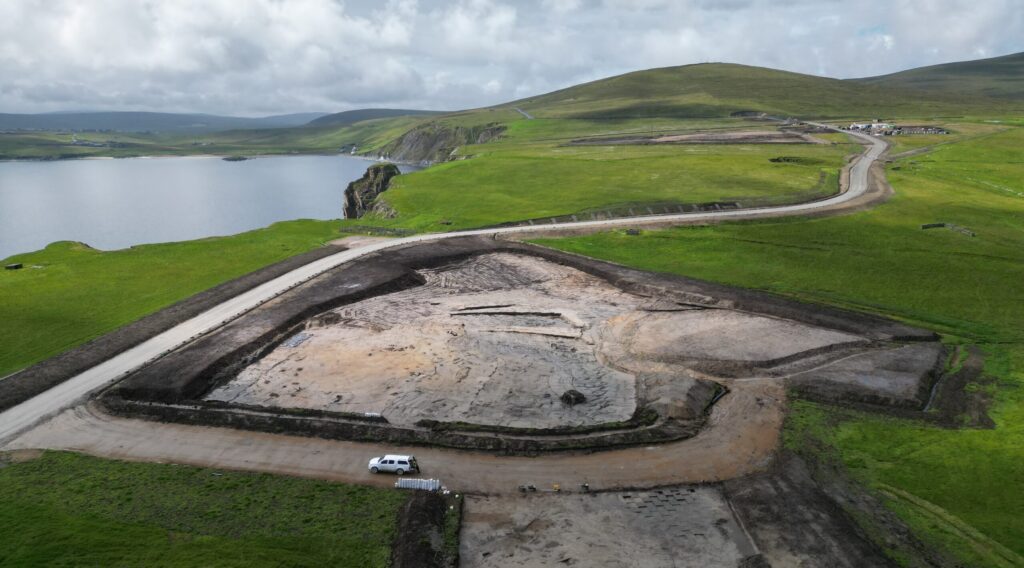
A possible Neolithic “hall”, a Bronze Age ritual cremation cemetery, and an “elite” Iron Age hillfort are among the most ground-breaking finds.
We’ve compiled our annual list of some of the biggest discoveries from the year to raise awareness of the fantastic archaeological work that takes place across the country.
1) Possible Neolithic Timber “Hall” in Moray
Starting with the oldest discovery on the list: a possible Neolithic timber “hall” – the first to be excavated in Moray – was identified by AOC Archaeology in Portgordon.
It was found in late 2022 during an evaluation and excavated between January and March 2023 in advance of proposed development works. This is known as developer-led archaeology, and is undertaken as part of the planning process, for example, in advance of the building of new houses, and provides a great opportunity to make new discoveries.
Archaeologists believe it’s a timber hall dating to the Early Neolithic period (4,100 BC to 3,500 BC) (around 6,100 to 5,500 years ago) as the layout of the postholes and pits (used to hold the structural timbers of the building) resembles other examples found in Scotland. More than 240 pieces of prehistoric pottery have also been recovered from the site, including fragments of Carinated and Unstan Bowl – among the earliest type of pots found in Britain.
Yvonne Robertson from AOC Archaeology said: “Whether or not the structure meets the criteria of a timber ‘hall’ or is actually a more everyday ‘house’, it’s a very special contribution to our understanding of Neolithic sites.”

Neolithic timber “hall” (Image Credit: AOC Archaeology)
2) Bronze Age Discovery at Shetland Spaceport Site
In June, the remains of what may have been an Early Bronze Age ritual cremation cemetery were found at a rocket launch site in Unst.
The discovery was made by AOC Archaeology, who were carrying out a watching brief during groundworks at the SaxaVord Spaceport site. Watching briefs involve careful observation of excavation works within a development site to ensure that any archaeological remains that are revealed are identified and recorded. The discovery will not hamper development at the spaceport.
Several features, including pits, boulders and cremations (surviving as deposits of burnt bone) have been uncovered along with quartz pebbles. These are often associated in prehistory with burial tombs and, in this case, had been used to create a bright white platform. Archaeologists believe the remains may date from around 2,200 BC to 1,800 BC (around 4,200 to 3,800 years ago).
According to Dr Val Turner FSAScot, Shetland’s regional archaeologist, “the Bronze Age is perhaps the period of Shetland’s past which we know least about and this is a wonderful opportunity to change that.”
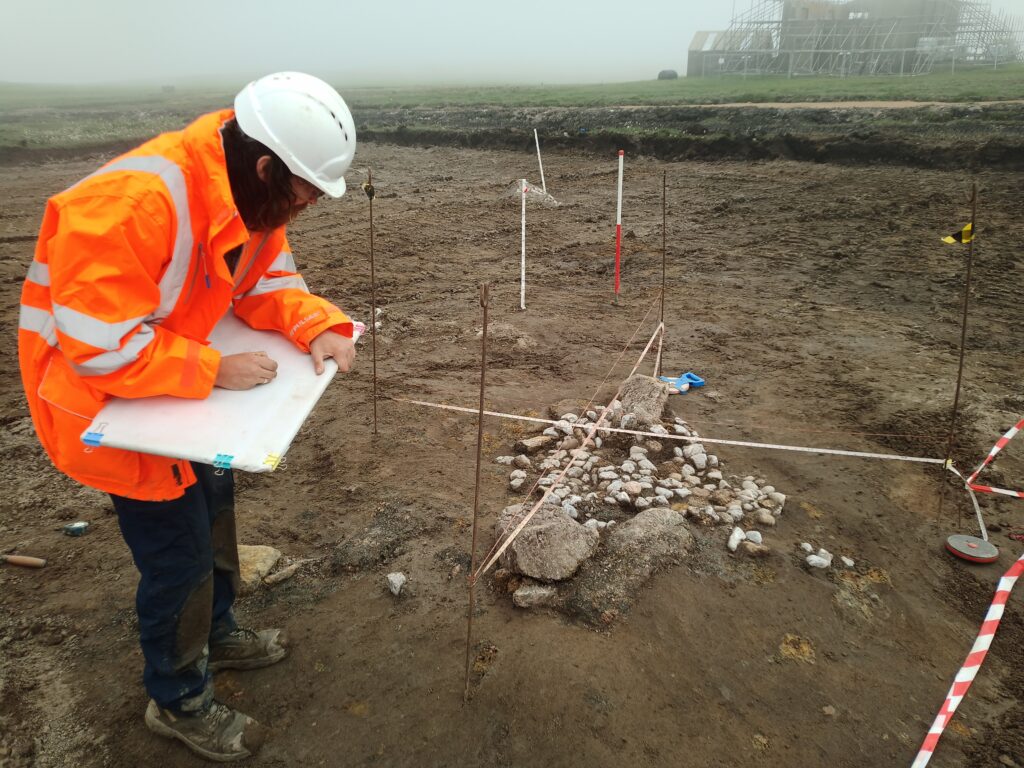
Recording the Shetland spaceport site discovery (Image Credit: AOC Archaeology)
3) “Elite” Iron Age Hillfort in Stirlingshire
One of Stirlingshire’s largest Late Iron Age sites – which may have been built and occupied by local tribes before, during and after the Roman invasions of Scotland – has been uncovered at Keir Hill of Dasher in Kippen.
With the help of volunteers, Rampart Scotland and Kippen Heritage have uncovered distinct phases of fortifications at the previously undated site over the last three years, including defensive ditches.
This spring, they unearthed a paved surface over the ditch into the entrance, similar to a causeway. Thanks to radiocarbon dating of charcoal found in this surface layer, they learned that this period of the hillfort dates to the Late Iron Age (AD 1 to 400) (around 2,000 to 1,600 years ago).
According to Dr Murray Cook FSAScot of Rampart Scotland, “this elite structure would’ve been used by the locals to express identity and power to each other and the Romans. Interestingly, it’s also one of a handful of Iron Age sites in this area that was still in use by the late 2nd and 3rd centuries. It’s hoped that the hillfort will therefore reveal more about this enigmatic period of Scottish history.”
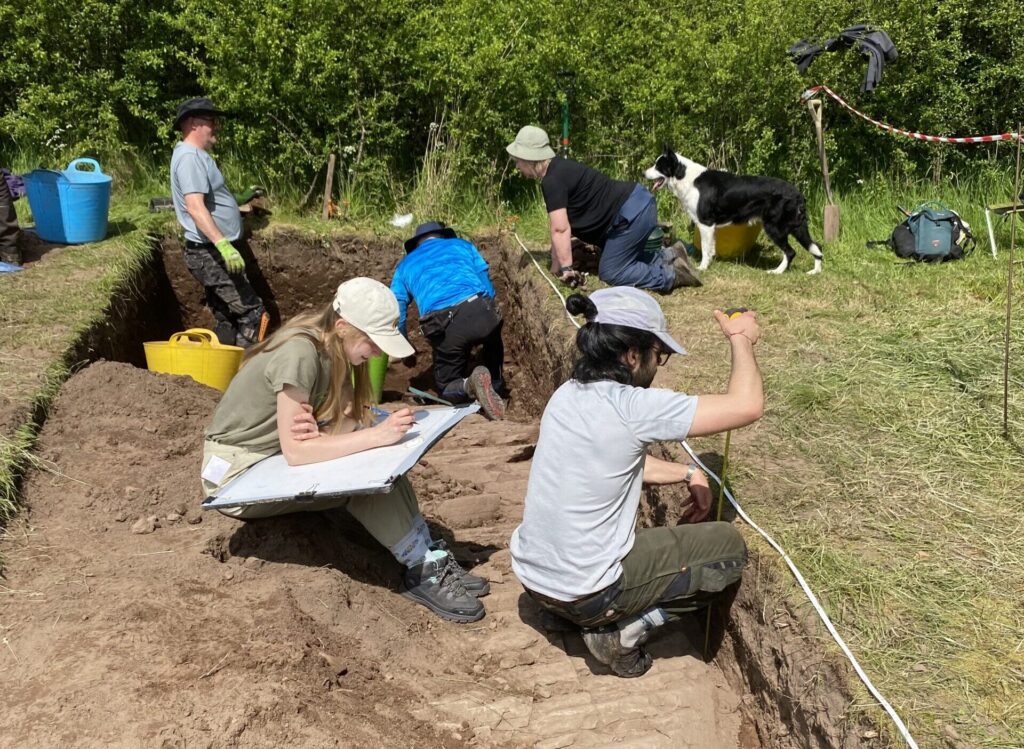
Excavation in Stirlingshire (Image Credit: Dr Murray Cook FSAScot)
4) Evidence of Medieval German Merchants in Orkney
In February, medieval pottery specialists from eight countries discovered traces of Orkney and Shetland’s contact with merchants from Hanse towns (a group of German cities) who expanded into the North Atlantic in the 15th century (over 500 years ago).
The German pottery was identified in museum collections in Orkney and Shetland, as well as in recent assemblages unearthed by the University of the Highlands and Islands (UHI) Archaeology Institute as part of the Looking in from the Edge (LIFTE) project. This includes sherds (pieces) from a late medieval building uncovered in 2023 at Skaill farmstead in Rousay, demonstrating that this rural island was linked to wider European networks.
According to Dr Sarah Jane Gibbon FSAScot of UHI Archaeology Institute, “merchant activity relating to Orkney during this period is little researched and LIFTE gives us an opportunity to explore the impact of this rapidly changing and expanding world on the islanders’ ways of life, the effects of which can still be seen today.”
LIFTE is an Arts and Humanities Research Council/German Research Foundation-funded project by the UHI, the German Maritime Museum and the University of Tübingen.
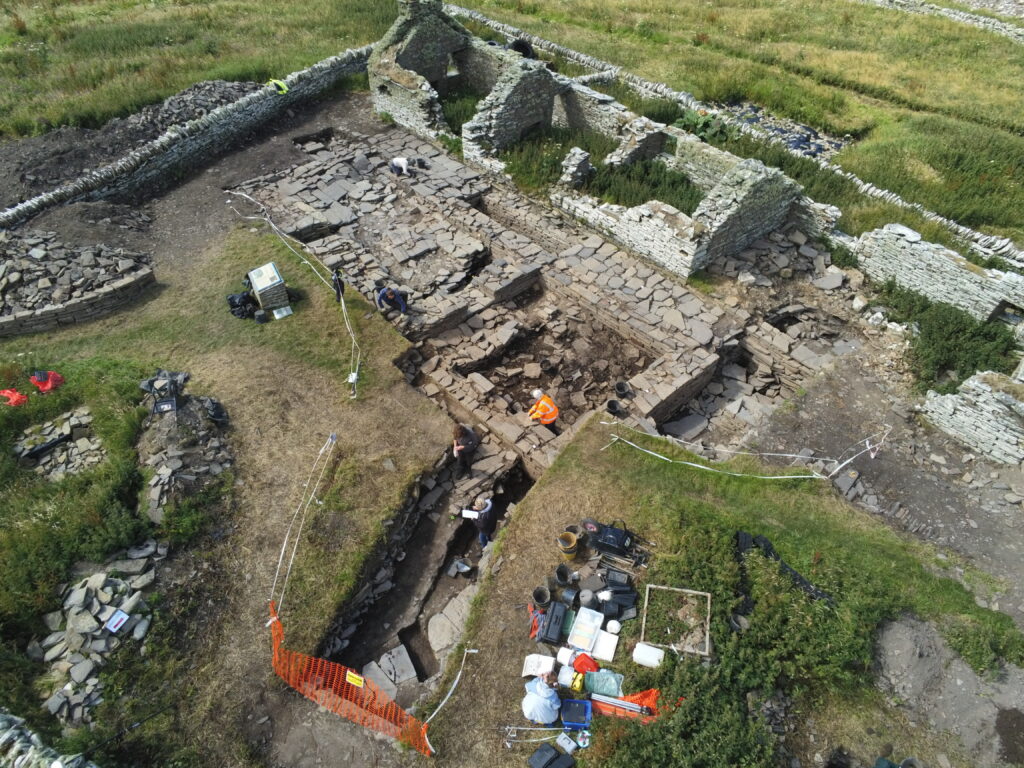
Skaill excavation in Orkney with the medieval square building in the centre (Image Credit: Bobby Friel)
5) Rare Cliffside Cableways in Aberdeenshire
In April and May, the SCAPE Trust surveyed and recorded rare – possibly unique – iron and steel cableways which were used to lift nets, gear, and fish from coves to the top of steep cliffs at Burnbanks Haven and Portlethen.
Introduced into quarries in the late 19th century (over 100 years ago), the technology was borrowed for the fishing industry in Aberdeenshire when natural coves were developed into small salmon harbours. According to a local resident, they were known as ‘Blondins’, named after the 19th-century French tightrope walker Charles Blondin who famously crossed the Niagara Gorge on a high wire.
Surveying and recording are important parts of the archaeological process which, in this context, involve visiting vulnerable coastlines, updating records, and prioritising sites for monitoring or future action.
The fishing stations are now largely disused, but remaining elements such as these make the sites important for preserving modern fishing heritage.
According to Sarah Boyd, SCAPE Project Officer, “although the site was known, the 2023 surveys have shed light and dug a little deeper into their history, with the help of local communities.”
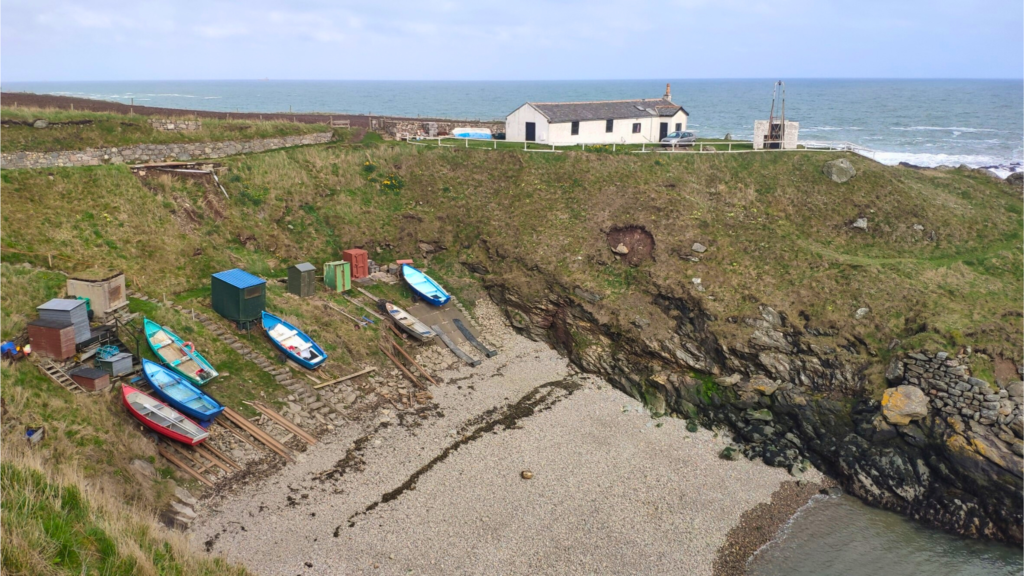
Portlethen Blondin in Aberdeenshire (Image Credit: SCAPE Trust)
Dr Jeff Sanders FSAScot, Dig It! Project Manager at the Society of Antiquaries of Scotland, said:
“It’s been another incredible year of discovery which has underscored archaeology’s relevance to contemporary issues, whether it’s new chapters of Scotland’s story being unearthed by development-driven archaeology or local groups documenting the impact of climate change on coastal sites.
And this is just a small selection! There were dozens of other exciting finds ranging from a Neolithic monument on Arran to a coin hoard that could be linked to the Glencoe Massacre. If you’re feeling inspired, why not make 2024 the year you get stuck into archaeology by visiting a site, volunteering at a fieldwork event, or digging into online resources?”
Dr Susan O’Connor, Head of Grants at Historic Environment Scotland (HES), said:
“This list is a great illustration of the archaeological discoveries made in Scotland this year alone. These projects highlight the variety and breadth of activity happening across the country, increasing our understanding of how the people, activities, and changes in the natural world over the centuries have shaped our environment today. Dig It! offers exciting opportunities for individuals, groups and communities to get hands on with the past and experience archaeology for themselves.”
Want to get involved? Thanks to funding from Historic Environment Scotland, we’re able to advertise free or low-cost archaeology events which are open to everyone with no experience required.
Header Image: Bronze Age Discovery at Shetland spaceport site (Image Copyright: Stuart Munro)
