What Are Watching Briefs and What Have They Uncovered in Scotland?
What do you think of when you hear the words “archaeological site”? The Antonine Wall? Skara Brae? Tursachan Chalanais (the Callanais Stones)? How about the building site down the street? Or the house extension next door?
The fact is, just like the excavation of a famous archaeological site, those other works could also be uncovering clues to our past. An archaeologist, putting on a hi-vis jacket and hard hat and tasked with undertaking a watching brief in your area, is there to do some site-based detective work.
What is a Watching Brief?
Proposed developments that are located in areas of archaeological potential based on historical mapping or previous findings in the locale (such as a desk-based assessment) may be flagged up for a watching brief requirement by the Council Archaeologist, especially where pre-development archaeological works are impractical.
GUARD Archaeology carries out around 10-15 watching briefs a year. Watching briefs or evaluations are only required when the local authority archaeologist considers there to be a potential for the development to impact archaeology – most developments do not require any archaeological mitigation.
The watching brief takes place as development starts and ensures that any material remains that might survive get recorded and sampled before they’re destroyed by construction works. It may also be that the Watching Brief Archaeologist is able to identify archaeological remains so that, if possible, these can be left alone and preserved in situ (where they were found), buried underneath the new development.
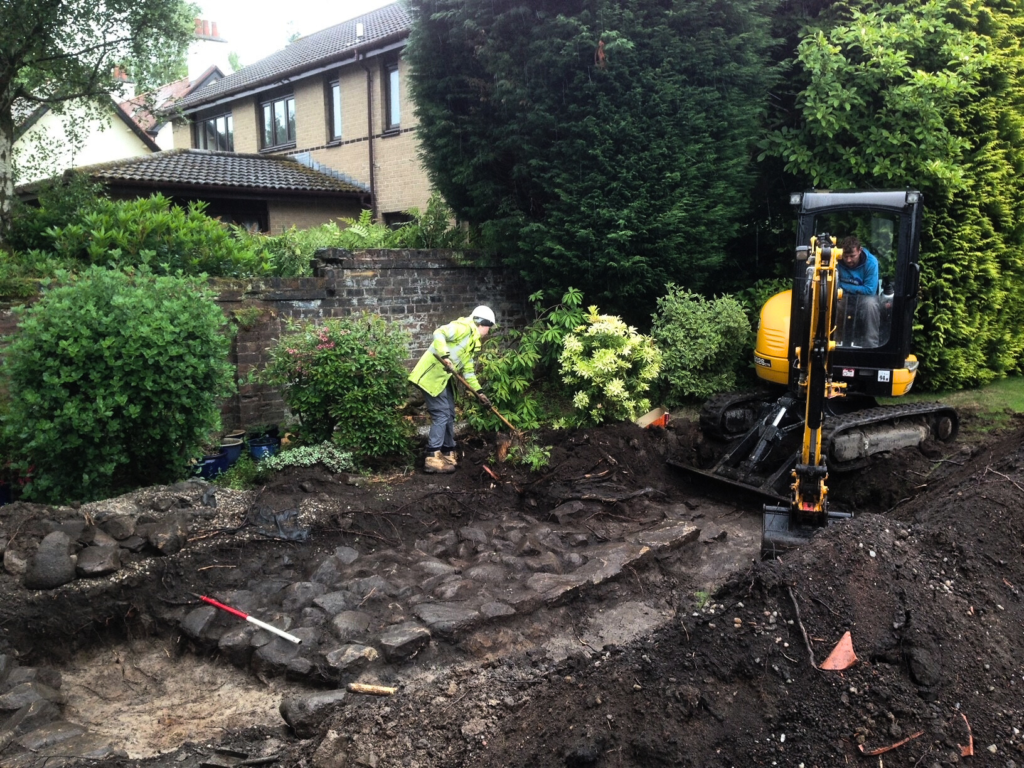
GUARD Watching Brief Archaeologist at work (© GUARD Archaeology Ltd)
How does a Watching Brief work?
Just as the name suggests, the archaeologist conducting a watching brief…watches!
They carefully observe any excavation works within a development site and look for buried evidence for past human activity. This can range from relatively recent material and activity from the last few decades or centuries, to evidence of much older activity going back millennia.
Whilst monitoring the excavation works, an archaeologist’s time will be spent carefully observing what is being excavated, photographing excavations as they progress, and keeping a written record of the deposits encountered. You probably have an image of archaeologists carefully digging and scraping away with their trusty trowels. And that’s true in some scenarios, but construction tends to involve some slightly bigger digging equipment.
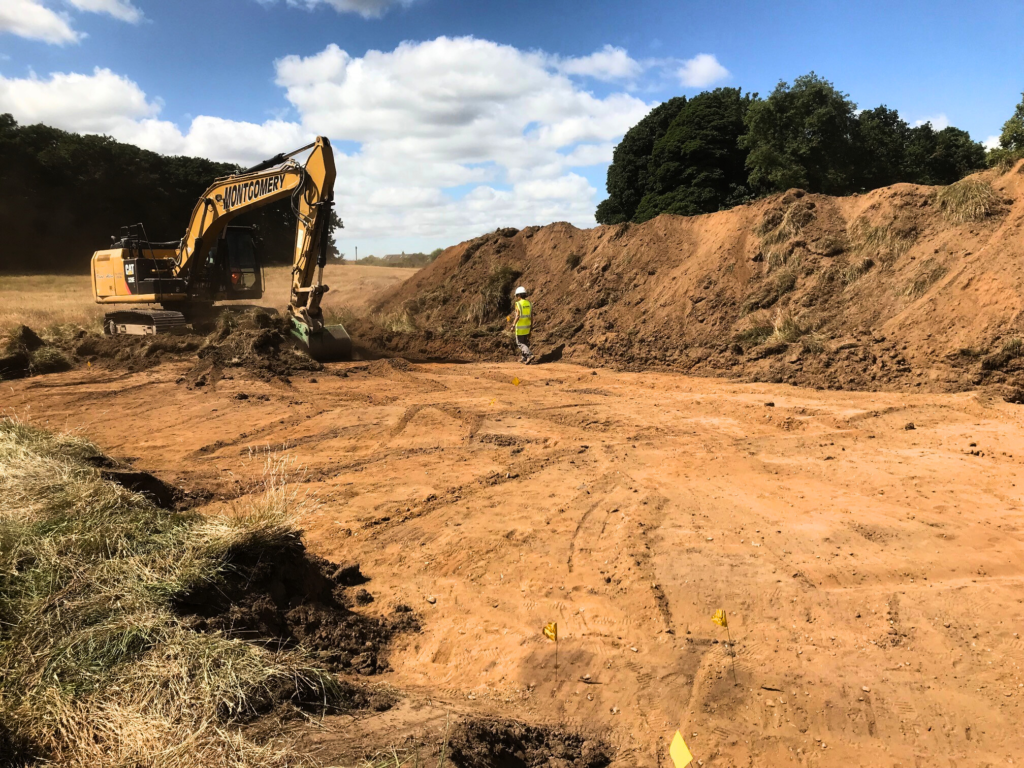
Machine excavator at work and monitored by GUARD Archaeologist (© GUARD Archaeology Ltd)
Most excavation works during watching briefs on construction sites will be undertaken with mechanical excavators. These can range from small mini-diggers to massive 35-ton machines. The archaeologist conducting a watching brief works at a safe distance from the machine operator whilst they excavate. Hard hats and high-vis clothing are definitely mandatory – as are good communication skills, including hand signals!
What happens if an Archaeologist finds something during a Watching Brief?
Should something archaeologically significant be uncovered, such as the remains of an ancient structure or archaeological artefacts, the archaeologist who has been patiently observing for days/weeks/months springs into action: halting the excavation so that they can get a better look. When the area has been made safe, the archaeologist will clean and observe the feature and determine whether it’s archaeologically significant. Some investigation may be necessary – this is where the ‘trusty trowel’ comes in handy.
Once the archaeologist has sufficiently investigated and recorded the archaeological remains, construction excavations will typically be allowed to continue, which often means that any remaining physical archaeology there will be destroyed. So, it’s essential that recording is done accurately and to a high standard. In archaeological watching briefs, you only get one chance to get it right. No pressure!
So, what types of discoveries have been made through watching briefs?
Eilean Leòdhais (Isle of Lewis): A Watching Brief on the Heather Isle
Watching briefs are conducted on construction sites up and down the country. A 2022-2023 watching brief conducted by GUARD Archaeology involved the monitoring of excavations for the construction of coastal flood defences at Stornoway Airport on Eilean Leòdhais in Na h-Eileanan A-Muigh (the Outer Hebrides). Originally developed in the 1940’s as an RAF airbase, Stornoway Airport now operates as a commercial airport, though evidence of its Second World War origins still survives.
Whilst monitoring the excavation works, we came across bullet cases associated with the military use of the beach front, with some of the bullets identified as being manufactured in the 1940’s.
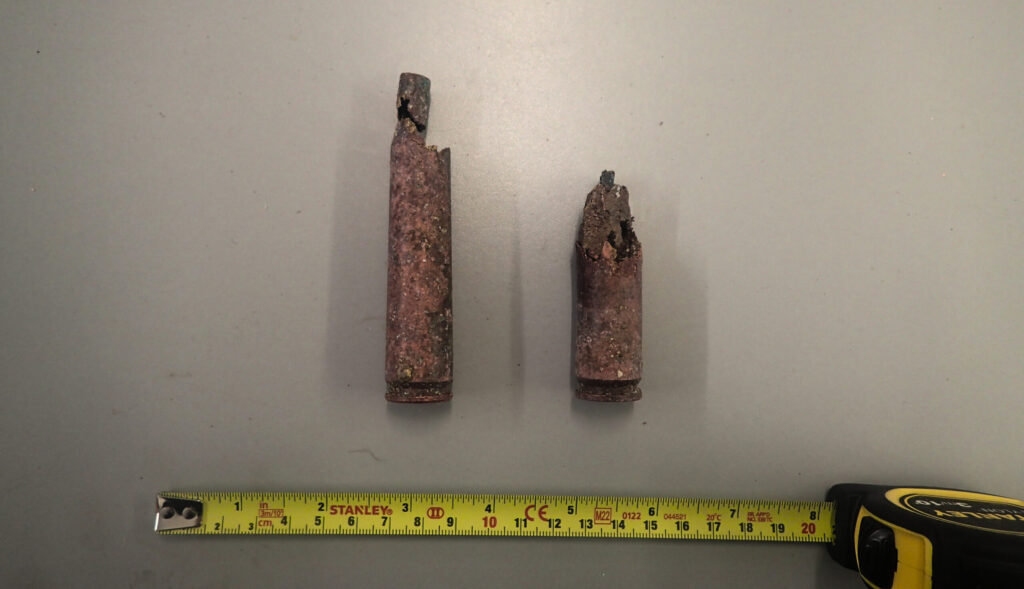
Spent bullet casings recovered during GUARD Watching Brief at Stornoway Airport (© GUARD Archaeology Ltd)
Other more benign finds attest to the presence of American pilots in Stornoway during the post-War period, with one unlucky airman appearing to have lost their half-finished bottle of whisky. Though produced in Scotland, the embossed “Federal Law” label on the bottle suggests that this bottle was purchased in the USA and brought back across the Atlantic, possibly because the only distillery on Eilean Leòdhais had been closed more than a century prior!

Whisky bottle recovered during GUARD Watching Brief at Stornoway Airport (© GUARD Archaeology Ltd)
Hiort (St. Kilda): Archaeology at the “Edge of the World”
Prior to trans-Atlantic contact with the people of the Americas (first by the Norse in the late 10th century AD and then post-1592 AD by European colonisers), these isolated islands at the westernmost point of Scotland were truly the edge of the world. And yet, people have called Hiort home for at least 4,000 years. No one has lived on Hiort full-time since the 1930s, though material evidence of the islands’ long history endures: preserved as a UNESCO World Heritage Site by the National Trust for Scotland for its archaeology and ecology.
For several years, GUARD Archaeology has conducted watching briefs during construction works on Hirta, the largest island of the archipelago. The first challenge is getting there, but commuting to work by helicopter is sometimes just part of the job!

Hiort helicopter in action (© GUARD Archaeology Ltd)
Excavations monitored by GUARD archaeologists have led to the uncovering of thick agricultural soil deposits from which were recovered sherds of pottery, some of which had burnt organic residues attached to their interior surfaces.
These residues allowed for radiocarbon dating, and results suggest that these ceramic sherds date from the Iron Age, between 380 BC and 16 AD (around 2,000 years ago), with some medieval pots also identified dating to the 13th century AD. No Iron Age structures were encountered during the archaeological monitoring on Hirta, though the presence of this pottery in fertilized soils and along a drainage feature encountered there suggests that Iron Age settlements may have been situated nearby, and provides a tantalising glimpse into prehistoric life on Hiort.
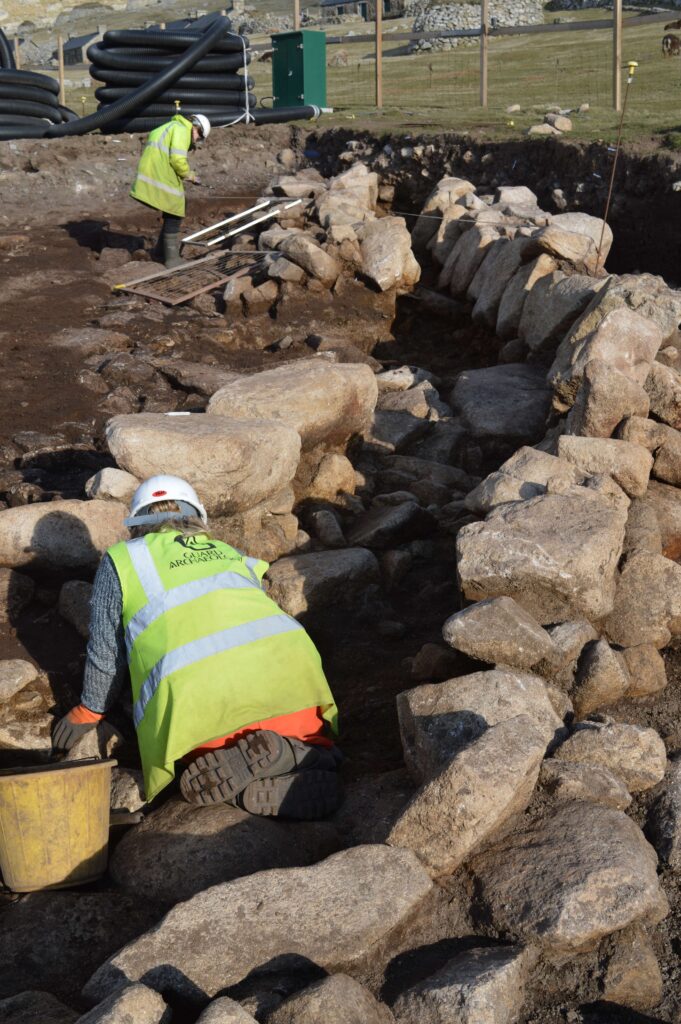
GUARD Archaeologists excavating a stone lined drain at Hiort (© GUARD Archaeology Ltd)
Watching briefs are a useful way of investigating archaeology when it’s either impractical or not possible to evaluate a site for archaeology in advance of construction. This increases the chance for the unexpected to appear, so it’s vital that Watching Brief Archaeologists can respond quickly to what they uncover to minimise disruption to construction works.
Want to know more about the archaeological process? Dig into desk-based assessments and what they’ve uncovered in Scotland.
By Jordan Barbour FSAScot. Jordan is a Senior Project Archaeologist at GUARD Archaeology Ltd and has worked on archaeological watching briefs, evaluations and excavations across Scotland.
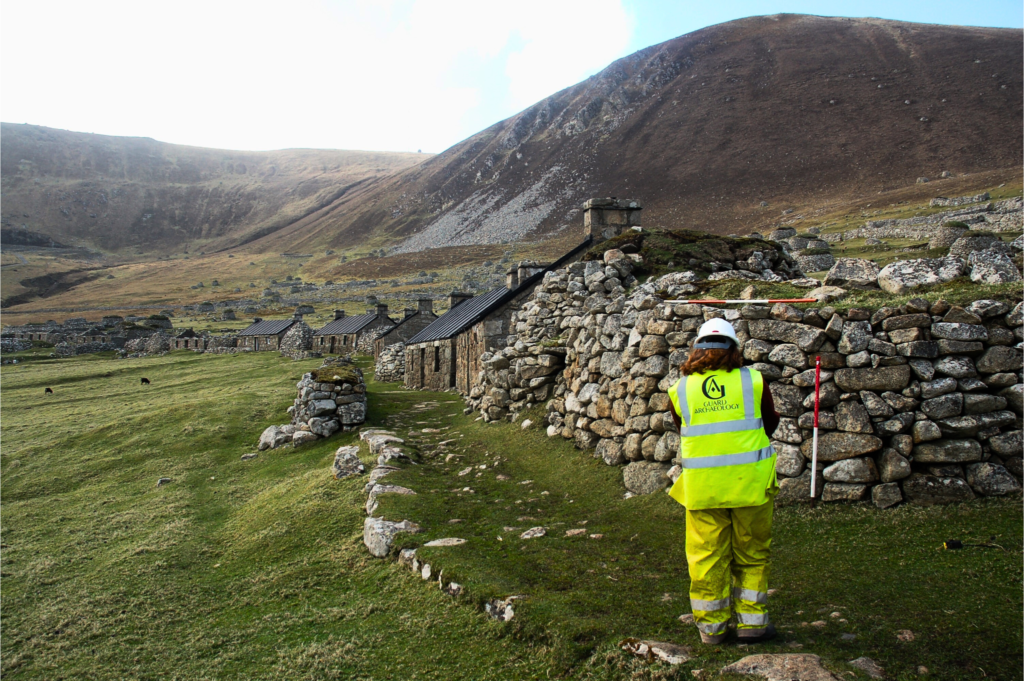
Header Image: Hiort (© GUARD Archaeology Ltd)
