Top Five Archaeological Sites and Discoveries in and Around Edinburgh
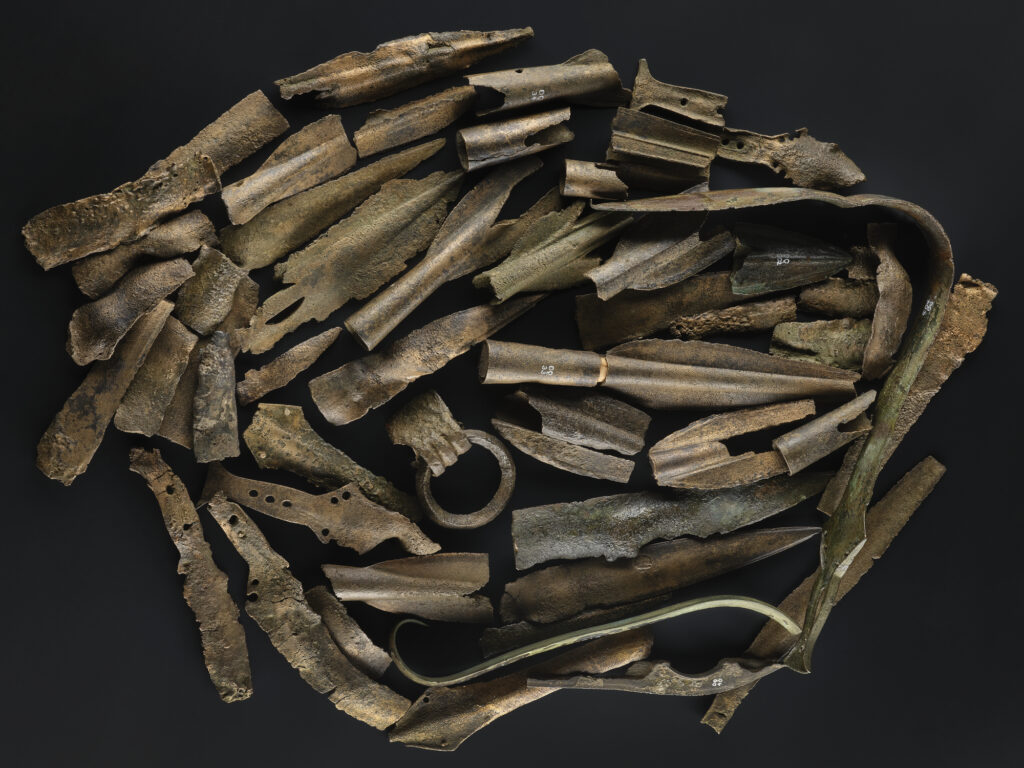
Edinburgh Castle may be its most famous site, but the story of Scotland’s capital city and the surrounding area doesn’t start or end on Castle Rock.
Evidence of Mesolithic Tool Production at Cramond
In the 1990s, fieldwalking and excavations at Cramond, a village in the north-west of Edinburgh, uncovered some of Britain’s earliest known evidence of stone tool production.
Work by the City of Edinburgh Council Archaeology Service and the Edinburgh Archaeological Field Society unearthed what’s known as “narrow-blade microliths”, as well as burnt hazelnut shells, which were used to radiocarbon date the site to around 8,500 BC (around 10,500 years ago).
Broken off (or knapped) from a larger piece of flint, microliths are small flint tools with a sharp edge which were crafted to create spear points or arrow heads or combined with other materials to make tools such as sickles.
According to the Scottish Historical and Archaeological Internet Report (SHAIR) about the site published by the Society of Antiquaries of Scotland (who coordinate Dig It!), this discovery pushed the timeline for this technology in Britain into an earlier millennium.
The artefacts were unearthed alongside evidence of structures, such as post-holes which would’ve contained supporting wooden posts. These suggest that hunter-gatherers here were becoming more sedentary, building small timber-framed structures (a bit like tents) and staying in camps for longer periods.
Due to a lack of Mesolithic discoveries in Scotland, countries like England and Scandinavia have often been used as proxies when studying this time period. However, sites like Cramond are gradually expanding our knowledge of the Scottish Mesolithic and showing us how different it really was.
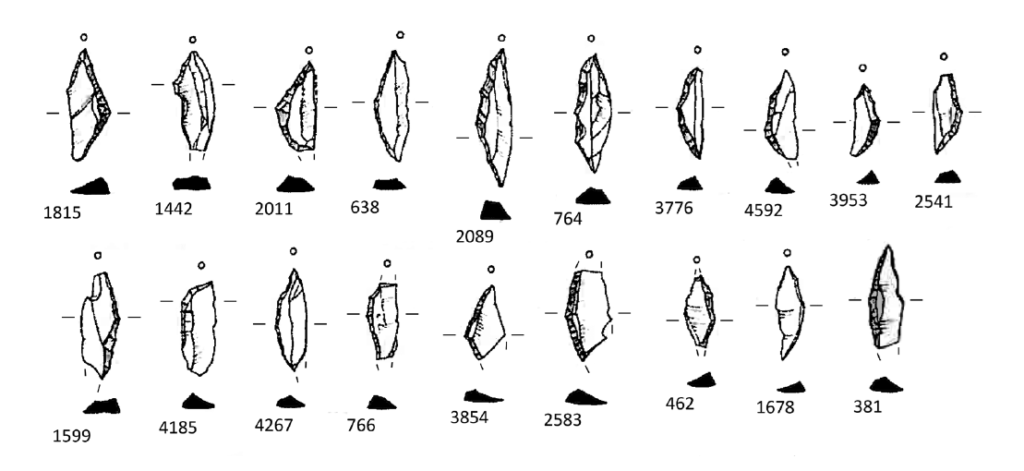
Mesolithic artefacts from Cramond (via SHAIR 103: ‘A time of change: Mesolithic occupation at Cramond, Edinburgh during the 9th millennium BC’ © AOC Archaeology Group)
Bronze Age Hoard at Duddingston
Around 3,000 years ago, a hoard of Late Bronze Age weapons, including swords and spears, was deliberately destroyed before being deposited in the waters of Duddingston Loch. These artefacts remained at the bottom of the loch until a dredger dragged them up in 1778. Some of this assemblage was then donated to what is now National Museums Scotland by the Society of Antiquaries of Scotland.
Dated to around 1100 to 900 BC, for decades the Duddingston Loch hoard was thought to be a pile of prehistoric scrap metal that was abandoned in the Bronze Age, but experts from Germany and at National Museums Scotland have re-examined the hoard and come up with some exciting alternate theories.
According to Dr Matthew Knight, Senior Curator of Prehistory at National Museums Scotland, many of the objects appear to have been used before they were intentionally damaged. The bent, broken and burnt nature of the objects implies that they were thrown into the loch as a kind of sacrifice. Archaeologists have suggested that they may have belonged to a band of warriors who deliberately sacrificed them, perhaps as offerings to the gods. Another possible explanation is that the weapons were war booty taken from an enemy and destroyed so that their adversaries couldn’t use them in the afterlife.
If you want to dig deeper into conflict in prehistoric Scotland, the hoard will be on display as part of the free Scotland’s First Warriors exhibition at the National Museum of Scotland in Edinburgh until 16 May 2027.
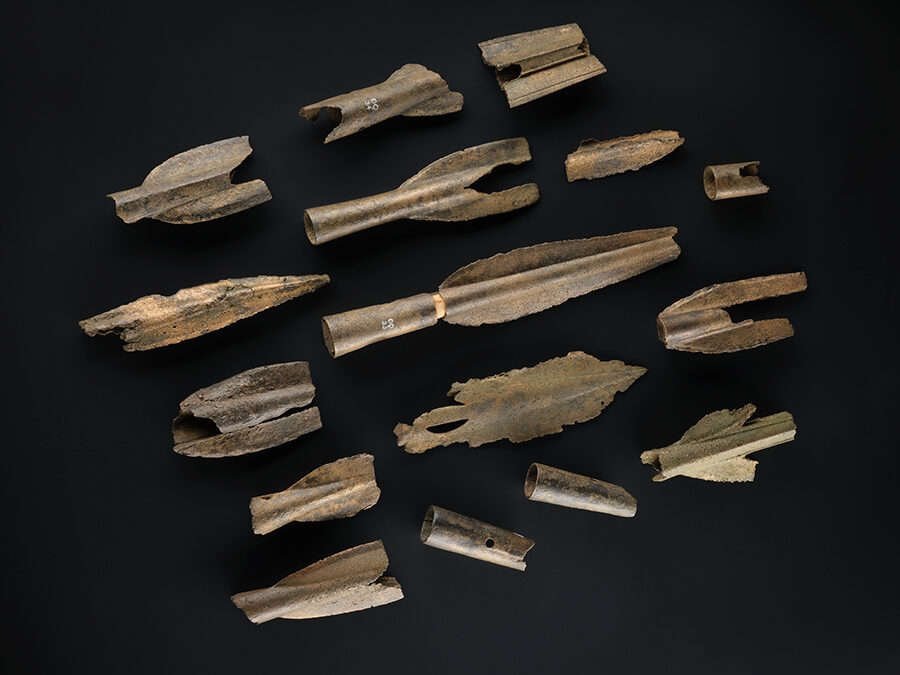
Spearheads and spearhead fragments from the Late Bronze Age Hoard from Duddingston Loch, Edinburgh (Image credit: National Museums Scotland, CC BY-SA 4.0, https://commons.wikimedia.org/w/index.php?curid=107680774)
Iron Age Chariot Burial at Newbridge
In 2001, archaeologists uncovered the remains of an Iron Age chariot which had been buried intact at Newbridge, west of Edinburgh city centre, over 2,400 years ago (dating to the 5th century BC).
The first of its kind to be found in Scotland, the discovery was made by Headland Archaeology through a process known as developer-led archaeology. First identified as a “figure-of-eight”-shaped pit, the resulting excavation was a joint operation involving staff from Headland and National Museums Scotland.
According to Headland, the construction techniques indicated that Scotland had links with Continental Europe at this time. However, they also identified the emergence of a British tradition of chariot construction which was “distinctively different in such areas as wheel construction and suspension fittings”.
The site of the discovery has been commemorated with the street name “Chariot Drive”.
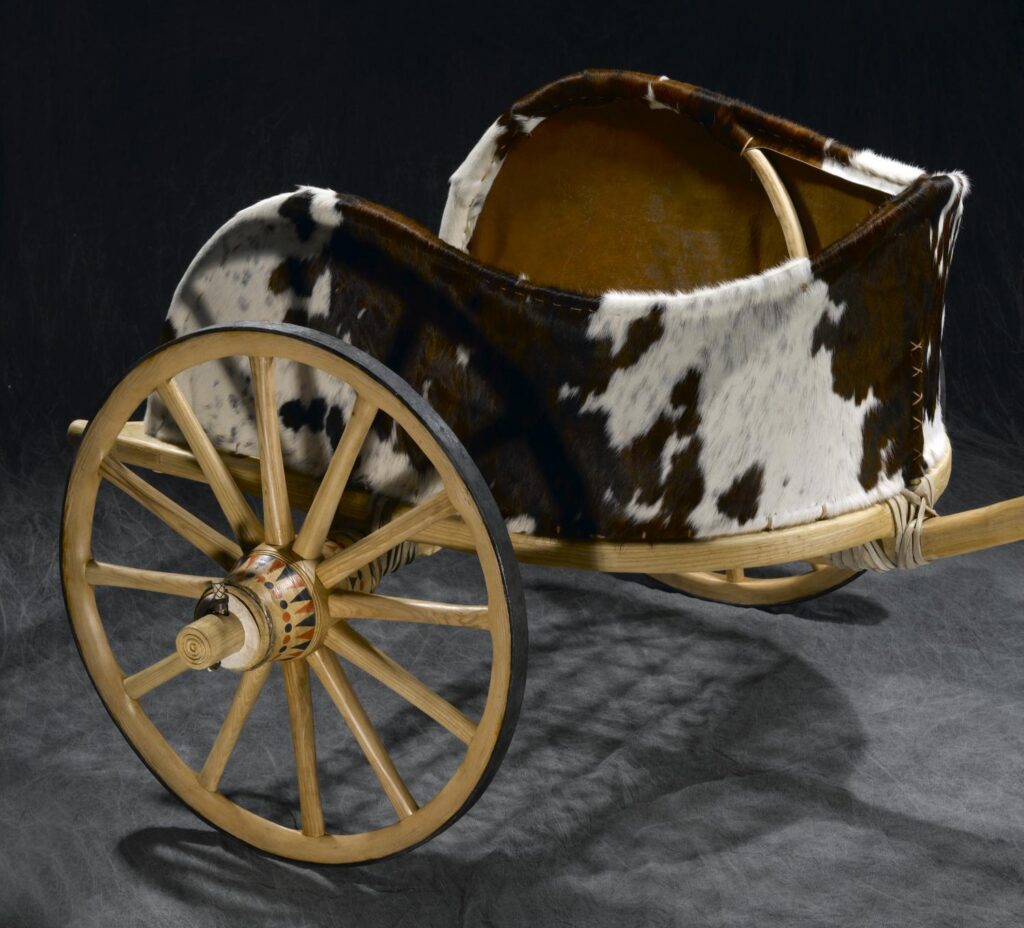
Reconstruction of Newbridge chariot, made from wood (mostly ash), rawhide, iron and feathers, made by Robert Hurford, with ironwork by Pete Hill at Ratho Byres Forge, 2007 (Image © National Museums Scotland)
Medieval Remains at India Buildings
From 2018 to 2019, archaeological works at the 19th-century India Buildings “revealed arguably the best medieval site ever excavated in the city of Edinburgh”.
The work undertaken by AOC Archaeology ahead of development uncovered “an excellent sequence” of stratigraphy (layers of soil which help date different parts of a site) from the present day down to at least the 12th century, which is particularly rare for late medieval sites in Edinburgh (around AD 1200 to 1500). Headland Archaeology then began the post-excavation analysis in 2023.
In addition to the well-stratified remains, the site featured waterlogged areas, which had prevented the organisms that break down organic materials from starting the process of decomposition. These conditions “led to the survival of large quantities of wood, leather, textiles, plant remains and other organic materials, an unprecedented assemblage for Edinburgh.”
These included over 100 leather shoes, a barrel-shaped leather water bottle known as a “costrel” with an imprinted design featuring coats of arms (an “unparalleled” find in Scotland), timber used in construction which dates to the 12th century (around the time of the burgh’s foundation) and reused wine barrels originating from valleys in France, Belgium and the Netherlands.
Post-excavation analysis is still underway, with plans to publish the results in 2027 which will help to “shed new light on Edinburgh’s early development, economy, and industries”.
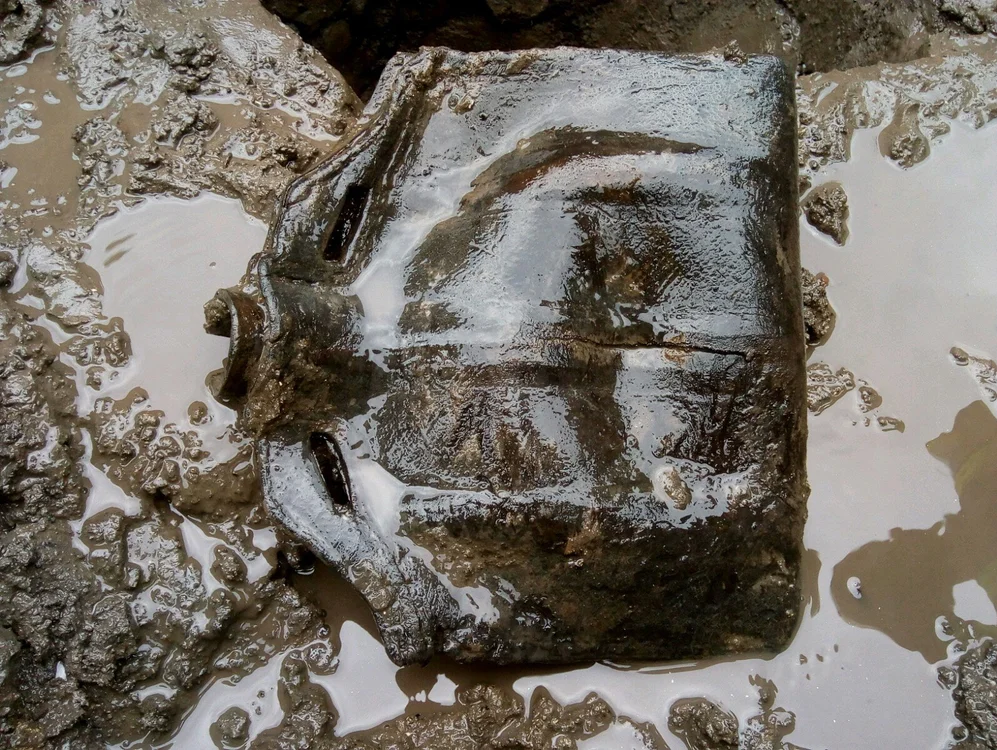
The medieval costrel (Image © AOC Archaeology)
New Street Gasworks at Canongate
According to the SHAIR volume, the New Street Gasworks began to supply the city with fuel for gaslight in 1818, which replaced candle or oil lamps in some people’s homes and businesses, and as street lighting. AOC Archaeology, who undertook the excavations, noted that this illuminated parts of the city into the night, encouraging safer streets. This also meant that businesses could operate longer hours and “Edinburgh’s industrial revolution could flourish”.
Although the new form of lighting provided plenty of benefits to the townsfolk, the innovation also came at a price; the processes which made the gas were dirty and dangerous, causing environmental pollution and health problems amongst the workers.
During the excavations, they discovered an array of buildings and technology and “significant evidence” of its construction and modification. When compared to contemporary maps of the area, this allowed the archaeological structures uncovered to be linked to key changes in the gasworks’ growth and development.
The excavations also recovered large amounts of artefacts, including metal, wood and stone fittings, fixtures and tools. Among the findings were an iron box with a sliding door which enabled workers to assess the temperature and efficiency of the furnaces, an intact fireclay retort (airtight cylinder) within which coal would be heated to release the gases, and remains of the double furnace room which was part of alterations to increase the efficiency of the gas making process.
The fieldwork enabled archaeologists to examine how the early gasworks functioned and how they expanded in response to increased demand and developed with the introduction of more efficient systems and new technology. Investigation of the structural remains and artefacts also revealed important new information about the development of industry in Edinburgh and “the advancement of coal gas technology more widely, with far-reaching effects on British society.”
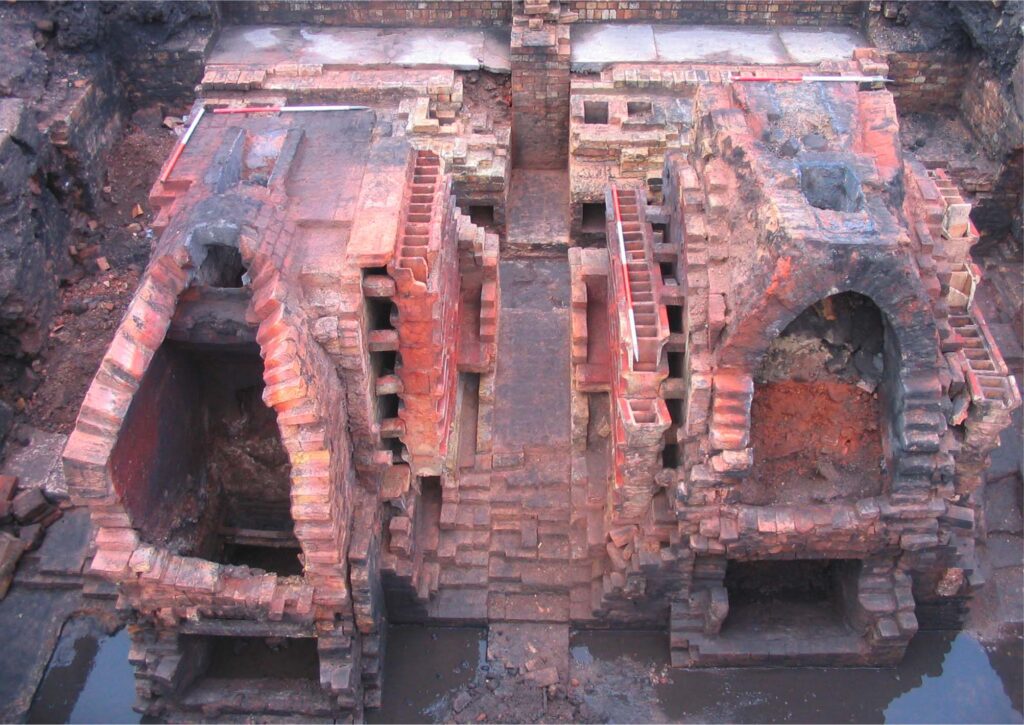
The double furnace room (via SHAIR 101: ‘The New Street Gasworks, Caltongate: archaeological investigation of a major power production complex in the heart of Edinburgh and its significance in the industrial development of Britain’)
Want to keep reading? Explore more archaeological sites and discoveries in nearby East Lothian and West Lothian.
Header Image: Duddingston Hoard (© National Museums Scotland)
