Top Four Archaeological Sites and Discoveries in Inverclyde
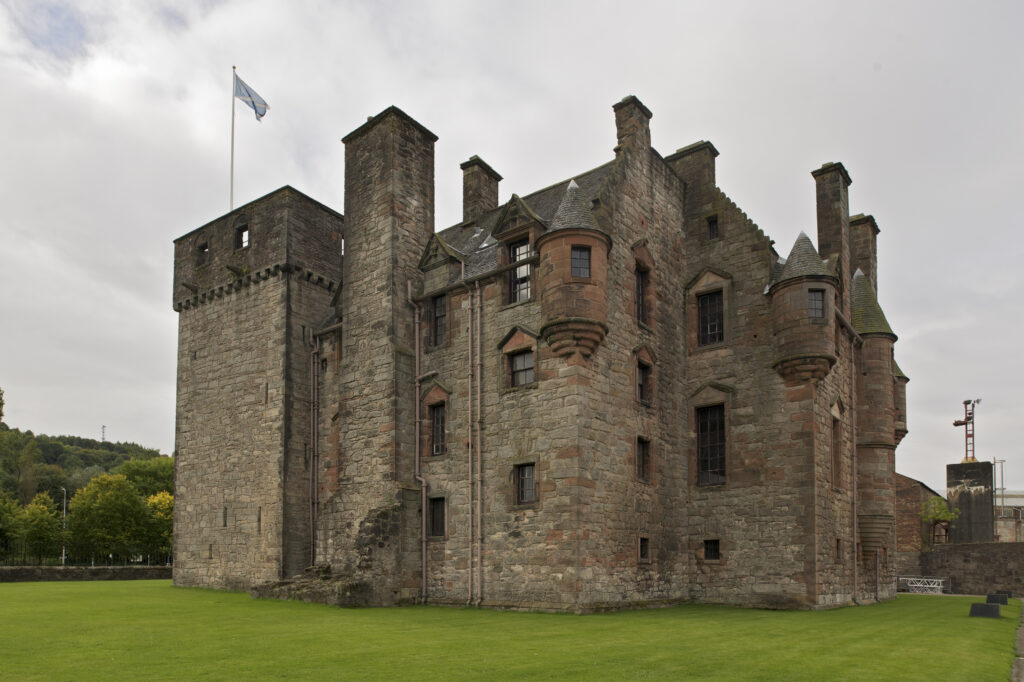
Dig into a Bronze Age house, Roman fortlet, medieval castle and more in the “mouth of the Clyde”.
Inverkip Bronze Age Roundhouse
In September 2014, the remains of a roundhouse which is believed to be over 3,200 years old (dating to between the 15th and 13th centuries BC) was uncovered at Inverkip.
It was discovered by a GUARD Archaeology team led by Christine Rennie during the excavation of a series of pits and ditches. These had been uncovered at the site of a new housing development as part of a process known as developer-led archaeology.
These pits and ditches originally held woven lattice panels made from hazel that formed the exterior wall, which would’ve been plastered for wind and weather proofing. This “wattle and daub” technique is still an important construction method in many parts of the world.
They also uncovered a central pit (probably a fireplace), pottery sherds from a cooking pot, worked flint and quartz debris, waste such as grains, hazelnut shells and charcoal, and post-holes that suggested that the entranceway into the roundhouse had a porch.
According to GUARD Archaeology, the Inverkip roundhouse is “especially significant because of its lowland location in a region where such Bronze Age settlements tend to survive only in upland areas.”
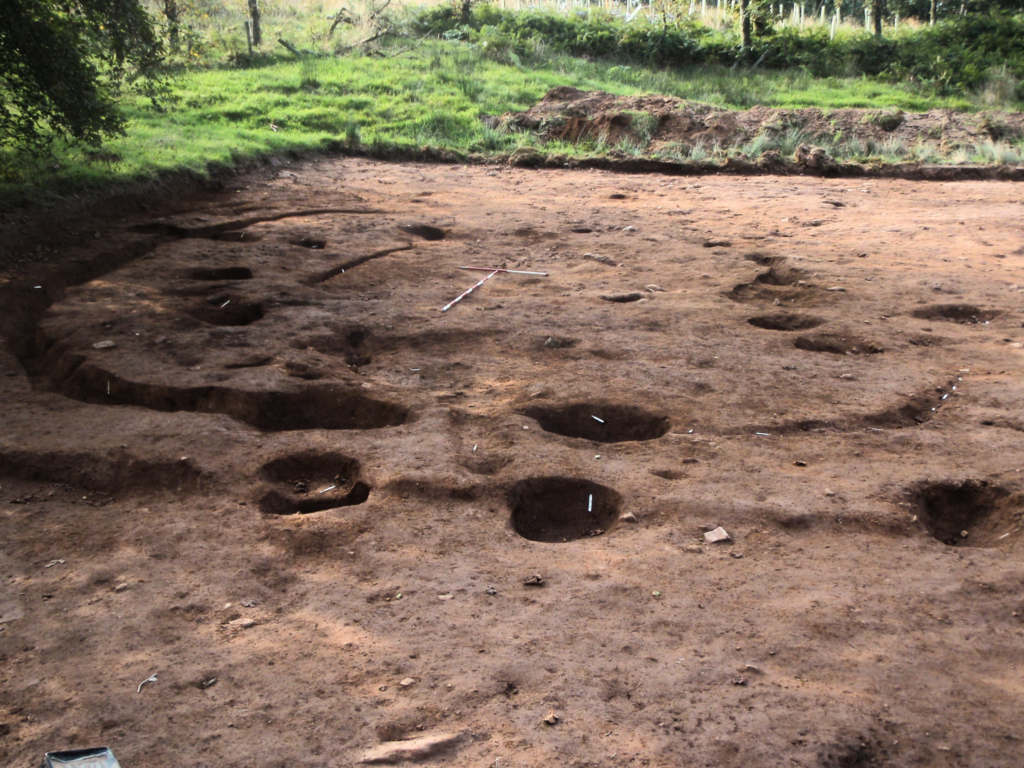
Inverkip Bronze Age Roundhouse (Image Credit: GUARD Archaeology Ltd)
Lurg Moor Roman Fortlet and Road
On the edge of a steep bluff overlooking the estuary of the River Clyde near Greenock lies the remains of a Roman fortlet and road which are believed to be over 1,800 years old (probably dating to the mid-2nd century AD).
The fortlet is still visible as a rectangular enclosure with a substantial V-shaped ditch and an inner turf rampart. According to Canmore, “the site appears to have been carefully chosen to maximise the fortlet’s outlook over the [river] from a timber tower rising above the gateway.”
A 180m stretch of Roman road also extends from the fortlet’s gate. Crossing the fortlet ditch on a causeway, it appears as a cambered (curved) turf-covered mound made of hard-packed gravel, small stones and naturally occurring rock outcrops.
Both the fortlet and road were part of a larger frontier system which was related to the Antonine occupation of southern Scotland, when the Roman Emperor Antoninus Pius invaded in AD 139/42 and built the Antonine Wall across the Central Belt.
The site has been called the “best preserved” of the series of stations along the south Clyde coast which protected the Antonine frontier. Historic Environment Scotland has also noted that the “combined elements of the monument and their particularly good survival make it an excellent example of Roman military infrastructure during the Antonine era.”
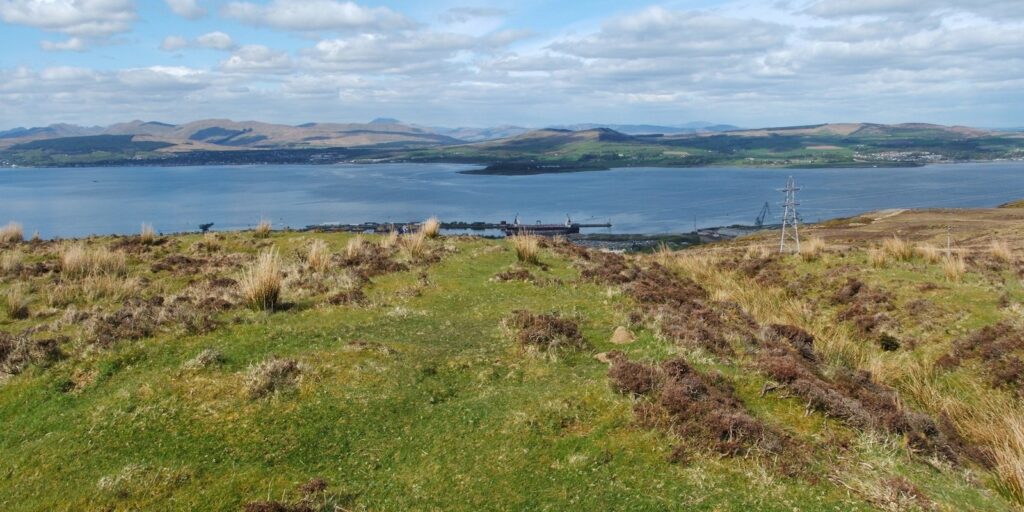
Lurg Moor Roman fortlet (Image Credit: cc-by-sa/2.0 – © Lairich Rig – geograph.org.uk/p/1853572)
Newark Castle
Once home to members of a powerful southern Scottish family, this well-preserved castle in Inverclyde has been described as one of the finest secular (not religious) buildings to survive from late medieval Scotland.
It was built in 1478 with defensive features (including some of the first gun-holes to appear in Scotland) and then remodelled in the late 1500s during a phase of Renaissance palace building, which included the construction of a “U-plan lodging, exquisitely adorned inside and out”.
According to Historic Environment Scotland’s Statement of Significance, the remodel made it a “case-study of the transformation of the lordly residence from the medieval, overtly defensive, cramped and ill-lit structure, into an elegant Renaissance mansion, epitomising the triumph of comfort, style and panache over strength and security.”
In 2007 and 2008, a detailed archaeological study, including dendrochronology (tree-ring dating), was carried out on the timber roofs of the castle. The results cast new light on their structural design and confirmed that they were assembled in (or shortly after) 1598. It also revealed that the builders incorporated re-used timber that “may conceivably have been recycled” from earlier structures.
The castle is now in the care of Historic Environment Scotland and is open to the public for six months each year.
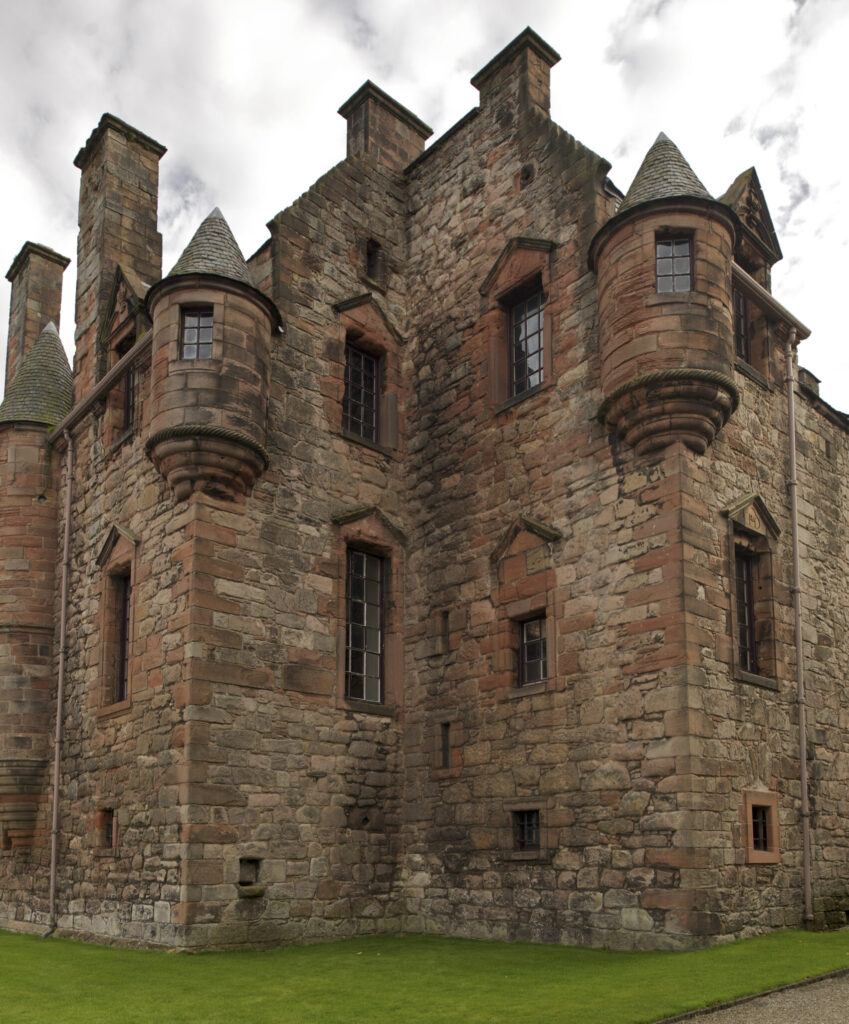
Newark Castle (Image © Crown Copyright HES)
Clyde Pottery
From the early 1800s until 1905, the Clyde Pottery produced their wares in Greenock under several guises, becoming extremely important to the town and the surrounding areas.
According to Laura Butterworth, who worked on an exhibition inspired by the Pottery, a lot of people found employment at the factory or in its associated flint mill and retail outlets and many local residents still treasure its wares as family heirlooms. Greenock even has its own ‘Pottery Street’, where the famous factory once stood.
In 1973, Peter Denholm carried out an excavation at the site with the support of the Scottish Pottery Society to identify the range of wares produced in the first half of the 19th century. In the Discovery and Excavation in Scotland 1974 entry, it was noted that he uncovered 200 kilograms of sherds (pieces of pottery) which dated to about 1830-50 (and filled 43 boxes).
These were eventually purchased by the McLean Museum and Art Gallery in Greenock which is home to the world’s largest collection of ceramics from the Clyde Pottery, including many items which were presented to the Museum in 1877 by the Pottery itself. According to Inverclyde Council, “the collection provides a unique resource and reference point for collectors and scholars as well as documenting an important Inverclyde industry.”
If you’d like to see some of the wares that made the Clyde Pottery so successful, the Museum (part of the Watt Institution) is usually open from Wednesdays to Saturdays and admission is free.
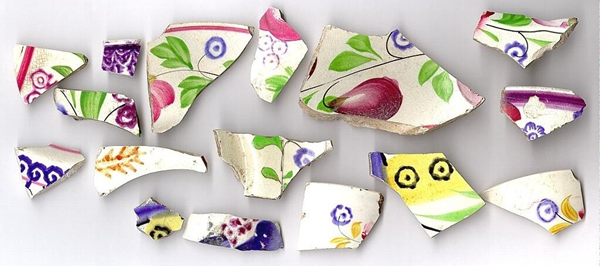
Excavated pottery purchased with grant-aid from the National Fund for Acquisitions (Image © McLean Museum and Art Gallery, Greenock)
Want to keep reading? Dig into our other guides to unmissable sites and discoveries by region.
Tweet
Header Image: Newark Castle (Credit © Crown Copyright HES)
