What is Contemporary Archaeology and Why Does It Matter?
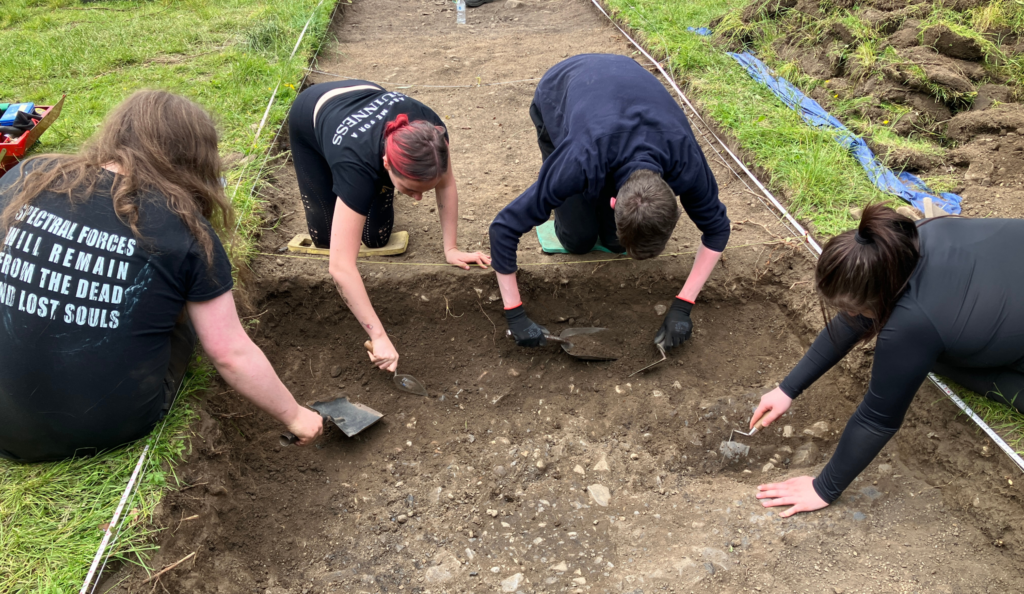
What comes to mind when you think about archaeology? Probably the study of the ancient past, like the Stone Age, and the Romans, and excavations of sites like Stonehenge or the Antonine Wall. However, over the past two decades, some archaeologists have become increasingly interested in using the same methods and approaches to explore a time period that is not anywhere near as old as that – the recent past.
Because contrary to what most people think, archaeology isn’t really about the past. It’s a series of techniques and theories that have developed to understand how people interact with things and the world around them regardless of when that happened, whether it was 10,000 years ago or 10 minutes ago.

View of graffiti art in the laundry block by System and Stormie Mills at Pollphail Village (Image © Historic Environment Scotland)
What is contemporary archaeology?
There are different ways to define contemporary archaeology. The Journal of Contemporary Archaeology defines it as “archaeology’s specific contribution to understanding the present and recent past. It is concerned both with archaeologies of the contemporary world, defined temporally as belonging to the twentieth and early twenty-first centuries, as well as with reflections on the socio-political implications of doing archaeology in the contemporary world”.
In other words, it’s the application of archaeological methods to people, places and things that are recent with the aim of adding something to our understanding of an event or situation, or to help solve a problem.
But my favourite interpretation comes from one of its leading practitioners, Rachael Kiddey. Her perspective is that if the techniques we trust and use to study the ancient past are robust, then surely they must also work for the study of the very recent past.
How recent is recent? For some, it’s defined as the period since the Second World War (1939 to 1945) and so could include Cold War archaeology. For others, it’s the past within living memory, or the past 50 years. Contemporary archaeology is sometimes also known as the archaeology of now, the archaeology of us, or the archaeology of the contemporary past.
Contemporary archaeology can involve traditional methods such as survey and excavation, but there are other tools that can be used. The results of an excavation can surely only benefit from the consultation of documents and archives, recording oral histories, and looking at photographs and video footage. Being able to ask a living person to explain something found in a trench is invaluable, but also quickly sheds light on the fact that memories are short and even recent events, things and activities age very quickly.
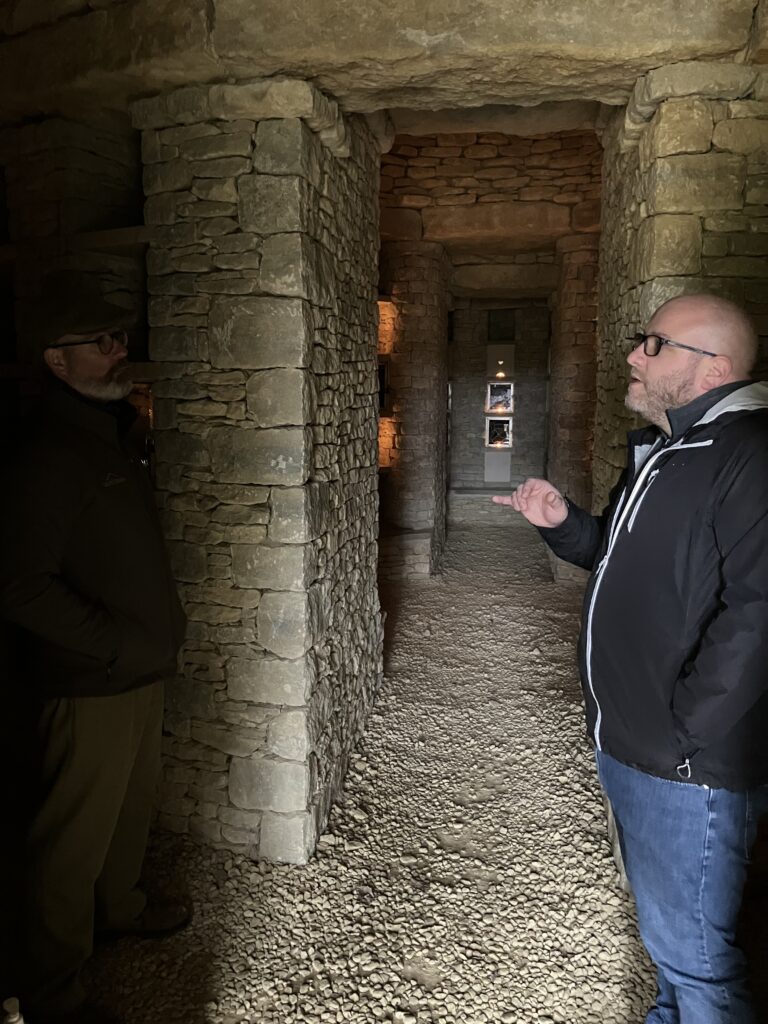
Interviews are an important aspect of contemporary archaeology. Here, researcher Andrew Watson conducts an interview in a barrow built in 2019 that is used to store cremated remains (Image credit: Kenny Brophy)
Why is contemporary archaeology important?
Contemporary archaeology is important because it can offer surprising insights into events and things that historical records and documents, and even speaking to people, cannot. It can give access to human actions that are nearly impossible to get using more traditional lines of enquiry such as interviews and can sometimes shed light on the lies we tell ourselves. William Rathje’s excavations of landfill sites in Arizona, for example, showed that people don’t recycle as much as they claim!
And contemporary archaeology allows archaeologists to intervene and try to help in a range of social issues that are pressing today, from the climate emergency to social injustice to plastic pollution.
To take one example, in recent years there’s been a lot of interest in a project called Lego Lost At Sea. Documented in social media, and the 2022 book by writer and beachcomber Tracey Williams called Adrift, this is a project that has seen the recovery of tens of thousands of Lego bricks from beaches in Cornwall. These were on containers that fell from a ship in 1997, spilling millions of these small pieces of plastic. In turn, this has opened up wider conversations about ocean pollution and plastic waste. This project is deeply archaeological, from the fieldwork and recording methods, to the aspiration to organise, and find meaning in, material culture and use this for social benefit and advocacy.
Other projects carried out by archaeologists have considered the archaeology of a commercial archaeology unit Transit Van, paraphernalia associated with heroin addiction, graffiti, festivals, industrial wastelands, and sporting heritage, often with a focus on social activism and community engagement.
Kiddey and Professor John Schofield from the University of York, for example, carried out a seminal project in Bristol a few years ago working with the homeless community to map out their territories, and excavate their illicit campsites. The homeless people themselves became archaeologists and involvement in the project “gave them the confidence they needed to voluntarily engage with existing addiction services and get back on their feet”.
Contemporary archaeology therefore is at the forefront of efforts from archaeologists to become more socially engaged and relevant, and to help tackle what Professor Schofield has called ‘wicked problems’. But it can also be used to excite, enthuse and inspire, as has been happening in Glasgow.

Example of an industrial wasteland in Granton, Edinburgh (Image Credit: Jonathan Gardner)
What was the Glasgow Garden Festival?
The Glasgow Garden Festival was a major event held in Glasgow between April and September 1988. Garden Festivals were biannual events held across the UK in the 1980s and early 1990s to stimulate investment and development in former industrial areas. They were funded by a mixture of public and private finance, which was unusual at the time. The Glasgow version was the most successful, with over 4 million visitors.
The Festival site was on an industrial wasteland on the south side of the River Clyde, between Kingston Bridge and Pacific Quay. It consisted of themed zones and dozens of gardens with plants from all over the world, visitor attractions, theme park rides, shops and places to eat.
There was also an emphasis on transport with a small steam train running round the site and many attractions on the water of Pacific Quay and the Clyde itself which included a steamboat and other watercrafts. Zones of the Festival site were sponsored and designed by local authorities, New Towns, government agencies, trade groups, and businesses. Many installations showcased a place or business and were often interactive and family friendly. There were also dozens of artworks across the site, and innovative computer information points created by IBM.
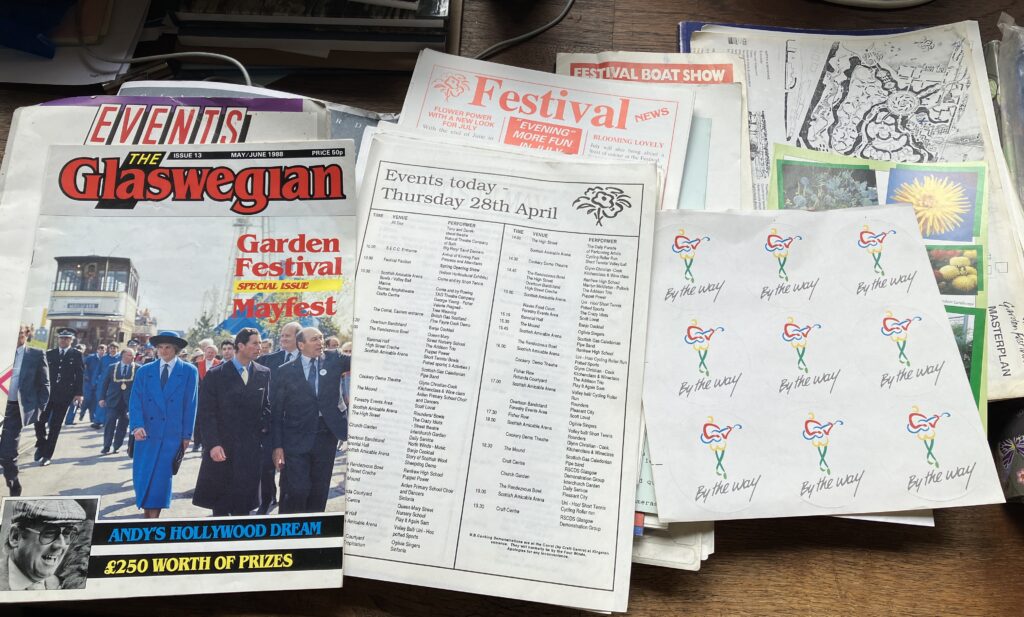
A personal archive of materials from and related to the Glasgow Garden Festival that has been donated to the After the Garden Festival project (Courtesy of James Ewing)
Why are archaeologists interested in the Glasgow Garden Festival?
There’s a huge amount of nostalgia for the Glasgow Garden Festival in the city and beyond, and it was a significant event in the modern re-birth of the city. However, this was always intended to be a temporary event and so as soon as the gates closed for the last time, structures, artworks, plants and attractions were sold off or taken away. This process took many months. The site itself was also gradually developed over several decades for housing, business premises (such as BBC Scotland), hotels, a leisure centre, car parks and a new road.
So over 30 years after the Festival ended, there are very few material traces left of this mega-event, other than remnants of landscaping in the small Festival Park and a few buildings scattered across the site, some of which, such as the Southern Rotunda, predated the Festival. There’s almost no indication that this seminal event had even happened across the 120-acre site, and amazingly there’s no formal written history of the event.
The After the Garden Festival Project began in 2021 to document what had happened to the hundreds of artworks, structures and vehicles that had been part of the festival, and it was quickly clear from public engagement that there was a huge appetite out there for information and sharing memories about the event. This led to a focus not just on what was taken away from the site, but what might remain, and it was clear that archaeological methods would be the best way to do this. The obvious place to begin was in Festival Park. There, Festival landscaping and water features survive, and there are open grassy spaces suitable for archaeological investigation.
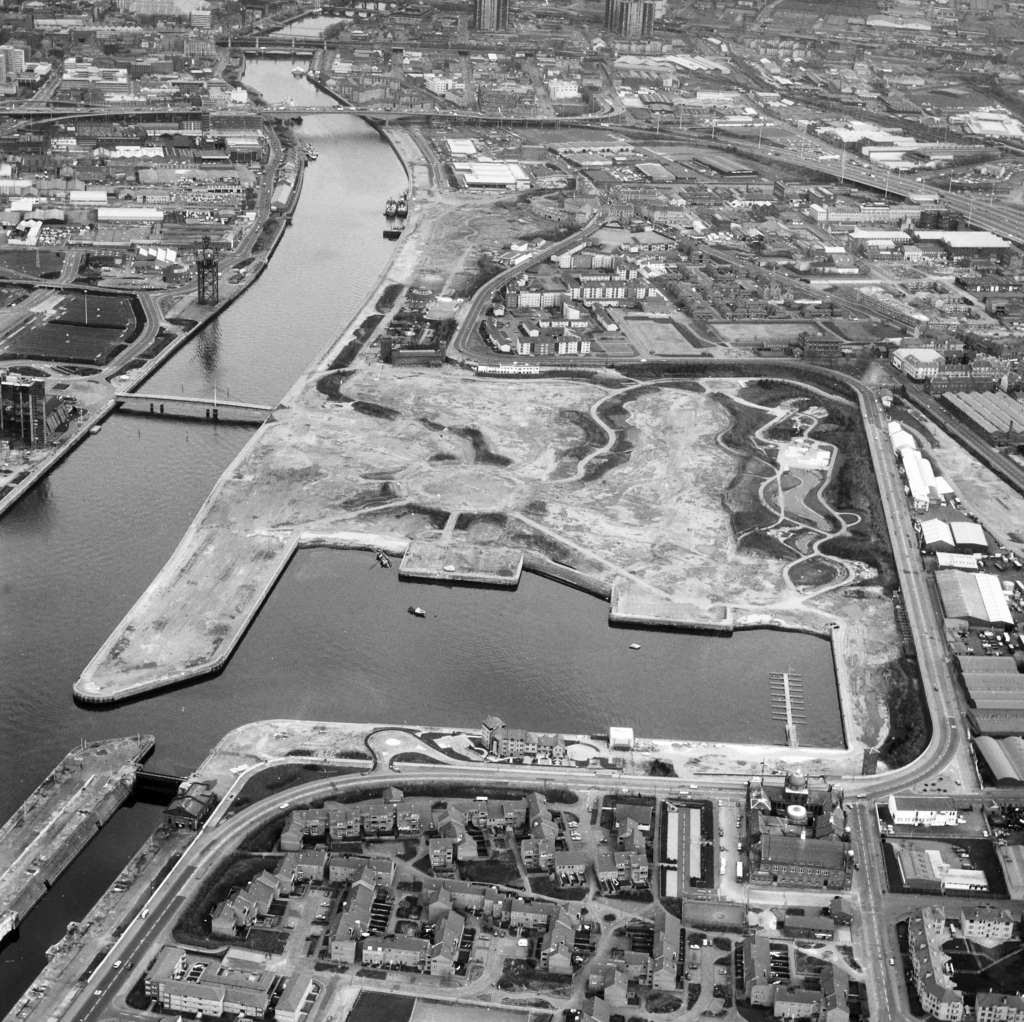
Site of the Glasgow Garden Festival in 1989 (Image © Crown Copyright HES)
What Glasgow Garden Festival discoveries have been found so far? Why are they important? What do they tell us?
Working with the University of Glasgow archaeology department, two seasons of fieldwork have been undertaken in Festival Park in 2022 and 2024, including geophysical and drone survey, and excavation. Upstanding features from 1988, such as a magnificent waterfall (sadly no longer operational), were surveyed using more traditional methods.
This work has shed light on the creation of the festival site (a massive landscaping project) and aspects of its dismantlement, but crucially it’s been demonstrated that features and even material culture from the festival remain on site, invisible beneath the grass. This includes the cut for the mini steam train line, which is a substantial ditch.
Excavations were able to recover materials from 1988, with plant tags and a green painted wooden stake (both Garden Festival features), confirmed by photographs of the festival site shared with us by members of the public and from the archives of Strathclyde Regional Council.
We’ve also been able to show that maps and plans for the festival site don’t quite show what was actually on the ground at the time, suggesting improvisational construction processes.
In addition, wider examination of the Garden Festival site through walkover surveys has identified other surviving fragments of the event including signage, artworks, and even screws in walls that once held hanging baskets.
The value of a contemporary archaeology approach, as noted already, is that it’s also been possible to consult archival materials, photographs, and home videos, and also collect oral histories by folk who were actually there.
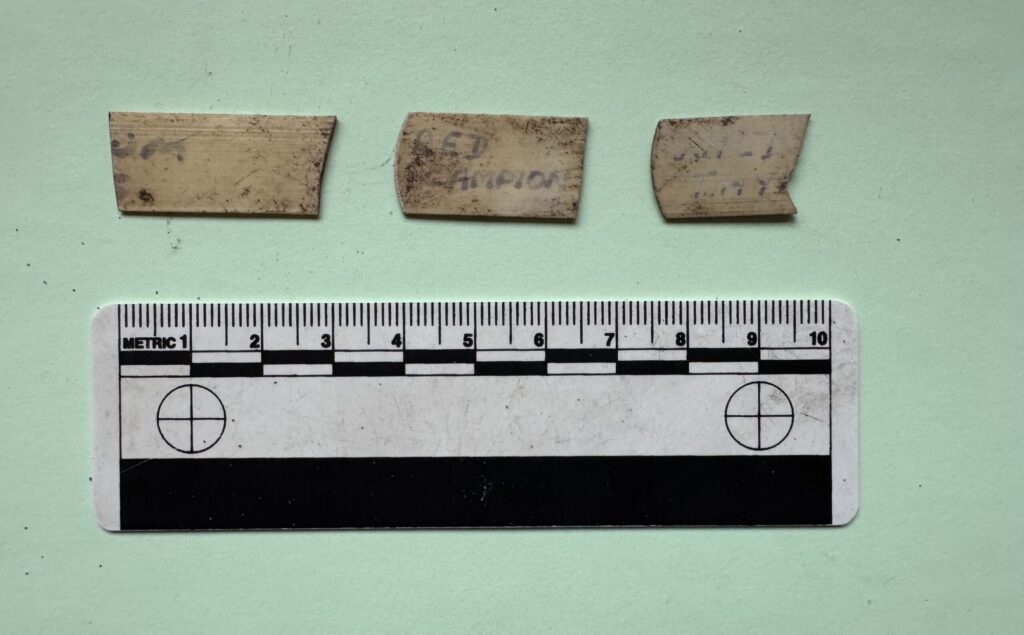
Excavated plant tag from the 1988 Glasgow Garden Festival (Image copyright: After the Garden Festival)
Why is it important for archaeologists to investigate sites from the recent past (not just ancient ones)?
Archaeology undertaken at the locations of events that happened within living memory can provide us with incredibly rich stories. Even things that millions of people experienced and that were extensively documented and photographed benefit from archaeological enquiry. This is because some things were never documented, and others have been forgotten.
The work at the Glasgow Garden Festival site has presented a series of surprises and revelations, but also unlocked memories and emotions about this important event. Archaeological engagement has helped to revive interest in the festival site, and will lead to information panels being installed in the park in the near future.
Contemporary archaeology is a powerful way of investigating our recent past, filling in gaps between memories and records, and recording often very personal events that lasted seconds and have been forgotten. The recovery of coins from a former lochan (small loch) in Festival Park, for example, may be the material record of a child throwing a coin into the water while making a wish. These very human moments and stories are the essence of archaeology, whether we’re investigating 1988 BC or AD 1988.
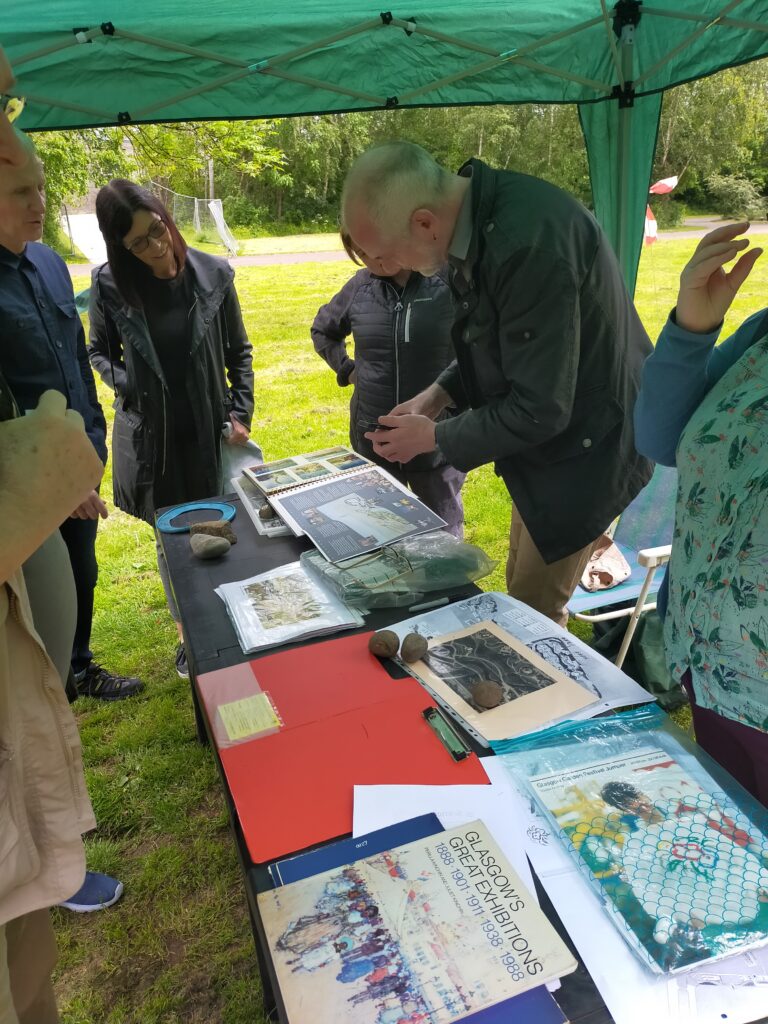
Members of the public looking at Glasgow Garden Festival memorabilia and sharing their own photos during an excavation open day in 2022 (Image credit: After the Garden Festival)
If you’d like to find out more about the archaeology of the 1988 Glasgow Garden Festival, dig into the recording of the free public lecture hosted by the Society of Antiquaries of Scotland (who coordinate Dig It!).
By Dr Kenny Brophy BSc FSAScot, a Senior Lecturer in Archaeology at the University of Glasgow with 30 years’ experience of research and fieldwork into Scotland’s Neolithic and 20th-century archaeology. This includes being co-director of the Strathearn Environs and Royal Forteviot (SERF) Project since 2006. Current research interests include the contemporary archaeology of prehistory, Glasgow’s archaeology, and exploring the social benefits of archaeology.
Header Image: 1988 Glasgow Garden Festival excavation (Image copyright: After the Garden Festival)
