What is DNA Analysis?
The discovery of ancient stories does not stop when the digging is done and trenches are closed over, the work often continues in the lab. DNA analysis is one tool used to help add pieces to archaeological puzzles that are thousands of years old. [NOTE: Article contains images of human remains]
Palaeogenetics (or the analysis of ancient DNA) is the scientific method of retrieving and analysing ancient molecules of the genetic material of past organisms. This can inform archaeologists about past individuals, their kin relationships and their lifestyle, as well as help experts to make inferences about the present and future of populations.
An Unusual Burial
In 2005, the excavation at the Uamh an Ard Achadh (High Pasture Cave) situated in the Parish of Strath on An t-Eilean Sgitheanach (the Isle of Skye) unearthed the skeleton of an adult female together with the remains of a foetus and an infant within a stone-built stairwell blockage.
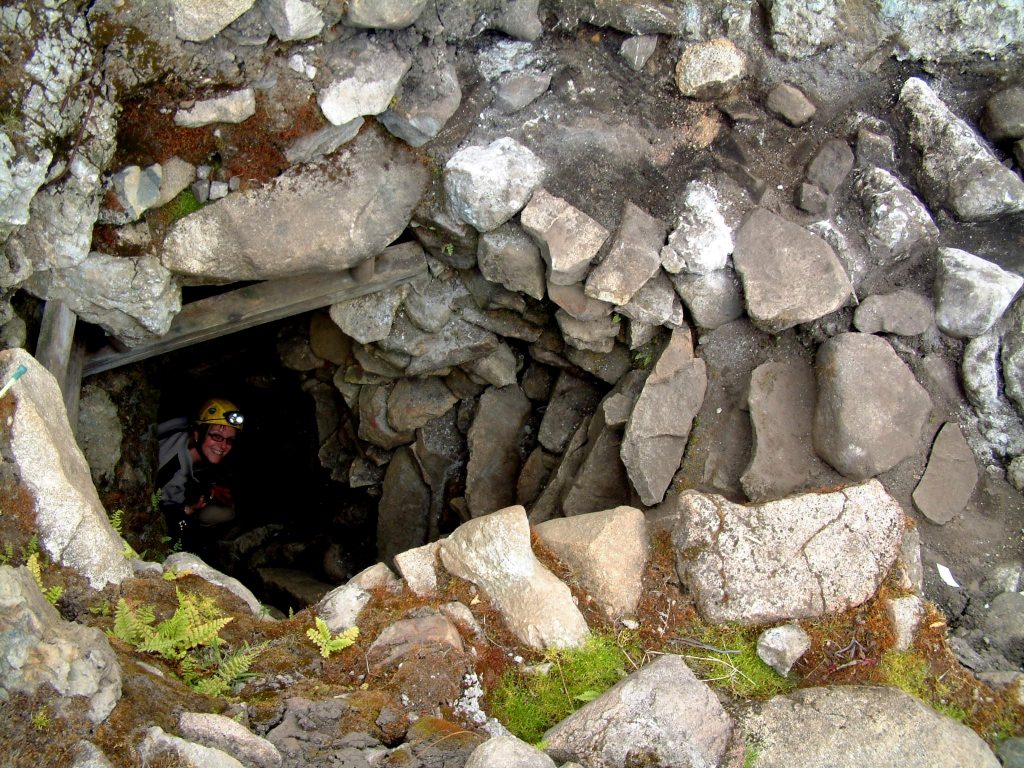
The Iron Age stairwell accessing the natural cave where the burials were found (in the top of the backfilled stairwell) (Image Credit: Steve Birch)
The stairwell which led towards an underground stream in the cave was back-filled and deliberately blocked with boulders and sediments, and as a final act of closure of the cave, the human remains from three individuals were deposited onto the top of the blockage. This intriguing deposit poses questions like why were these individuals buried in this way and was the woman the mother of these child and foetus?
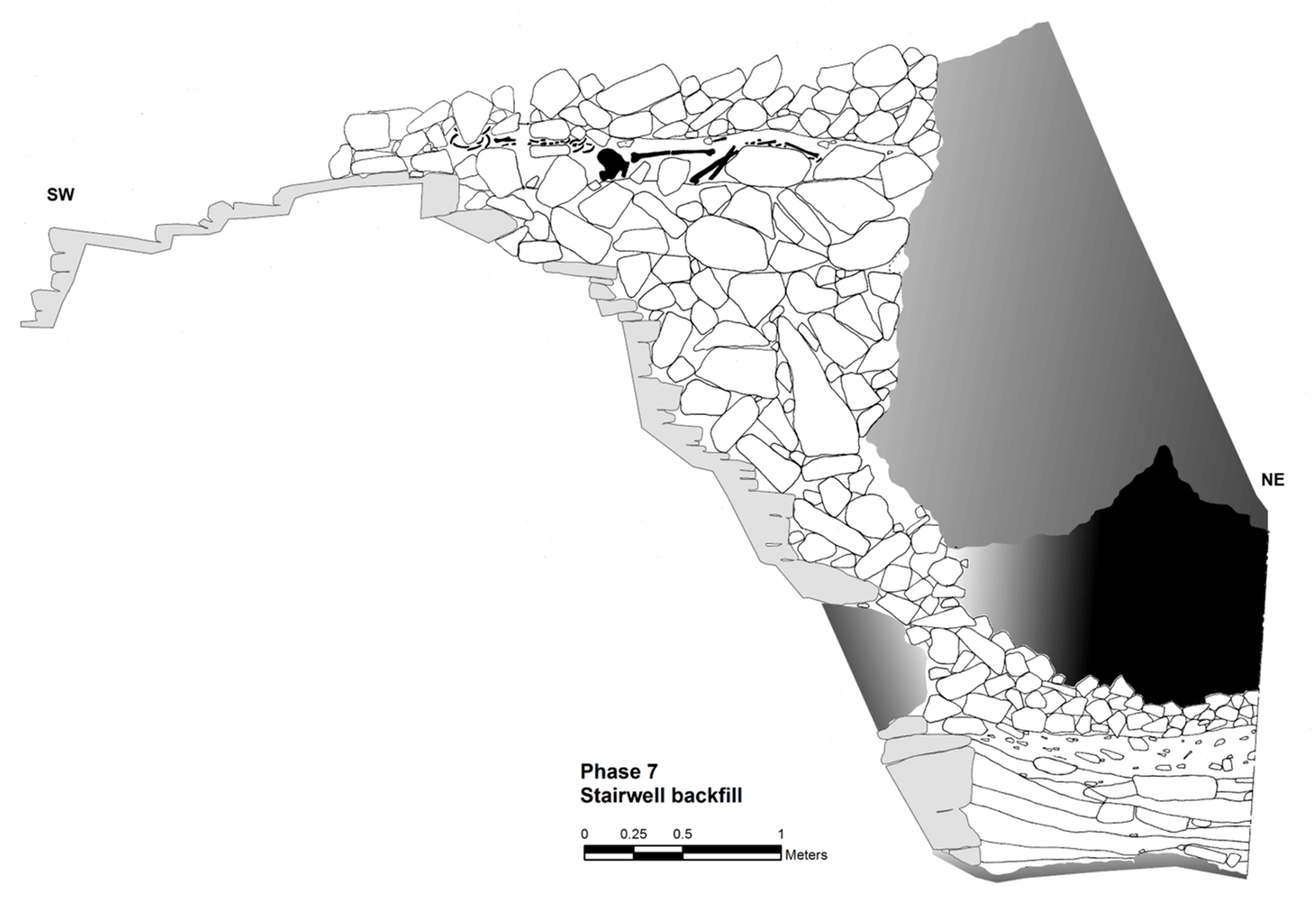
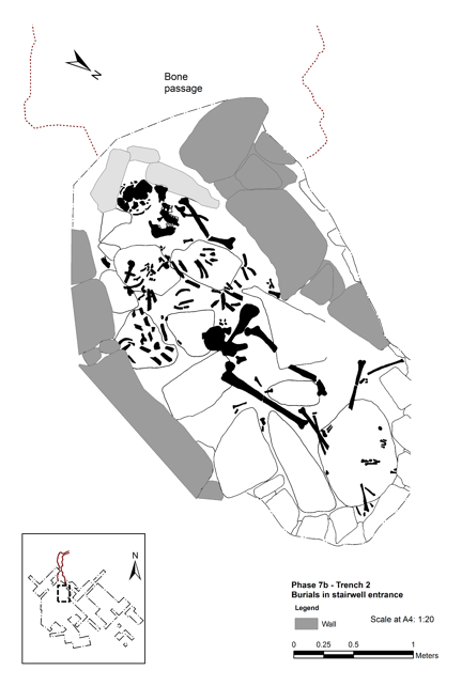
Section illustration through backfilled stairwell showing location of burials (Image Credit: Steve Birch) and Plan illustration of burials in stairwell (Image Credit: Steve Birch)
While genetic analysis cannot answer the question why individuals were buried or deposited in a specific way, it certainly can give us information about the relationship of individuals. A piece of the puzzle that can than further be used by archaeologists to interpret the site.
Reconstructing Kinship
Palaeogeneticists (people who study the past through the examination of preserved genetic material) use uniparental markers to identify kin relations. To do this they compare the mutations of the individual mitochondrial genomes (which give us information about the maternal lineage) or Y chromosomes (which give us information about the paternal lineage) to identify similarities and differences. The DNA (the genetic material) is extracted from typically bones or intact teeth.

The two bundles of bone representing the human infant and foetus in the top of the backfilled stairwell – located near the woman’s feet; while other long bones from the individuals were found located between the woman’s lower legs. These bundles of bone also included elements from a perinatal dog and a foetal pig (Image Credit: Steven Birch)
Mutations are chemical differences in our genomes that occur naturally through time, which in the case of the mitochondrial genome, is estimated to happen as once every 3,624 years. As this time period is obviously much longer than any human lifespan, we can therefore assume that we have the same set of mutations in our mitochondrial genomes as our mothers.
In the case of the High Pasture Cave individuals, the comparison of the mitochondrial genomes of the woman with the foetus and infant buried with her, showed that the infant had a very different set of mutations than the foetus and the woman, excluding a maternal relationship. In contrast, the foetus had a very similar set, although incomplete, when compared to the adults’ mitochondrial genome, indicating a mother-child relationship. This means that the female was probably the mother of the foetus, but not of the infant.
New Questions
This ancient mitochondrial genome analysis revealed that unlike the common archaeological interpretation of adult female-infant burials, a mother-child relationship should not generally be assumed, as the infant buried with the woman and the foetus was not maternally related to either.
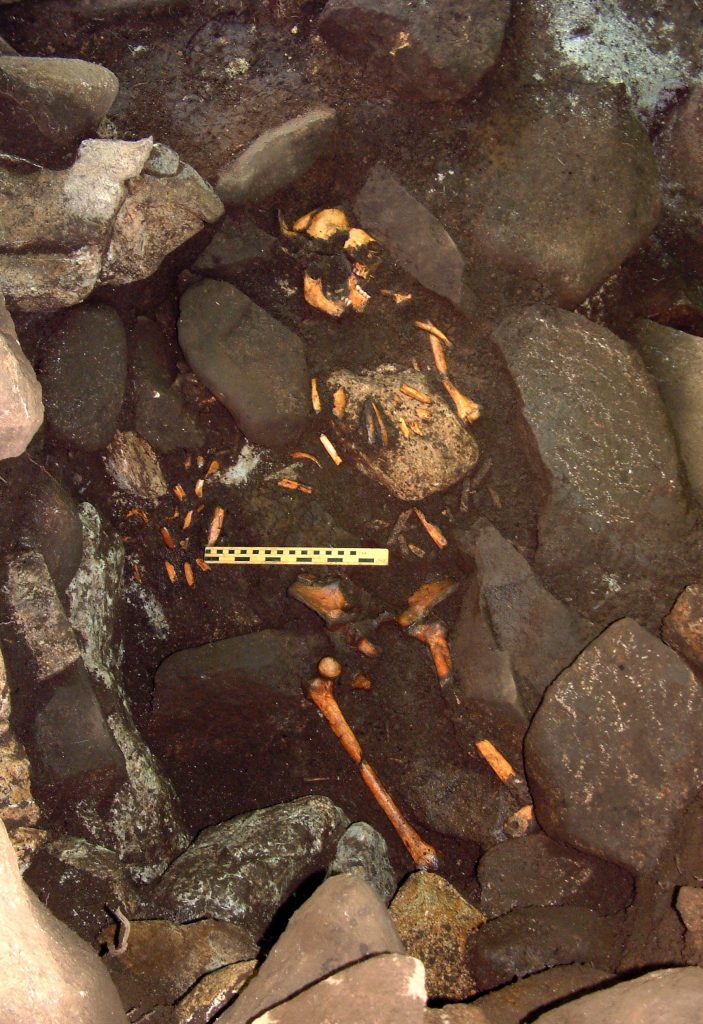
Burial of adult woman in top of backfilled stairwell (Image Credit: Steve Birch)
This is an intriguing piece of information considering the common archaeological understanding of this type of female/child burial, where the infants are assumed to be the children of the women.
Although this study answered the question about the kin relationship, other questions remain to be answered. Why was she buried in this way? Why was she buried with an unrelated child? Work into this burial continues.
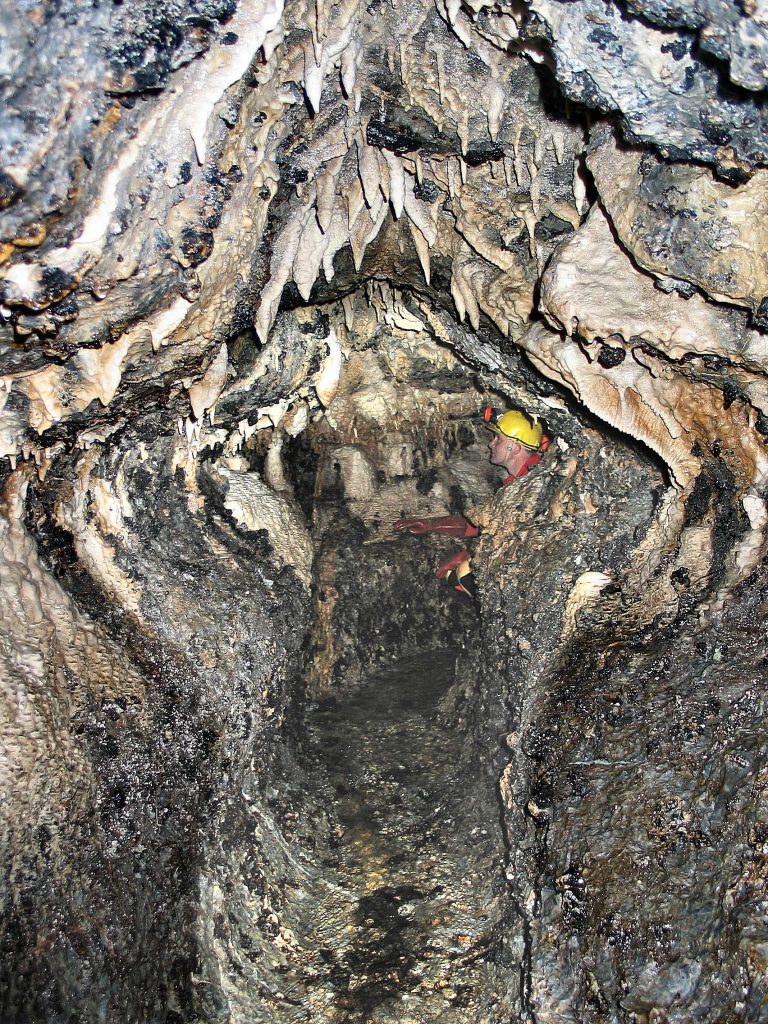
The main stream passage of High Pasture Caves (Image Credit: Steve Birch)
Discover more finds from High Pasture Caves on the project blog and learn more about cave use throughout Scotland’s history here.
By Dr Katharina Dulias. Genetic analysis was undertaken by Dr Dulias whilst a doctoral student at the University of Huddersfield, under the supervision of Dr Ceiridwen Edwards. Katharina’s thesis title was “Archaeogentics and Paleogenetics of the Human Population of the British Isles”, and involved genetic analysis of samples dating from the Neolithic to Anglo-Saxon period. She is currently an AHRC Postdoctoral Researcher at the University of York.
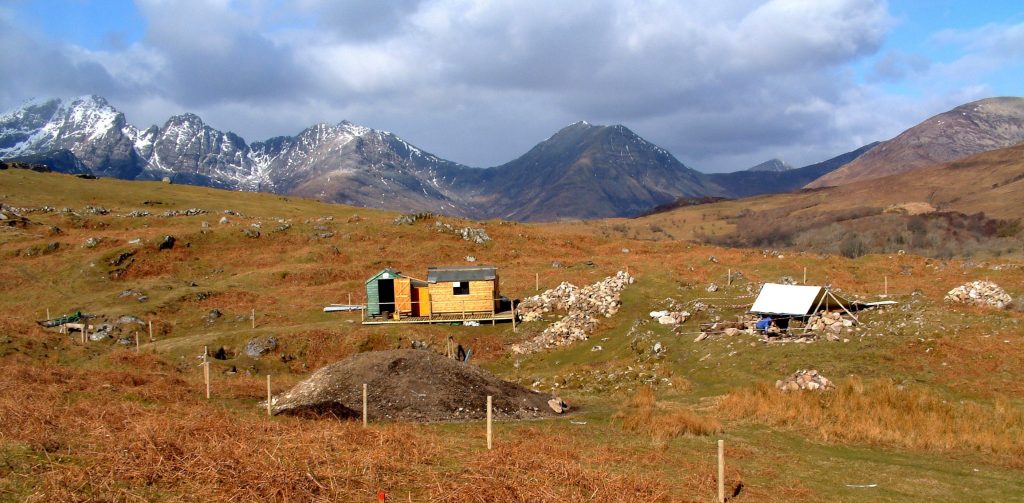
Header Image: Landscape shot of the site with Cuillin Mountains beyond (Image Credit: Steve Birch)
