Top Five Archaeological Sites in Aberdeenshire and Aberdeen

This area of Scotland is home to the UK’s largest National Park, award-winning beaches, a ‘Granite City’ which boasts two Old Towns, and archaeological wonders that span over 4,000 years.
EAST AQUHORTHIES STONE CIRCLE
Around 100 stone circles can be found in Aberdeenshire, including the only recumbent stone circles in Scotland, which means that they feature a large stone lying on its side (recumbent) flanked by two upright ones.
East Aquhorthies Stone Circle was constructed near modern-day Inverurie about 4,000 years ago and still has a full set of stones which makes it one of the best-preserved. It’s almost perfectly circular in plan and features a selection of colourful stones from different locations. According to Historic Environment Scotland, they’re all a pinkish shade, except for one which is red jasper, the two flanking stones which are grey granite and the recumbent stone, which is made of red granite.
We still don’t know why stone circles were erected, but excavations at similar sites have revealed complex monuments which usually began as cremation pyres before developing into ring cairns (stone mound) and ending with stone circles.
Were they ritual sites related to the disposal of the dead through cremation? Or did the south-west alignment of the stones – with the flanking stones framing the rising and setting moon at midsummer – help prehistoric farming communities to follow the changing seasons?
East Aquhorthies Stone Circle is free to visit and open year-round.
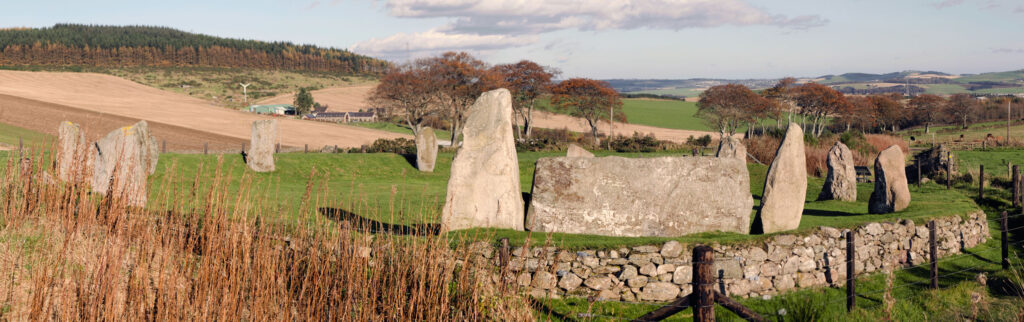
By stu smith from Hampton Wick / Aberdeen, uk – easter aquhorthies stone circle, CC BY-SA 2.0, https://commons.wikimedia.org/w/index.php?curid=40210690
TAP O’NOTH HILLFORT
Aberdeenshire is also home to one of the largest known Pictish settlements in Scotland.
Thanks to University of Aberdeen archaeologists, we know that up to 4,000 people may have lived or gathered in more than 800 huts on the summit of Tap O’ Noth near Huntly with the settlement possibly being built over 1,700 years ago (in the AD 200s).
Information from radiocarbon dating (a method for determining the age of an object containing organic material) was recently combined with drone surveys and laser technology to show that there are hundreds of hut platforms within the fort – described as “potentially verging on urban in scale”. At its height, it may have rivalled the largest known post-Roman settlements in Europe.
Visitors to the summit of Tap O’ Noth can observe the remains of the massive rectangular fort, which is visible as a mound of rubble, some of which has been exposed to intense heat. This process is known as vitrification and although there are a lot of vitrified forts in Scotland, we still don’t know why they were fired. Was it a construction technique to make the walls stronger? Did it take place during a conflict?
Tap O’Noth is also the second highest fort in Scotland, so visit on a clear day and you’ll be rewarded with “a huge sweep of north-east of Scotland”.
If you want to keep the hillfort tour going, there’s plenty of additional sites in Aberdeenshire to explore.
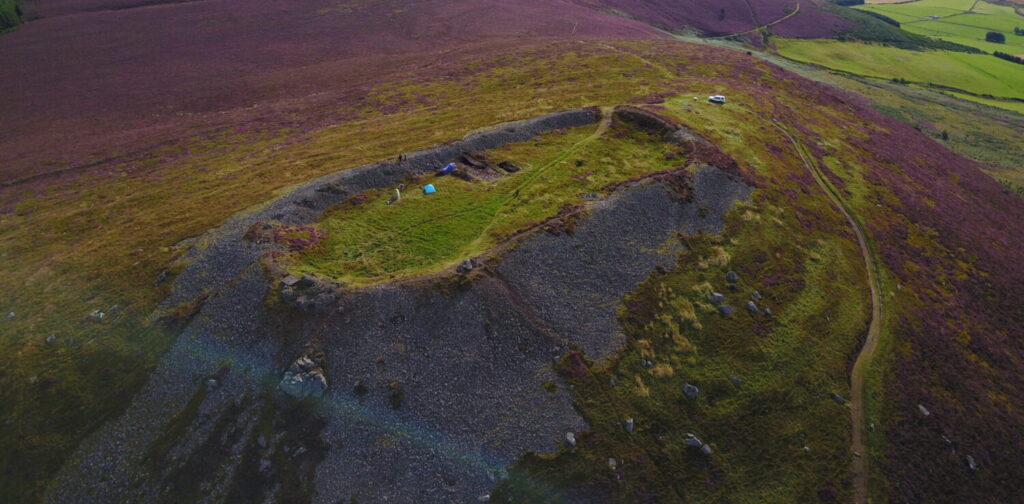
© University of Aberdeen
MAIDEN STONE
The pink granite Maiden Stone (or Drumdurno Stone) near Inverurie was first recorded in 1726 and has been described as “one of the most beautiful, grand and distinguished pieces of Pictish sculpture in north-east Scotland”. Standing at 3m, it’s also one of the tallest of all Pictish monuments.
The Maiden Stone may have been carved after AD 700 (1,300 years ago) as a marker in the landscape. It features both Pictish symbols and Christian symbols, including a male figure flanked by two opposed sea monsters (possibly Jonah, escorted by two whales), a centaur, notched rectangle with a Z-rod, mirror with double-sided comb and the mysterious Pictish beast.
According to legend, the stone is actually a woman who was transformed after losing a wager with the Devil. She bet that she could bake bannocks before he could build a road to the top of the nearby hill of Bennachie. He finished the road before the bread was ready and when she fled, he transformed her into the Maiden Stone.
It’s just one of many Pictish standing stones on offer in Aberdeenshire.
KILDRUMMY CASTLE
Kildrummy Castle is a rare Scottish example from “the high point of medieval European castle building”. Built in the 1200s, the ruin still features a curtain wall, chapel, hall and four round towers which housed apartments for the lord and senior household.
In 1919, a troop of Boy Scouts helped expose much of the plan of the gatehouse, barbican (outer defence), and barbican pit with other works including the excavation of two latrine pits and a well in the Snow Tower (which was once one of the tallest buildings in Scotland). In 1951, excavations also targeted the towers, great hall, kitchen, chapel, gatehouse and external defences.
Archaeological objects unearthed at Kildrummy include spurs made in the 1500s, a large key from around the same time, door handles, and pottery fragments which are at least 500 years old – with many of the metal artefacts having been discovered around 1900 in the well in the Snow Tower. Animal bones from the 1500s and 1600s also tell us about the residents’ diet which featured beef, pork, lamb, and occasionally, deer, duck, wildfowl or oyster. Other finds from excavations in the gatehouse included stone roof tiles, window glass and the nails of a draw-bar (used to secure a door or gate).
Visiting in the winter? ‘The noblest of northern castles’ may be closed, but there’s plenty of others in the area – including the iconic Dunnottar Castle.
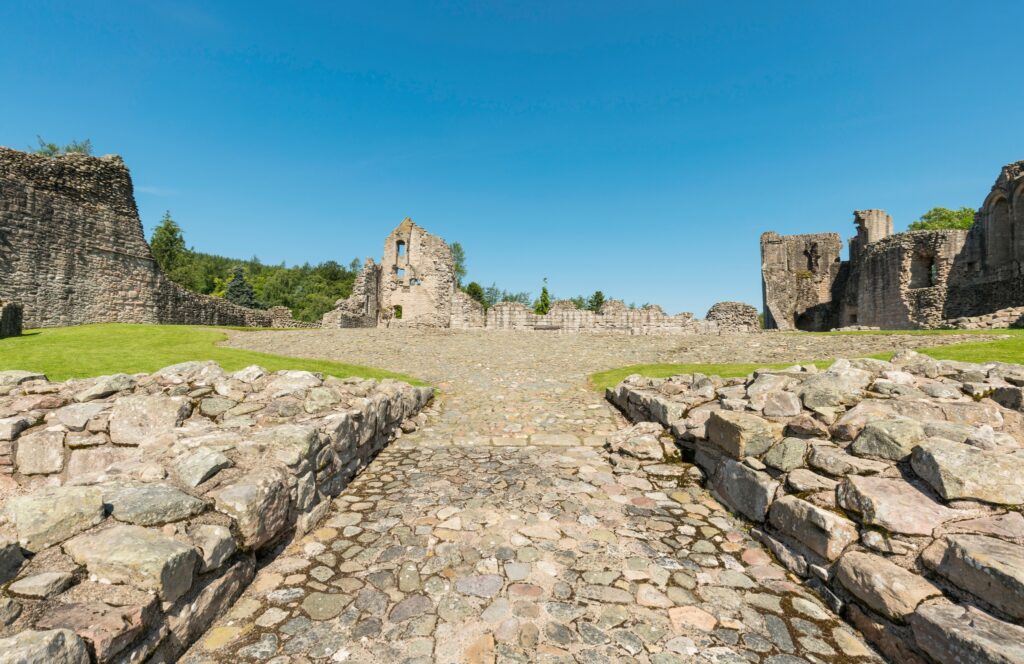
Image Credit: VisitScotland / Kenny Lam
TORRY BATTERY
Torry Battery was built in 1857-61 to protect the port and harbour of Aberdeen from attacks from the sea. It replaced several older structures, including a blockhouse from the 1400s and a battery from the 1700s.
The battery was permanently occupied during both world wars which coincided with periods of reconstruction and adaptation, such as the addition of a high battery control tower for defence against airborne attack. The battery took at least one direct hit from a German bomber resulting in fatalities in 1941.
It was also used as temporary accommodation during periods of housing shortage between the wars and after World War Two. After the last family left in 1953, Torry Battery was partially demolished.
Thankfully, it was Scheduled as an Ancient Monument in 2000, which means that it’s a nationally important site which is protected against unauthorised change.
In 2004, archaeologist Ali Cameron reported that a trench to determine how much of the structure remained underground revealed that the foundations for the store buildings used as housing for families were well preserved, including a utensil store, a bedding store with a fireplace, and ash and coal stores. Later excavation by the Aberdeenshire Council Archaeology Unit revealed “a curious, late nineteenth century, system of heating the bedding store for Torry Battery by way of flues running from an open fire in an adjacent stone room.” Archaeologists have also uncovered remains of the curtain wall with evidence of three gun slits.
In addition to giving people the opportunity to delve into over 160 years of history, the site is considered an excellent place to spot wildlife while enjoying views of the city and harbour.
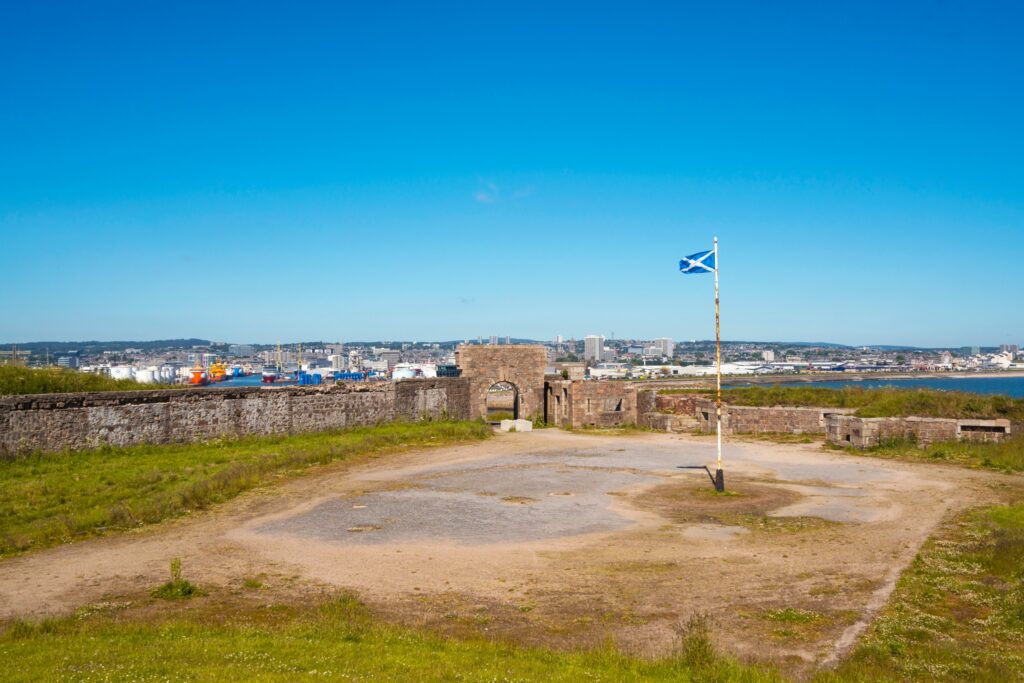
Image Credit: VisitScotland / Kenny Lam
If you’d like to keep exploring, head over to the VisitAberdeenshire website or read about some of the region’s other archaeological projects by Cameron Archaeology, who were responsible for a lot of the work at Torry Battery.
Header Image: Kildrummy Castle (VisitScotland / Kenny Lam)
