Prehistoric Figurine, Viking Boat Burial and Rare Township Brought to Life Through Flash Fiction
Sites and artefacts from across the country have inspired the three winning short stories as part of Dig It!’s competition celebrating Scotland’s Year of Stories 2022.
The original stories had to be 250 words or less, written in English, Gaelic or Scots for adult readers and inspired by a site, artefact or discovery which can be found in an article on the Dig It! website.
Submissions were judged by Alison Lang, Stiùiriche (Director) at Comhairle nan Leabhraichean (Gaelic Books Council), Ashley Douglas, a multilingual researcher, writer and translator, Mae Diansangu, a poet and performer who writes in English and Doric, and Dr Simon Gilmour, the Director of the Society of Antiquaries of Scotland (who coordinate Dig It!).
The three winning stories were scored as being the most compelling and affecting while inspiring readers to learn more about the topic chosen by the author.
Buddo
Buddo by Maggie Bartlett was influenced by an article about lost artefacts being rediscovered in museum collections stores, which was written by Dr Abeer Eladany, Curatorial Assistant at Aberdeen University Museums and Special Collections.
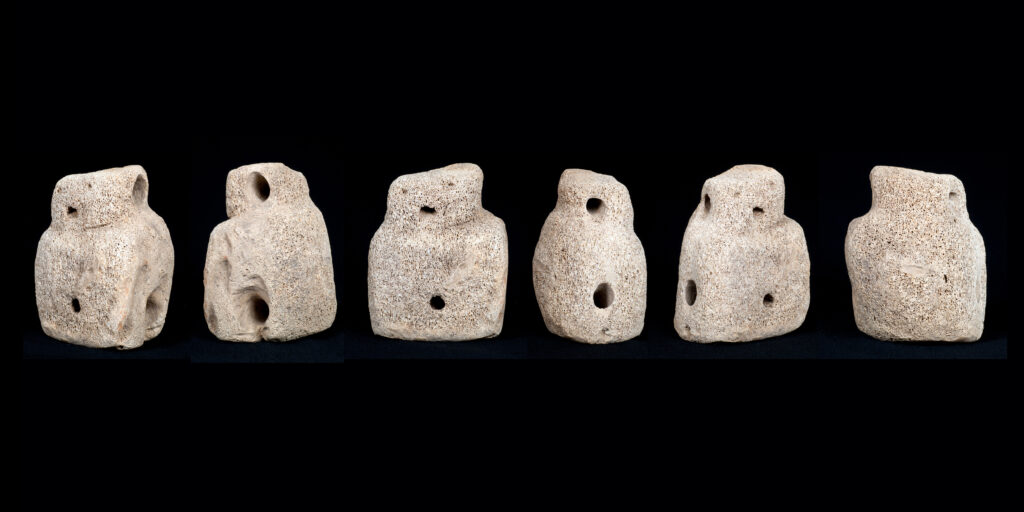
Bartlett was particularly drawn to the small Neolithic figurine known as the ‘Skara Brae Buddo’ which was unearthed around 1860, went missing for 80 years and can now be found in Stromness Museum in Orkney. In their entry, the author offers a suggestion for what its purpose could have been over 4,500 years ago, “based on my perception of it as female and the expression on its face”. Bartlett was also influenced by an article on volunteering at an archaeological dig for the first time written by Sehar Mehmood, a student at the University of Dundee.
I hold it in my hand. Small, rough, light. I feel its significance as I feel its texture and its gaze meets mine. This meant something, means something still. I shake it and grains of sand fall from the bone’s tiny cavities. I brush out more until its features are fully visible. Pain in its eyes and in the gasp of its mouth.
It’s her first time, and it’s winter. Outside, the winds are high and howling. Sand and waves beat against the dunes but it’s dry and warm inside, and smells of fur and whale meat and the seaweed that smoulders in the hearth. She paces the room when she can and bends to lean against the stones when she needs to. She’s tired already after a day with the barley and the fish and though she looks often at the bed against the wall she knows it’s best to keep moving.
An older woman sits in a doorway. She’s working at a piece of dry old bone from a whale washed up in the year of her own first time. She sees what she needs to see in it and shapes it with care. She remembers her time and how she felt and her hands translate that into the figure she makes. She looks steadily into its eyes. Take on her pain, she asks. Then, lower down and in the middle, she makes a hole. Let her open easily, she asks, and let the wee one easy out.
Judges called it an “extremely powerful short story”. Douglas said: “This story gies a ferlie Neolithic figurine, cairvit fae whale bane, a human story sae hertsair and real, sae proofond yet sae simple, that Ah noo cannae thole the thocht o its haein been oniethin else. It maks clear the importance o fiction and imagination, alangside mair traditional scientific and scholarly study, gin we are tae ettle at unnerstaunin the lives o oor prehistoric ancestors in onie sort o mensefou wey. Although they’ve no left ahint onie scrievit records, they maun hae experienced the ae fundamental hings that we aye dae – life arrivin, life depairtin, and ettlin at makkin sense o it aw. A gey pooerfu wee story.”
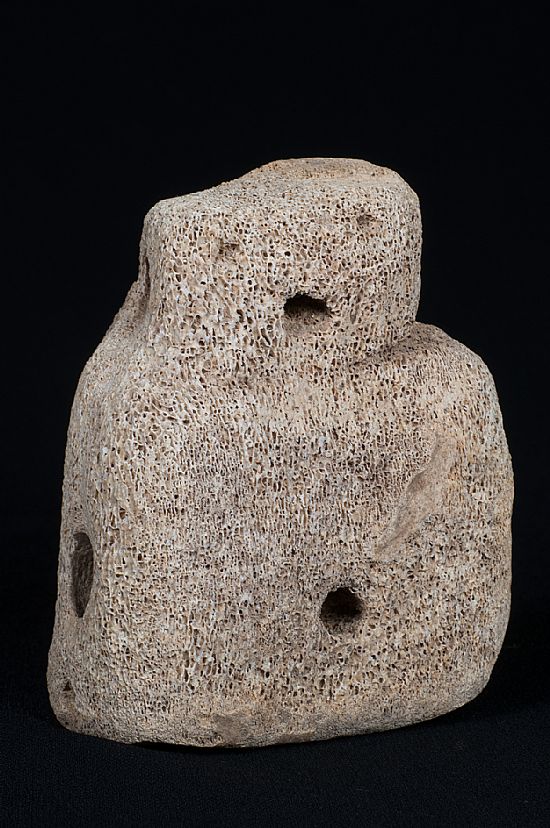
Image Credit: Stromness Museum and Rebecca Marr
Gaisgeach
Gaisgeach by Shelagh Campbell was inspired by Queering Archaeology: Vikings in Scotland written by freelance museum and heritage professional Sacha Coward which discusses some of the issues with gendering Viking burials based on grave goods. The 1,000-year-old Port an Eilein Mhòir ship burial discovered in Ardnamurchan in the Highlands, for example, was initially presumed to be that of a male warrior based on weapons found with the body.
Campbell’s story opens with two people in a 20th-century laboratory talking about a burial: a great hero who had been surrounded by weapons. They believe that this person was a professional warrior and describe his appearance as big and strong before explaining that the lack of jewellery or vessels in the grave means that a woman wasn’t buried there. The story then shifts to the 10th century, where Freya and Astrid are standing over the hero’s grave as they comfort themselves with the fact that people in the future will understand that she was head of the tribe – a heroic woman buried with her weapons.
20mh linn
“Dè sgrìobh mi mu dheidhinn?” dh’fhaighnich Marc don Ollamh MacIllEathain, is an dithis aca nan seasamh san obair-lann.
“An stuth àbhaisteach: fìor ghaisgeach a bh’ ann, air a chuairteachadh le buill-airm: claidheamh, sgiath, tuagh, sleagh, is mar sin air adhart. Thathar a’ creidsinn gum b’ e neach-cogaidh proifeasanta a bh’ ann: ’s dòcha gum b’ esan ceannard na treubha.”
“Ceart, agus bha Sìm a’ faighneachd mun ìomhaigh – cò ris a bha e coltach, nad bheachd?”
“Duine mòr, treun, gaisgeil – iarr air Sìm an t-èideadh àbhaisteach a chur air.”
“Agus bean, teaghlach?”
“Chan eil dearbhadh againn – cha robh seudraidh no soitheachan san uaigh, feumaidh nach deach boireannach a thiodhlacadh còmhla ris.”
10mh linn
“Dè nì sinn às a h-aonais?” dh’fhaighnich Astrid do Freya, is an dithis aca nan seasamh ri taobh uaigh a’ ghaisgich.
“Chan fhaic sinn a leithid a-rithist.”
Chuir Freya a làmh air gualann Astrid.
“Chan fhaic, ach rinn sinn cinnteach gun tuigeadh na Diathan gum b’ ise ceannard na treubha – boireannach gaisgeil a chaidh a tiodhlacadh le buill-airm: a claidheamh, a sgiath, a tuagh, a sleagh…”
“’Eil thu a’ smaoineachadh gun tuig gaisgich sna linntean ri teachd dè cho cumhachdach, cho treun ’s a bha i? Na rinn i dhuinn?”
“Tha, gun teagamh.”
“Dè chanas iad mu deidhinn?”
“Ò, an stuth àbhaisteach,” thuirt Freya, a’ coimhead air an tuineachadh air am beulaibh.
“Fìor bana-ghaisgeach a bh’ innte, neach-cogaidh gun choimeas, is mar sin air adhart.”
Rinn Astrid fiamh-ghàire agus shuath i a sùilean. “Abair dìleab.”
The author was commended for making a powerful statement with such brevity and simplicity. Lang said: “Tha mi cho toilichte gu bheil sgeulachd sa Ghàidhlig air soirbheachadh san fharpais seo. Ann an “Gaisgeach” tha Shelagh Campbell a’ sealltainn mar a bhios àrc-eòlas ag atharrachadh agus mar a dh’fheumas sinn a bhith fosgailte gu mìneachaidhean ùra air lorgan nan linntean a dh’fhalbh. Tha an sgeulachd seo gar tarraing a-steach air saoghal a’ ghaisgich san uaigh, ged nach fhaigh sinn ach sealladh aithghearr caochlaideach air, agus tha an t-ùghdar ri a moladh airson teachdaireachd cho cumhachdach a chur an cèill ann am beagan fhaclan sìmplidh.”

X-ray of the reconstructed sword from the Viking boat burial at Ardnamurchan (By Pieta Greaves, AOC Archaeology – Mike Addelman, Faculty of Humanities, University of Manchester. CC BY 3.0, Link)
Abandoned
Charlie Maciejewski, author of Abandoned, was inspired by Auchindrain in Argyll & Bute, where ordinary people lived and worked the land together until the 1960s. First documented in the 1500s, this farm township is a rare survivor of the Highland Clearances, when thousands of families were evicted in the 18th and 19th centuries. Many similar buildings lie in ruins across the landscape, but Auchindrain has become an open-air museum cared for by Urras Achadh an Droighinn/The Auchindrain Trust, where visitors can explore Scotland’s rural history.
Maciejewski often uses resources such as Canmore and the Historic Environment Record for the Highland Council area to identify old townships and shielings “which I visit and photograph, and allow my imagination free reign.”
I am derelict now.
For nearly three hundred years have I stood here, my body hewn from the sandstone outcrops on the nearby shore.
The land is poor for growing crops, and needs constant attention, else the heather and weeds take advantage, as now.
Many generations lived, and died, within my walls. I cared for them, as they cared for me.
Now the hawthorn and ivy have pushed me aside, and their branches continue to pierce and weaken my body, yet I take some comfort in their sharp embrace.
I am lonely.
I miss the company of humans.
My hearth is cold and lifeless. My rafters, imbued with the peat smoke from its gentle warmth, have fallen and rotted away.
My last master went to fight in a great war.
He did not return.
My mistress and the children left me.
I was empty, bereft of a reason to be, and have remained so ever since.
Many years later, one of the children visited me by the now overgrown and barely visible track.
She caressed my crumbling and decaying body, and wept.
My once fine lines are blunted, worn down by age and neglect, and robes of lichen and moss cover
my skeletal remains like a funeral shroud. I am no longer a house, a shelter, but a heap of stones,
gradually becoming as one with the landscape.
Here I was born, here I was raised, and here I shall die.
I am home.
Judges admired Maciejewski’s evocative writing. Gilmour said: “The author has done an excellent job of capturing the spirit of some of Scotland’s more recent historic sites. I hope their story encourages everyone to use free online resources to explore their local area and let their imagination run wild too. It’s been a joy to help judge this competition—just one of the many activities coordinated by the Society’s Dig It! project which encourages engagement with our past as part of Scotland’s Archaeology Strategy.”
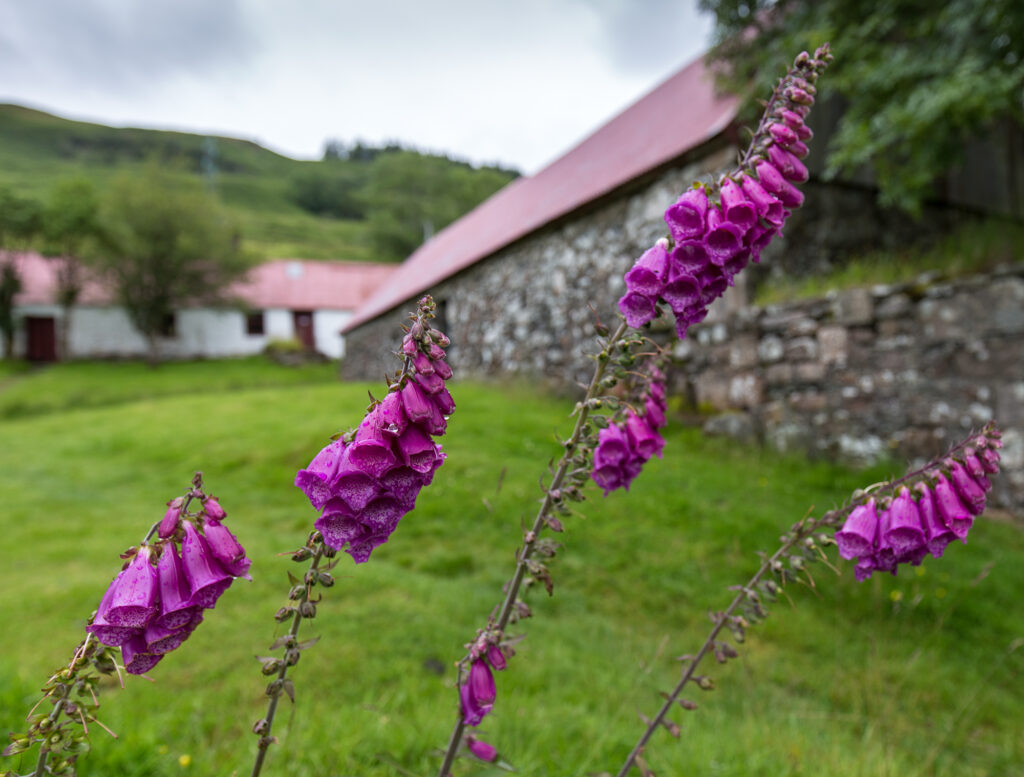
Foxgloves at Auchindrain (Image Credit: cc-by-sa/2.0 – © David P Howard – geograph.org.uk/p/4596511)
Three winners will receive £250 each and their stories will be published in the biannual Society of Antiquaries of Scotland newsletter which is distributed internationally to their members (known as Fellows). Thank you to everyone who took part in the competition.
Want to keep discovering Scotland’s story? Dig into some of the articles that inspired these authors.
Header Image Credit: Stromness Museum and Rebecca Marr
Dig It! is coordinated by the Society of Antiquaries of Scotland and primarily funded by Historic Environment Scotland
 |
 |
 |
 |
