Bioarchaeology and Tales from Bones
Archaeological science and technology have come a long way in the past twenty years and powerful new analytical tools have allowed us to dig deeper into the lives of people from Scotland’s past. [NOTE: Article contains images and descriptions of human remains]
By combining human osteology (the study of bones), palaeopathology (the study of ancient diseases), and stable isotope methods (used to investigate patterns of diet and mobility), as well as archaeological and historical evidence, we can reconstruct the types of foods people ate, their health, whether they were local to the area they were buried and in rare cases, even the cause of death. Human bioarchaeology incorporates these disciplines and allows experts to recreate the past lives of skeletons found in archaeological contexts, like the fascinating Pictish and medieval burials at Portmahomack in the Highlands and at the medieval Christian site at Whithorn in Dumfries & Galloway.
What is Human Osteology and Palaeopathology?
Human osteology is a scientific discipline that focuses on the recovery, assessment and interpretation of human skeletons. This can either apply to a modern legal context (forensic osteology or anthropology) or to an archaeological context to reconstruct past lives. Human osteology assessments can tell us the sex, age-at-death, stature and ancestry of a skeleton.
Experts use a range of osteological methods that differ depending on whether the skeleton is adult or non-adult (a child). For example, non-adult skeletons are aged based on the development of their bones and teeth. Adult skeletons, however, are aged from the rate of decline in their bones and teeth.
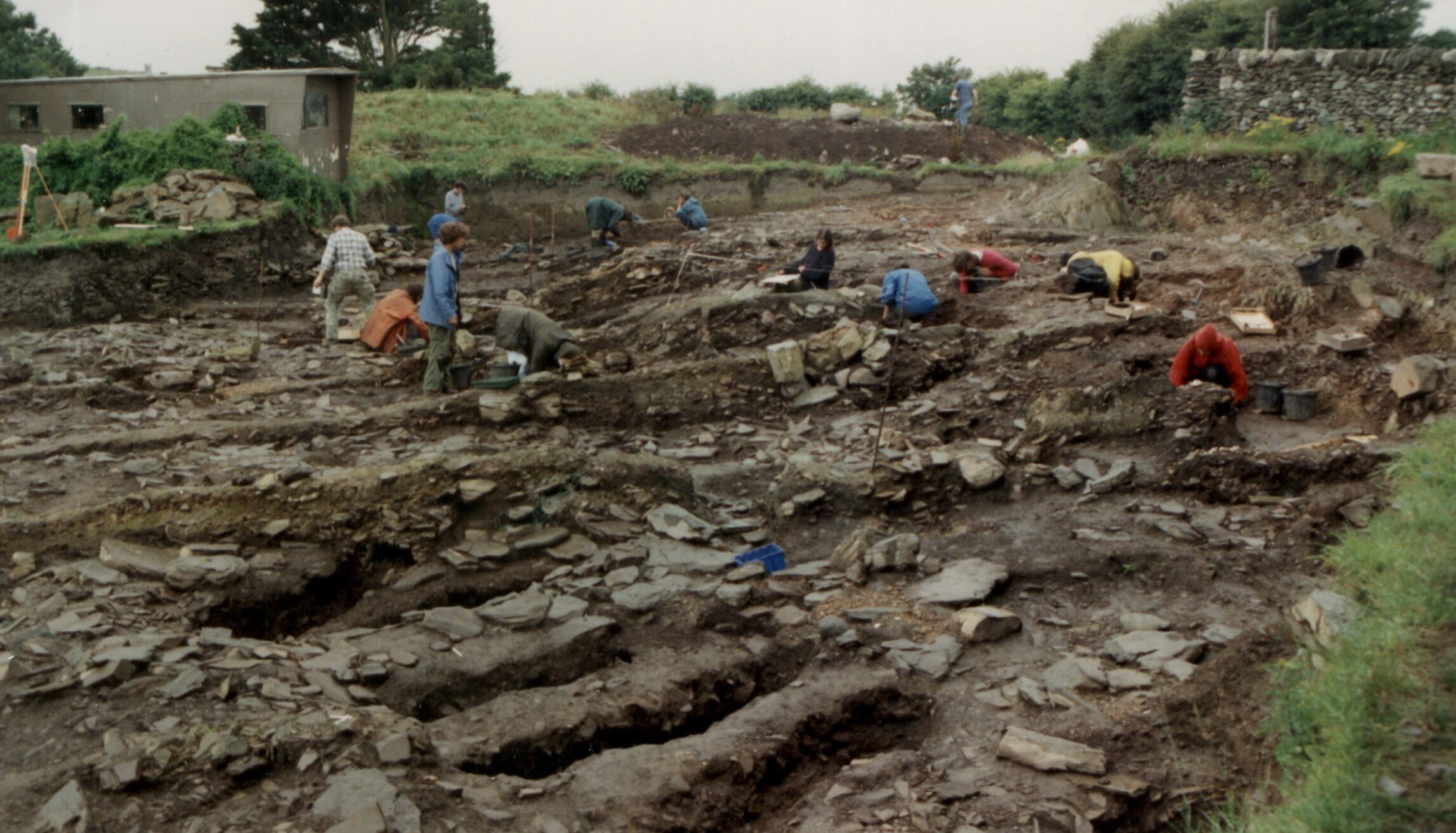
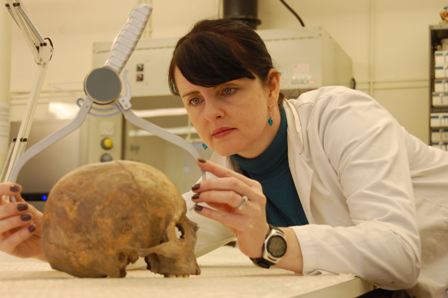
Excavations at the ancient burial ground of Whithorn Priory in September 1991 (© Elliott Simpson) and a skull from Portmahomack is examined in the lab (© Shirley Curtis-Summers)
Palaeopathology is the study of skeletal evidence of disease and trauma. Evidence of specific diseases, such as leprosy, tuberculosis or malignant cancers can offer a wealth of information about that past person when combined with osteological, archaeological and historical evidence.
For example, malignant tumours were identified on a number of adult males from the Pictish and medieval site of Portmahomack in Easter Ross. The Picts were a confederation of peoples who lived in what is today eastern and northern Scotland from around 400 AD to 1,000 AD. The youngest individual affected by a malignant tumour at Portmahomack was aged 26-35 years-at-death and another, a monk aged 46-59 years-at-death from the Pictish monastery, had late-stage prostate cancer when he died. Recent investigations at Portmahomack also identified a very special burial that contained the remains of a man that met a violent end.
What is stable isotope analysis?
Stable isotopic analysis is often used in archaeological studies alongside osteology and palaeopathology evidence. What is consumed during life will leave specific isotopic traces in the body, which can be analysed to reconstruct patterns of past diet and mobility. Depending on what tissue is analysed (e.g. bone or teeth), we can find out important things about past lives:
-
Carbon and nitrogen isotope values can tell us the types of foods a human or animal consumed in life
-
Strontium and oxygen isotope analysis from the consumption of plants and drinking water can identify whether one or more individuals lived near or far away from their site of burial
-
Sulphur isotope analysis can tell us about both diet and mobility, plus its isotopic ratios in bone collagen represent uptake from plant and soil of a particular area
Something Fishy: The Portmahomack Picts
Another recent study on the 137 adult skeletons from Portmahomack used stable carbon and nitrogen isotope analysis to reveal a stark difference in diet of the early Pictish communities over 1,300 years ago, compared to the later parish church community. By analysing bone collagen from these skeletons, it was discovered that the early medieval Picts did not eat fish, yet by the later medieval period, the community had a predominantly fishy diet.
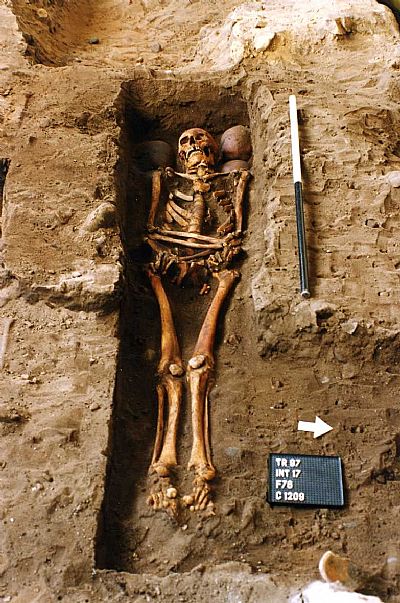
One of the medieval burials at Portmahomack containing six skulls
Experts have seen a similar dietary pattern in skeletons from other sites such as Lundin Links (Fife) and Westness (Orkney), yet the opposite case at others, like Newark Bay (Orkney) where the community there had a continuously fishy diet. These cases tell us that there was variation in Pictish diet across the country, which appears to be not just influenced by location, resources and seasonality, but by social and religious influences on the types of food consumed.
What Happened in Whithorn?
New scientific analyses on early Christian skeletons at Whithorn Priory have provided important new insights of burial practices, diet and mobility at the site.
Some of the earliest monks buried at Whithorn were laid to rest in log coffins made from hollowed-out tree trunks and these burials have now been radiocarbon dated to the 7th Century AD, not the 5th Century AD as previously thought.
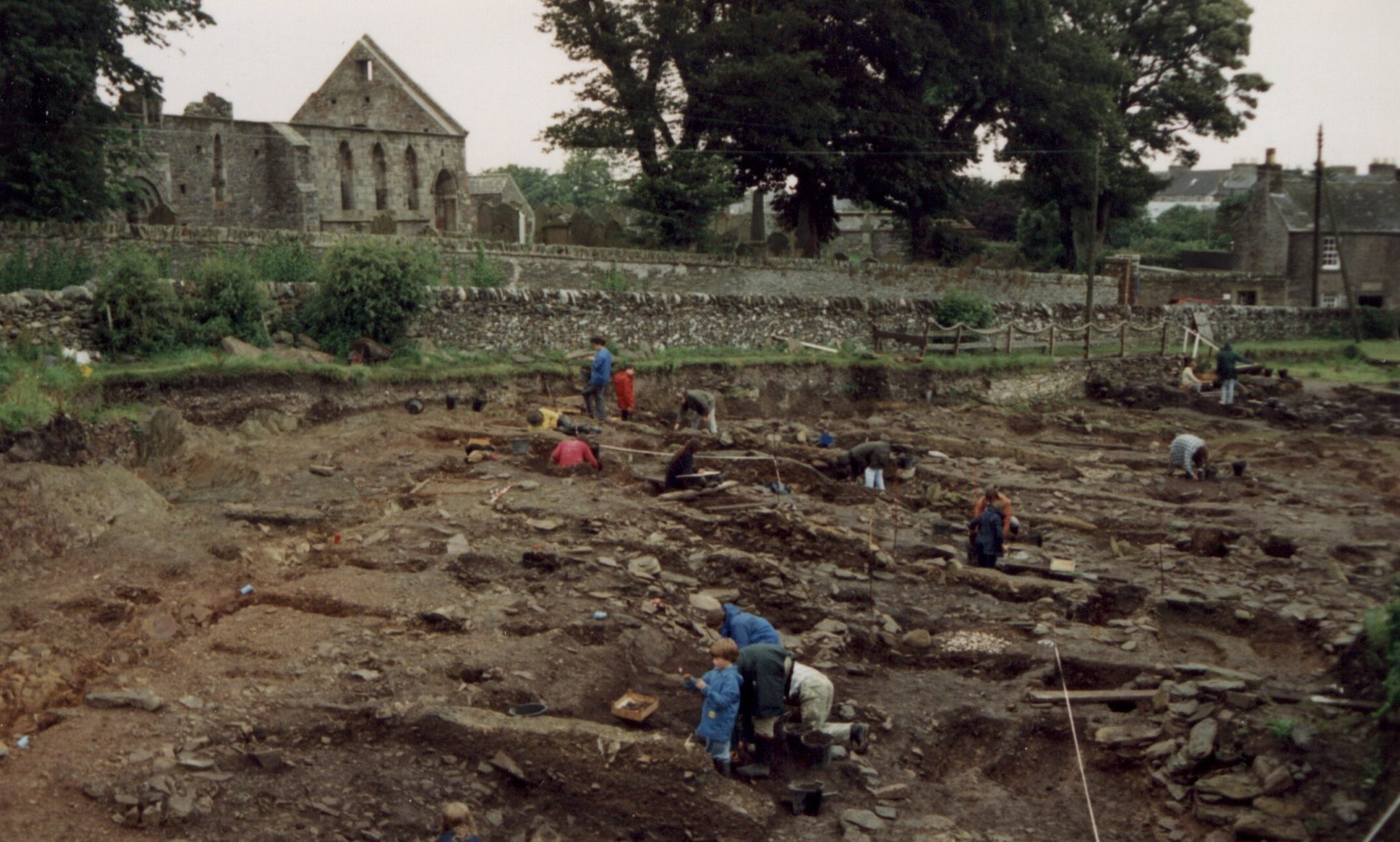
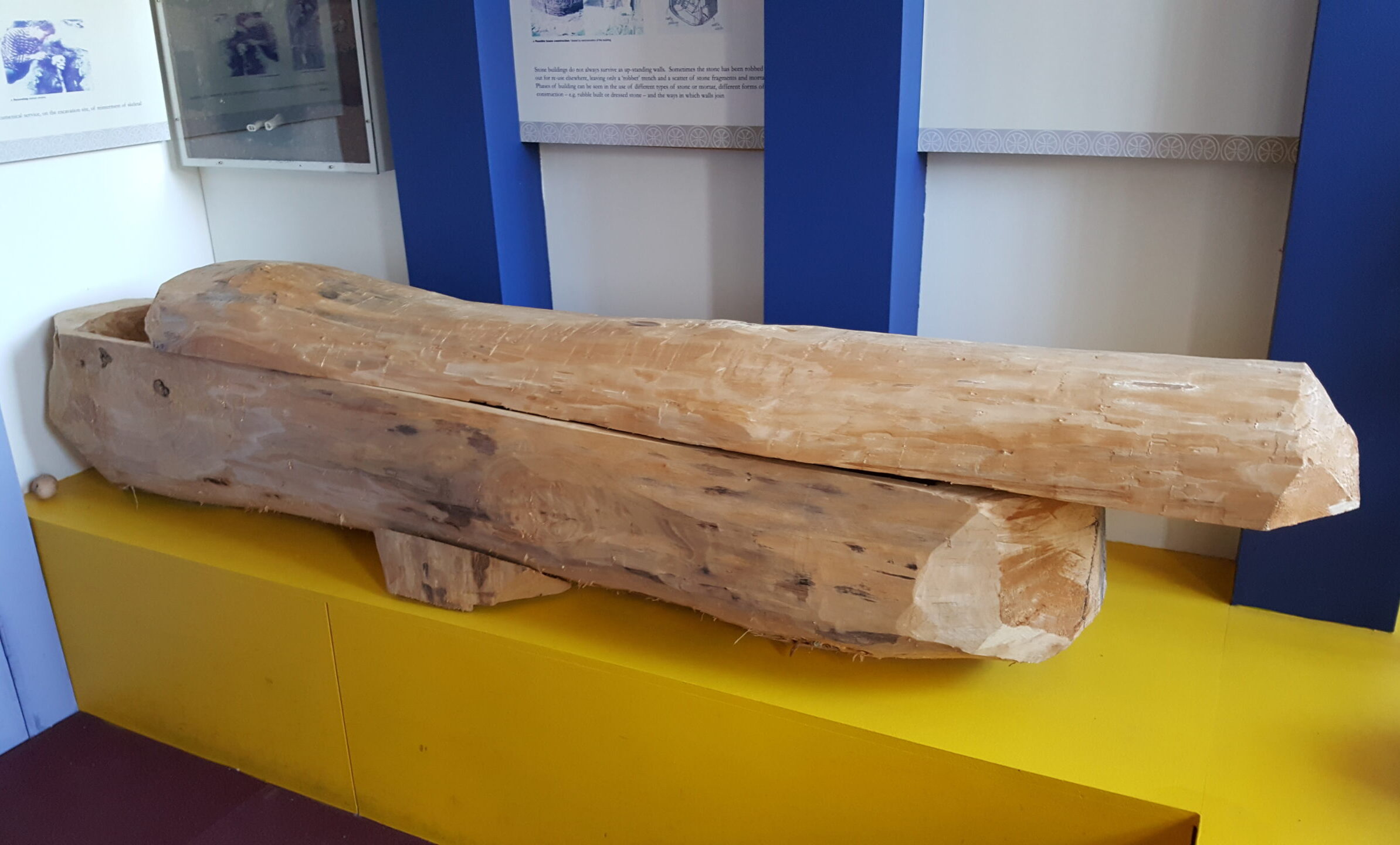
Excavations at the ancient burial ground of Whithorn Priory in September 1991 (© Elliott Simpson) and a replica by Andy Nicholson of one of the medieval log coffins, currently on display at The Whithorn Story (© Adrián Maldonado)
Strontium and oxygen isotope results on the skeletons revealed that most of them were local to the Whithorn area, although there were a few that were non-local. Carbon and nitrogen isotope data suggest that they had a predominantly land-based diet and did not rely on the nearby waterways for fish consumption, similar to the Pictish communities at Portmahomack.
What’s next?
By combining these multiple disciplines, we can gain deeper insights into to the lives of those from Scotland’s past and answer important questions relating to Scottish society, economy, politics and religion. Analysis on the burials from the two medieval Christian sites of Portmahomack and Whithorn offer just a glimpse of the future potential that skeletal analysis has to offer with regards to reconstructing past Scottish lives.
It’s hoped that bioarchaeological analysis on the non-adult skeletons from Portmahomack will contribute to a greater understanding of the health and well-being of children from medieval Scotland, an area of research that is still very much underrepresented.
Follow the ongoing investigations of the Cold Case Whithorn project, with Dr Adrián Maldonado (National Museums Scotland) and the Whithorn Trust, for more on the unusual skeletons from Dumfries & Galloway.
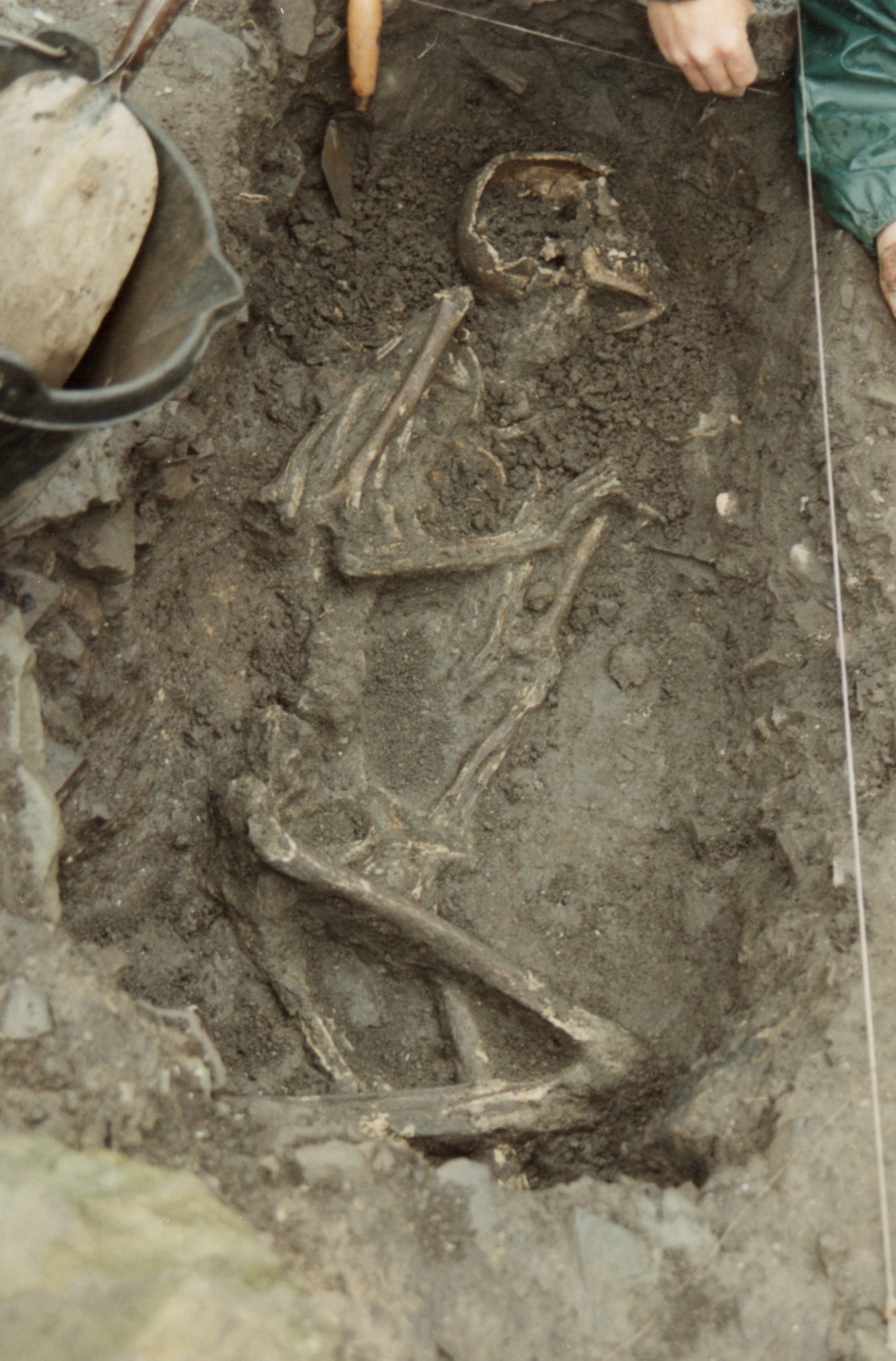
Excavations at Whithorn Priory in September 1991 (© Elliott Simpson)
By Dr Shirley Curtis-Summers FSAScot, University of Bradford. Shirley has been a human bioarchaeologist for over 15 years and much of her research focuses on reconstructing past lifeways of inhabitants from medieval Britain. Shirley’s particular interests include studying medieval monastic and lay communities to understand socio-economic and religious influences on diet, health and well-being. Shirley is a trustee for the Tarbat Historic Trust and continues to research the lives of those at Portmahomack, along with new research on the burials from Whithorn Priory.
At the time of publishing, she is keen to hear from those who can offer insights on folk traditions (written or oral evidence) of treating the sick in medieval and early modern Scotland, especially sickly children and pregnant/new mothers, which will contribute to her current research. Please email S.Curtis-Summers@bradford.ac.uk
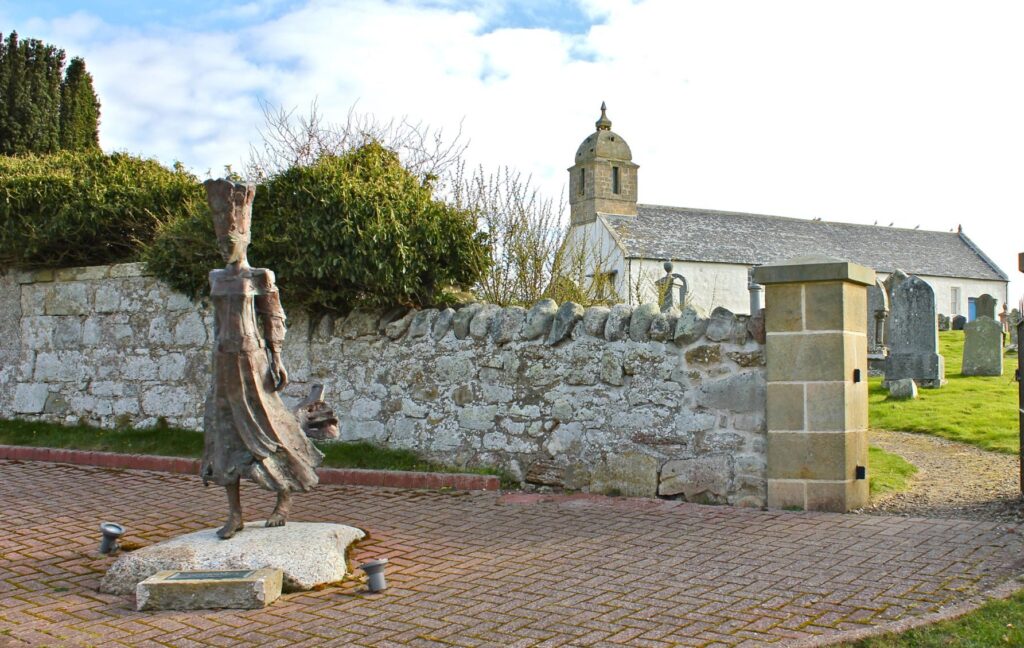
Featured Image: Tarbat Old Church (Image Credit: sobolevnrm via Flickr at https://bit.ly/2NY9nzF, CC BY-SA 2.0)

This article was produced as part of Scotland Digs Digital. In the summer of 2020, we shone a spotlight on Scottish archaeology with the Scotland Digs Digital campaign which brought together online and offline events, as well as live updates from across the country for everyone to enjoy.
