Why Do Scotland’s Archaeological Sites, Artefacts and Monuments Need Protecting?
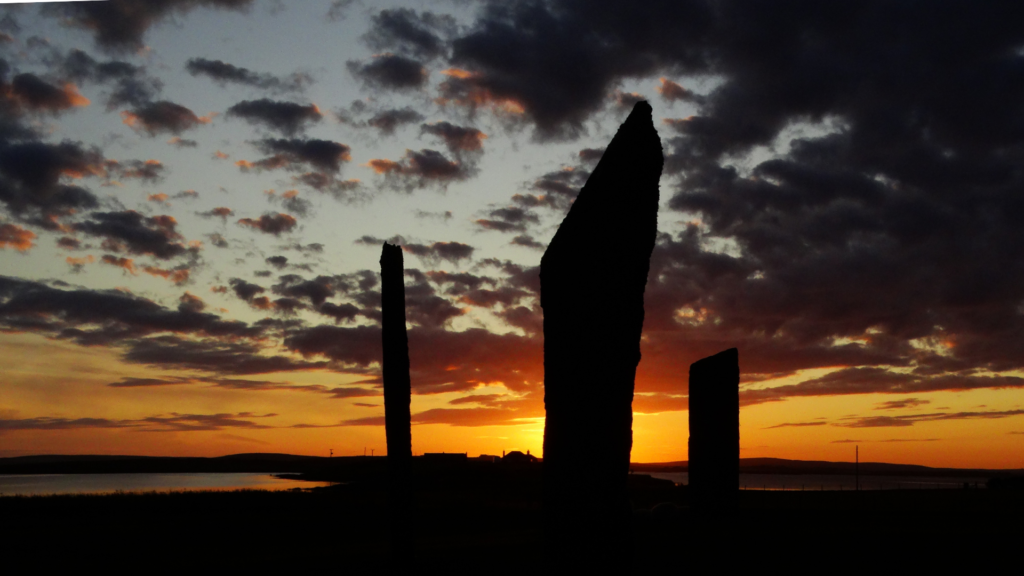
People have been living on the land that is now called Scotland for over 14,000 years and many left behind sites, artefacts and monuments which can reveal more about their story. Today, many of these are legally protected, but that hasn’t always been the case.
The Stone of Odin Standing Stone
For over 4,500 years, the Stone of Odin stood to the north-west of the Stones of Stenness in Orkney. It’s generally accepted to have been around 2.5 metres high with a breadth of just under one metre and reportedly had a “round hole in the midst of it”.
Excavations confirmed that the Stone of Odin was likely part of a pair which, according to Sigurd Towrie, “may have represented symbolic doorways – perhaps marking, or controlling movement, through the landscape and the monuments”. More recently, “it was believed to have curative and preventative powers and was the site where binding oaths were sworn – both business and romantic”.
But in 1814, a tenant farmer incensed the local community when he toppled it as part of his plan to remove the monuments from his land reportedly “for the purpose of strengthening the fields” and because his “pasture was being ruined by visitors to the stones”. He then moved onto the Stones of Stenness where he toppled one stone and demolished a second but was stopped before he could do further damage.
It was too late for the Stone of Odin, but the Stones of Stenness were taken into state care in 1906 and the toppled stone (Stone Five) was re-erected.
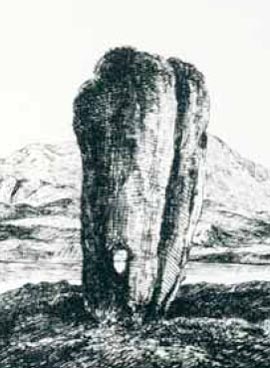
Odin Stone (Original uploader: Srvban at German Wikipedia. Original text: Elizabeth, Marchioness of Stafford – Orkneyjar, Public Domain)
Cairns of Memsie Bronze Age Cemetery
Built about 4,500 years ago, Memsie Cairn (measuring some 25 metres across and 4.5 metres high) near Fraserburgh in Aberdeenshire was once accompanied by two other large cairns and many smaller monuments which would have made an “impressive cemetery”.
Finds at these the cairns include human bones and heavily burnt stones, a flint ‘dart-head’, an iron sword with a medieval pot, and a beaker and Bronze Age sword. This “curious mixture” suggests that they were intermittently in use for thousands of years (up into the medieval period which began approximately 1,600 years ago).
Where are these monuments now? Unfortunately, the other two were plundered for building material. According to Historic Environment Scotland, a 1799 account says the three cairns “were very large till of late, when great quantities of stone have been taken away from two of them”, probably for building field walls. Memsie Cairn now serves as a reminder of why it’s so important to protect these places.
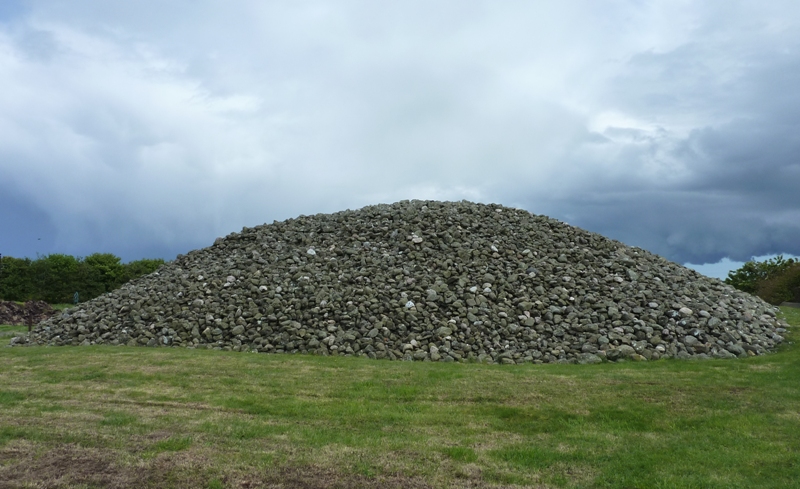
Surviving Memsie Cairn (By Otter – Own work, CC BY-SA 3.0)
Arthur’s O’on Roman Temple
Arthur’s O’on was a unique stone building thought to be Roman temple that stood near Falkirk in Stenhousemuir (which was possibly named for this ‘stone house’).
Built almost 2,000 years ago, it was shaped like a beehive with a domed roof and was 6.7 metres high with a circumference of 26.8 metres. The door is said to have had an iron gate and a rampart and ditch appears to have surrounded the building. There may have been carvings of eagles, the goddess Victory and other insignia on the inside, as well as a huge stone which could have been an altar or the base of a statue—a bronze finger was reportedly found in a crevice.
It was too far from a fort or road to have been a bath or mausoleum, so it’s thought that it was primarily a “triumphal monument, or tropaeum, erected to commemorate a victory” which was built to be visible from the Antonine Wall. In addition to artefacts such as pottery fragments, ox horns from cattle which may have been sacrificed were found nearby which help support this theory.
The structure may have also commemorated the campaign that led to the establishment of the Wall which was led by Quintus Lollius Urbicus who was originally from Numidia (modern day Algeria).
It was one of the best-preserved Roman buildings in Britain until 1743 when it was demolished to line a mill dam on the River Carron. The stones were swept away in a flood five years later.
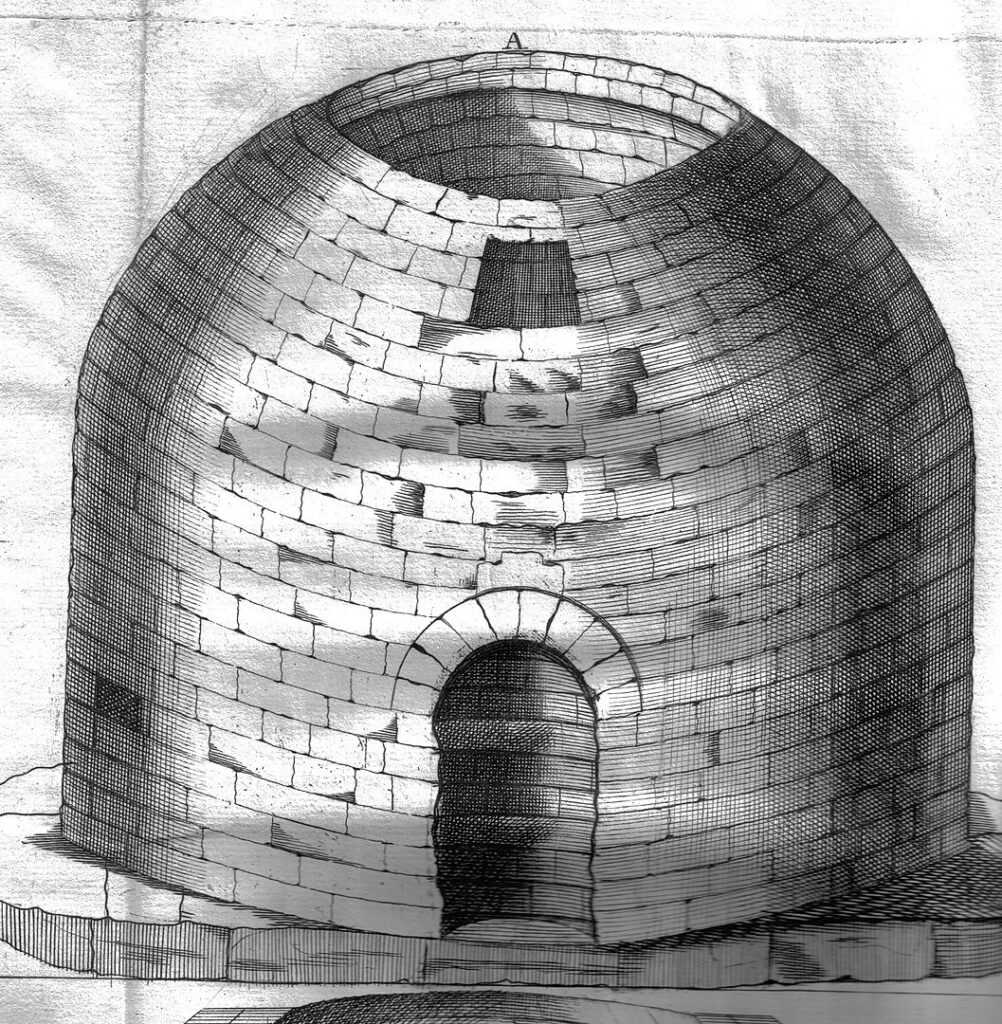
Arthur’s O’on (By Unknown author – Alexander Gordon’s Itinerarium Septeptrionale, 1726., Public Domain)
Burghead’s Pictish Bull Carvings
Around 1,400 years ago, the site of modern-day Burghead in Moray was home to a large Early Medieval fortress which was probably a significant seat of power. It’s thought that the people who lived there used carvings of bulls to signify their might.
In the 1800s, remnants the fort were mostly destroyed when the town was built and around 24 bull carvings discovered during this work were used to build the harbour quayside. Only six survived, and no other examples have been found anywhere else in Scotland.
Luckily, not all of the information about the fort was lost. In fact, excavations led by the University of Aberdeen over the last several years have yielded “some of the most significant Pictish items and building remains ever uncovered”. In addition to enormous defensive ramparts and dwellings within the fort, they’ve unearthed items which reveal more about the everyday lives of Burghead’s former inhabitants such as metalworking, weaponry and hair and dress pins.
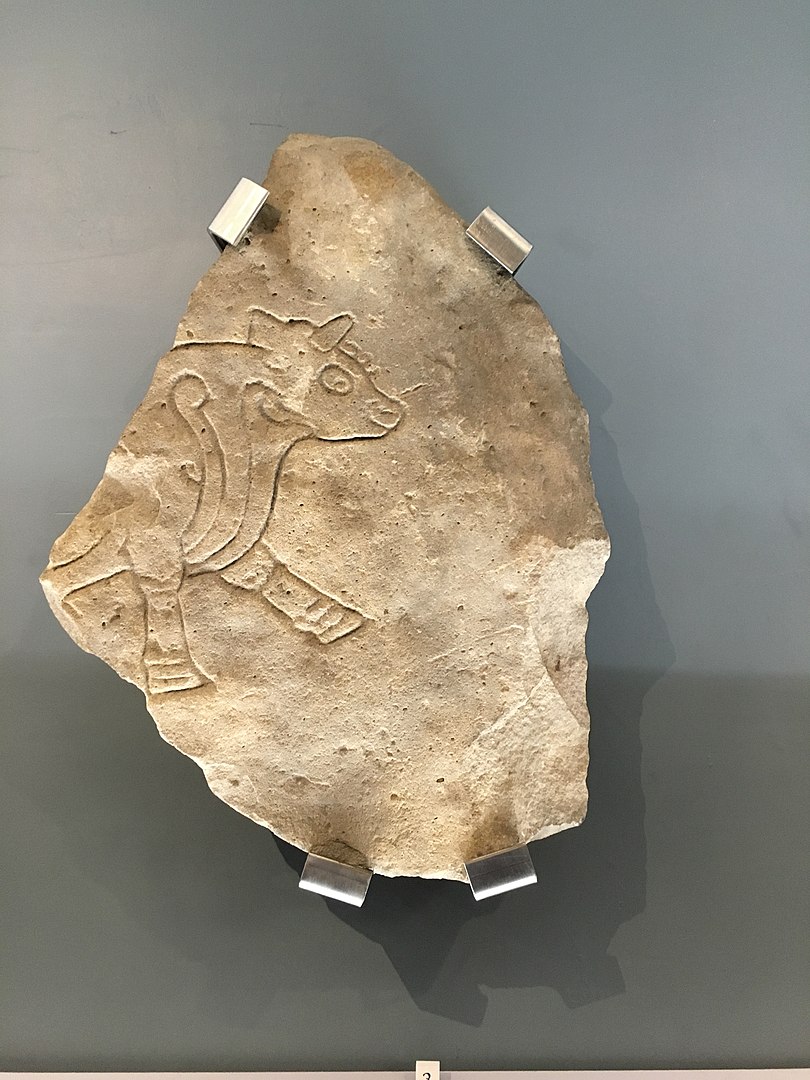
Surviving Burghead Pictish Symbol Stone (By JimmyGuano – Own work, CC BY-SA 4.0)
HOW ARE SCOTLAND’S SITES, MONUMENTS AND ARTEFACTS AND PROTECTED TODAY?
It’s not just physical objects and structures that are lost when destruction occurs; the bigger issue is the disappearance of information. It means we’ve lost the story that they could have told through archaeological research.
Thankfully, when sites are discovered due to development (such as the building of new houses, schools or roads) they are now investigated by professional archaeologists as part of the planning process. And if anyone thinks they have found something of archaeological significance anywhere in Scotland, they are obliged by law to report it to Treasure Trove.
But what about the sites and monuments we already know about? This is where scheduling comes in.
Historic Environment Scotland maintains a schedule (a list) of monuments of national importance which date from around 8,000 years ago up until the Second World War. Scheduling is the process of adding monuments to this list which has been ongoing since it began in 1882. Today, Scotland has around 8,000 scheduled monuments and it’s a criminal offence to damage any of them.
In addition to digging away at prehistoric cairns with a mechanical excavator, this also includes activities such as leaving graffiti and undertaking illegal metal detecting. Historic Environment Scotland can’t staff every site or install alarm systems or surveillance, so they need you to help by reporting heritage crimes to Police Scotland or Crimestoppers.
Thanks to commercial archaeologists, charities like Historic Environment Scotland and conscientious members of the public, it’s hoped that the loss of sites, monuments, artefacts and the information they hold will become a thing of the past.
Tweet
Header Image: Stones of Stenness at sunset © Colin Park (cc-by-sa/2.0)
