Top Six Modern (Post-Medieval) Archaeological Sites and Discoveries in Scotland
Are archaeologists only interested in sites from thousands of years ago?
While ancient places can be thrilling to investigate, experts are also keen to explore material remains from as recently as the 1500s to the present day, which covers everything from illicit whisky distilling to football stadiums.
Blackhouses in Leòdhais (Lewis)
Blackhouses were particularly common in the post-medieval period in Na h-Eileanan Siar (Outer Hebrides) and the Scottish Highlands, but their origins probably extend much earlier into the Norse period (which began around 1,200 years ago). These long narrow buildings featured double dry-stone walls packed with material such as earth and clay, and featured wooden rafters covered with a thatch of turf, cereal straw or reed.

Gearrannan Blackhouse Village – Entrance houses (© Rob Farrow, CC-BY-SA 2.0)
As there was no chimney for the smoke to escape through, the smoke made its way through the roof. The soot then blackened the interior which may have contributed to the adoption of name blackhouse (other theories cite their general lack of windows, and that the Gaelic term taigh-tughaidh (thatched house) was misinterpreted as taigh-dubh, which was then translated as blackhouse). The structure was often used to accommodate livestock as well as people with a family living at one end and the animals living at the other with a partition between them.
Blackhouses in Leòdhais in particular, appear to have been modified to survive in the tough environment of Na h-Eileanan Siar; low rounded roofs resisted the strong Atlantic winds and thick walls provided insulation, while curved corners allowed the wind to flow around the building.
In 1996, archaeologists excavated two dry-stone structures in the abandoned blackhouse village of Bereiro, near to the township of Crowlista on Leòdhais, to learn more about this iconic structure.
Excavations focused on what seemed to be the oldest, most degraded buildings in the small township and radiocarbon dates from barley grains confirmed the post-medieval date of one of the buildings investigated.
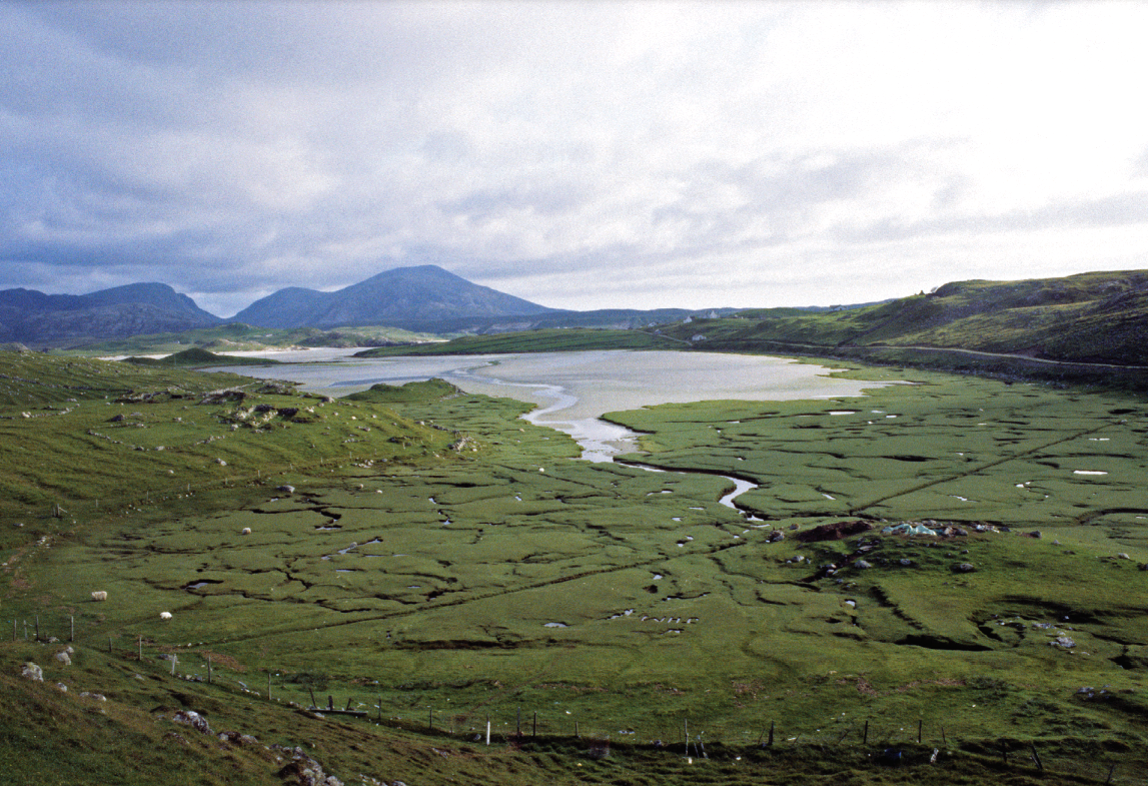
Landscape position of the abandoned blackhouse village of Bereiro in 1996, looking south towards Uig sands (© Simon Gilmour)
Finds included the remains of 18th-to 19th-century glass bottles and a fragments of coarse pottery. Excavated deposits of peat ash lying on a cobbled floor with additional patches of clay revealed the presence of a single hazelnut fragment and both charred oats and barley, giving an insight into what people ate in this community centuries ago.
Today, you can visit restored or reconstructed blackhouses on Leòdhais, at Gearrannan and Arnol, to get a sense of what life was like hundreds of years ago inside these dwellings.
Scotland’s Earliest Railway in East Lothian
Opened in 1722, the Tranent to Cockenzie Waggonway was Scotland’s first railway. The 2.5-mile-long wooden track in East Lothian transported coal from the pits at Tranent in horse-drawn wagons to fuel the fires beneath the salt pans at Cockenzie, and to be shipped on from the harbour at Port Seton.
Aside from being the country’s earliest railway, the site is also notable as the site of the Battle of Prestonpans, which was fought across the line. It was the first significant engagement of the Jacobite rising of 1745, where Jacobite forces led by the exiled prince Charles Edward Stuart defeated a government army in less than thirty minutes, establishing the revolt as a serious threat to the British government.

Since 2017, the 1722 Waggonway Heritage Group has run community excavations with volunteers searching for the remains of the original waggonway line, and even uncovered some of its 300-year-old timbers in 2021. The team have also led investigations uncovering the 17th-century salt pans in Cockenzie, as well as garden digs looking for evidence of the lost 18th-century Port Seton Glassworks, building a bigger picture of Scotland’s early industrial era.
In 2022, they will return to excavate an area called the ‘coalfauld’, where the waggonway’s coal was taken to be sorted, graded and stored. The waggonway ran right through the middle of this area, so there is hope for more unique discoveries.
Evidence of Illicit Whisky Distilling in Speyside
Whisky distilling in Scotland began as early as 1494, and the practice grew throughout the late medieval period to become an incredibly popular industry. But when whisky was first taxed in 1644, illicit stills sprang up across the country so that producers could bottle Scotland’s ‘water of life’ without paying heavy tariffs.
Between the 1760s and the 1830s, the Highlands was the largest player in the illegal Scottish whisky trade. To give you a sense of the scale, more than 1,000 illegal stills were seized from the area in 1782.
Pioneering Spirit began in 2020, the first project of its kind – a nationwide archaeology & research programme between the Trust & @TheGlenlivet, seeking to unearth stories old & new, and ground the knowledge & mythology of illicit whisky making back to the places it happened 🥃 pic.twitter.com/qgkw1QaRRP
— National Trust for Scotland (@N_T_S) June 29, 2022
Since 2020, the National Trust for Scotland (NTS) has been heading up a project of archaeological investigation into Scotland’s illicit distilling past, named Pioneering Spirit.
In 2022, archaeologists from NTS travelled to Speyside to excavate the site of the original 1824 Glenlivet distillery, situated just one kilometre away from the current business. The founder of Glenlivet, George Smith, began as a smuggler and illicit distiller, before applying for a license in 1823 to produce whisky legally and on a large scale.
During the excavation, the team uncovered a stone lined setting with a wooden base for a possible spirit receiver (also known as a spirit safe), evidence of possible mash tun (a huge metal vat in which malt is mixed with hot water and broken down), and a wooden vat which could be just under 200 years old.
As well as uncovering more about the origins of Scotland’s most famous drink, the excavation was significant as it revealed material remains relating to the people who worked at the distillery in centuries past. Unearthed artefacts included various ceramics and glass, a whistle, clay pipe and leather boots.
‘Iconic’ Glassworks in Edinburgh
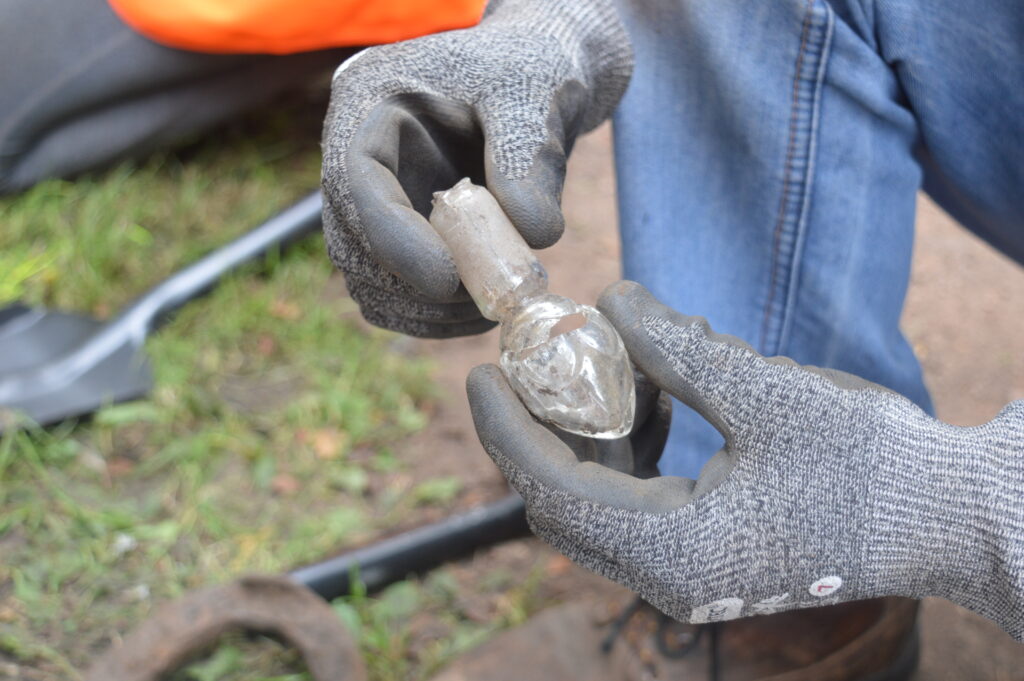
In 2020, construction of a housing complex near Salamander Street in Leith revealed the remains of Edinburgh & Leith Glass Works, which operated in the 18th and 19th centuries. This is known as developer-led archaeology, which offsets the impact that development has on the historic environment.
Experts from AOC Archaeology uncovered the ‘nationally important’ remains which included stone and brick walls, floors, furnaces, and deposits of glass-working material, as well as a number of workshops around the bases of two glass cones.
Leith’s bottle production was once vital to Britain’s trade in wine and spirits. At its peak around 1770, the glass factory’s furnaces produced “a staggering [one] million bottles per week” to accommodate the growing demand for wine and whisky across the British Empire.
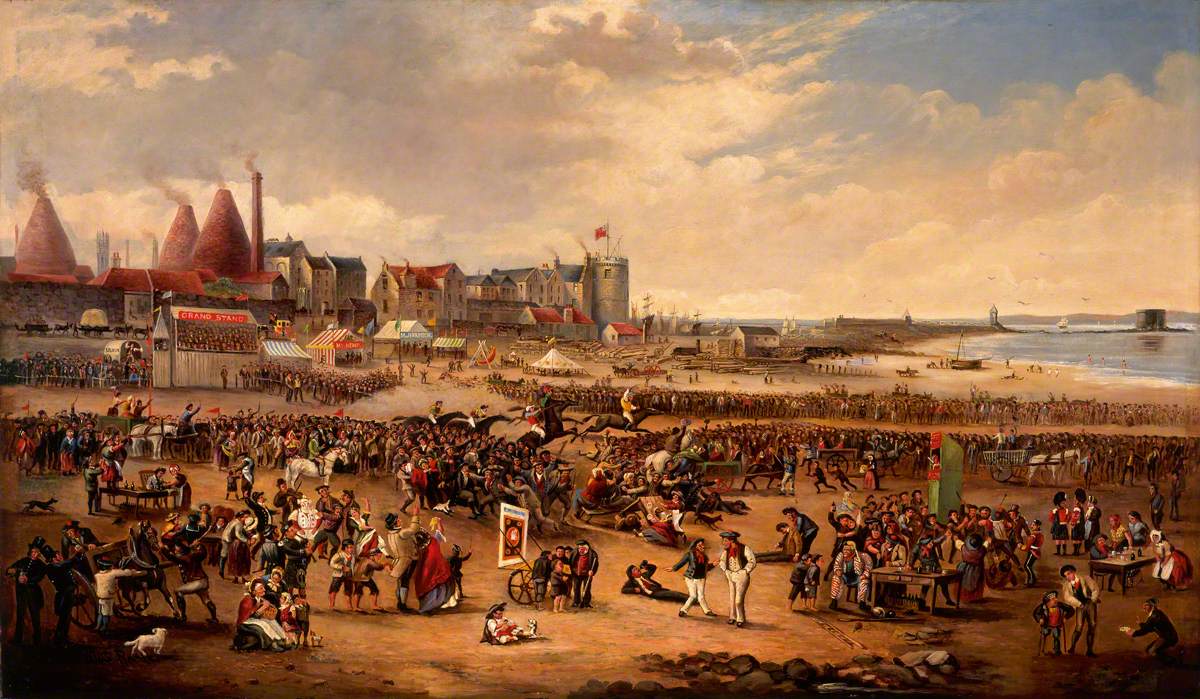
The Leith glass factory’s cone-shaped furnaces appear in the background of painter William Reed’s Leith Races (William Thomas Reed via Museums & Galleries Edinburgh – City of Edinburgh Council, CC BY-NC-ND)
Conveniently situated in the port district of Leith, when barrels of wine and spirits arrived they were swiftly decanted into bottles from the glass bottle factory. These bottles, many of which were uncovered during the 2020 dig, may have even influenced the shapes of wine bottles seen today.
The site’s brick glassmaking cones which stood over the furnaces dominated the Leith skyline over 200 years ago, possibly reaching up to 30m in height.
The Edinburgh and Leith Glass Works Company was dissolved by 1874, probably linked to a loss of business following American Independence, and the last furnaces were demolished in 1912.
Early Footballing Heritage in Glasgow
In 2021, Archaeology Scotland partnered with The Hampden Collection to excavate an area in Glasgow where it’s believed the first Hampden Park stadium, built in 1873, once stood.
Dubbed “the most significant footballing site in the world” by experts, the site became the model for purpose-built football stadiums around the world, with features such as turnstiles, embankment standing and season tickets which we recognise today all originating at Hampden. It was also the site of Scotland’s historic 5 – 1 win over England in 1882, with the winning team being captained by Andrew Watson, the first Black captain of an international football team.
Archaeologists and volunteers used a combination of survey and excavation to reveal evidence of the foundations of the pavilion and the original playing surface, as well as numerous artefacts dropped by the early supporters including beer bottles, juice bottles and clay pipes.
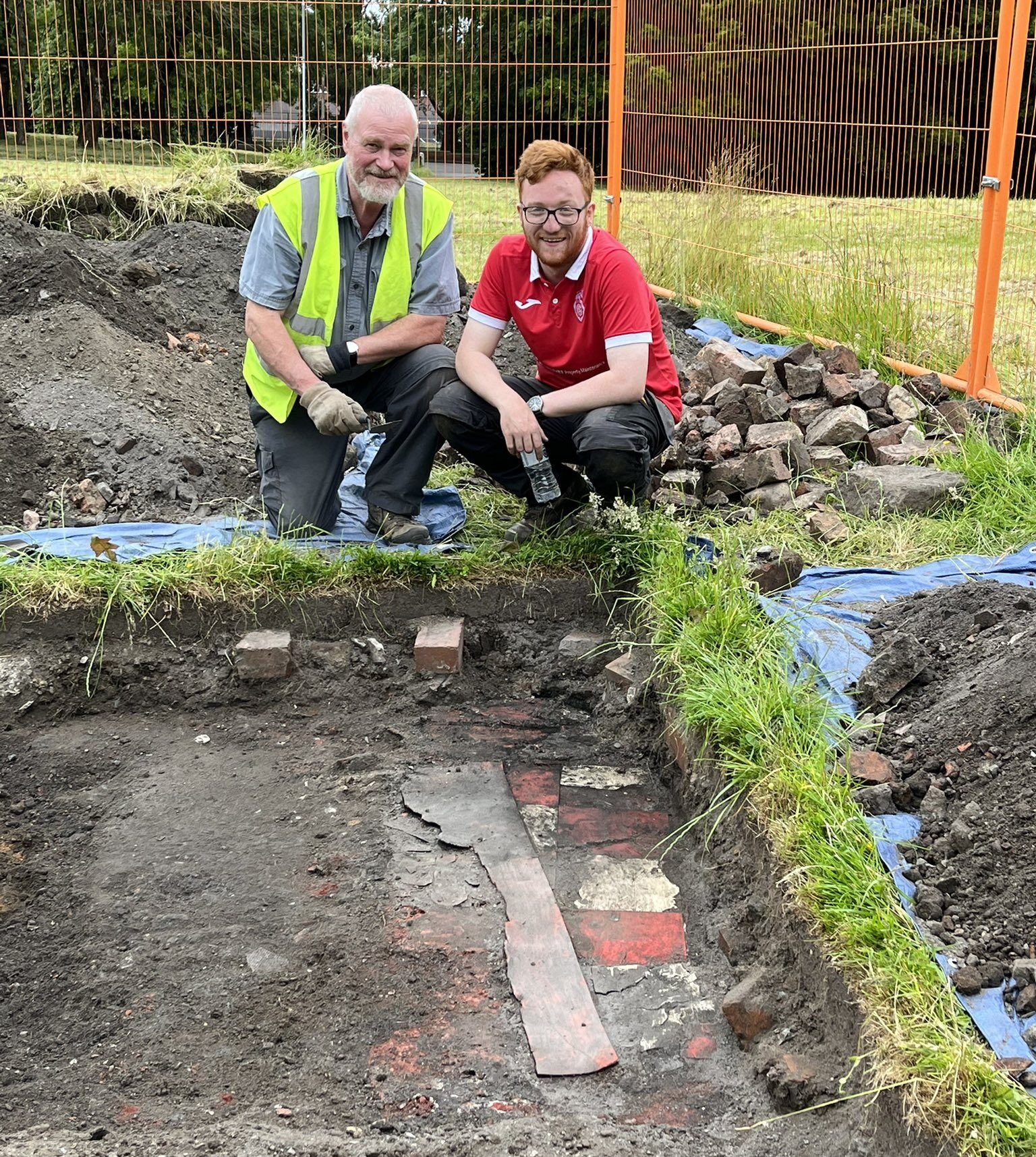
(© Adopt a Monument and Archaeology Scotland)
In 2022, the investigations into Glasgow’s footballing heritage continued when Archaeology Scotland ran a field school excavating Cathkin Park, which was built in 1872 and was home to Third Lanark AC, Queens Park FC and the Scottish National football team, as well as being the site of many historic Scottish Cup matches.
They explored how this early football stadium developed and discovered artifacts and buried remains, including the pavilion foundations, pottery in the colours of the Third Lanark AC, and even retro sweet wrappers. Experts and first-time diggers also uncovered the Third Lanark bath and changing room where the team cooled down after matches. These sites are so significant, that there are calls for these and other Scottish footballing landmarks to be recognised with World Heritage status.
This project is part of Archaeology Scotland’s New Audiences programme; a programme designed to provide engagement, respite and training opportunities to marginalized groups, including refugees and asylum seekers.
Wartime Forestry Camps in the Highlands
During World War I and World War II, the Canadian Forestry Company (CFC) brought over lumberjacks and shipped their own sawmills to forestry camps in the Highlands. Wood was desperately needed for pitprops (large wooden beams used to support the roof of a coal mine) and to shore up trenches in the First World War.
Thanks to guidance provided by a local who had worked at a similar sawmill, from 2014-2015 archaeologists and volunteers from two community archaeology projects – Archaeology for Communities in the Highlands (ARCH) and North of Scotland Archaeological Society (NoSAS) – were able to trace the remains of a timber bridge and the concrete base of a mill near Spinningdale. They also identified evidence of a large number of railway sidings (a low-speed railway track section) and a loading site where the timber was placed before being transported.
They also found the concrete foundation of a square building which may have been a guard hut, as well as two middens (rubbish heaps) which were added to after the camp was deserted, containing a range of bottles, ironwork and even a spittoon.

Clockwise from left: Loch Migdale, the remains of a sawmill at Skibo; and a recruitment poster for Canadian forestry and sawmill workers to join the war effort overseas (© Donald H Bain via geograph.org.uk/p/3737005, CC-BY-SA 2.0; and ARCH)
We know of three camps near Loch Migdale in Sutherland, each with accommodation and a hall where dances were attended by Canadians and locals, some of which led to marriages between CFC workers and local women.
It’s common for there to be very few remains of these forestry camps, as most buildings were constructed from wood and didn’t survive long after they were no longer in use. However, experts have linked up documentary evidence with oral history and archaeological remains to reconstruct one of the sawmills and camps.
These investigations have provided an idea of the layout of a typical camp which will also help identify other similar sites in the Highlands. Their work also shows the value of bringing together memories, documentary evidence and physical remains to piece together stories from the recent past.
Want to keep reading? Dig into Four of the Best Archaeological Sites and Discoveries from Bronze Age Scotland.
Header Image: Dig It!
