Four of the Best Archaeological Sites and Discoveries from Bronze Age Scotland

Scotland’s Bronze Age began approximately 4,500 years ago with the first evidence of copper tools and ended around 2,800 years ago (2,500 BC to 800 BC) with the first evidence of iron tools.
Nestled between the Neolithic and Iron Age, this time period is filled with fascinating burials, settlements and artefacts.
Forteviot Bronze Age Tomb
During the Bronze Age, people started using materials such as gold, amber or jet to display their wealth and status which tells us about their social hierarchies. They also started to separate burials of single individuals with grave goods accompanying them.
A great Early Bronze Age example is the grave at Forteviot in Perth & Kinross which was a centre of religious and political significance for many millennia.
In 2009, archaeologists from Glasgow and Aberdeen Universities excavated the 4,000-year-old burial chamber which had been so well sealed by a stone slab weighing 4 tons that organic materials survived intact as well as various metal objects. The high-status individual had been laid on a bed of quartz pebbles in a large stone coffin and buried with items including a small knife, elements of a fire-making kit, fragments of a leather bag and dagger with a gold band which was dubbed “a discovery of national significance”.
According to Dr Kenneth Brophy from the University of Glasgow: “The high quality of preservation is virtually unique in Britain and is of exceptional importance for understanding the important centuries when metals were first introduced into Scotland.”
Archaeologists also discovered plant matter composed largely of meadowsweet flowers – “the first proof that people in the Bronze Age were actually placing flowers in with burials.” Dr Brophy noted that “to find these very human touches is something very rare, if not unique.”
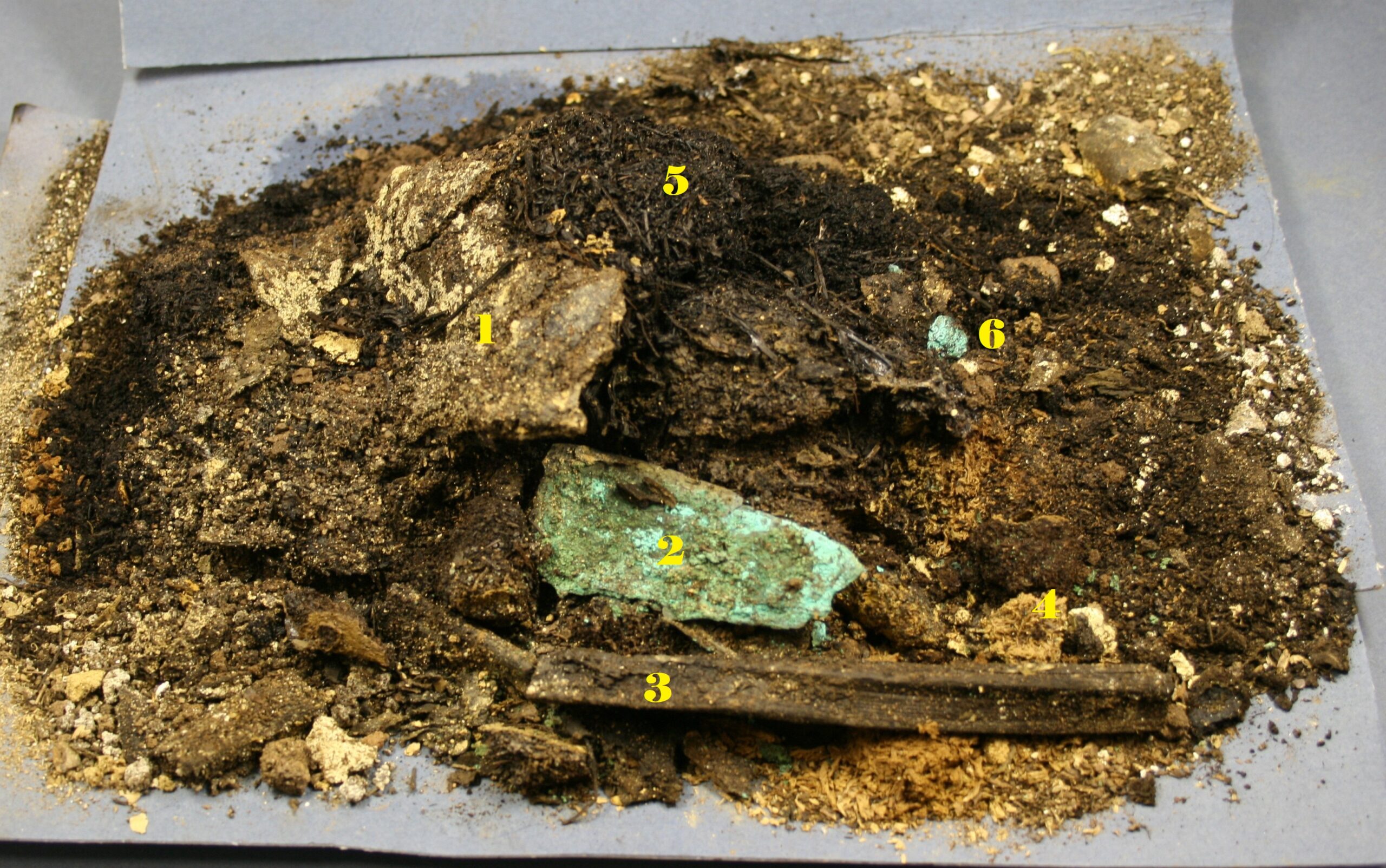
Material from the Forteviot cist during post-ex analysis including a small knife, elements of a fire-making kit and fragments of a leather bag (© GUARD Archaeology)
Jarlshof’s Bronze Age Houses
Jarlshof in Shetland has been described as “one of the most remarkable archaeological sites ever excavated in the British Isles” and although fragments of earlier dwellings can be seen, the Bronze Age remains are much more substantial.
After storms revealed the multi-period site in the 1890s, excavations uncovered the stone structures that are still visible today. This includes oval-shaped Bronze Age houses dating from at least 2,000 BC (4,000 years ago) with the living space divided up into distinctive cells which have been described as “among the best of their kind” as “few have been consolidated and laid out for visitors”.
One of these houses was later adapted to form the workshop of a travelling bronze-smith. According to Canmore, “an itinerant bronzesmith from Ireland set up his workshop around 800 BC, supplying the inhabitants with bronze swords and axes and other goods; many fragments of broken clay moulds were found”.
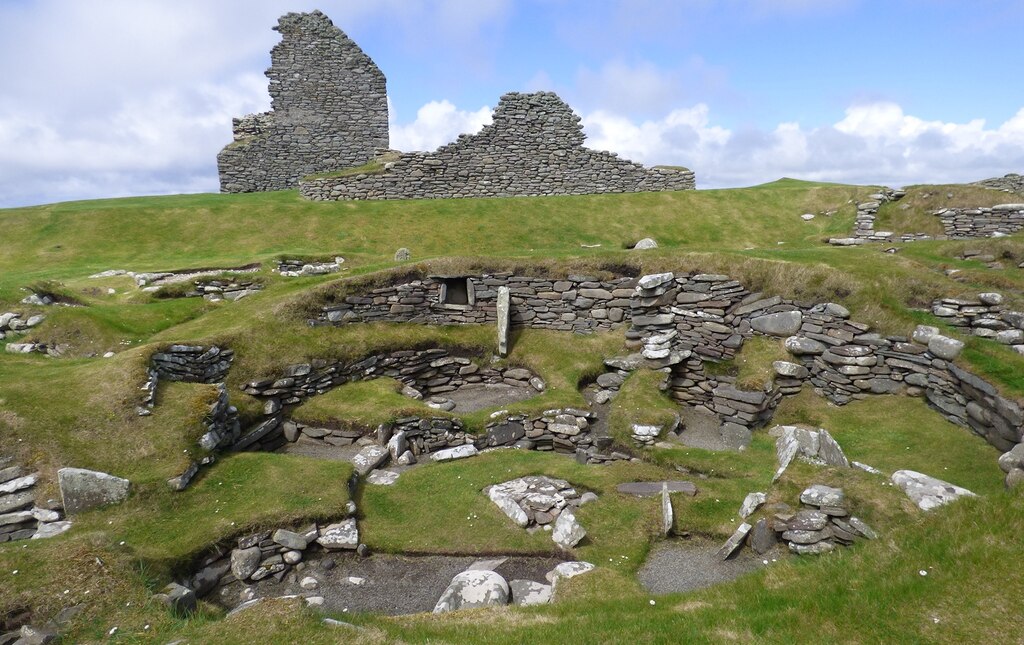
Jarlshof Settlement (cc-by-sa/2.0 – © Sandy Gerrard – geograph.org.uk/p/6736033)
The Achavanich Beaker Burial
During the Bronze Age, a specific form of pot called a “beaker” (due to its size and shape and its use as a drinking vessel) is often discovered in early Bronze Age graves. This distinctive style and “(presumably) shared ideological, cultural and religious ideas” are thought to have been brought over by immigrants from the Continent who are sometimes known as “Beaker people”.
In 1987, the remains of a woman who lived around 4,000 years ago was excavated at Achavanich in Caithness in the Highlands along with one of these beakers. The vessel was discovered in an almost complete state and features bands of decoration, including horizontal lines, herringbone, triangular and criss-cross impressions. The skeleton was found in a burial cist (stone box) with items that may have been intended for use in the afterlife such as stone tools.
Limited post-excavation work was undertaken and the report was never published, but in 2014, archaeologist Maya Hoole FSAScot launched a project to investigate and publish the find with support from the Society of Antiquaries of Scotland (who coordinate Dig It!).
Ancient DNA analysis revealed that the woman was born in Caithness, but her family had moved from the Continent, and she may have been a first- or second-generation migrant. It also showed that she most likely had black hair, brown eyes and tanned skin (similar to populations living in southern Europe) and may have been lactose intolerant.
Thanks to Maya’s work, support from the Society and the help of experts and institutions, this little-known archaeological site has become one of the best researched of its kind.
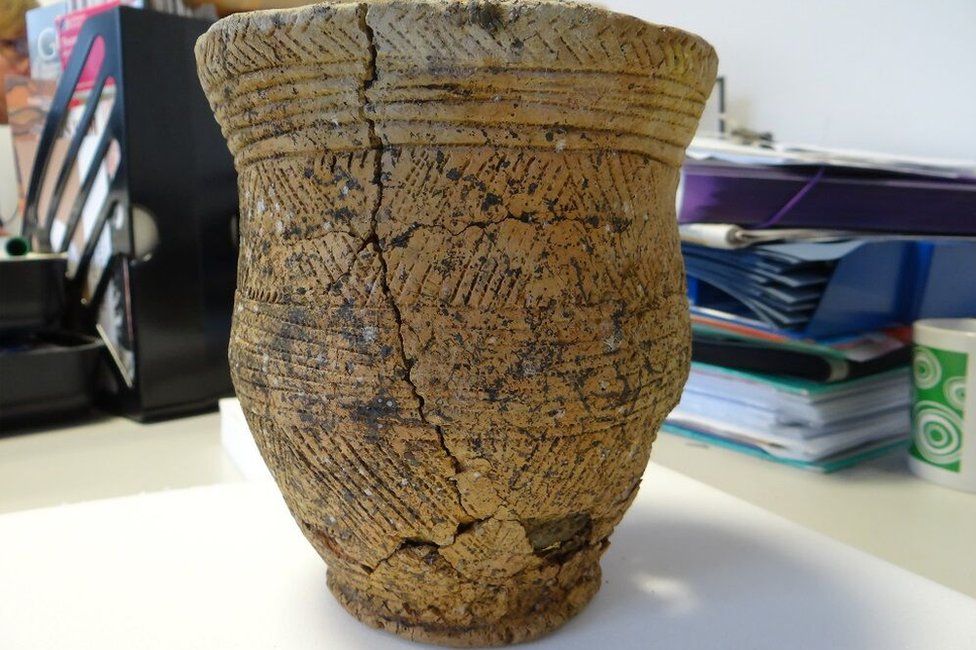
The Beaker discovered in the Bronze Age cist burial at Achavanich (© Maya Hoole)
Cladh Hallan “Mummified” Bodies
In 2001, a team of archaeologists led by Mike Parker-Pearson of the University of Sheffield uncovered the first evidence for mummification in Bronze Age Britain at the Cladh Hallan roundhouses in Na h-Eileanan Siar (the Outer Hebrides) which were built around 3,200 years ago (1,200 BC).
One of the bodies (that of an adult woman) had been tightly wrapped and possibly displayed above ground for hundreds of years before being buried in one of the roundhouses, while another ‘body’ was made up of bones from three individuals who had also died several centuries before being buried. The head and neck belonged to one man, the jaw to another, and the rest of the body to a third.
These people seem to have have temporarily buried their dead in peat to preserve them, before exhuming them and burying or displaying them elsewhere.
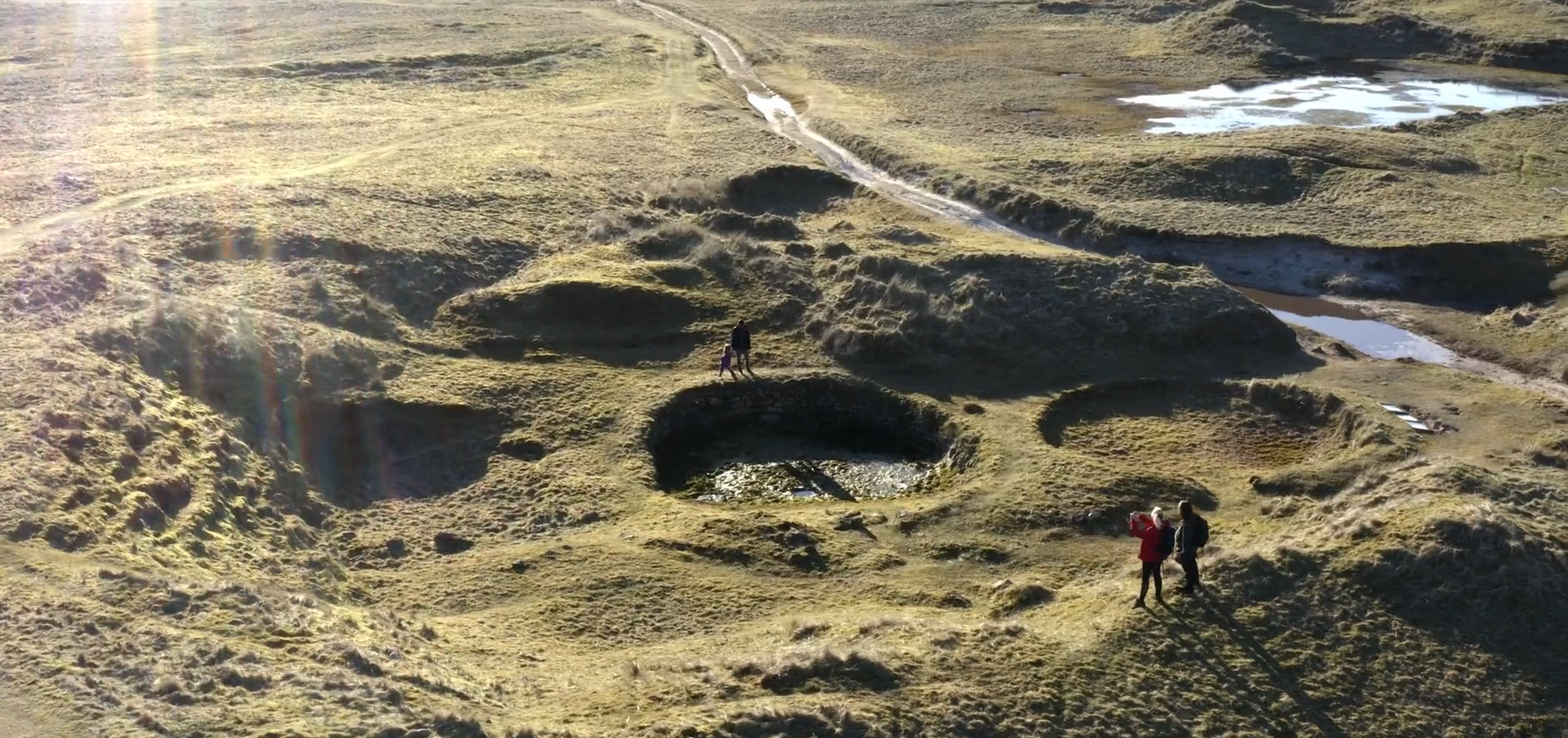
The site of the Cladh Hallan roundhouses which is one of the many locations that can be explored through the Uist Unearthed app (© Uist Virtual Archaeology Project)
Want to read about more Bronze Age discoveries and sites? Dig into the Midgale Hoard, Duddingston Hoard or Clava Cairns.
(Header Image Credit: Dr Simon Gilmour)
