What Happens When Scotland’s Past Meets New Development?
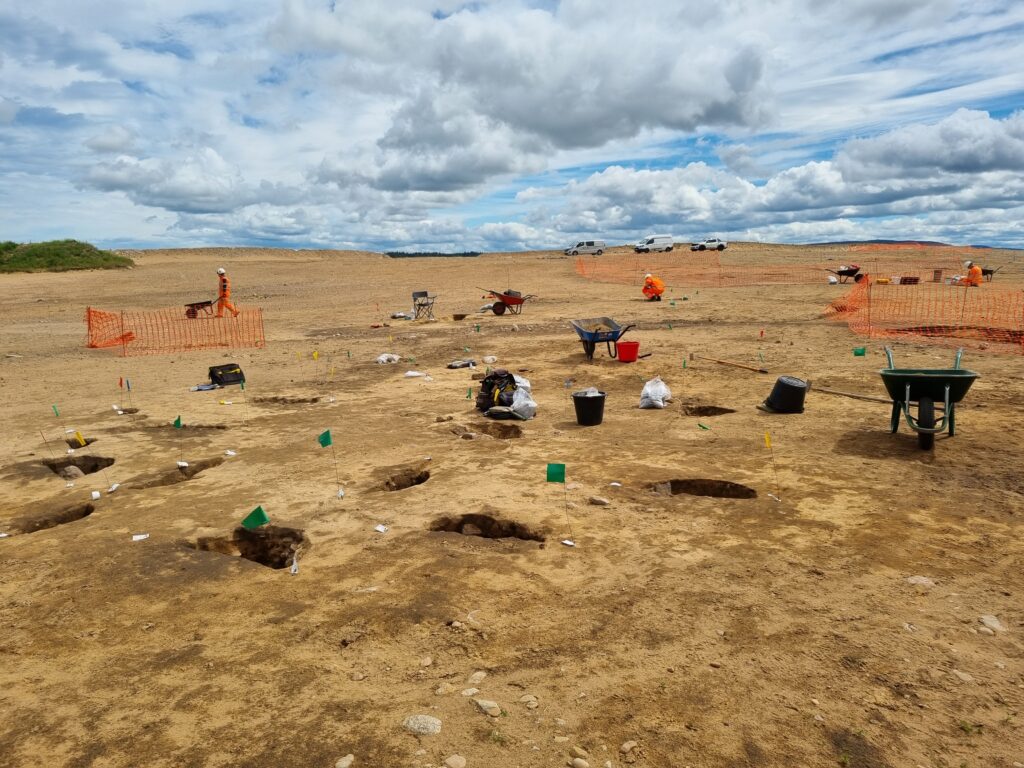
When roads, houses and offices are built in Scotland, traces of the past are often found during the process. In fact, some of Scotland’s most amazing archaeological discoveries have been found through developer-led archaeology. Discoveries include Culduthel, an Iron Age craftworking centre near Inverness in the Highlands, and Ballumbie, a lost medieval church and cemetery outside of Dundee.
What Could Happen When Archaeological Sites Are Found Through Development?
There can be dozens of development-led projects happening at any one time across Scotland, each with the potential to uncover something new about the past. However, not all development projects require archaeological interventions – only 8% of all new Planning Applications monitored by local authority archaeologists require archaeological work.
If a developer has been instructed to do archaeological works in advance of construction, then there are various options as to what happens when something is found. Each depends on what’s being built, where it’s being built, what’s been found and what the relevant research questions are that can be answered by the remains (guided by the Scottish Archaeological Research Framework (ScARF)).
Preserved where found
In some instances, what’s been found can be left in-situ (in its original place) once it’s been recorded. This may mean some minor changes to the layout of what’s being built so that the remains can be avoided or even incorporated into the finished development.

Sherds from part of the medieval jug found at Hobshill, Hatton in Aberdeenshire. Initial results suggest it dates to 14th to 16th century (© Cameron Archaeology Ltd.)
In 2021 at Hobshill, a single house building plot on the outskirts of the small village of Hatton, Aberdeenshire, an archaeological watching brief identified a circular ring-ditch and three pits. One of the pits contained the remains of a medieval jug (initial results suggest it dates from the 14th to 16th century – around 400 to 700 years ago) while the ditch itself and the other pits were radiocarbon dated to the Early Neolithic (c,3,900 BC to 3,700 BC, around 5,700 to 5,900 years ago).
Part of the ditch, and three other pits outside of this circular feature, were preserved by slightly moving the planned house instead of having to excavate them. With the new house moved slightly, and the remaining archaeological features reburied and protected from accidental damage, part of this site was preserved for the future. It’s exciting to think that archaeologists in years to come may choose to excavate it, bringing their new techniques that could help us glean further information from the site.

The Hobshill, Hatton ring-ditch feature showing as a dark arc through the lighter soil, as seen shortly after being found (© Cameron Archaeology Ltd)
In most cases though, because the remains are often so fragile, or the overall plans for the development can’t change for practical reasons, we can’t save what’s been found.
Partially excavated and recorded
Many archaeological sites consist of repetitive features, such as post-holes used for constructing timber buildings. Instead of digging everything fully, a decision is made to perhaps only dig half of the post-holes, or perhaps just part of a ditch. This means the information about the site is still captured, but no unnecessary work is done beyond that. This is called sampling and is guided by what we already know about the remains found and by the questions archaeologists want to answer.
ScARF, which is coordinated by the Society of Antiquaries of Scotland, provides guidance on what we know and what we want to know about specific periods, themes and other remains from Scotland’s past, and helps guide these decisions.
Between 2002 and 2013, a significant multi-period settlement was found and excavated ahead of a new housing development at Grantown Road, in Forres, Moray. The main evidence dated to the Iron Age (800 BC to AD 400, around 1,600 to 2,800 years ago), with the remains of roundhouses, four-post structures (probably above ground storage structures), a souterrain (an underground storage structure), and metal-working furnaces.
Instead of excavating absolutely everything, only 20% of the ditches (enough to establish form, function and date for the ditches), 50% of isolated non-structural features (like pits and other holes dug into the ground in the past), and 100% of features with artefacts and structures were excavated. This approach allowed for a full understanding of the site, its function, and a date to be determined, while sensibly limiting how much was dug. This saved time and money for all involved and allowed a greater focus to be given to the important features of the site.

An excavated section through the Iron Age souterrain found at Grantown Road, Forres (© AOC Archaeology Ltd)
Fully excavated and recorded
For more significant sites, the decision can be taken to excavate everything. One thing to remember is that the archaeologists can only excavate up to the edge of the development boundary and no further, unless the landowner is willing to let them (and cover the costs!).
During 2013, in advance of a new electrical sub-station being built on the outskirts of Kintore, Aberdeenshire, a rectangular farm building belonging to the 14th and 15th centuries (around 500 to 700 years ago) was discovered. Because rural medieval buildings (or the remains of such) are incredibly rare finds in Scotland, the site was fully excavated, revealing a stone and turf building set within a larger enclosure.
By excavating it fully, the construction techniques could be better understood, allowing comparison with excavated buildings from the early medieval period in Scotland. This in turn suggested a continuity of activity across several hundred years, which means that the medieval farm had perhaps been established at an early date.
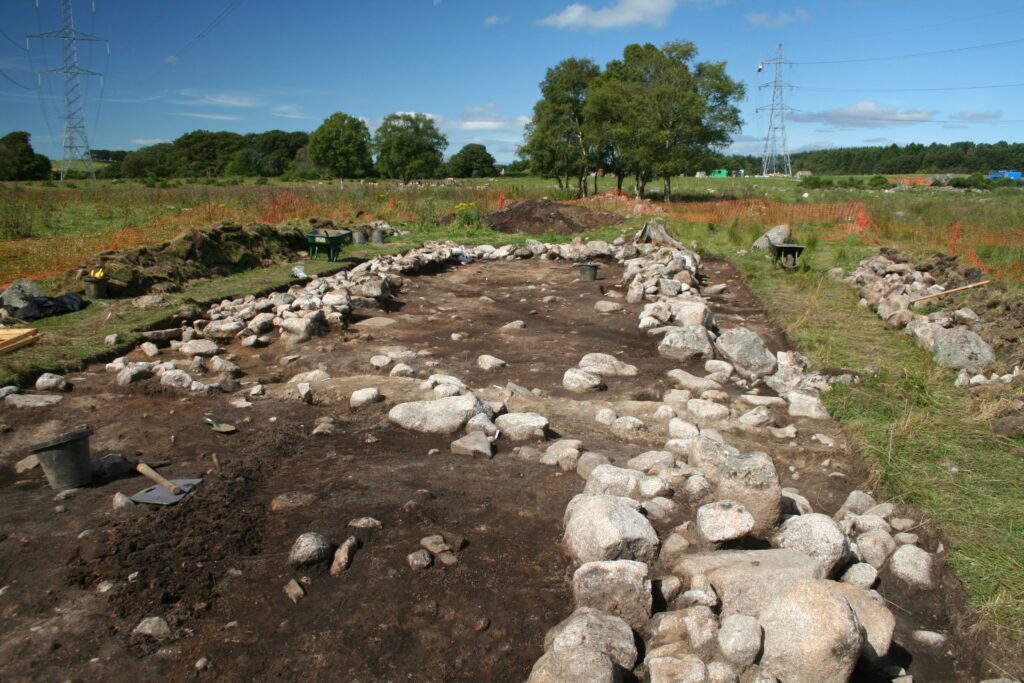
The excavated outline of part of the medieval farmstead found on the outskirts of Kintore, Aberdeenshire (© Aberdeenshire Council Archaeology Service)
Relocated
Occasionally, important parts of a site can be saved by moving them to somewhere else, perhaps within the new development to make them a feature for all to enjoy locally, or somewhere else such as a museum.
In 1994, the full excavation of a Bronze Age ring-cairn dated to c.1500 BC to 1100 BC (around 2,100 to 2,500 years ago) and its associated earlier Neolithic features took place within the footprint of the new Badentoy Industrial Estate just outside of Portlethen, Aberdeenshire.
The excavation revealed the complex development sequence of this monument, which started with the creation of an arc of pits surrounding a stone-circle. The next stage involved the burning of a pyre and then the construction of a timber enclosure inside of the stone-circle, followed by five burial urns being placed beneath the ground. Finally, the timber enclosure was replaced by a stone ring-cairn, before it was expanded and included the original stone-circle.
This important site couldn’t be saved where it was found, so after it was excavated it was moved 175m and accurately reconstructed within a landscaped site with an interpretation board that was accessible to the public.
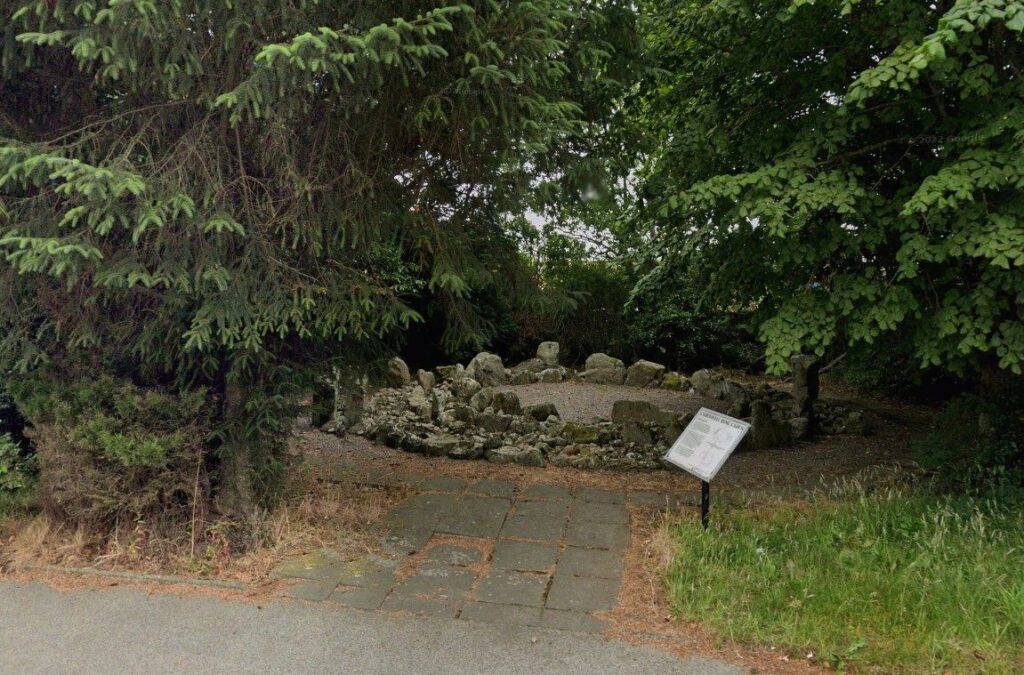
The reconstructed Bronze Age ring-cairn of Cairnwell in its new location within the Badentoy Industrial Estate out the outskirts of Portlethen, Aberdeenshire (© Aberdeenshire Council Archaeology Service)
With all of these options, once the fieldwork has finished, analysis is undertaken on the artefacts and environmental samples which have been taken. All of this post-excavation work adds to the story of the sites, leading eventually to a publicly accessible report. These are then published in Scottish Archaeology Internet Reports (also managed by the Society of Antiquaries of Scotland) or other academic journals and publishing outlets.
All work is recorded in detail and a Historic Environment Record (HER) for the site is created. The one for Hobshill, for example, includes information such as location, what was found and any other relevant information such as radiocarbon dates, and references to the final excavation reports. These local HERs also feed into the national record – Canmore – so information is widely available to anyone who’s interested.
The artefacts excavated go through the Treasure Trove process and a decision is made as to whether they’ll be conserved for the future. Most assemblages from fieldwork will then be looked after by museums and available for public research.
The results may also warrant a larger publication (sometimes called a site monograph, for example, Darkness Visible) or other outreach activities such as public talks, interpretation boards, heritage trails, public art, school visits, and so on. This is where the power of what’s been found really helps to deliver public benefits and add social value to new development.
Do Archaeologists and Developers Get Along?
The short answer is yes! Around 90% of all archaeological work happening in Scotland happens because of developer-led archaeology, and that’s been going on for many decades now. A 2019 report showed that archaeology only formed 0.13% of overall construction costs, so very little considering the benefits it can deliver.
Archaeologists form a crucial part of the new build process, considerably reducing the likelihood of developers encountering unknown headaches. Archaeologists not only help us to recover and understand our past but can also help their clients better understand the ground conditions on site, help inform the design of a new project, and even deliver direct benefits to local communities impacted by the construction works.
Furthermore, where we build new infrastructure today is based on modern needs rather than where known people lived in the past. This means archaeological excavations can happen in random places across the landscape where no-one would otherwise have reason to look for traces from the past. As a result, unexpected discoveries are made all of the time, adding to our understanding of the past while giving local communities a sense of history and identity.

Excavation of an Early Bronze Age cremation cemetery ahead of a housing development in the village of Tarves, Aberdeenshire (© Cameron Archaeology Ltd)
Who Makes the Decision on What Happens to Archaeological Sites Found Through Development?
You may have seen headlines of how archaeologists and developers are “stunned”, “amazed” or “shocked” when something is found through archaeological fieldwork. But the truth is, archaeological work is happening in the first place because there’s an expectation that something could be discovered.
While commercial archaeologists undertake archaeological research on behalf of their client ahead of or during construction, that work has been done at the instruction of the local authority archaeologist. It’s the role of the local authority archaeologist to judge the potential impacts a development will have on the area’s history and heritage, and to decide on how best to reduce the risk of losing information about our past.
By working with both the commercial archaeologists undertaking the research and those who are advising on the development itself, and taking into account views from the community, the local authority archaeologists try to ensure that sites are retained and protected where possible, or if not, that they’re recorded appropriately so the information is available for future generations. It’s these local authority archaeologists who make the final decision on what happens next.
They also monitor progress during archaeological work, ensuring that the sometimes long process of excavation, post-excavation analysis, transfer of material to Treasure Trove, and publication is completed so that the full benefits of that new understanding of our past are made available to the public.
Why Aren’t All Discoveries Made Through Developer-led Archaeology Saved?
We still need new houses, new roads, and new places to work. That demand means these things will always need to be built somewhere. Scotland has a rich history of human activity stretching back at least 14,000 years, so often any time something new is built, there’s a very good chance that something old will be dug up.
If we tried to save every archaeological site, we would never build anything new again. Careful judgements are therefore made over what should be saved, and what can be let go. It’s important to also remember that archaeology, specifically excavation, is a destructive process, but one which converts physical remains into data and knowledge. So, when something is found, it ‘ll always have value and meaning as a piece of research if dug.
It’s a careful balance between letting changes happen in the landscape, while saving the most important parts of our collective past. That ‘saving’ will more often than not be in the form of excavating and recording a site before it’s destroyed. It’s not an easy job, but the handful of local authority archaeologists tackle that challenge every day across Scotland.
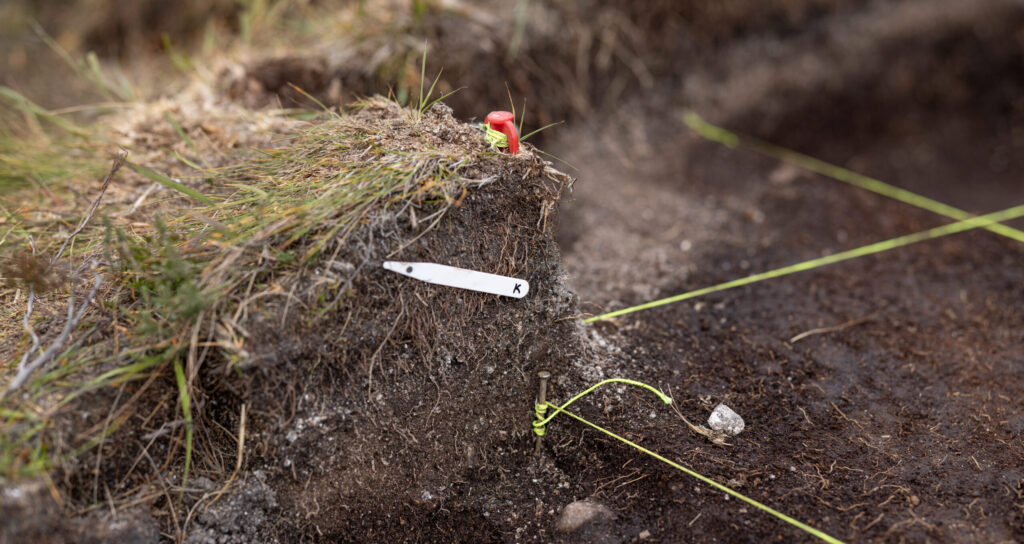
Excavation (Image Copyright: Shahbaz Majeed 2023)
What Would Happen Without Developer-Led Archaeology?
Historic sites would still be found by developers, but they would have no obligation to safeguard them, record them, or share what’s been found with anyone. In most instances, they’d probably not even realise that they were destroying an archaeological site because they simply wouldn’t have the skills to recognise it.
In short, we’d lose our history and heritage quickly, without realising it, and be far poorer in terms of understanding who we are, and where we’ve come from.
To find out more, dig deeper into developer-led archaeology, visit the Association of Local Government Archaeological Officers (ALGAO) website, or follow @ALGAO_UK on X (Twitter).
By Bruce Mann, Senior Historic Environment Officer (Archaeology) for Aberdeenshire, Moray, Angus and Aberdeen City Councils. In his role he works not only within the development management process, but also within activities as diverse as supporting community projects to developing national policy to dealing with unexpected discoveries of human remains.
Header Image © Bruce Mann, Aberdeenshire Council
