What Is Archaeology?
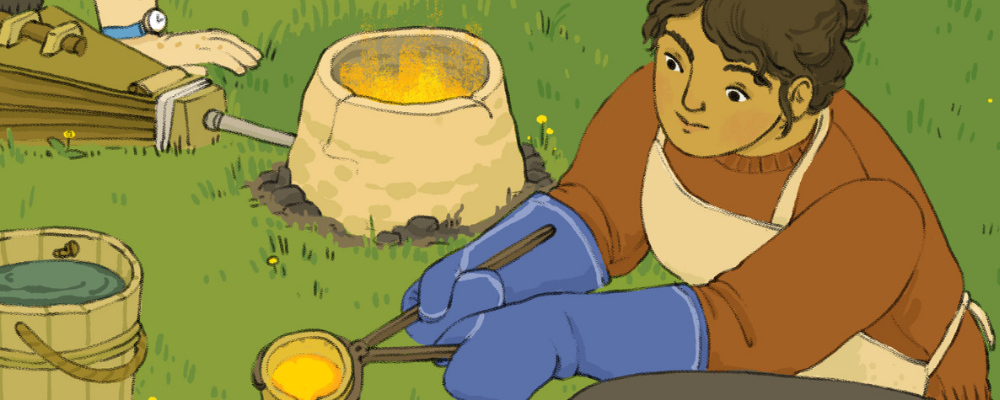
Archaeology is the study of people from the past, trying to understand who they were and how they lived through the evidence they left behind.
What is an Archaeologist?
An archaeologist is someone who finds and interprets evidence. This usually means that they make the best guess they can, using the information they have at the time. Their interpretations will never be perfect and often change as more evidence is found.
What Is Archaeological Evidence?
Evidence comes in all sizes. It can be large, like statues and buildings; medium, like skeletons or furniture; or small like clothes and tools. It can even be incredibly tiny, like grains of pollen trapped between layers of dirt.
Evidence can be found everywhere. Evidence can be the hills and ditches left by farmers from years before. It can be the foundations of knocked-down buildings that have since been built over. It can be books or journals written by people who were alive at that time.
Evidence might not look like we expect. A rubbish heap is a treasure trove of evidence. By looking through what people throw away, we can confirm many things, like what materials they had access to, what sorts of activities they were doing to generate such rubbish (like hunting or crafting), and how long they were using a specific site for.
What Work Do Archaeologists Do?
Archaeologists do a lot of different forms of work, including surveying, excavating, analysing, inferring from data, and presenting it publicly:
Surveying
Archaeologists systematically search for and record places where they think evidence could be found. They call these places archaeological sites, and use some of the following ways to find them:
Oral & Written Histories: Cultural knowledge passed down through oral traditions and written documents can hint at where a site might be and provide context for what went on there.
Walkover Surveys: Groups of people walk over a large area, using small flags to mark places they think may contain evidence. Then they retrace their steps to figure out if any of the flags are worth investigating further.
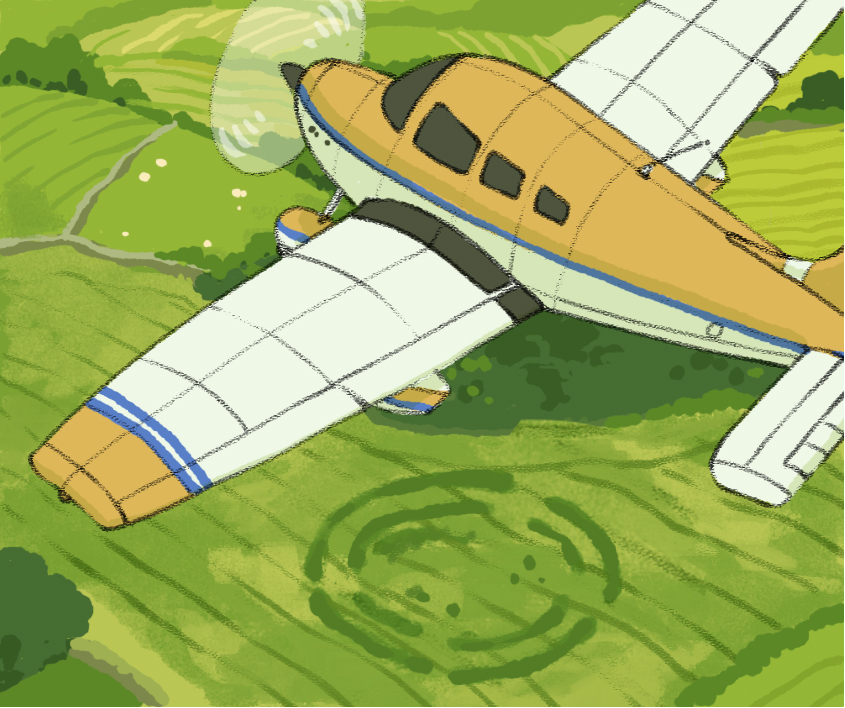
Aerial & Satellite Photography: Archaeologists use planes and satellites to gather photos of landscapes or scan them with LiDAR lasers. They look for changes in how plants grow (called cropmarks) that could suggest the presence of a site and use the LiDAR measurements to create 3D models of the land, which helps them search in places with lots of plants, like jungles.
Geophysical Surveys: Archaeologists use machines to measure changes in electric, sonar or magnetic pulses through the ground. These changes create different maps of potential evidence below the ground’s surface. Because geophysical surveys are time consuming, archaeologists often use other methods first to narrow their search.
© Anine Bösenberg
Excavating
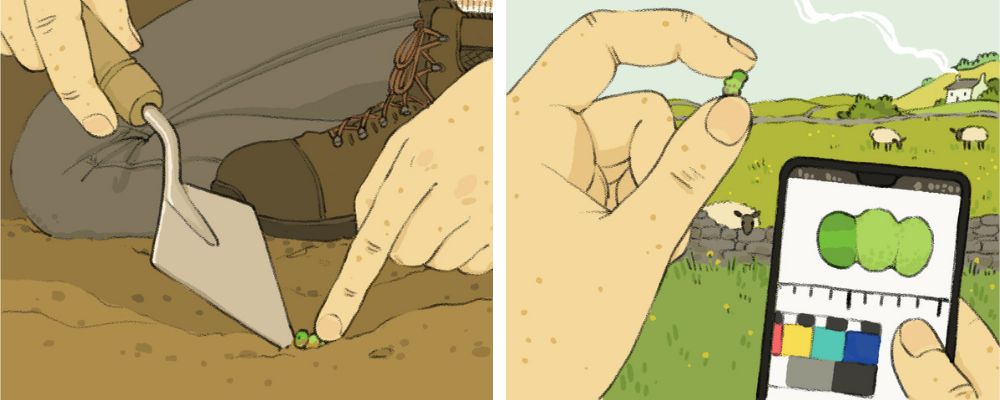
Once found, archaeologists excavate sites by methodically removing soil, sometimes with the aid of machinery but most often entirely by hand. They delicately investigate what they find.
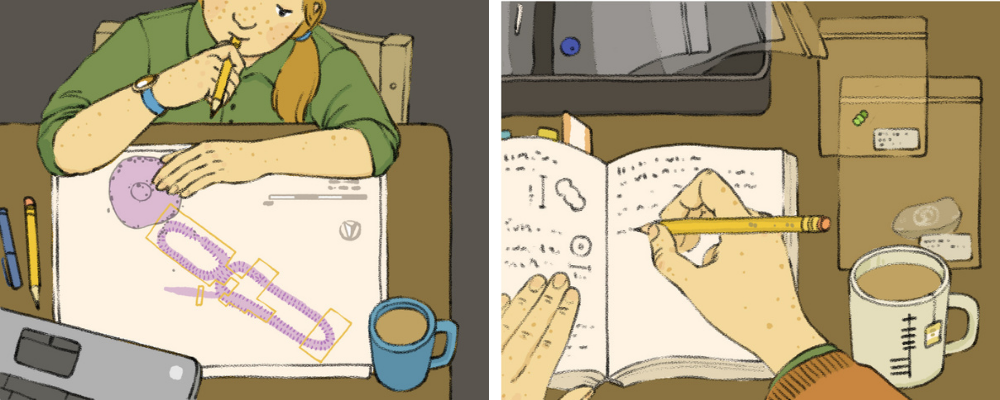
During an excavation, everything is recorded. Archaeologists take photos before, during, and after any digging takes place. They draw maps to record where discoveries are made, like site maps which provide a top-down perspective, and section drawings which highlight trenches, soil compositions and how deep they were dug.
Every find, every sample, every photograph, every drawing, and every recording gets its own number, all of which are kept in both physical and digital records. This ensures that all the information about a specific piece of evidence can be traced back to its origin.
When archaeologists find evidence, they categorise it into the following groups:
– Features are non-portable things that were created, altered or used by humans, such as buildings or carved stones. They can be photographed or scanned to make 3D models, and left “in situ” (in place), preserving them for future study. Sometimes they are excavated with heavy machinery, and moved elsewhere.
– Artefacts are portable things that were intentionally created, altered or used by humans, such as tools, clothes, and even rubbish. They’re small enough to transport and might get lost or damaged if left in place, so they are often taken away from a site for preservation and analysis.
– Ecofacts are natural objects or remnants that have been unintentionally created or altered by humans. Humans create ecofacts simply by existing in a space, because our presence changes the ecology around us. Grass trampled along a path through a meadow, and seed burrs stuck to clothing are both examples of ecofacts.
– Human and/or funerary remains can also tell us about the past, such as what was in a person’s diet or what medical care they received. It’s important to treat human remains with the respect owed to a once-living person and archaeologists today follow strict ethical standards to ensure this is the case.
© Anine Bösenberg
Analysing
Once evidence has been secured, archaeologists spend time slowly and systematically evaluating it. The goal of analysis is to tease as much information out of a piece of evidence as possible while minimally altering or damaging it. Some methods used today are detailed below.
Bioarchaeological analysis examines skeletal remains to determine factors that affected a person’s life. Biological remains rot quickly in Scotland’s soil, but there are methods of extracting information from even the smallest fragments. For example, we can find out what someone ate by the composition of the different layers in their tooth enamel.
Environmental analysis reconstructs environments at different scales in an attempt to understand how humans affected or interacted with them. Animal remains can hint at what creatures lived near a human settlement.
Chronological analysis aims to pinpoint when a piece of evidence is from. For example, radiocarbon dating guesses the age of an organic object by measuring how its carbon isotopes have changed over time. This helps establish a timeline of events, but contaminated samples are unreliable.
Material analysis tries to understand how humans made an object and where they got the components it’s made from, such as trying to recreate a technique for blowing glass as it’s described in an old manual. Understanding how an object is made helps give context to its cultural worth and use, but requires a great deal of trial and error, and is difficult to definitively prove.
© Anine Bösenberg
Inferring
With a large enough body of evidence, archaeologists can begin to piece together their interpretation of a past culture. They must consider many factors (like the following) when drawing their conclusions.
Humans are, and always will be, opinionated. How we grow up, who teaches us, our lived experiences, and many other factors all affect which stories we see in the world around us, and which ones we think are worth telling.
Archaeologists call these opinions “biases”. We can try to minimise our biases, but we can never eliminate them from the conclusions we come to, only acknowledge them.
We often need to make comparisons, but comparisons aren’t definitive. Circumstances can create situations where archaeologists can’t find enough evidence to get a clear idea of a culture.
While they can hope to find more evidence in the future, they also need to make theories in the present day, so they must compare the evidence they have with sources they believe can patch holes in their understanding.
For example, they might make assumptions about the technologies a culture has access to by looking at what their neighbours have. When they do this, they bear in mind that any comparisons could later be proven incorrect as new evidence is found.
We use labels for our own benefit. Every day, we use labels as a shorthand for communicating aspects of someone’s identity, such as their sexual orientation, their faith, their political beliefs, and more.
The labels we use today might summarise the circumstances of someone from the past to us, but they’re most likely irrelevant or incorrect to how that person saw themselves.
Archaeologists need to be careful with the labels they use to describe people from the past, in case they accidentally portray qualities that there isn’t sufficient evidence to support or erase nuances for the sake of summary.
No matter how close you are to a past culture, you will always be an outsider.
Sometimes we can believe that interpretations can be more reliable because of someone’s proximity to a culture; perhaps they live in the same region as a past culture or grew up in a culture that descended from that which they are studying. Proximity can help us make more informed guesses, but they are still guesses.
How Can I Get Involved?
Volunteers can help archaeologists by doing things like reporting finds, looking through Google Maps for cropmarks, taking part in excavations at dig sites, and digitising old records from archives so more people can freely access them. By sharing their research, archaeologists help everyone draw their own conclusions about the past.
This article has been adapted from a chapter in Carved in Stone: A Storyteller’s Guide to the Picts, an illustrated and comprehensive book for anyone interested in Scotland’s past. Packed with information on the weather, languages, settlements, cuisine, fashion, medicine, skills and more, cutting-edge research is presented in over 160 pages with more than 350 historically informed illustrations. The project was led by Brian Tyrrell of Stout Stoat Press and ArchaeoPlays’ Dr Heather Christie FSAScot in partnership with Dig It!. To purchase the book and/or PDF, visit Stout Stoat Press.
Header Image: © Anine Bösenberg
