Archaeology in the Scottish Highlands: Six of the Most Spectacular Sites and Discoveries

Stretching from Speyside in the south to the northernmost mainland town of Inbhir Theòrsa (Thurso) and over to the western tip of An t-Eilean Sgitheanach (the Isle of Skye), the Scottish Highland region is almost the size of Belgium – which means there are a lot of stories to be uncovered.
What is HighARF?
The Highland Archaeological Research Framework (HighARF) is the latest addition to the Scottish Archaeological Research Framework (ScARF). It launched in 2021 and is the place to go to find out everything you ever wanted to know about the archaeology and heritage of the Highlands of Scotland.
Archaeology for Communities in the Highlands (ARCH) led the enormous task of bringing together what is already known about the archaeology of the Highlands as well as highlighting the big questions that we don’t yet know the answer to.
What can I find on HighARF?
The result is over 350 webpages, with sections covering topics such as ‘craft and industry’ and ‘religion and ritual’, from the Late Upper Palaeolithic period (beginning around 14,000 years ago) through to the modern day. There are also over 70 case studies to explore and these are just some of the highlights:
Evidence of Scotland’s Earliest Settlers
On a raised beach at Tarradale in Easter Ross, fieldwalking and excavation have revealed shell middens (mounds of discarded material), as well as stone and antler tools including an axehead and this harpoon.
Dated to the 7th millennium BC, these 8,000-year-old finds are some of the earliest evidence for people living in the Highlands during the Mesolithic period.

Antler harpoon (© Tarradale Through Time)
Migdale Hoard
The Migdale Hoard is a magnificent Early Bronze Age hoard of bronze and cannel coal objects, which include axeheads, buttons, jewellery and hair ornaments. These were found over a century ago close to Loch Migdale in Sutherland.
It will never be known for sure who owned these objects or how they were worn around 4,000 years ago, but this reconstruction by illustrator Victor Ambrus shows how they may have looked.

Bronze anklets from the Migdale hoard (© NMS)
The Loch a’ Ghlinne Bhig wooden bowl
This incredibly rare wooden bowl from Loch a’ Ghlinne Bhig was discovered on An t-Eilean Sgitheanach. Wooden objects from the Iron Age are hardly ever found in such good condition partly due to Scotland’s acidic soil.
Archaeologists were able to tell that this bowl was made from alder and the tool marks gave them clues as to how it was made nearly 2,000 years ago.

Wooden bowl from Loch a’ Ghlinne Bhig (© Susan Kruse)
Storr Rock Viking hoard
In 1891, this collection of coins and fragments of silver objects was found on the shore of Storr Rock – also on An t-Eilean Sgitheanach. The coins included several from England and 19 dirhams minted in Samarkand (modern-day Uzbekistan) and the dates on them suggest that the hoard was buried around 1,000 years ago (AD 935-40). Other objects in the hoard were also made overseas including a Permian arm-ring (named after the region of the Perm in Russia where finds of its type are concentrated) made in either Scandinavia or Ireland.
Was this the property of a passing Viking traveller or someone who lived on An t-Eilean Sgitheanach?

Storr Rock hoard (© National Museums Scotland)
Early medieval monastic site at Portmahomack
The excavation of the early medieval monastery at Portmahomack in Easter Ross provided a wealth of evidence for archaeologists to recreate the way of life of the monks and other people who lived there over 1,100 years ago.
The team found the sites of the workshops where artisans had carved stone, worked hide to make parchment and created objects from metal and glass. The skeletons uncovered have also been analysed for isotopes which show what these people ate and where they may have lived before moving to Portmahomack.
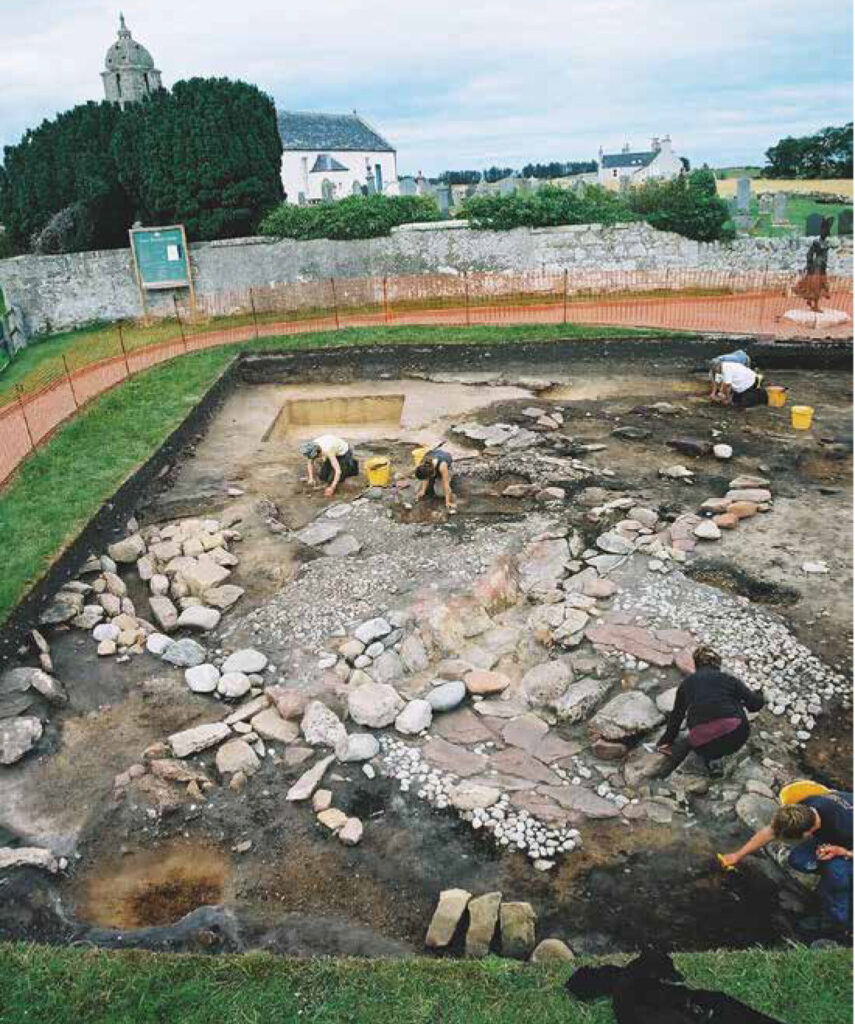
The remains of the craft working building being excavated (© FAS Heritage/University of York)
Cromba (Cromarty) medieval Burgh
Recent excavations at Cromba in an t-Eilean Dubh (the Black Isle) have provided new evidence for how people lived in a medieval burgh (a chartered town).
The community-led project discovered foundations of houses, a blacksmiths workshop and a grain kiln. Environmental evidence also showed that barley, oats, rye and flax were all grown nearby, while the large numbers of fishbones indicate that there was probably commercial fishing in the 13th and 14th centuries. A range of everyday objects such as pottery, brooches, coins and pendants were also uncovered.
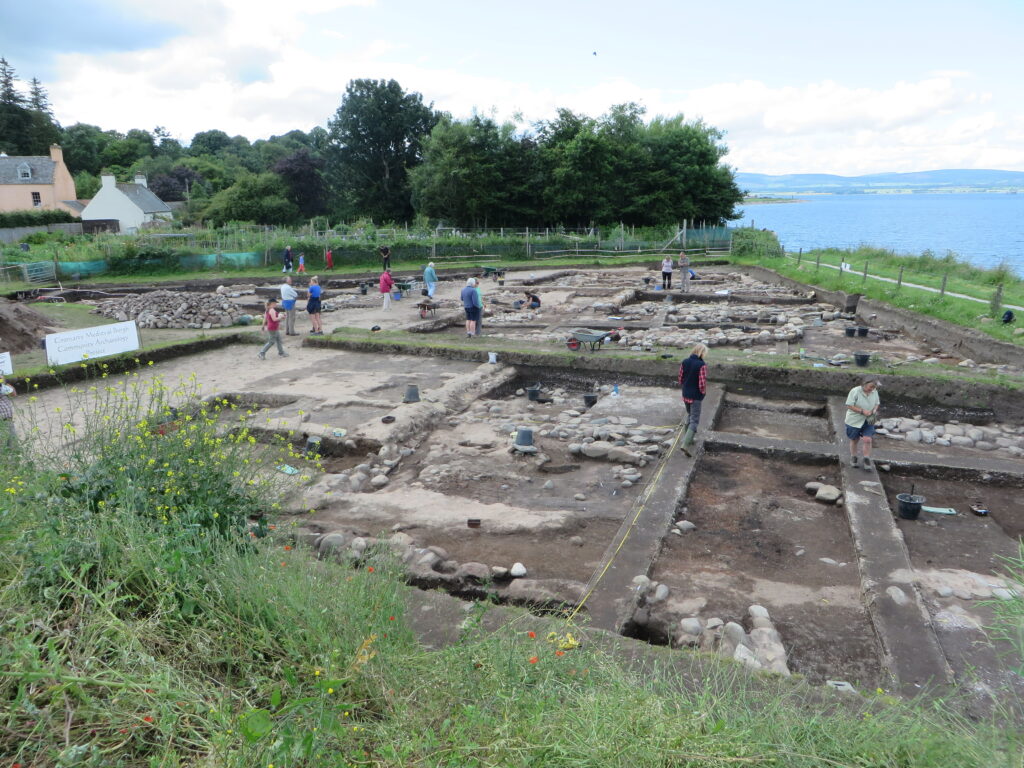
Excavation of the medieval burgh (© Susan Kruse)
BONUS: Thomas Telford in the Highlands
The turn of the 19th century was a period of great change in the Highlands and the engineer Thomas Telford made his mark on the landscape. In 1801, he was asked to create a network across the Highlands to replace the rough tracks and military routes and in total he masterminded over 700 miles of roads and 1000 new bridges. He was also responsible for canals with the Caledonian Canal being his most famous undertaking.
Telford changed the landscape of the region forever and a variety of archaeological projects have investigated Telford’s legacy.

Surveying a probable Telford bridge outside of Lairg, Sutherland (© Susan Kruse)
Keep Exploring
If you want to find out more, head over to the HighARF website, ScARF website or check out ten highlights from the Scottish Archaeological Research Framework. You could also get involved with ARCH and see what other events are being held in the region.
By Helen Spencer, ScARF Project Manager at the Society of Antiquaries of Scotland (who coordinate Dig It!)
The Highland Archaeological Research Framework and ScARF project are primarily funded by Historic Environment Scotland and supported by the Society of Antiquaries of Scotland
Header Image: Old Man of Storr by Kyle Pasalskyj on Unsplash
