How Hard is it to See Neolithic Scotland by Bike?
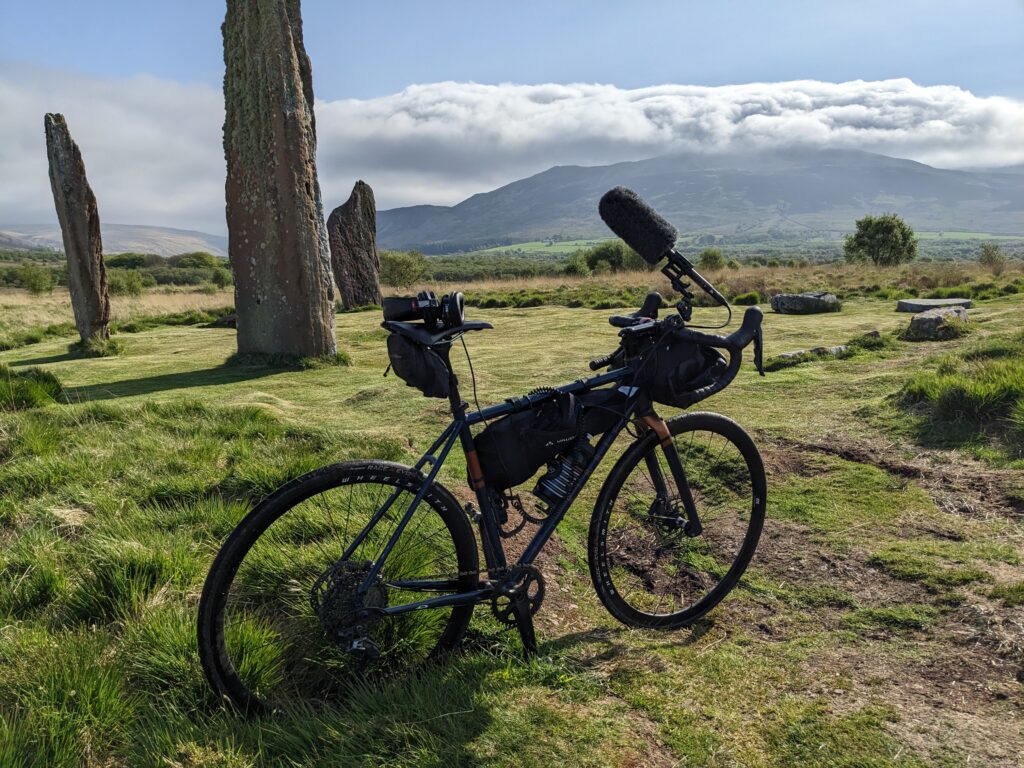
Some of the most exciting Neolithic sites in Scotland are in some of the most beautiful places – think Eilean Leòdhais (Lewis) in Na h-Eileanan Siar (the Outer Hebrides), Orkney, Argyll and Eilean Arainn (Arran) off the west coast of Scotland.
So when Matthew Magee hatched the plan to produce Stone Me, a podcast exploring seven of Scotland’s finest Neolithic sites (which were built over 4,500 years ago), he decided to combine it with his other love: cycling.
Why Cycle to Neolithic Sites in Scotland?
For one thing, these are the types of sites that are increasingly affected by climate change. One of the stone circles at Machrie Moor on Eilean Arainn, for example was two thirds under water with reedy grass growing out of the sodden ground when I visited. At the Ring of Brodgar in Orkney, the inner path that lets you get really close to the stones was closed when I visited as a wetter climate means the ground is less able to cope with the footfall of thousands of summer visitors.
So the idea of driving a CO2-emitting car to these places just didn’t feel right.
For another thing: I really love riding my bike, and the further the better. As I said, these sites are located in some of the most dramatic, beautiful and striking places in the country. Cycling would be a treat.
I love to go bikepacking – where you attach packs to your bike to carry clothes, toiletries and anything else you need on your journey so you are self-sufficient. And there are hostels in many towns on islands and in rural locations so you don’t have to worry about carrying heavy camping equipment. But it takes a lot of planning.
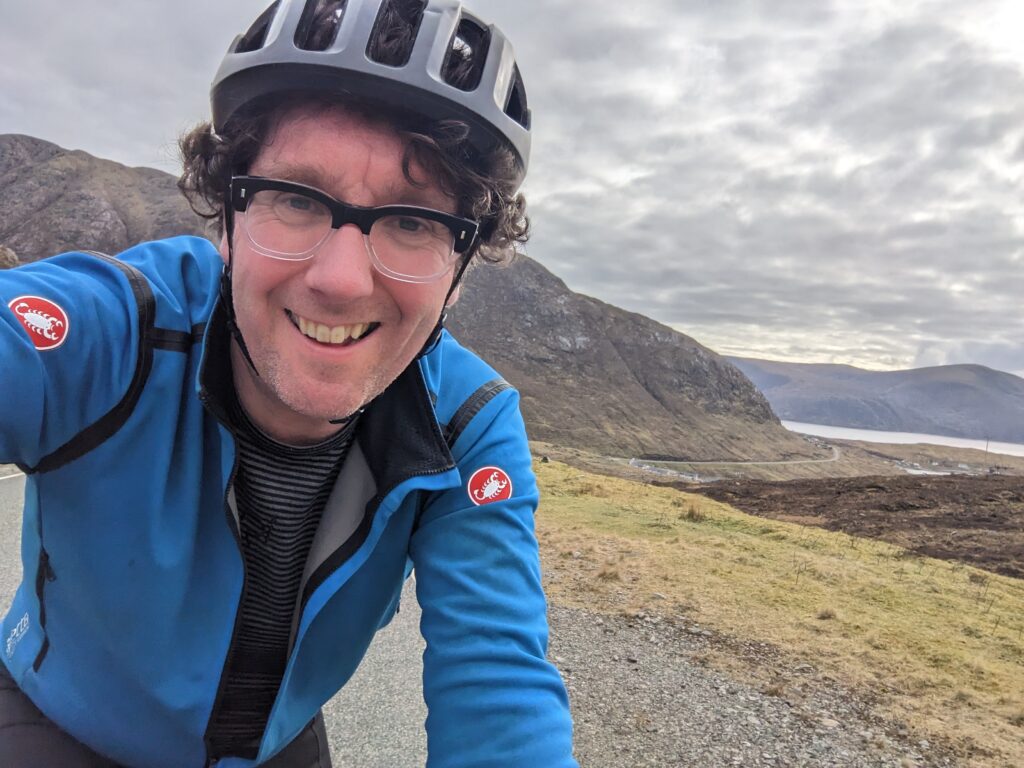
Cycling near Tursachan Chalanais
Planning a Cycling Trip to Neolithic Scotland
The process of coordinating a multi-day trip is wonderful because you’ll be imagining the amazing places you’ll see, but make sure you also set aside time to investigate lots of different travel options and be prepared to squeeze your requirements into the gaps left by train and ferry timetables.
To get to Orkney and back from Glasgow, for example, I had to choose between a 26-hour trip and a five-day trip. In the end, I decided to go there by one route (Glasgow-Thurso train, then boat to Stromness) and come back by another (overnight boat from Kirkwall to Aberdeen, then a train to Glasgow).
You may also want to consider the effort to reward ratio. The trip to the Tursachan Chalanais (Stones of Calanais) on Eilean Leòdhais, for example, was a highlight, but it was also the most demanding: a five-day round trip via Mallaig in the Highlands, all the way up An t-Eilean Sgitheanach (the Isle of Skye), followed by the Uig-Tarbert boat, then up through Leòdhas agus Na Hearadh (Harris and Lewis), with a final ride from Ullapool to Inverness for the train.
The Benefits of Cycling to Neolithic Sites in Scotland
You just see so much more on a bike than in a car. And when you learn more about the relationship between ancient monuments and the landscapes they sit in, this really adds to your appreciation.
Many of these sites – Tursachan Chalanais, the Ness of Brodgar complex in Orkney, Kilmartin Glen in Argyll– sit in bowl-like settings, surrounded by hills that enclose these spaces. Well if you had to cycle over those hills to get there, then you probably have a greater awareness of them than you might have otherwise had.
What’s so Special About the Neolithic Period?
I’m not an archaeologist – I’m a journalist by trade and now work in communications. So why did I even want to ride around the country looking at old stones?
I’ve always been fascinated when I passed by standing stones and wished I knew more. When I found out more about the period when they were built, I couldn’t stop digging. This was the moment when farmers arrived from what is now mainland Europe and people began settling down in one place for longer periods of time (rather than relying on hunting and gathering).
It was also the moment when people began marking the landscape with huge monuments like the Ring of Brodgar, elaborate tombs for their dead like Nether Largie South Cairn in Argyll, and art carved into the bedrock like in Kilmartin Glen.
Why Produce a Podcast about Neolithic Scotland?
I wanted to know more and thought other people might too – so I persuaded leading archaeologists to meet me at these sites to explain where these structures came from, what they might have meant to the people who built them, and how they have been used over the millennia.
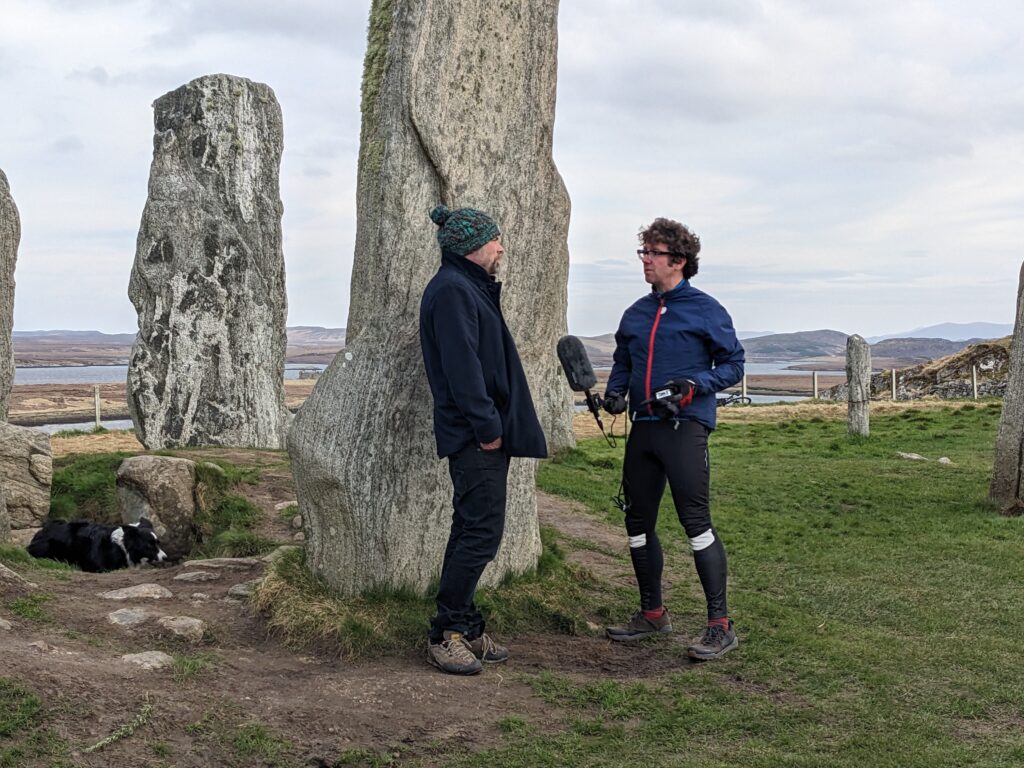
Interview at Tursachan Chalanais
Should You Cycle to Scotland’s Neolithic Sites?
If you don’t live close enough for a day trip, you can try to keep costs down by camping or staying in hostels to visit some of the sites I’ve already mentioned. You don’t pay for your bike on trains or ferries, though it’s essential to book them on ahead of time. However, you do need to spend money on packs for your bike to carry clothes, toiletries, etc. if you don’t already own these.
Depending on your starting point, you also have to have a certain level of fitness (although there are e-bikes now which really take the sting out of hills). For reference, I try to keep my bikepacking miles to 40-60 a day. But if you’re prepared to take more time and go slower you can make real progress and see wonderful things at just 30-40 miles a day.
Alternatively, you could visit websites such as PastMap to find prehistoric sites which are closer to home.
Cycling isn’t the only way to see Neolithic Scotland, but I can’t imagine a better one.
By Matthew Magee, host of the Stone Me: Investigating Scotland’s Oldest Places podcast which is available wherever you get your podcasts and at the Stone Me Podcast website.
Image Credits: Matthew Magee
