Top Five Archaeological Sites and Discoveries in Angus
Explore Bronze Age hoards, Iron Age hillforts and World War One training trenches in “the birthplace of Scotland”.
Lunanhead Palaeolithic Stone Artefacts
In 1993, some of the oldest artefacts in Scotland were recovered by the Scottish Urban Archaeological Trust Ltd (on behalf of Historic Scotland) while they investigated a field near the village of Lunanhead northeast of Forfar.
The work was prompted by the building of a new housing development – a process known as “developer-led archaeology” – and uncovered 29 lithic artefacts consisting of stone tools (such as scrapers and strike-a-lights) and debris from the production of tools.
In 1996, the artefacts were dated to the Neolithic period, which began approximately 6,100 years ago (4100 BC). But more recently, lithics specialist Torben Bjarke Ballin FSAScot was awarded a grant by the Society of Antiquaries of Scotland (who coordinate Dig It!) to re-examine and re-interpret the artefacts.
With the help of other prehistoric discoveries that had been analysed since 1996, Ballin was able to conclude that the artefacts are actually from a much earlier period – the Late Upper Palaeolithic – which means that they’re over 12,800 years old.
In Scotland, the Palaeolithic period began when small groups of generally nomadic hunter-gatherers arrived from what is now mainland Europe. They produced the earliest evidence for people living in what is now Scotland, such as these stone tools.
According to the Scottish Archaeological Research Framework (also coordinated by the Society of Antiquaries of Scotland), “the period as a whole provides the foundation for the human occupation of Scotland and is crucial for understanding prehistoric society, both for Scotland and across North-West Europe.”
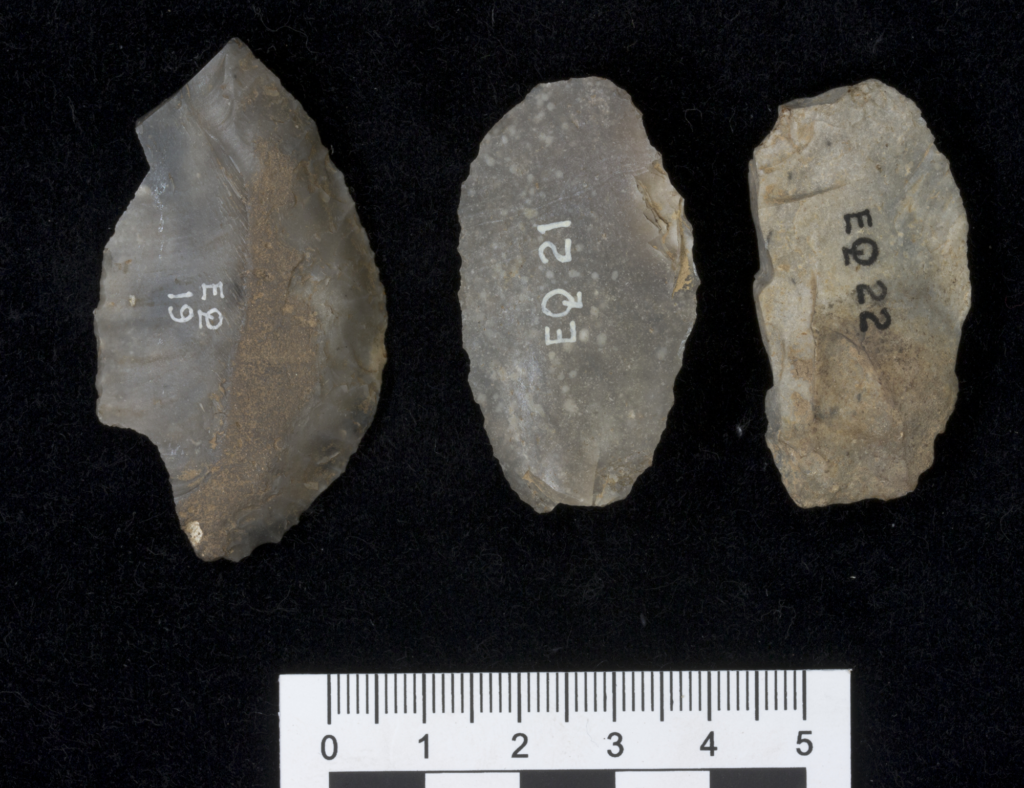
Flake of flint, from Lunanhead, Angus © National Museums Scotland
Carnoustie Bronze Age Hoard
In 2016 to 2017, an archaeological evaluation ahead of the creation of new football pitches – another example of developer-led archaeology – led to the discovery of a late Bronze Age hoard of “international significance”.
Buried around 3,000 years ago, the hoard contained a gold-decorated bronze spearhead wrapped in sheepskin, a bronze sword with a wooden scabbard wrapped in woollen cloth and a large bronze pin.
According to Alan Hunter Blair from GUARD Archaeology, who presented on the discoveries at Archaeological Research in Progress 2017 coordinated by the Society of Antiquaries of Scotland (with their partners Archaeology Scotland), “the hoard is a major addition to the Scottish Late Bronze Age. Each individual object is significant, but the presence of gold ornament on the spearhead makes this an extraordinary group. Within Britain and Ireland apparently only four other such spearheads are known.”
He noted that this hoard, along with another found 17 miles away, “indicate[s] the wealth of the local warrior society”.
The extremely rare survival of organic remains also “elevate[s] the Carnoustie discovery to international significance”. According to GUARD Archaeology, “a leather and wooden scabbard encased the Carnoustie sword and is probably the best preserved Late Bronze Age sword scabbard ever found in Britain. Fur skin survives around the spearhead, and textile around the pin and scabbard. Such organic remains rarely survive on dryland sites”.
The hoard is also significant because it’s not an isolated find but was buried within a Late Bronze Age settlement, making it “possible to study the archaeological context of the hoard, revealing new insights into the local Bronze Age community that buried it.”
This includes information about the longevity of the settlement, as the excavation also revealed the largest Neolithic hall found in Scotland so far. The building dates to around 4000 BC (around 6,000 years ago) and “may have been as old to the people who buried the weapon hoard, as they are to us.”
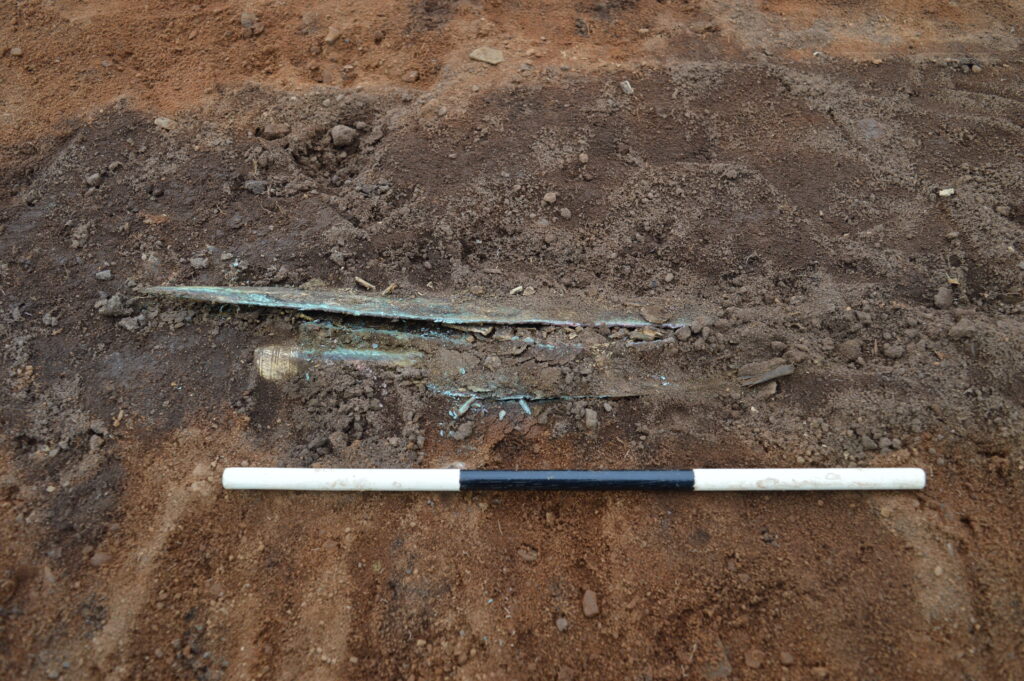
First sight of the Bronze Age hoard revealed at Carnoustie (© GUARD Archaeology Ltd)
Caterthun Iron Age Hillforts
Sitting about 1km apart on adjacent hills west of Edzell lie “two of the most impressive Iron Age hilltop enclosures in Scotland”.
According to Historic Environment Scotland, the remains of the Brown and White Caterthun hillforts we see today probably date to about the first millennium BC (3,000 to 2,000 years ago), although artefacts have revealed that the White Caterthun site probably had earlier significance in the Neolithic period and Bronze Age.
Both forts are surrounded by a series of earthworks, including ramparts and ditches, and have numerous entrances aligned to form avenues to the forts’ summits.
Excavation at the Brown Caterthun in the 1990s revealed that the site became larger over time, and that its ramparts were burned, rebuilt and re-modelled in several phases. In addition, the stone fort on the White Caterthun (which would have stood several metres high) shows evidence for vitrification – a process in which stones are fused together due to intense heat.
We don’t know exactly what the Caterthuns were used for. Historic Environment Scotland notes that the ramparts, ditches and palisades (stakes used as a fence or wall) enclosing each of the forts seem to suggest that they were tribal forts or strongholds, “but their numerous entrances seem to invite access” (perhaps indicating the segregation of people by their status or function). The vitrification might also be evidence of a tradition of deliberate burning.
This hints that these sites are likely to have had multiple functions, including as military and ceremonial centres.
Want to take a closer look? The Brown and White Caterthuns are free to visit and open year-round.
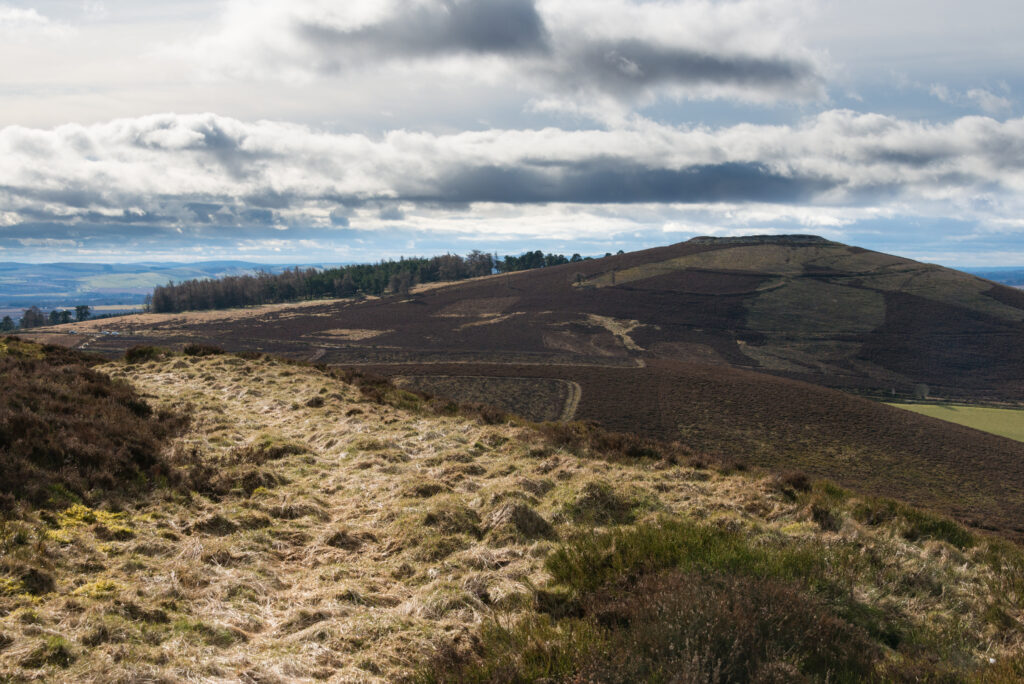
Caterthun site (© Historic Environment Scotland)
Arbroath Abbey
Founded in 1178 for Tironensian monks, the abbey is best known for the Declaration of Arbroath. The letter sent by Scottish nobles, barons and freemen to the Pope in 1320 was a formal written defence setting out Scotland’s case that it was an independent, sovereign kingdom. This is partly why Angus is referred to as “the birthplace of Scotland”.
In 2000, excavations in advance of the new visitor centre at the site uncovered a range of discoveries which, according to Historic Environment Scotland’s Andrew Burnet, “are particularly good at revealing the daily lives of the monks who lived [there]”.
This includes pins and a needle, which “conjure pictures of the brethren making and repairing clothing” and bone styluses (writing implements) which “provide evidence of a scriptorium, or writing office, even though this room no longer survives.”
Archaeologists also uncovered a tiny spoon elaborately carved from antler which has been interpreted as an ‘ear scoop’ for removing wax from the ears of monks, as well as a pair of barbed arrowheads from the 14th century which “remind us that abbeys were not spared bloodshed during the Wars of Independence, a series of military campaigns fought between Scotland and England.”
Other discoveries included a group of copper-alloy tokens which may have permitted worshippers to attend certain sacraments (rites) or granted pilgrims access a legendary container for relics, fragments of delicately painted window glass, “colourfully glazed floor tiles, a coin dating from the reign of William I, a medieval ink pot and a curious ceramic cup thought to be of French origin, whose multiple lobes make it entirely impractical for drinking.”
However, the most exciting find was “a grave effigy of King William I, founder of the abbey, carved in Frosterley marble from 200 miles away in the north-east of England. There is good reason to think it was commissioned for him by King Robert the Bruce, who was closely associated with the abbey.”
If you’d like to see some of these artefacts in person, the abbey grounds and visitor centre (exhibition, shop and toilets) are open throughout the year.
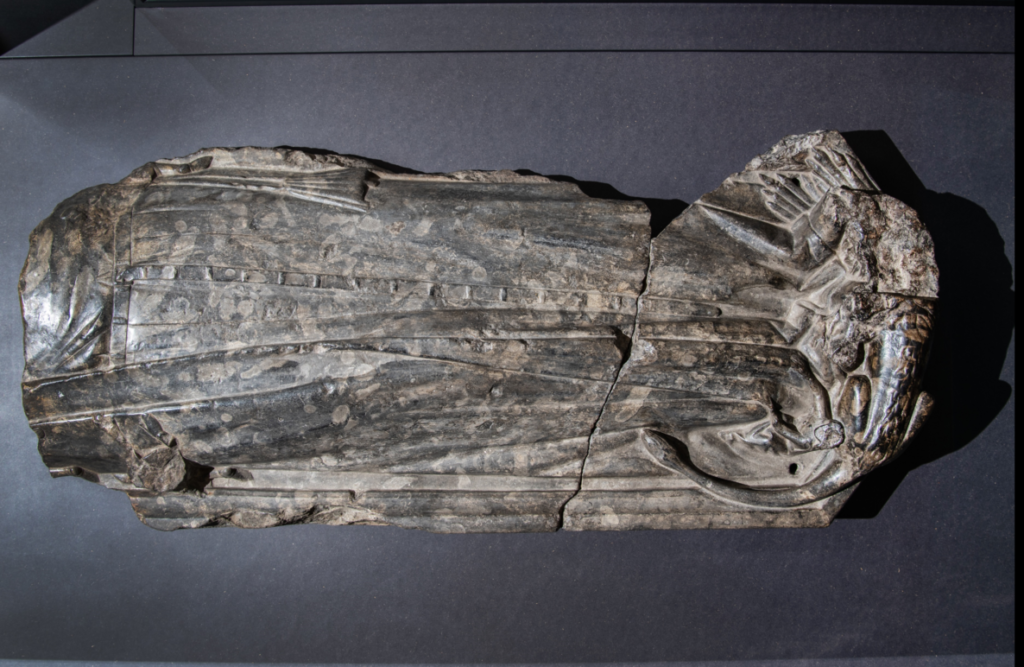
Effigy of King William I (© Historic Environment Scotland)
Barry Buddon Training Trenches
During the summers of 2017-2019, a group of veterans and archaeologists travelled to the Barry Buddon Training Area near Dundee to investigate features which were assumed to have originated as First World War (1914 to 1928) practice trenches.
With some “well positioned trenches”, the team of Wessex Archaeology staff, Defence Infrastructure Organisation (DIO) archaeologists, and Breaking Ground Heritage staff and injured veterans confirmed that the site was in use in the First World War (and through multiple other periods).
According to Richard Bennett, founder of Breaking Ground Heritage, a charity which provides support for veterans through heritage projects, “we started excavating a feature that we thought looked like a front-line trench. Before we knew it, we were faced with the unmistakable tiger stripe pattern in the sand. The ‘tiger stripe’ is formed when a sandbag rots away leaving only a black organic stain in its place (we see this a lot when we excavate similar features in France and Belgium).”
Wessex Archaeology also reported that “the trenches demonstrated a range of military trench construction techniques, including the use of breastwork style parapets which have not previously been recorded in the UK.”
According to Alex Sotheran, DIO archaeologist, this style was “used where the ground was too wet to dig a full depth trench. Instead of digging a deeper trench as was done in other parts of the Western Front, a shallower trench would be dug and the sides built up with sandbags to protect the soldiers.”
Wessex Archaeology also noted that the presence of revolver bullets in certain trenches and “a quantity of bullet fragments suggests that these positions were not only used to train troops in defence but also in attacking defensive positions with live ammunition during the First World War or during the Inter-war period.”
In addition to providing insight into the period of active use for the training trenches, construction techniques and the possible range of training exercises, Wessex Archaeology noted that the works were “particularly successful in developing and enhancing the physical, mental and social wellbeing of injured military personnel and veterans.”
If you’re a veteran or serving member of the military and would like to get involved in similar projects, visit the Breaking Ground Heritage website to find out more.

The ‘tiger stripes’ at the the Barry Buddon Training Area (© Breaking Ground Heritage)
Want to keep reading? Explore archaeological sites and discoveries in the neighbouring regions of Dundee, Perth & Kinross and Aberdeenshire.
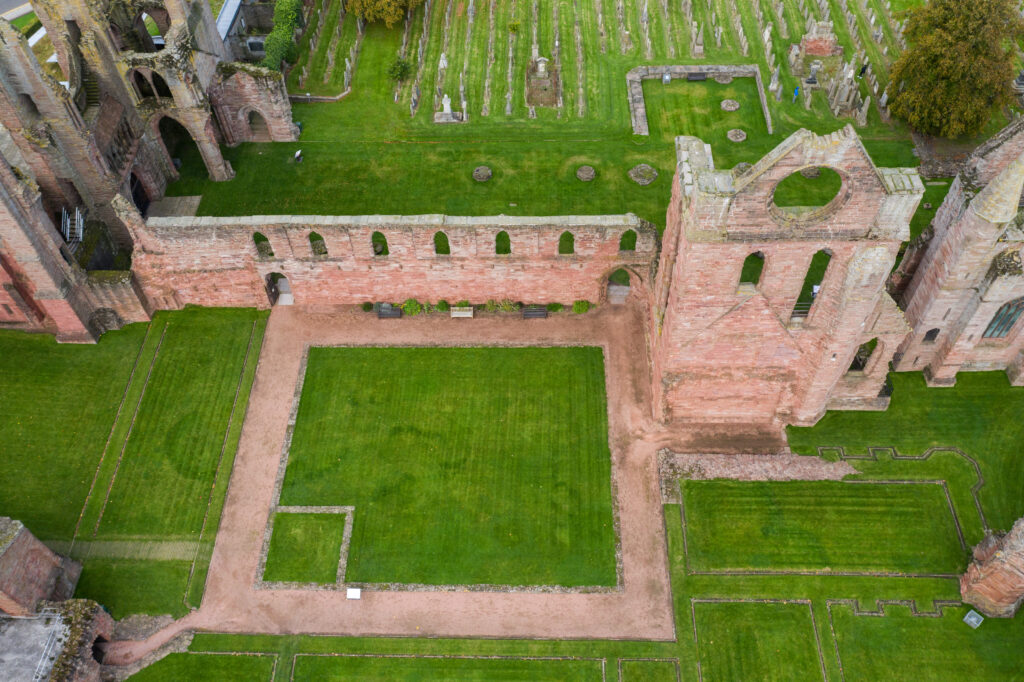
Header Image: Arbroath Abbey (© Historic Environment Scotland)
