Scottish Artefacts as Astrological Signs
What’s your sign?
Aries (“Ram”) – 20 March to 19 April
The Orkney Hood made of wool (a textile fibre which is primarily obtained from sheep) was found in peat-moss in Tankerness in 1867 and is the only complete piece of clothing to survive from before the medieval period in Scotland according to National Museums Scotland. The garment was lost, or deliberately deposited, in the bog over 1,500 years ago and the lack of oxygen slowed its decay for centuries.
According to the Orkney Museum, the hood can tell us a lot about weaving at this time. With this piece in particular, it seems that the cloth was woven with hand-spun yarn which varied in thickness, and the changes in direction were being used to mask these variations. Amazingly, experts have been able to determine that the hood was probably made for a child using recycled pieces from an adult’s garment.
Taurus (“Bull”) – 19 April to 20 May
In the 19th century, several 1,400-year-old bull carvings were found at Burghead in Moray, once the home of a huge Pictish fortress. According to National Museums Scotland, “various theories have been put forward to explain their significance, including religious, territorial emblems or clan totems.”
Experts and volunteers working with the University of Aberdeen’s Northern Picts project recently managed to dig down to the base of the fort’s upper citadel rampart. They unearthed a wall almost three metres high which provided a sense of the scale and importance of this site and how much still lies beneath the surface.

Symbol stone of rough sandstone with the incised figure of a bull, Pictish, from Burghead, Moray (© National Museums Scotland)
Gemini (“Twins”) – 20 May to 20 June
This stone altar dedicated to Apollo (twin of Artemis) was found at Bar Hill Roman fort in Dunbartonshire, one of 16 known forts along the Antonine Wall which was built across Scotland’s central belt. Carved around 1,800 years ago, it features a richly moulded top and base with a wreath, bow and quiver.
According to Historic Environment Scotland, “numerous items have been found at Bar Hill, helping us to understand what life would have been like on the Roman frontier. Many of these items were found at the bottom of the fort’s well, and were probably thrown down there when the fort was abandoned.”
Cancer (“Crab”) – 20 June to 22 July
Over 6,100 years ago, Mesolithic hunter-gatherers at Sand in the Highlands were tucking into the local shellfish, “especially limpets, periwinkles, dogwhelks mussels, as well as crabs.” But they weren’t just harvested for food. They were also used as bait, decoration and raw material for tools (and/or in the case of dogwhelks, possibly as a source of dye).
According to the Scottish Archaeological Research Framework (ScARF) article by archaeologist Susan Kruse, the excavation at Sand was particularly important as it’s “one of the largest assemblages for the Scottish Mesolithic” and “relatively few sites have such good preservation.”
Leo (“Lion”) – 22 July to 22 August
In 1997, a ferryman uncovered an 1,800-year-old sandstone sculpture of a lioness from the river at Cramond near Edinburgh. Cramond is the site of a former Roman fort and you can still see the lines of the walls of barracks and granaries, as well as the excavated remains of one of the best-preserved Roman bath houses in Scotland.
The sculpture was probably created as a memorial for one of the fort’s high-ranking officers. The monument symbolises death and depicts a naked bearded man with their hands tied behind their back (probably representing a local taken captive) being devoured by a lioness.
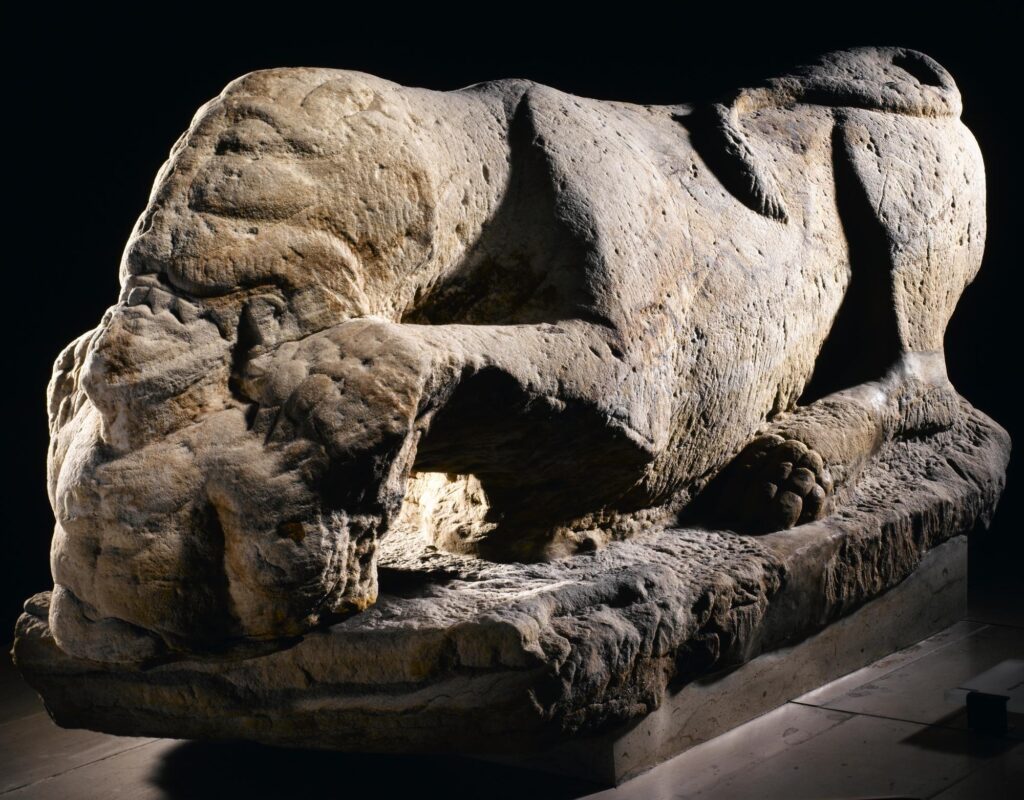
Sandstone sculpture of a Roman lioness devouring human prey, from Cramond, Edinburgh, Midlothian (© National Museums Scotland)
Virgo (“Virgin”) – 22 August to 22 September
In summer 2023, post-excavation work on an Old Town site in Edinburgh revealed a wealth of well-preserved remains as part of a process known as developer-led archaeology. Their discoveries included a small pipe clay figurine of the Virgin Mary and child Jesus which is likely over 400 years old (from the 15th or 16th century).
According to Julie Franklin FSAScot, Finds and Archives Manager and a Post-ex Project Manager with Headland Archaeology, it’s damaged at the bottom and their heads are missing. In her 2023 talk recorded by the Society of Antiquaries of Scotland (who coordinate Dig It!), Franklin notes that it’s “entirely possible they were deliberately defaced”. If they can narrow down the dating to the mid-16th century, “then that is the Scottish Reformation right there encapsulated in one find”.
During the Reformation, Scotland broke with the Papacy (the office of the Pope, the head of the Roman Catholic Church) and developed a predominantly Calvinist national church which resulted in the widespread destruction of religious sculpture, paintings, furnishings, ornaments and decoration.
Libra (“Scales”) – 22 September to 22 October
Around 1,100 years ago, a male – “probably a trader as well as a warrior” – was buried under a boat at Kiloran Bay on Colbhasa (Colonsay) in na h-Eileanan a-staigh (the Inner Hebrides) with a range of Scandinavian weapons and tools, including a bronze scale and weights. According to National Museums Scotland, silver and gold were used as a medium of exchange and were weighed on balances in the Viking world.
Excavated by antiquarians in the 1880s, the scales feature pans for weighing items which would’ve been suspended from thin chains or threads. The weights all have lead bases, although six also have tops made from bronze or enamel metalwork which had been reused from other objects.

Bronze scale and seven weights found at Kiloran Bay (© National Museums Scotland)
Scorpio (“Scorpion”) – 22 October to 21 November
In 2006-7, excavation within Croig Cave exposed three millennia of fishing and foraging on the coast of An t-Eilean Muileach (Mull) in na h-Eileanan a-staigh, which included catching sea scorpions (Taurulus bubalis) over 3,400 years ago.
According to an article in the Proceedings of the Society of Antiquaries of Scotland, analysis revealed that the Bronze Age residents had been processing a range of small fish such as sea scorpions, which are common on rocky ground where there’s a covering of seaweed.
Although it may seem like a lot of work for such a tiny meal, the authors noted that “humans have exploited small fish for food throughout history” and “minimal technology would have been required, fish being scooped up in nets, baskets or hands”. Plus, whitebait is still eaten today.
Sagittarius (“Archer”) – 21 November to 21 December
6,000 years ago, a broken flatbow was abandoned in wet ground at Rotten Bottom in the Scottish Borders. There it remained, preserved in the peat that grew up over it, until 1990 when it was found by a hill walker, Dr Dan Jones, who showed it to an archaeologist.
According to information published by Dr Alison Sheridan FSAScot in ScARF, bows surviving from Neolithic Britain and Ireland are extremely rare and it’s the oldest bow ever discovered in Britain. It’s thought that it was broken while in use, at full draw, almost certainly during a deer hunt.
Skilfully made from a single piece of yew, this object shows that the early Neolithic inhabitants of Britain had a sophisticated knowledge of the properties of different woods and used these to their best effect.
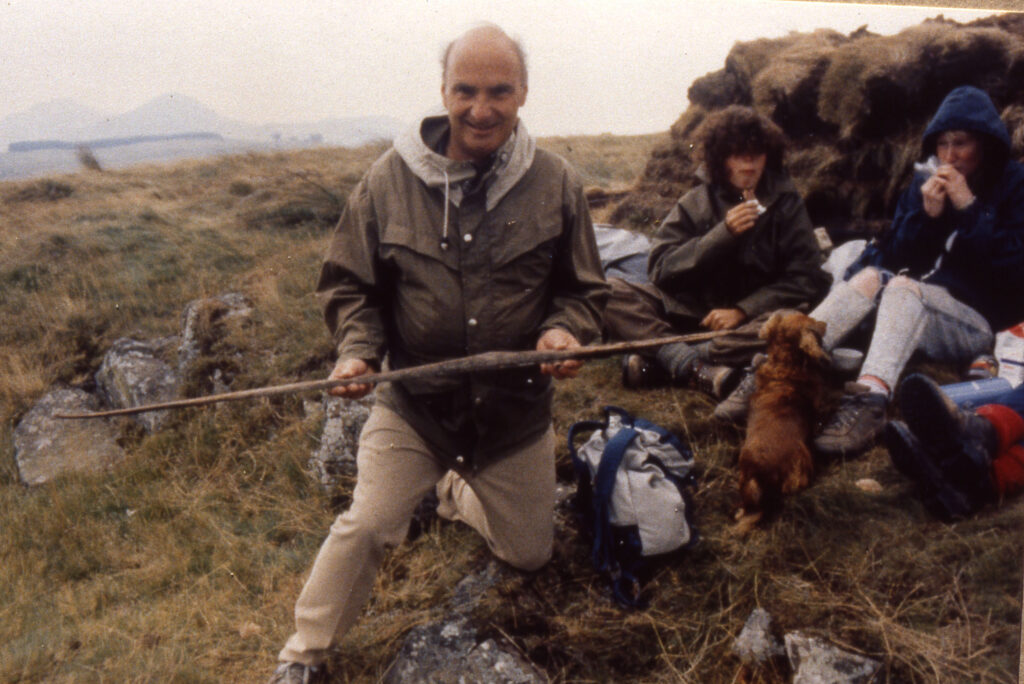
The finder, Dr Dan Jones, with the bow in 1990 (© Dr Dan Jones)
Capricorn (“Horned Goats”) – 21 December to 19 January
In 1985, an Iron Age copper alloy pendant depicting a male goat with “exaggerated, backward curving horns” was found at Dumbuck in Dumbartonshire during cable-laying operations.
According to Catherine Smith FSAScot, author of “The ‘Poor Man’s Mart’: history and archaeology of goats in Scotland” in the Tayside and Fife Archaeological Journal, it’s “thought to be a fertility symbol, or perhaps a good-luck amulet”. Only one other goat figurine from the Roman period has ever been recovered from a Scottish site.
Aquarius (“Water-bearer”) – 20 January to 19 February
Over 1,800 years ago, this sandstone fountainhead in the shape of a water nymph holding a shell (from which water cascaded into a basin) would’ve created a decorative focal piece within the bathhouse at Duntocher fort in West Dunbartonshire.
According to ScARF Project Officer Dr Jennifer Allison FSAScot, bathhouses play an important role in Roman history and archaeology and this object highlights the significant presence of Roman ways of life and culture in Scotland during the occupation of the Antonine Wall.
(Image Credit: Hunterian Museum GLAHM F44)
Pisces (“Fishes”) – 19 February to 20 March
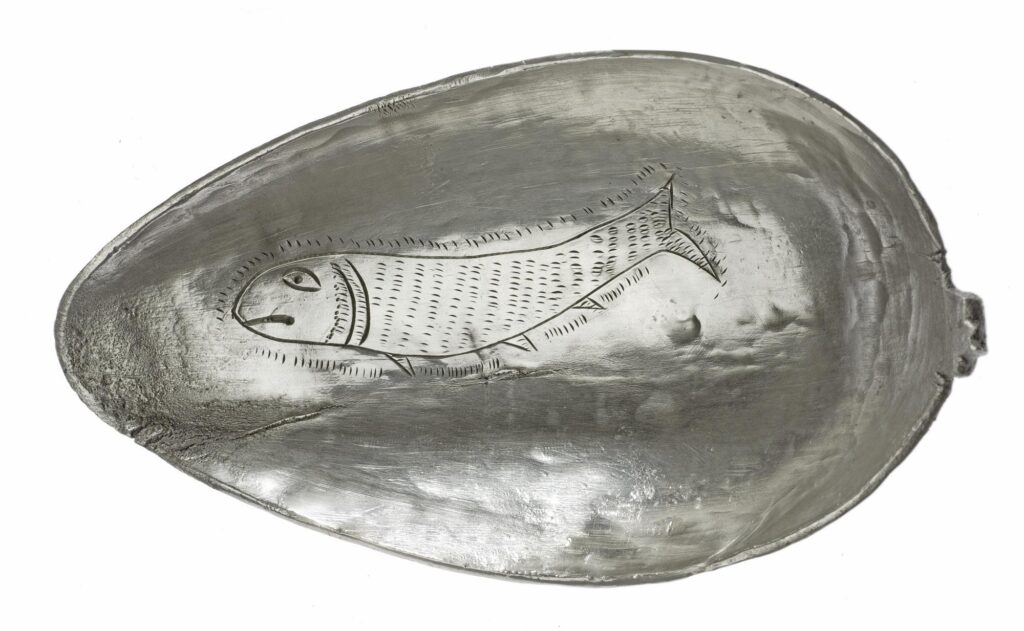
This silver spoon with a fish engraved inside (header image) was discovered by archaeologists in East Lothian in 1919 as part of the Traprain Law hoard. Buried around 1,500 years ago on a site which has shown evidence of occupation since 1000 BC (3,000 years ago), it’s the largest known hoard of Roman silver from outside the Roman Empire.
According to National Museums Scotland, the hoard is made up of over 300 fragments of objects which have been cut up either for exchange or for melting down and recycling into new objects. After abandoning Scotland in the AD 160s, the Romans used bribery to keep the frontier secure, so it’s “possible that they gave this great treasure as a bribe to a friendly native chief to prevent attacks south of Hadrian’s Wall into England, which they still occupied.”
Want to keep digging into Scottish archaeology? Explore other articles or sign up to our monthly Dig It! Digest to ensure stories, events and updates land in your inbox once a month.
Tweet
Header image: Bowl of a silver spoon with a fish engraved inside, from Traprain Law, 410 – 425 AD (© National Museums Scotland)
