Why Do Museums in Scotland Store Human Remains?
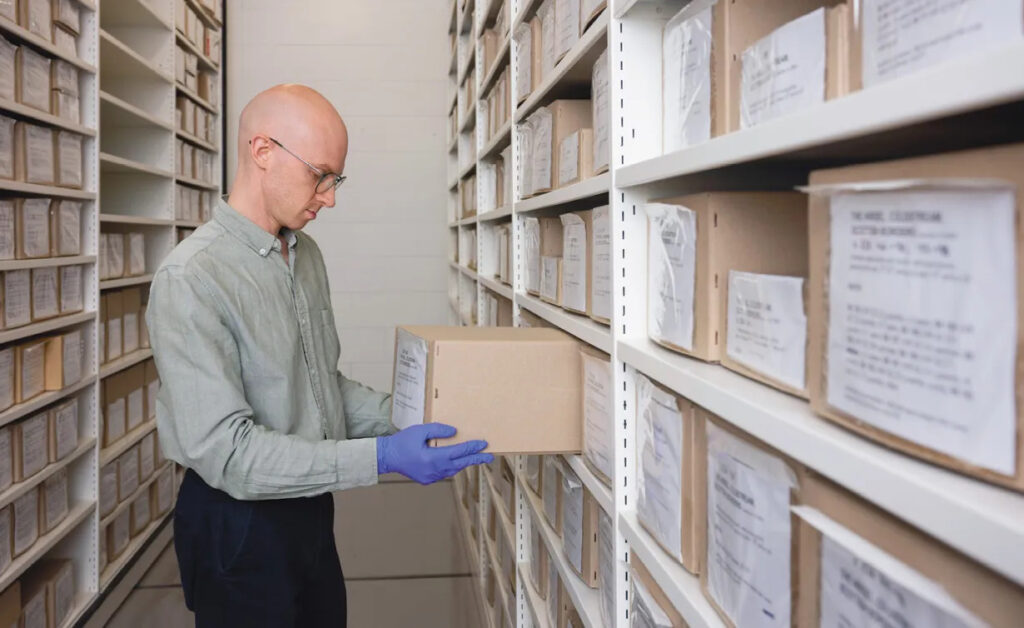
Human remains from the past are discovered frequently in Scotland and when a decision has been made to excavate them and bring them to a museum to be studied, the story of what they can tell us about Scotland’s past truly begins to unfold.
[NOTE: Article contains images and descriptions of human remains]
How Do Excavated Human Remains End Up in Scottish Museums?
There are several possible routes by which human remains make their way into museums in the 21st century. In the past, this was much more variable, and many museums hold human remains which were donated by antiquarians (a person who studies or collects artefacts from the past), anatomists, and even members of the public.
As Part of an Excavation Assemblage
This occurs when human remains are discovered as part of a larger collection of archaeological material recovered from a site which also contains physical objects that people created or used, such as tools, pottery and grave goods (known as ‘material culture’). This is the route by which human remains usually get allocated to museums. Human remains can’t legally be owned and are not assigned a monetary value, but are often allocated through this process when associated with artefacts. The excavation may have been carried out by a commercial archaeology unit, a heritage body like Historic Environment Scotland, a university, or as part of a community dig with a trained archaeologist supervising, or a combination of these.
Once archaeologists have completed post-excavation work on the assemblage and published their findings (for example as a Scottish Historical and Archaeological Internet Report published by the Society of Antiquaries of Scotland), excavation assemblages are reported to the Treasure Trove Unit (TTU) and are advertised through the Scottish Archaeological Finds Allocation Panel (SAFAP) caselist. This list is circulated to accredited museums in Scotland three times a year and museums use it to apply for the assemblages they’d like to collect, based on their collecting area.
There are many reasons why a museum may choose to acquire human remains. National Museums Scotland (NMS), for example, collects human remains from the Mesolithic period (which began around 12,800 years ago) to the 19th century and from across the whole of Scotland, but usually only where a local museum doesn’t want to – or doesn’t feel best placed to – curate human remains from their collecting area, or where the finds come from an area which doesn’t have a local museum.
It’s also important to note that an archaeological assemblage should always stay together, so a museum should be able to take in and care for both the human remains and the associated objects from a given assemblage. If a museum is successful in their application, the whole assemblage will be transferred to the institution.
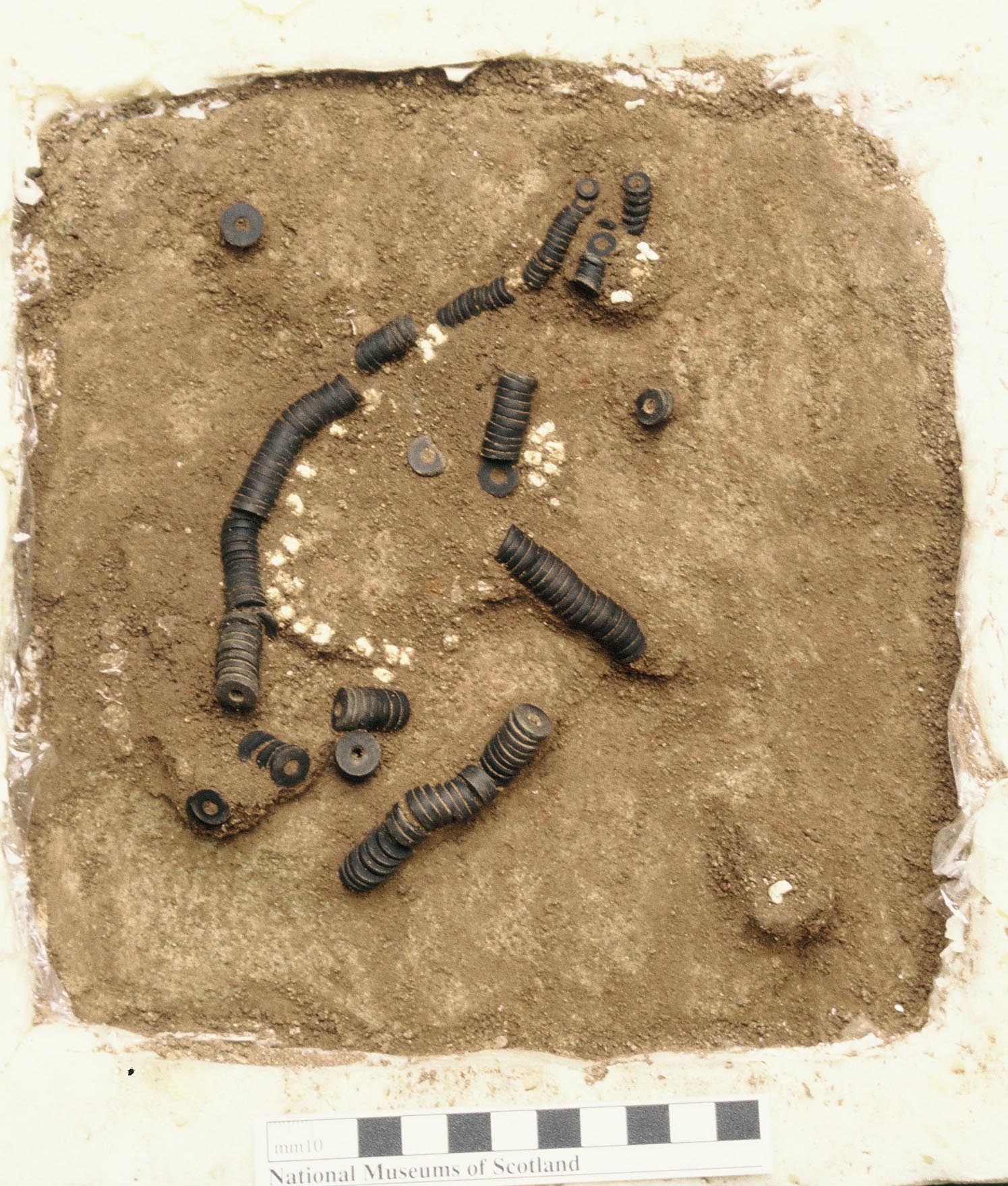
The necklace from West Water. The dark beads are the outer string of cannel coal disc beads, the white lumps are the lead beads, the slight spaces suggesting lost organic beads. Teeth enamel remains (not visible on this picture), were identified by Dorothy Lunt as belonging to a young child around 3-5 years old (© National Museums Scotland)
An example of this process in action is the assemblage uncovered at West Water Reservoir in the Scottish Borders, when an Early Bronze Age cemetery was excavated by Dr Fraser Hunter FSAScot between 1992 and 1994 after it was exposed by reservoir erosion. Nine surviving cists (stone-lined boxes) were found, containing a mixture of inhumations (burials) and cremations as well as grave goods including food vessels and a unique cannel coal and lead necklace (see picture above).
The surviving bones and teeth from the graves indicated that those deceased were young adults. The results were published by the Society of Antiquaries of Scotland (who co-ordinate Dig It!) and are available to read free online. The assemblage (including the human remains) is now cared for at the National Museums Collection Centre in Granton, Edinburgh, and has much to tell us about Bronze Age burial practices over 3,500 years ago.
This was also the case with a large medieval cemetery connected to the monastery on the Isle of May in the Firth of Forth. G.U.A.R.D. and Peter Yeoman FSAScot excavated the site near the 12th-century priory church from 1992 to 1995. There they uncovered many different kinds of medieval burials, including one of a young adult male with part of a scallop shell resting in his mouth, as well as pockets of disarticulated bones which may have belonged to people who had died elsewhere but were brought to the island for burial. The results were published by the Tayside and Fife Archaeology Committee (TAFAC) in 2007 and are available to read free online. These human remains are also stored at NMS and hold much information about medieval religious belief and burial practices.
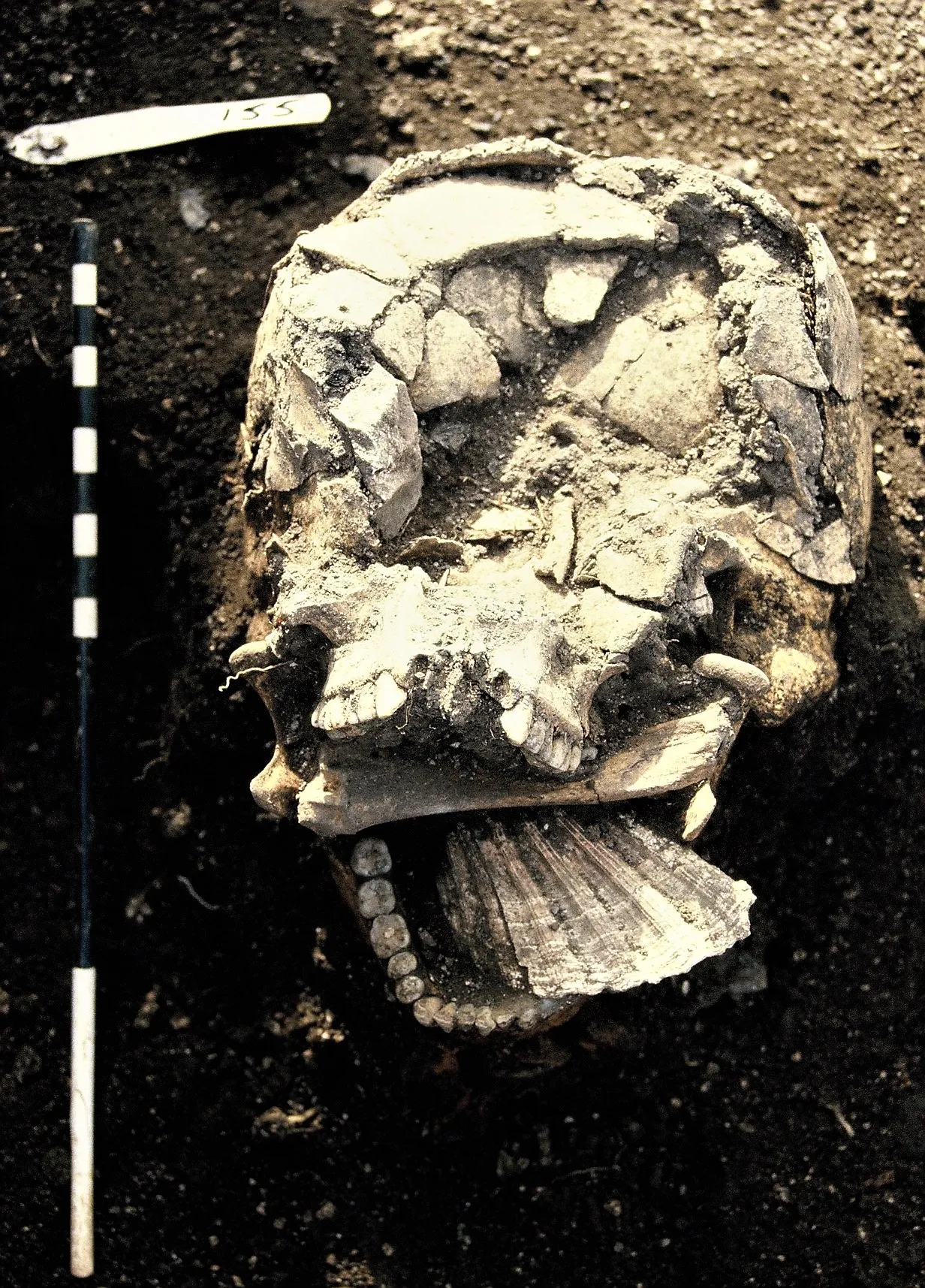
The skull of a man in his 20s who died around AD 1300 and was buried with a scallop shell in his mouth at the monastery on the Isle of May in the Firth of Forth near Edinburgh (Credit: Peter Yeoman FSAScot)
Through the SAHRC Project
You now know what happens when human remains are found alongside artefacts, but what happens when it comes to allocating human remains without associated material culture? You may be surprised to learn that there is no clear process. Progress is being made to change this, however; as a result of a 2024 review, the updated Treasure Trove Code of Practice now allows for human remains without associated finds to be reported and allocated via SAFAP.
What’s more, in 2024 the Scotland’s Archaeological Human Remains Collections (SAHRC) project (supported by the Arts and Humanities Research Council) was set up as a collaboration between NMS and Historic Environment Scotland (HES). Several archaeology units (such as AOC Archaeology Group) retain numerous assemblages of human remains in their stores without associated material culture, which were recovered through the HES human remains and emergency archaeology call-off contract. Prior to 2024, there was no clear process through which to allocate these to a museum and they were largely inaccessible to further research.
In September 2025, NMS successfully completed the first transfer of assemblages excavated by AOC under the human remains call-off contract to NMS, with at least three other museums also expecting to receive assemblages related to their collecting areas. This is a real success story, as some assemblages which were excavated decades ago can finally be fully studied.
Some assemblages received at NMS from AOC call-off contract excavations include:
– The chance find of two human bones at St Columba’s Cave in Argyll, a date from one was very early, from the Late Neolithic-Chalcolithic (2468-2304 cal BC, around 4,300 to 4,500 years ago)
– A rare example of Iron Age human remains from Loch Eriboll in Sutherland, which included a small assemblage of 26 fragments which suggests post-mortem (after death) processing, potentially of multiple individuals
– A human skeleton found by walkers eroding out of the machair at Cnoc na Faire on Ile (Islay), which turned out to be a Viking-age burial (cal AD 771 – 993, around 1,000 to 1,250 years ago)
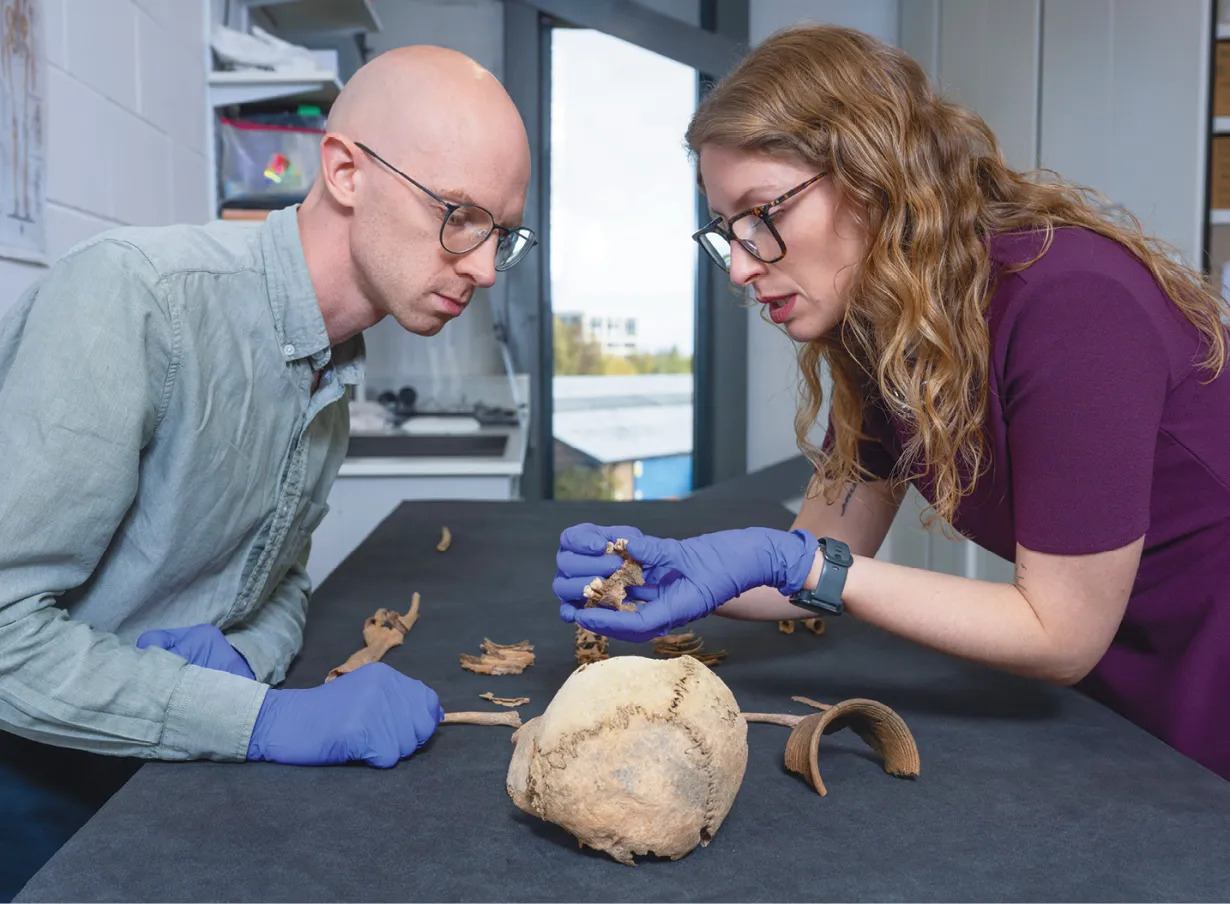
Jess Thompson, Scotland’s first Curator of Osteoarchaeology, and NMS curator Matt Knight studying the Sorisdale woman’s teeth (© Neil Hanna)
Who Owns Human Remains When They’re Found in Scotland?
No one. Unlike human-made objects which are subject to Treasure Trove law, human remains can’t be legally owned in the UK, even ones which are thousands of years old. Therefore, institutions curating human remains hold them in custodianship.
However, despite the law regarding ownership, it unfortunately remains legal to buy and sell human remains that are over 100 years old and they occasionally come up for private sale at auction houses in Scotland. Usually these are skulls or full skeletons which are ex-medical teaching aids, but these people never gave consent for their bodies to be sold on the open market and were usually acquired through ethically dubious means. The British Association of Biological Anthropology and Osteoarchaeology (BABAO) is spearheading the campaign to close this legal loophole.
Since 2020, BABAO have had a dedicated task force of specialists working to stop the sale of human remains and raise awareness of this issue. Other heritage organisations, such as the Society of Antiquaries of Scotland, have also intervened to stop individual sales. If you become aware of human remains up for sale, please report it by emailing saleofhumanremains@babao.org.uk.
What Happens to Human Remains Stored in Museums?
Human remains will usually stay in the museum to which they are allocated as long as the museum store is suitable for their ethical curation. Occasionally human remains may be moved temporarily in the case of research loans for display or analysis. At Trimontium Museum in the Scottish Borders, for example, you can see a Roman skull on display which is normally housed in the NMS collections.
“Care” is the fundamental principle behind the storage and treatment of human remains in museums. Importantly, ethical guidelines by various institutions (for example BABAO, the Department for Culture, Media and Sport, and Museums Galleries Scotland) state that all deceased individuals’ remains should be treated in a fair and dignified way.
This principle has been key to the SAHRC project and Dr Jess Thompson FSAScot, Curator of Osteoarchaeology at NMS, is working on updating ethical guidelines for storing and researching human remains at the organisation, aspects of which have already been shared with curators of human remains across the country.
Training included how to best pack and store human remains and knowledge sharing on current analytical techniques. Specific guidance on processes such as destructive sampling is also being enhanced (for example, in the case of radiocarbon dating, isotopes or aDNA analysis).
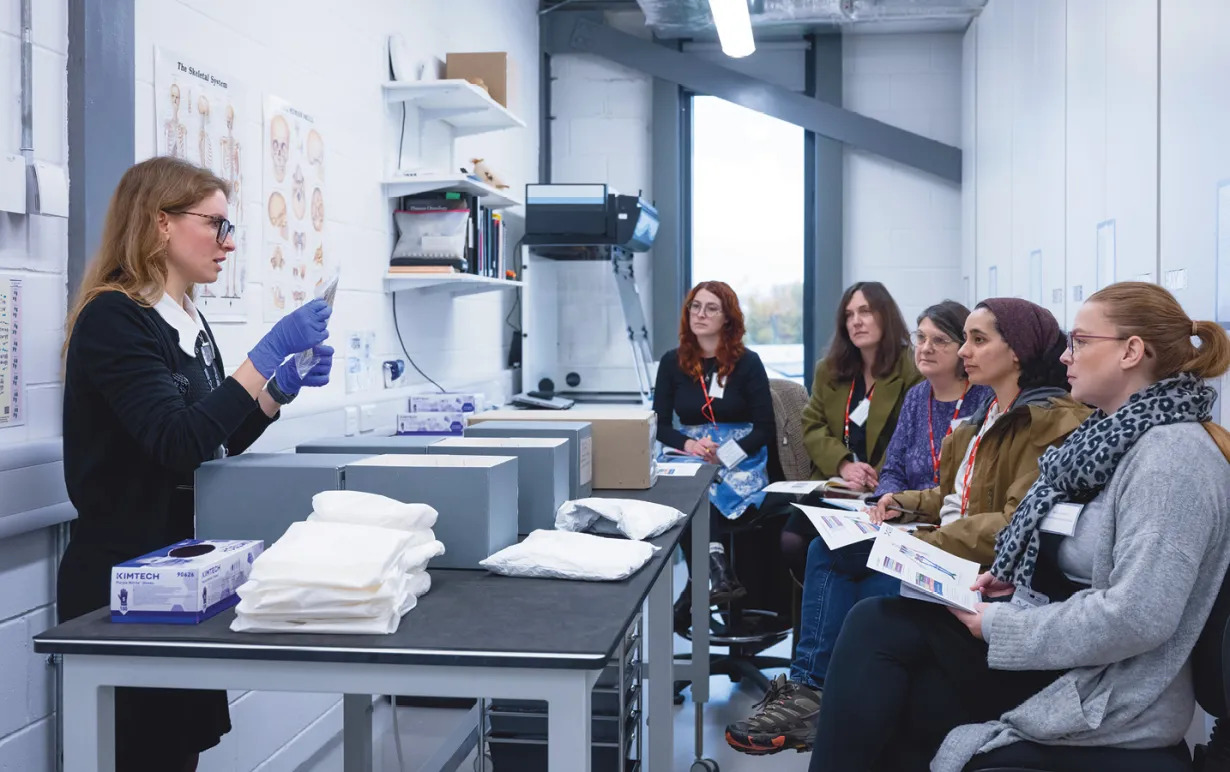
Jess Thompson discusses best practice for packing skeletal remains at the first sector workshop at NMCC, with (from left to right) Lily Barnes, Judith Hewitt, Christina Donald, Sam Ferrer, and Sarah Cameron (© Neil Hanna)
Why Are Human Remains Displayed in Museums in Scotland?
Human remains are displayed to tell particular human stories from key case studies, and they demonstrate a range of ritual and funerary practices from important sites across Scotland.
For instance, the remains of a Bronze Age woman from Upper Largie in Argyll are displayed in Kilmartin Museum as they were found in the cist along with the artefacts with which she was buried. Together with a facial reconstruction, this display communicates a rich story as revealed through archaeological investigation, whilst also sensitively presenting these remains and their burial circumstances.
Present and past curators are responsible for making decisions about displaying human remains according to best guidance and ethical practice at the time of the exhibition design. Sometimes this can take years, and most museum displays are often multiple years or even decades old. Nonetheless, museums should try to stay aware of evolving ethical considerations surrounding displaying human remains.
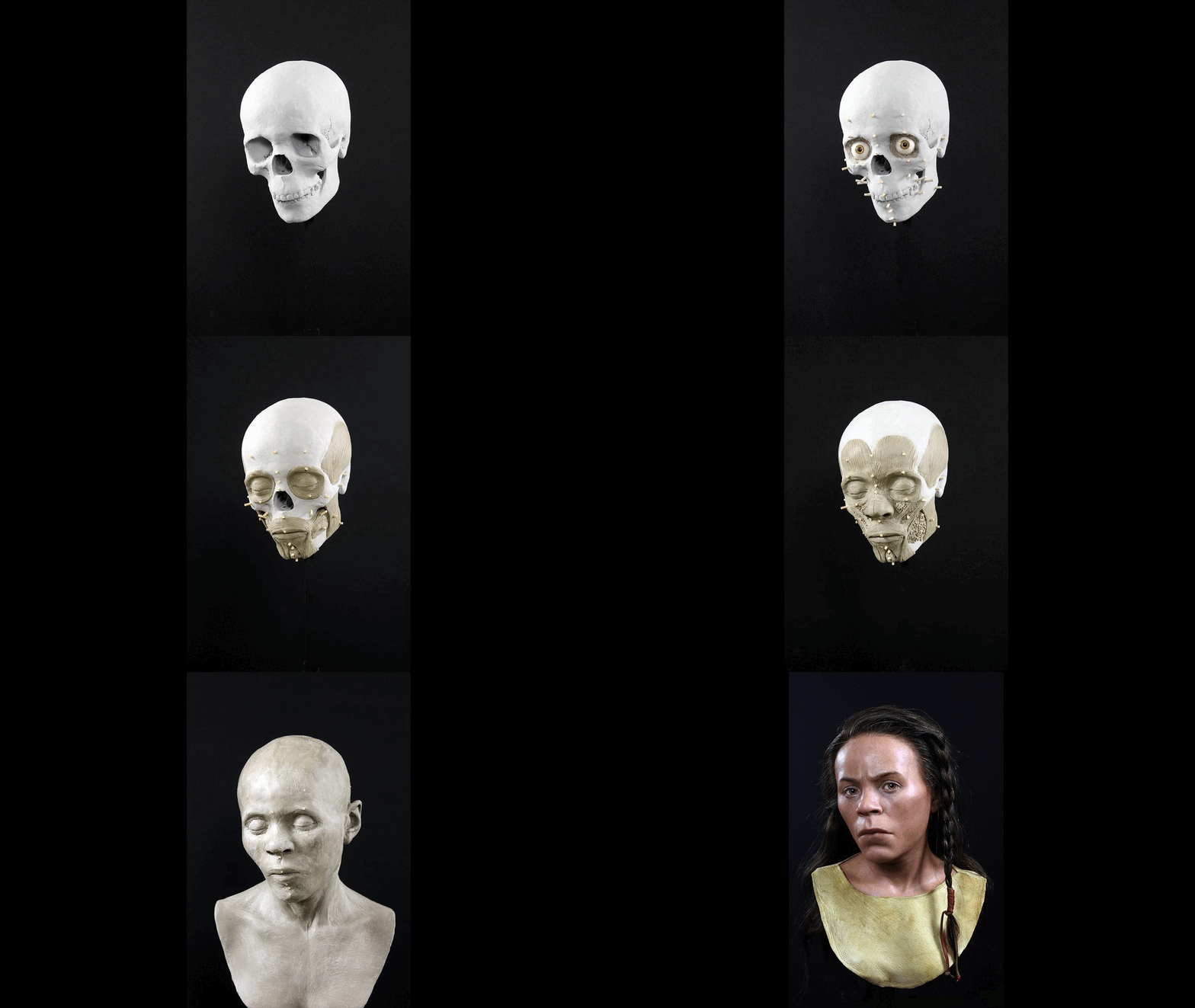
The reconstruction of Upper Largie woman from Scotland was made with a 3D printed skull and layered plasticine clay (Credit: Oscar Nilsson)
Do Archaeologists in Scotland Try to Find the Relatives of the Deceased?
As mentioned in our accompanying human remains article, licensing to exhume (remove from the ground) a body requires that due diligence is undertaken to identify any surviving relatives of the deceased and gain their consent to exhume.
However, descendants of the majority of archaeological human remains excavated in the UK can’t usually be identified as they’re older than the surviving historical records which could identify them. Even recent advancements in ancient DNA sequencing don’t enable identification, as securely identifying genetic relatives is only possible for around the previous five to six generations (you can find out more in this Dig It! article).
Who Decides if Human Remains in Scotland Can be Studied and How?
Whether or not human remains can be studied by researchers is usually up to the responsible curator or collections manager.
Each museum (usually, but not always) has an internal process for evaluating applications for research on human remains. At NMS, this is now the responsibility of the Curator of Osteoarchaeology, and terms of access for study and analysis of human remains are in place to ensure that ethical practices are followed in the collection. A researcher might be given permission to carry out non-invasive macroscopic analysis, such as examining activity patterns or health, or for invasive analyses such as radiocarbon dating, isotopes or aDNA analysis.
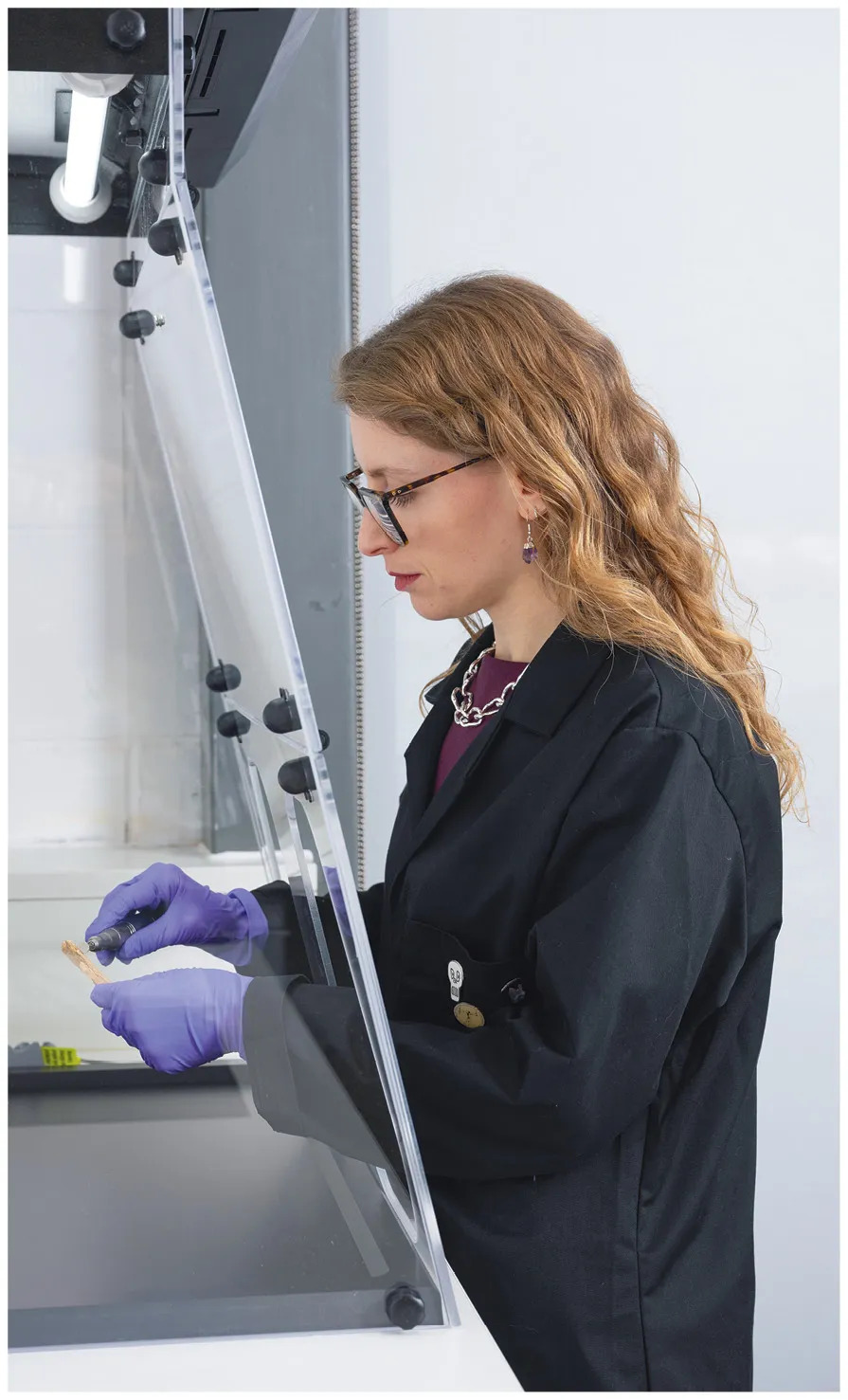
Curator of Osteoarchaeology Jess Thompson preparing to sample bone (© Neil Hanna)
A key aspect of granting permission is to ensure that the results of any studies are shared with the curating institution so that knowledge of the collection can be enhanced, allowing the team to communicate stories with the public and visitors through museum channels.
Furthermore, it’s essential that future researchers benefit from any studies carried out in the present, and researchers should think carefully about how they share their raw data with the curating institution to allow their data to be integrated into future work and built upon.
The City of Edinburgh Council, for example, has undertaken a number of such projects over the last 15 years or so. This includes the Edinburgh First Burghers project in 2025 and Dark Goings On At Cramond, the re-examination of medieval burials found in the latrine attached to the Roman Bathhouse at Cramond Fort which turned out to be 6th-century in date and not 13th/14th century as first thought (the analysis suggests that they formed part of an burial crypt attached to a possible early Christian Church/Chapel). These resulted in public exhibitions which used facial reconstructions, isotopic analysis and radiocarbon dating, with the First Burghers project also using using aDNA analysis.
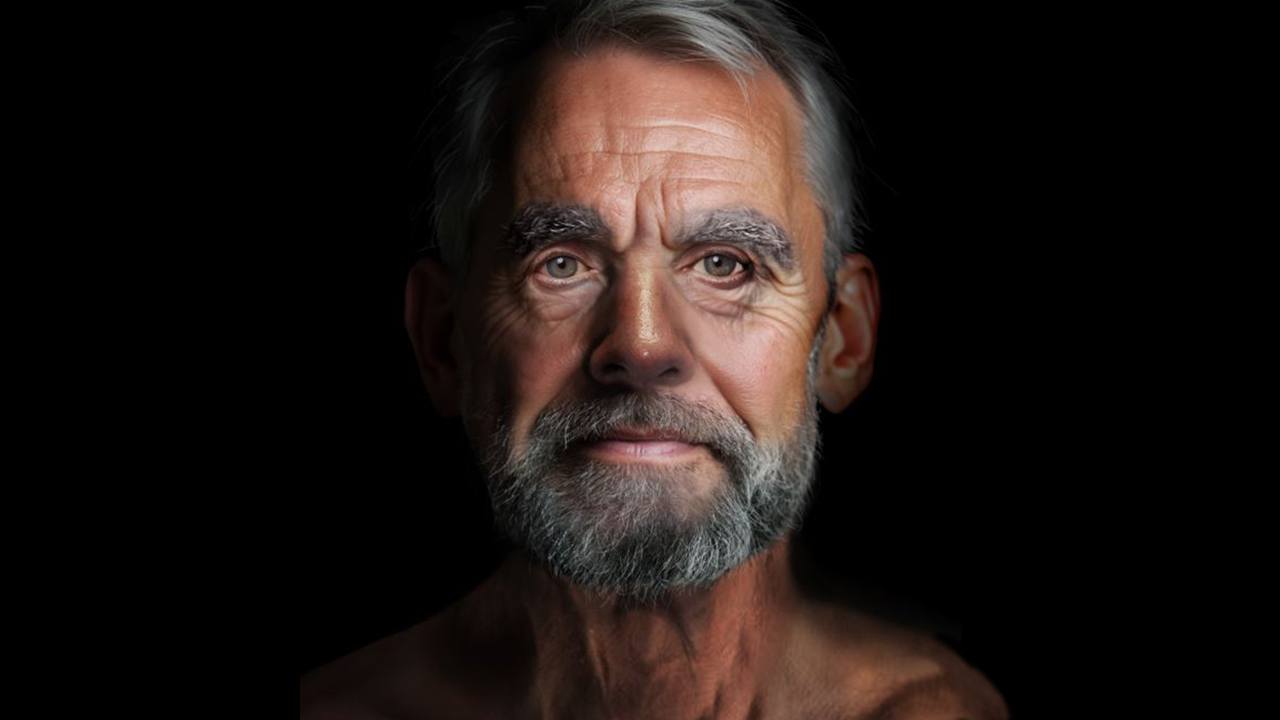
Facial reconstructions of a 12th-century man is among the medieval Edinburgh residents whose faces have been recreated for the Edinburgh First Burghers Project by Maria Maclennan (© The City of Edinburgh Council & Maria MacLennan)
What Work Has Already Been Done on Human Remains Curated in NMS?
The Scottish human remains collection at NMS is one of the most intensively studied collections within the Scottish History and Archaeology department. These human remains have been the subject of numerous masters and doctoral theses and incorporated into large bioarchaeological projects.
A key target for research has been the re-assessment of historic archaeological discoveries. This includes Dr Rebecca Crozier’s work on the Neolithic chambered tomb from Quanterness in Orkney, which contained a large number of disarticulated human remains, and the collaborative project led by Professor Ian Armit FSAScot and Dr Lindsey Büster FSAScot on the Sculptor’s Cave in Moray, which contained many human remains from the Bronze Age to the Pictish period. These studies are fundamental for changing our appreciation of the nuances of past burial practices.
For decades, curatorial staff at NMS have facilitated a range of internal and external research projects, usually involving multidisciplinary collaboration. Internal research includes a regular radiocarbon dating programme which is published annually in Discovery and Excavation in Scotland.
Research led by external teams includes exciting projects such as Dr Pontus Skoglund’s 1000 Ancient British Genomes which is carrying out a large-scale genetic analysis of populations from prehistory to the 2nd millennium CE to answer both archaeological and evolutionary questions, Professor Armit’s COMMIOS examining social dynamics across Iron Age Britain, and Dr Sam Leggett FSAScot’s ArchaeoFINS, which is assessing evidence for medieval fishing around the Irish and North Seas.
In recent years, particular focus has been directed toward assessing biological relatedness and population ancestry through aDNA, especially in prehistoric and medieval periods, and investigating diet—especially determining the presence and extent of fish consumption—amongst prehistoric, medieval and Pictish communities.
Similar work has been undertaken with a range of museums and cultural heritage institutions across Scotland, leading to a rich and complex picture of the people from Scotland’s past that can be presented to the public. The input of curatorial expertise in many of these projects is fundamental.
To aid future research, NMS is currently developing a full inventory of their collection of archaeological human remains from the UK which will be viewable online.
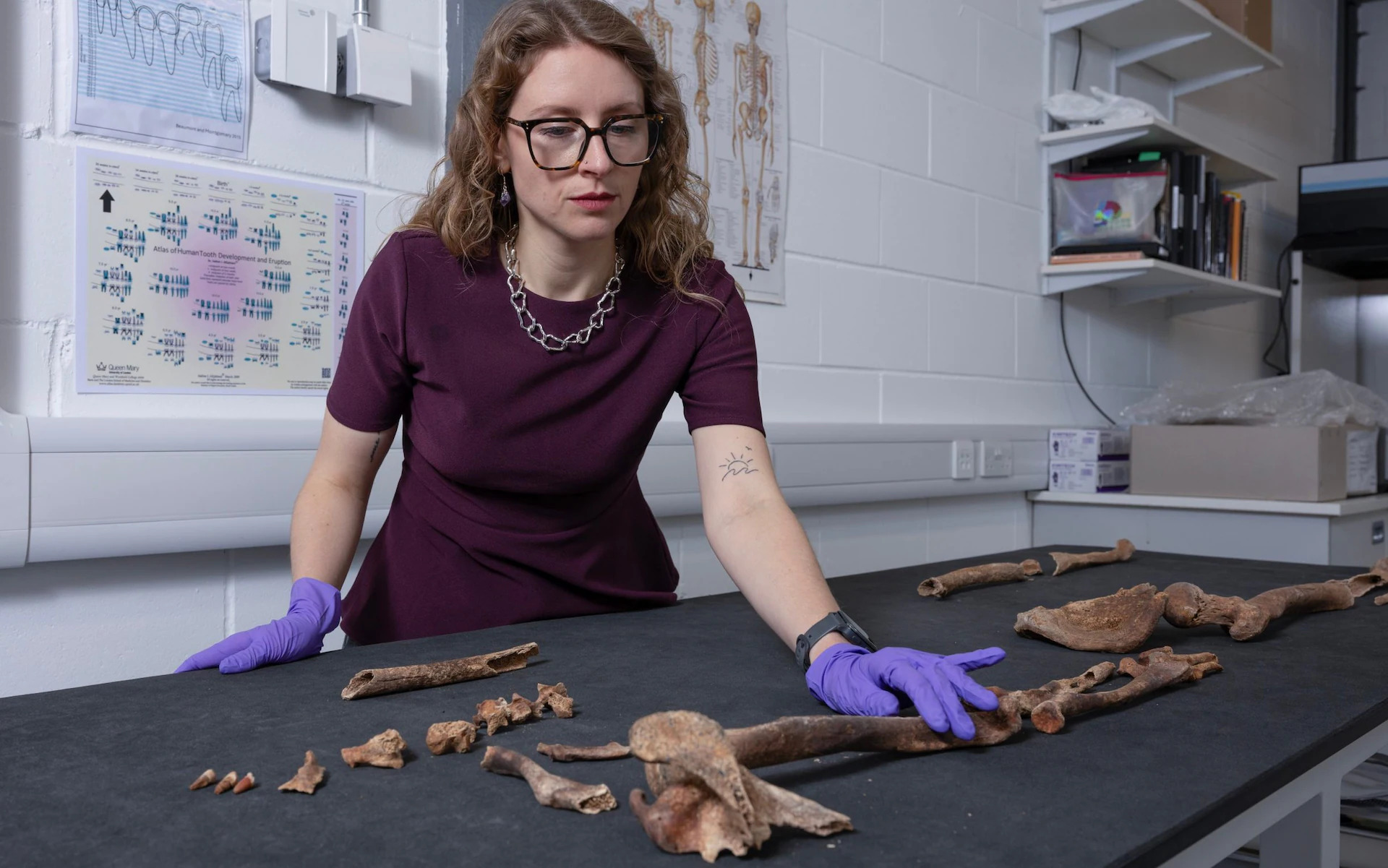
Dr Jess Thompson FSAScot at work (© Neil Hanna)
The way archaeologists and museum curators collect, catalogue, store, and research human remains in museums is improving year on year.
Museums in Scotland are working towards the best ethical practice, while also making these collections more accessible than ever before. Despite this, the guidance for the care of human remains in museums across the UK needs updating.
This is a critical next step, as the exciting stories we can tell from human remains have never been so diverse. Scientific methods continually develop and emerge, providing the opportunity to reflect on highly relevant social and political topics, such as migration, diet and conflict. The remains of Scotland’s past inhabitants have much more for us to discover, share and learn from.
By Dr Jess Thompson FSAScot Curator of Osteoarchaeology at National Museums Scotland; Dr Matt Knight FSAScot, Senior Curator of Prehistory at National Museums Scotland; John Lawson FSAScot, Archaeology Officer at The City of Edinburgh Council; and Jane Matheson, Bereavement Services Operational Manager at The City of Edinburgh Council.
Header Image Credit: © Neil Hanna
