Top Five Archaeological Sites and Discoveries in East Lothian
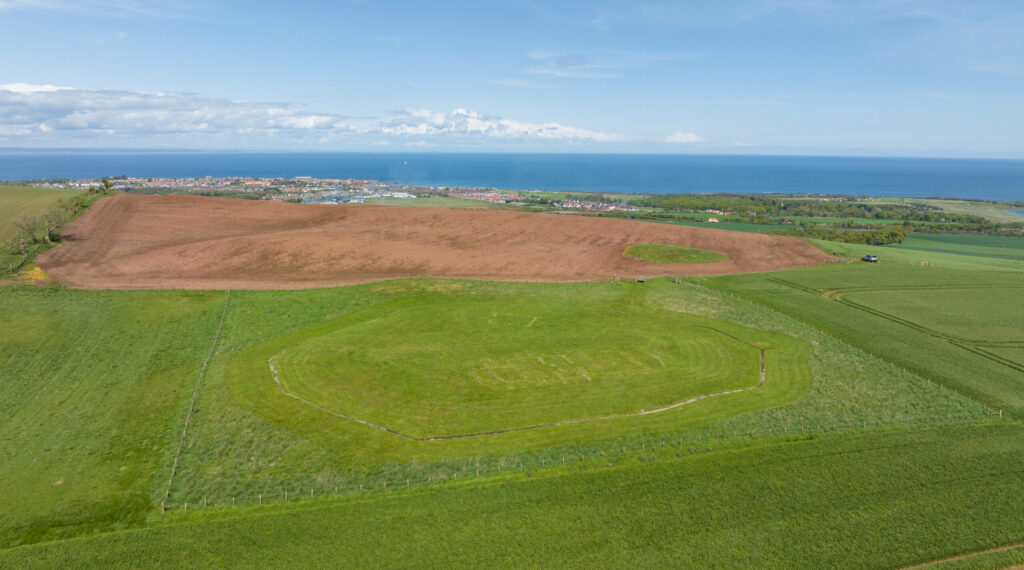
Stories of burning halls, Viking burials and Scotland’s first railway are just some of the fascinating tales that have been unearthed in East Lothian.
East Barns Mesolithic House
In 2002, the “substantial remains” of a Mesolithic house were discovered by AOC Archaeology Group in advance of quarrying at East Barns near Dunbar. According to the John Gray Centre, charcoal found at the site was dated to 8300 BC (10,300 years ago), making it one of the oldest dwellings in Scotland.
“Postholes across the floor had divided it into ‘rooms’ with a fireplace in the centre” and it’s thought that six or seven people would’ve lived there all year round. Over 30,000 pieces of flint were also found at the site, including different tools and scraps of flint from tool making.
It was previously thought that Mesolithic people in Scotland at this time were constantly on the move, living in temporary tents, huts or caves. However, sites like this demonstrate that they did settle for longer periods and built more permanent structures in good locations – possibly due to the presence of “varied, numerous and predictable resources” – much earlier than previously thought.
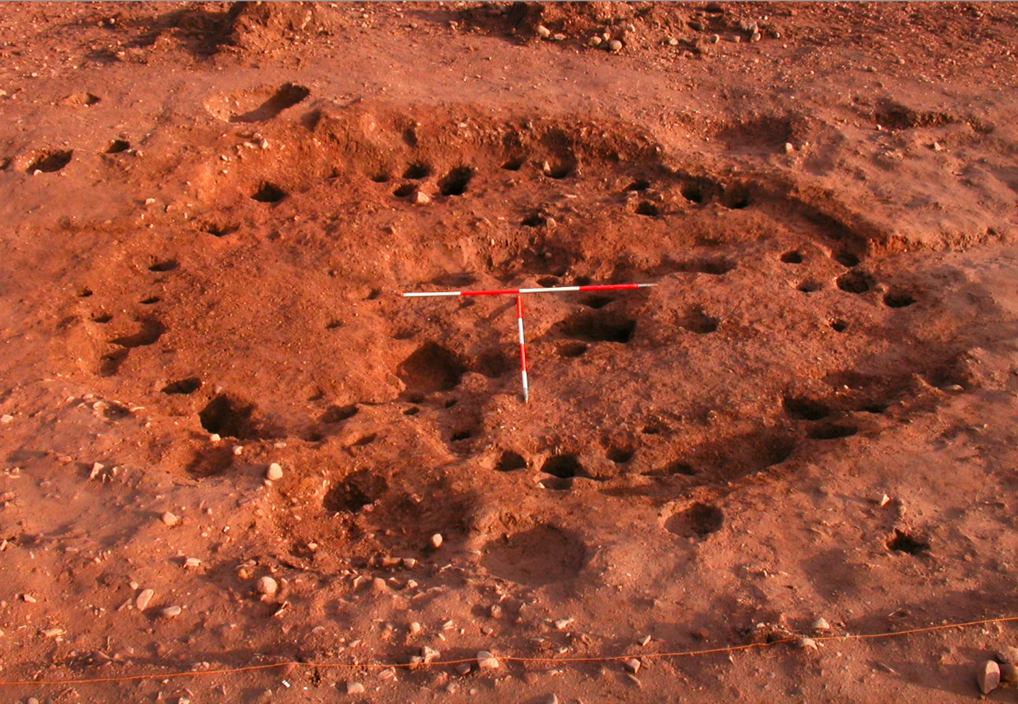
East Barns Mesolithic house after excavation (Image © Rob Engl and John Gooder)
Neolithic Halls at Doon Hill
This site near Dunbar was first identified through aerial photography in 1959 before excavations in the 1960s by Brian Hope-Taylor revealed two timber halls built on the same spot, as well as other enclosures.
According to Historic Environment Scotland, the evidence initially suggested that the halls were built in the AD 500s and 600s (around 1,400 years ago), but re-analysis of artefacts and radiocarbon dating later revealed that they were thousands of years older. Their work placed both halls in the Early Neolithic period which began approximately 6,100 years ago (4100 BC).
Intriguingly, the first timber hall was burned down and Dr Kenny Brophy FSAScot, Senior Lecturer (Archaeology) at the University of Glasgow, believes it wasn’t an accident: “Such big fires would have required huge amounts of fuel and days of hard work, curating a big fire for political effect. Such ‘flashbulb memories’ would live on in the social consciousness for many generations at a time when such gestures were needed in the absence of the written word. These emotional shared experiences were what held society together.”
Doon Hill is free to visit and open year-round. Although nothing survives above ground today, it offers visitors the rare opportunity to trace the outlines of the Neolithic structures marked out in coloured concrete in the grass.
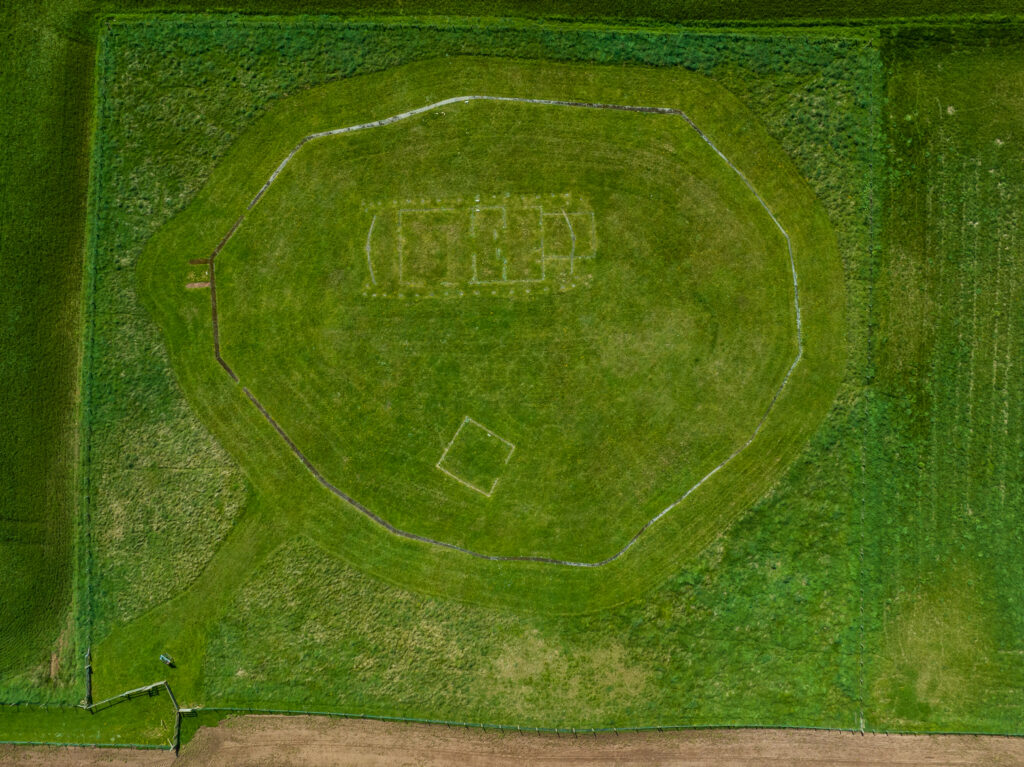
Aerial photo of Doon Hill, taken by drone (Image © Historic Environment Scotland)
Broxmouth Iron Age Fort
Broxmouth Fort near Dunbar was occupied more or less continuously from the earliest Iron Age (which began over 2,800 years ago) to the second century AD (over 1,800 years ago).
Before being destroyed by quarrying, it was almost completely excavated in the 1970s, making it one of the first major rescue projects in Scotland. It was also “one of the most comprehensive examinations of any Iron Age hillfort” and resulted in a lot of important discoveries.
The unusual alkali soil (the opposite of acidic), for example, meant that archaeologists were able to unearth one of the largest collections of animal bones in Scotland, which allowed them to learn about life at Broxmouth “in unusual depth”.
They also discovered rare evidence for the treatment of the dead in Iron Age Britain, including a small cemetery just beyond the northern rampart, and “evidence for violent death and the taking of human trophies”.
In addition, the site was home to a series of “remarkably well-preserved” roundhouses and painted “a richly detailed picture of the evolution of the elaborate hillfort entrances”.
If that wasn’t enough, high-carbon steel was also produced at Broxmouth around 2,400 years ago (490 BC to 375 BC), making it the earliest use of steel in the British Isles.
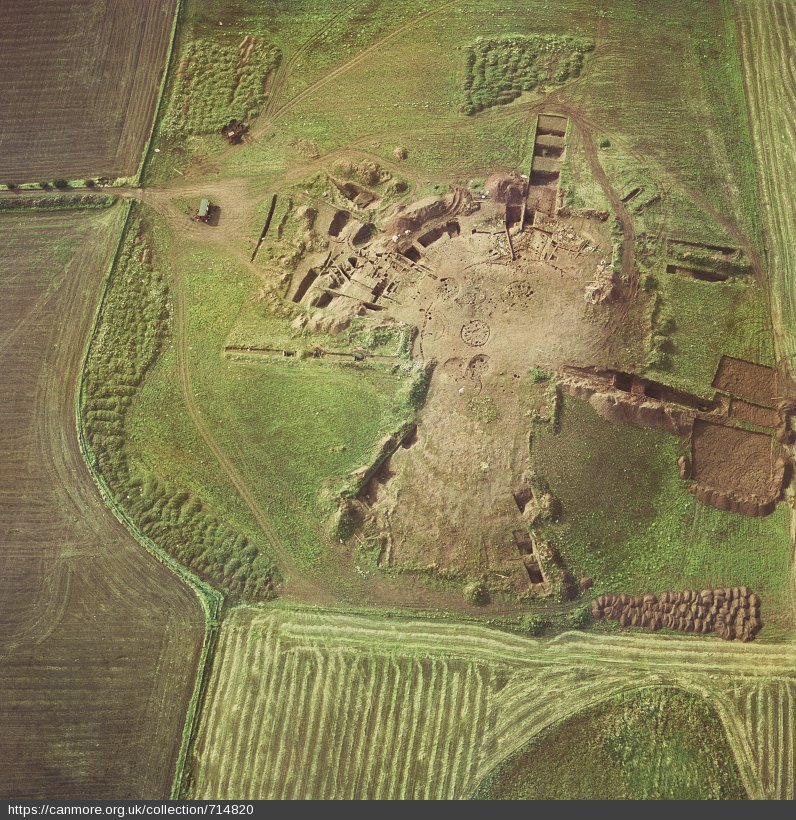
Aerial view showing the excavation of the fort (Image © Crown Copyright: HES)
Auldhame Monastic Settlement
In 2005, archaeologists uncovered what’s believed to be the site of an early historic cliff-top monastery settlement east of North Berwick. It was established over 1,300 years ago (in the AD 600s), before becoming a parish church in the AD 1100s and ending its life in the AD 1600s as a burial aisle/mortuary chapel.
According to Historic Environment Scotland, AOC Archaeology unearthed the remains of stone chapel foundations and features, uncovered evidence (such as charred cereals and shellfish) which strongly suggests that people were living at the site as well as worshipping and burying the dead, and excavated or recorded the position of over 300 burials.
This included a rare Viking grave containing grave goods (a belt set, spurs and spear head), the most southerly found in Scotland so far. It’s been suggested that the individual could be Olaf Guthfrithson, king of Dublin and Northumbria, who died in AD 941 shortly after attacking the East Lothian coast. But it’s worth keeping in mind that “identifying early Medieval burials with certainty is almost impossible”, according to Dr Alex Woolf, Senior Lecturer at the University of St Andrews.
The excavations also unearthed a range of significant artefacts and ecofacts (artefacts that weren’t made by humans but are still important), including rare evidence for early historic book production: a fragment of a glass ink well and large amounts of dog-whelks (sea snails) which might have been used to make purple dye.
The archaeological evidence from Auldhame is particularly important because written sources which refer to the arrival of Christianity in Scotland are partial and problematic, so early settlements such as this are vital to any understanding of how the faith spread throughout the country. Small chapels of proven early historic date are also rare in Scotland and few examples have been excavated to modern standards.
If you want to keep digging into this site, you can enjoy the talk from AOC’s Dr Anne Crone or grab a copy of Living & Dying at Auldhame from the Society of Antiquaries of Scotland (who coordinate Dig It!).
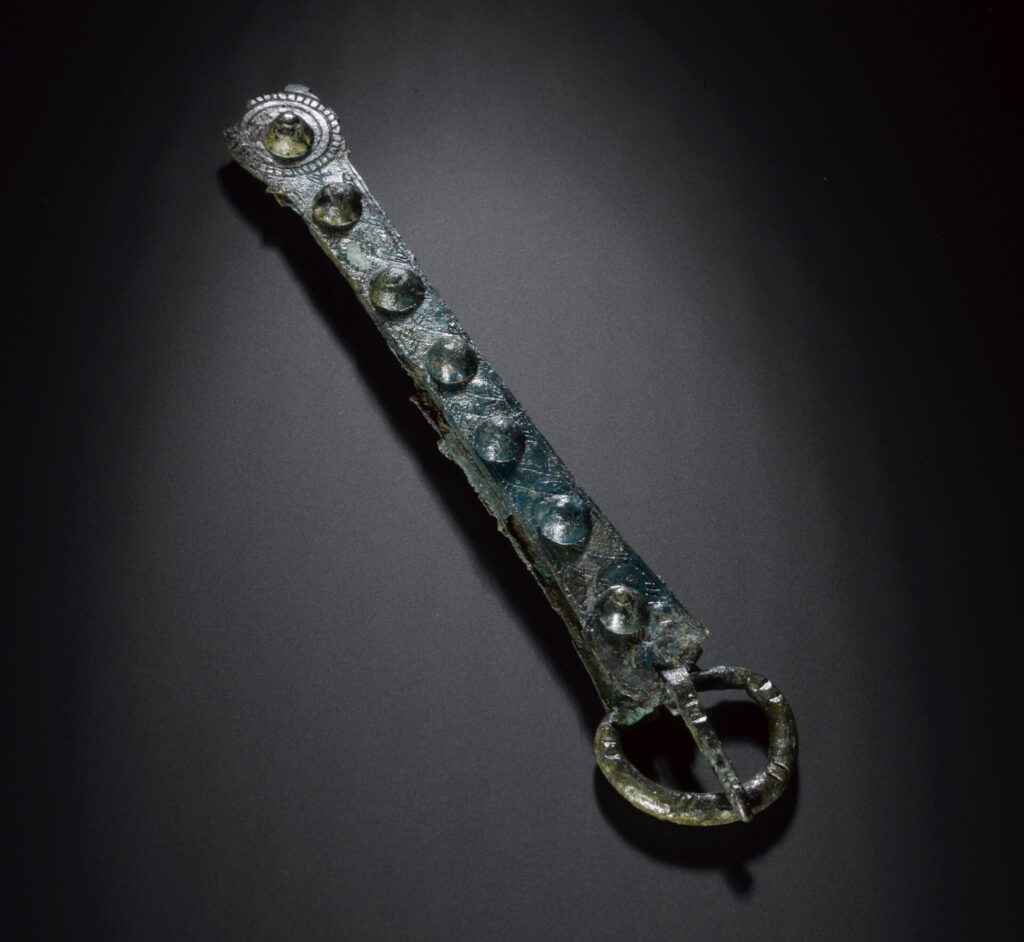
Buckle plate uncovered at Auldhame (Image © National Museums Scotland)
Tranent to Cockenzie Waggonway
Opened in 1722, the Tranent to Cockenzie Waggonway was Scotland’s first railway. The 2.5-mile-long wooden track transported coal from the pits at Tranent in horse-drawn wagons to fuel the fires beneath the salt pans at Cockenzie and to be shipped on from the harbour at Port Seton.
Since 2017, the 1722 Waggonway Heritage Group has run community excavations with volunteers searching for the remains of the original waggonway line, and in 2021, they uncovered some of its 300-year-old timbers. In fact, their work revealed three wooden railways stacked on top of each other which appear to have been the result of multiple upgrades over a short period of time.
The finds, including the remains of sleeper and rail timber, have been described as “unique in railway archaeology” by Ed Bethune FSAScot, chairman of the 1722 Waggonway Project which is run by the heritage group. He noted that it was “the first time that clear evidence of the temporary and short lifespan of these early wooden waggonways has been discovered.”
They now plan to use this knowledge to build a working wooden replica, exactly as it was constructed in the 18th century.
If you want to find out more about the railway or the heritage group, head to their free museum in Cockenzie.
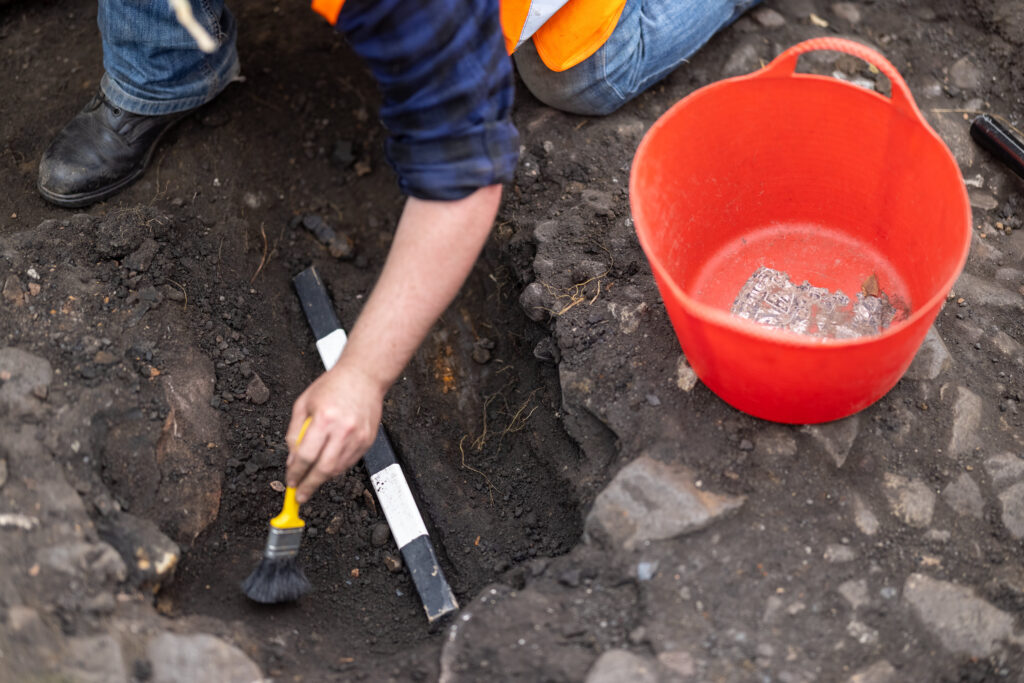
1722 Waggonway Project excavation which unearthed the remains of Scotland’s earliest railway (Image © Shahbaz Majeed 2021)
Want to keep reading? Dig into other exciting East Lothian sites and discoveries including hoards, towers, hillforts, the remains of ‘Scotland’s dodo’, and Roman brooches and altars.
Header Image: Aerial photo of Doon Hill, taken by drone (Image © Historic Environment Scotland)
